Physical Address
304 North Cardinal St.
Dorchester Center, MA 02124
Physical Address
304 North Cardinal St.
Dorchester Center, MA 02124

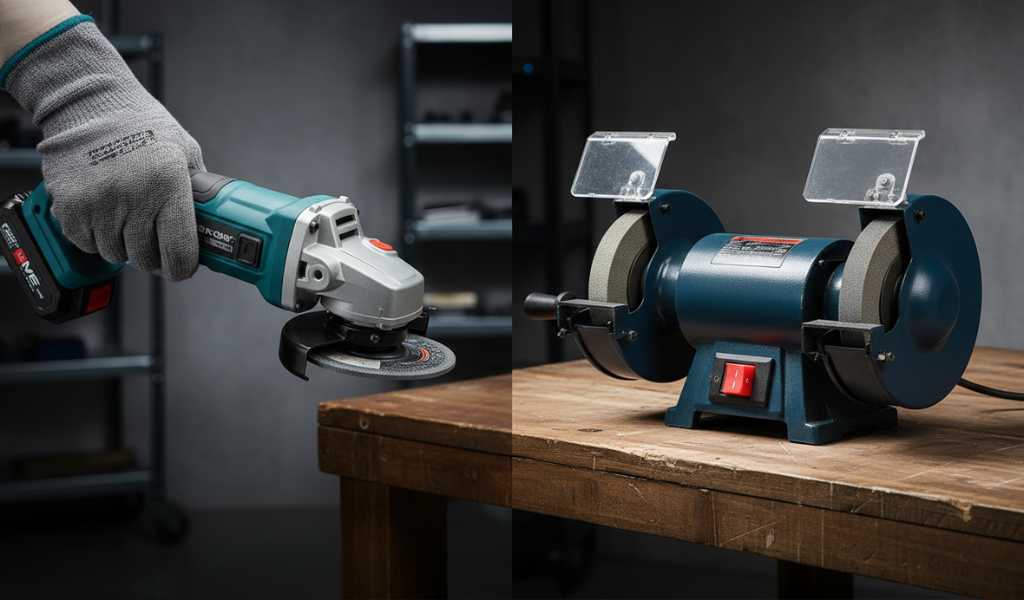
When you step into a workshop, two tools almost always stand out: the sleek, handheld “angle grinder” and the heavy, bolted-down “bench grinder”. If you are a DIY enthusiast or a professional maker, you’ve likely asked yourself: which one do I actually need? While they both spin abrasive wheels at high speeds, they are as different as a mountain bike and a stationary exercise cycle. One is built for the road, and the other is built for stability.
In this guide, we will dive deep into the world of angle grinders and bench grinders to help you decide which tool fits your specific project. Whether you are trying to sharpen a dull lawnmower blade or cut through a thick steel pipe, understanding the strengths of these “grinders” will save you time, money, and a whole lot of frustration.
At first glance, angle grinders and bench grinders seem to do the same thing—they use friction to remove material. However, the way you interact with them is completely opposite. With an angle grinder, you take the tool to work. With a bench grinder, you take the work to the tool.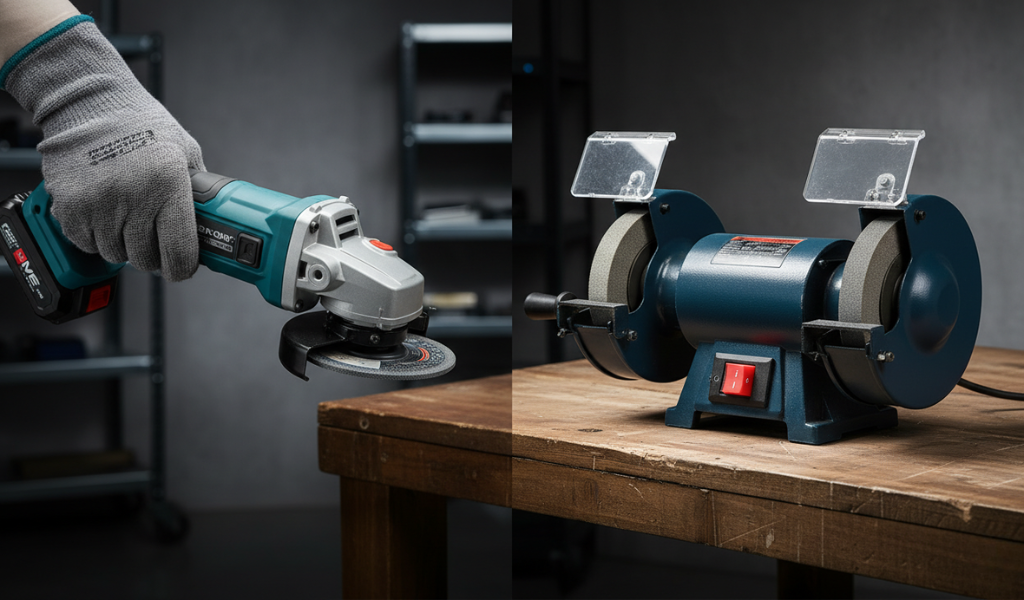
Both tools use circular wheels or discs to grind, polish, or buff. They are both essential in any metalworking or masonry shop, but they occupy different “territories” in the workflow. A bench grinder is usually your starting point for shaping and sharpening, while the angle grinder is your go-to for cutting and finishing on-site.
An angle grinder is the ultimate “versatile” tool. It’s a staple for carpenters, plumbers, and home renovators because it can go anywhere.
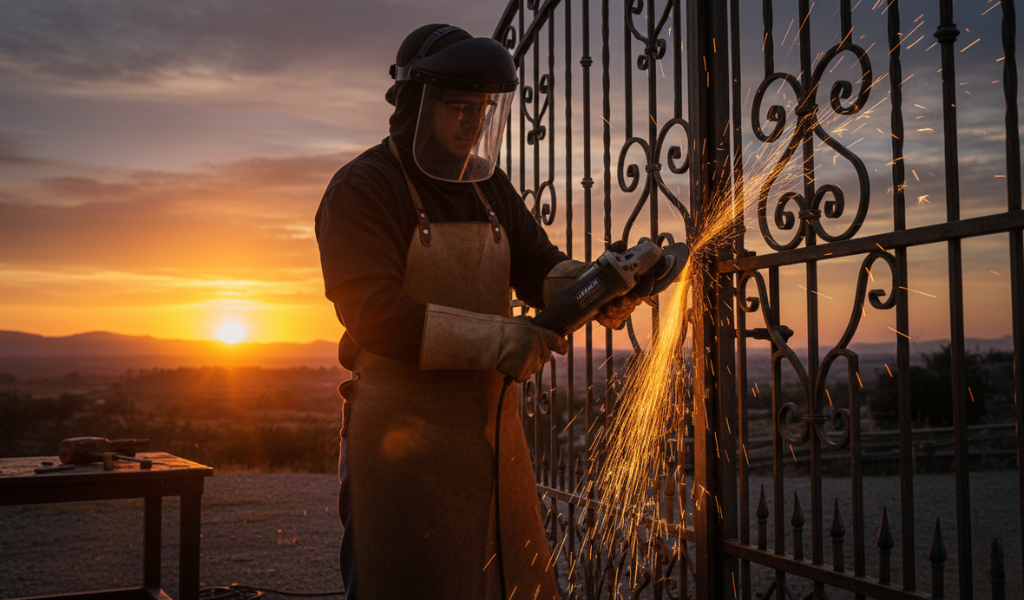 You should reach for this handheld powerhouse in the following scenarios:
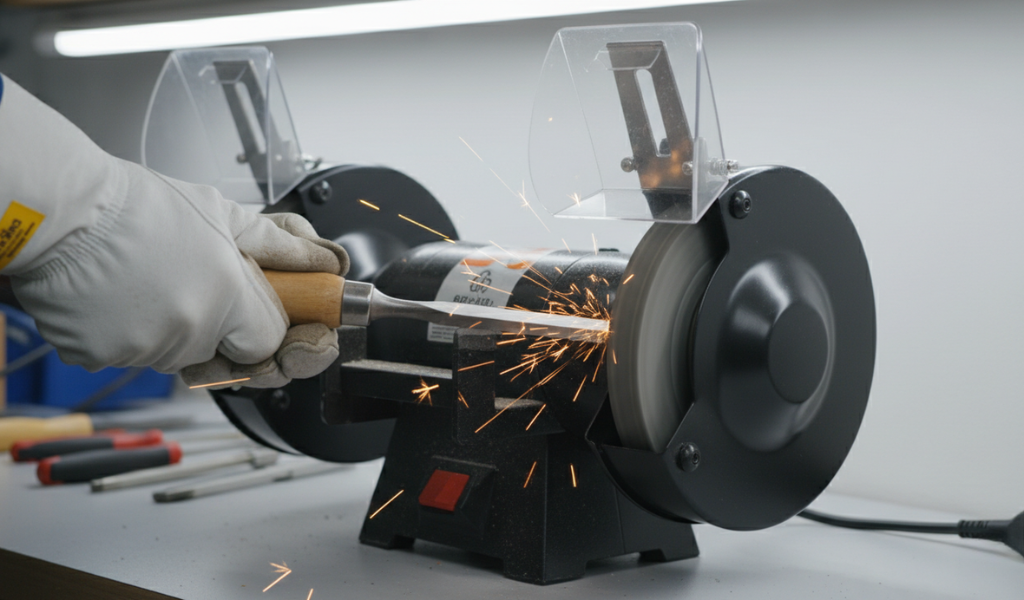
While it lacks portability, the bench grinder makes up for it with incredible “stability”. Because it is bolted to a table, you have both hands free to guide your workpiece.
This tool is the better choice when your job requires a delicate touch or heavy material removal on small items:
When shopping for angle grinders, you’ll notice they are built for “ergonomics” and speed. Most handheld models run between 8,000 and 12,000 RPM.
The tool consists of a motor housed in a slim body with a side handle for a two-handed grip. Modern versions often include “vibration-reduction” tech in the handle to keep your hands from going numb during long concrete-cutting sessions.
This is where the angle grinder shines. You can swap out discs in seconds:
The guard on an angle grinder can be rotated. This allows you to direct the “stream of sparks” away from your face and any flammable materials in your shop.
A bench grinder is a simpler, more “robust” machine. It usually features a motor in the middle with a spindle coming out of each side, allowing you to mount two different wheels at once.
The base is heavy-duty and meant to be bolted down. This weight absorbs vibration, making the tool feel “solid” and safe when you are pressing a piece of steel against it.
Most users put a coarse-grit wheel on one side for fast material removal and a fine-grit wheel on the other for finishing. This saves you from having to stop and change discs constantly.
Bench grinders come with small “shelves” called tool rests. You can rest your workpiece on these to ensure it doesn’t get pulled down by the spinning wheel. They also usually feature clear plastic shields to catch sparks.
Now that we know the features, let’s look at the “Angle grinder and bench grinder” comparison across specific tasks.
For small blades like chisels or kitchen knives, the bench grinder is the clear winner because of its stability. However, if you are sharpening a massive “lawnmower blade” or a heavy axe, the angle grinder is often easier because you can clamp the blade to a table and move the grinder over it.
An angle grinder with a flap disc is great for polishing large surface areas like a metal tabletop. A bench grinder with a cotton buffing wheel is better for small, intricate items like a brass doorknob.
If you are cleaning a rusty shovel, the angle grinder is faster. If you are cleaning a handful of rusty bolts, holding them against a wire wheel on a bench grinder is much safer and more efficient.
The bench grinder cannot be cut. Its wheels are designed for surface contact only. If you need to shorten a metal rod or cut a stone, you must use an angle grinder with a thin cut-off wheel.
Safety First: Essential Safety Gear
Impact-Rated Face Shield: While safety glasses protect your eyes, a full-face shield protects your skin from “shattered disc” fragments. Use both for maximum safety.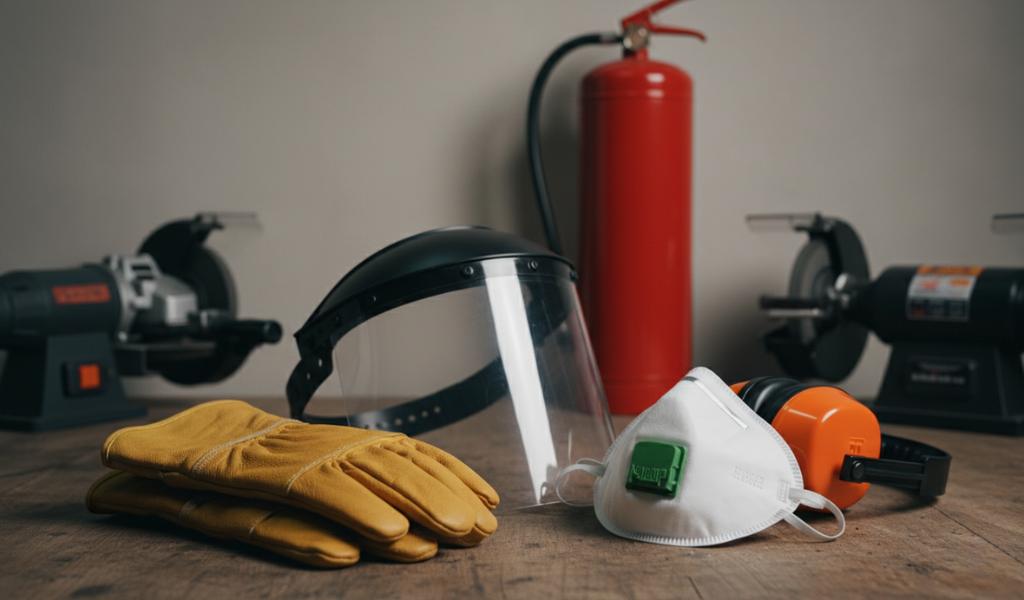
Heavy-Duty Hearing Protection: The combination of a high-RPM motor and the friction of metal creates a deafening “shriek.” High-NRR earplugs or muffs are mandatory to prevent long-term hearing loss.
Respiratory Protection (N95 or P100): If you are working with masonry, concrete, or stone, you are dealing with silica dust. This invisible killer can cause permanent lung damage, so a tight-sealing respirator is vital.
Snug-Fitting Leather Gloves: Choose leather for its heat resistance. Avoid loose, “floppy” gloves or those with hanging threads, as they can be pulled into the spinning spindle.
Natural Fiber Clothing: Only wear 100% cotton, denim, or leather. Synthetic fabrics like polyester or nylon will melt instantly upon contact with a spark, bonding to your skin.
Steel-Toe Work Boots: Heavy off-cuts of steel or concrete slabs tend to drop straight down. Protect your feet from falling debris and accidental slips.
Using grinders improperly is one of the leading causes of shop accidents. Avoid these common errors:
In the debate of angle grinders and bench grinders, there isn’t really a “better” tool—only the “right” tool for the moment. If you are doing demolition, construction, or working on large automotive projects, the angle grinder is your best friend. If you are a woodworker, a tool sharpener, or a hobbyist making small metal crafts, the bench grinder is the heart of your workspace.
Ideally, most well-equipped shops should have both. They complement each other perfectly, allowing you to handle everything from heavy-duty cutting to precision sharpening. Just remember to always wear your “eye protection” and respect the power of the spin!
No. Never attempt this. Bench grinder wheels are often not rated for the extremely high RPMs that angle grinders produce. Using a wheel not designed for the tool can cause it to “shatter” into dangerous fragments.
Generally, the bench grinder is considered slightly safer because it is stationary and harder to drop. However, both tools require a high level of respect and the use of proper PPE (Personal Protective Equipment).
While there are specialized wood-carving discs, it is generally not recommended for beginners. The tool can easily “kick back” if it hits a knot in the wood, which is a major safety risk.
For a bench grinder, variable speed is “phenomenal” for sharpening tools because it prevents the steel from getting too hot. For an angle grinder, variable speed is great for polishing but isn’t strictly necessary for basic cutting.
On a bench grinder, ensure it is bolted tightly to the bench and that the wheels are “balanced”. On an angle grinder, vibration usually means the disc is worn unevenly or isn’t centered correctly on the spindle.
Yes! In fact, many people prefer using an angle grinder with a flap disc for this task. It allows you to follow the curve of the blade more naturally than a flat bench wheel.
The sparks are actually tiny “molten particles” of the metal you are removing. They are extremely hot, which is why you must always wear flame-resistant clothing and keep flammable liquids far away from your work area.