How to Choose the Best Drill for DIY Home

How to Choose the Best Drill for DIY Home Use?A Comprehensive Guide for Beginners (Without the Brand Hype)

Choosing your first power drill is a rite of passage for any homeowner or renter.

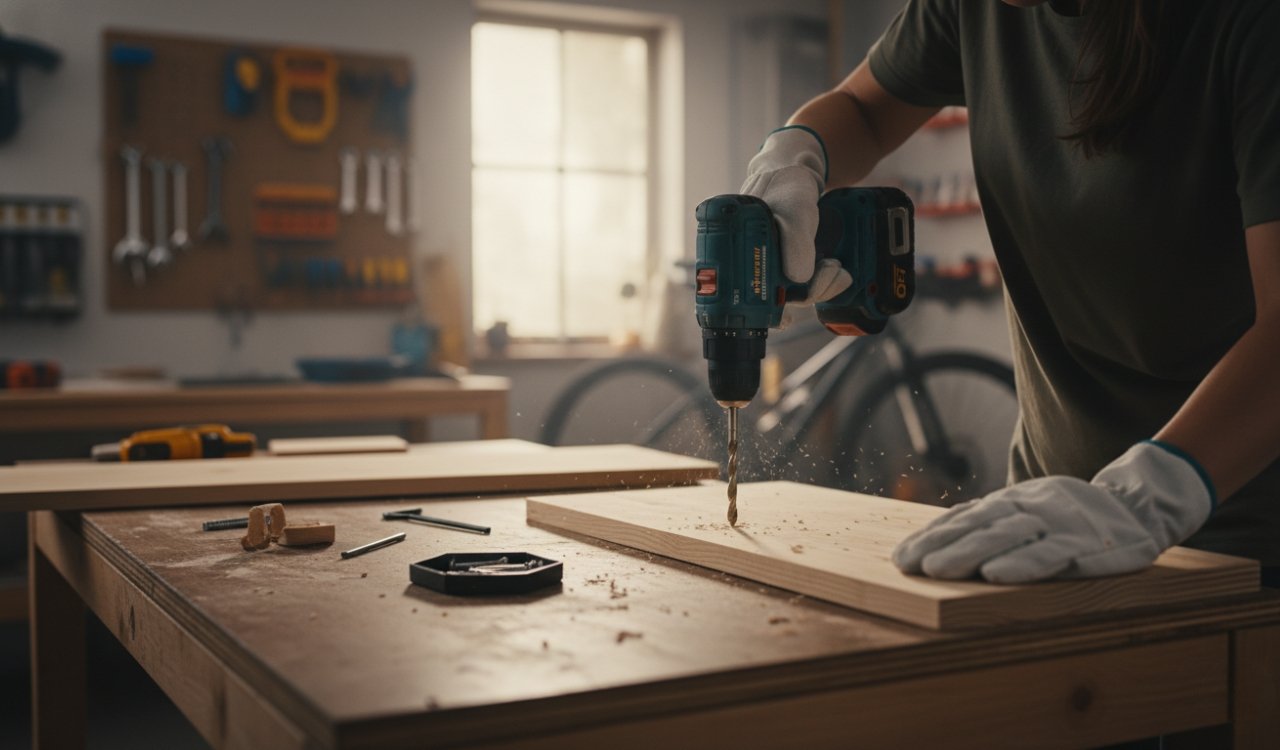
Person using a cordless power drill to drill wood on a workbench at home


However, walking into a hardware store can feel like entering a battlefield of marketing jargon. Between “brush-less motors,” “max torque,” and “lithium-ion technology,” the average person just trying to hang a picture frame can easily feel overwhelmed.

The truth is, choosing the best drill for DIY home use isn’t about buying the most expensive brand or the tool with the highest voltage. It is about understanding which features actually matter for the specific tasks you have in mind. This guide is designed to cut through the noise and help you select a hand tool—and its powered counterparts—that will serve you for years without breaking the bank.

Introduction: Why the Right Drill Matters

A drill is arguably the most essential power tool in any household. Unlike a specialised saw or a sander, a power drill is a multi-tasker. It puts together your flat-pack furniture, creates the holes for your curtain rods, and can even be used to stir paint or sand small surfaces with the right attachments.

When we talk about the best drill for a DIYer, we are looking for a balance of power, weight, and ease of use. If a tool is too heavy, you won’t want to use it. If it’s under-powered, you’ll get frustrated when it stalls against a piece of oak. This guide focuses on practical utility, helping you identify exactly what you need for a standard home environment.


The Great Debate: Cordless vs. Corded Power Drills

Before we look at specific models, we must address the fundamental divide in the world of the power drill: how it gets its juice.
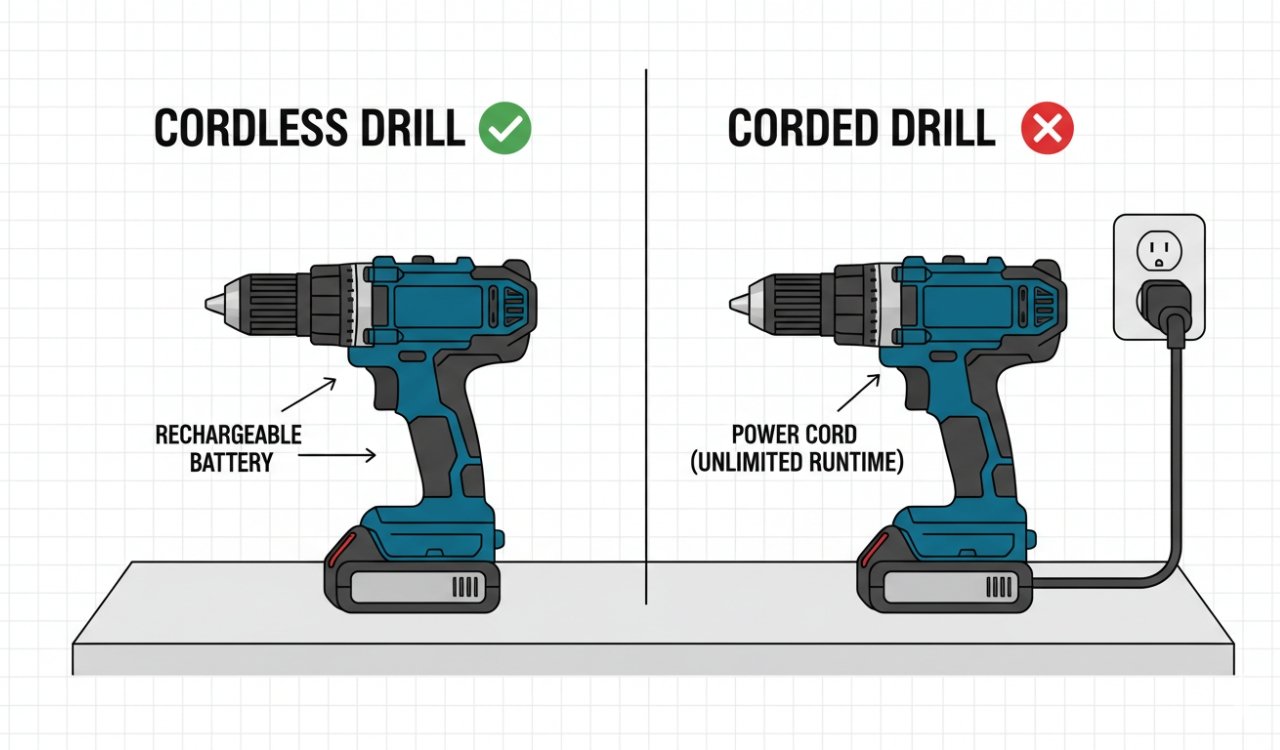
Comparison between cordless drill and corded drill showing rechargeable battery and power cord differences

Cordless Drills: The King of Convenience

For 90% of DIYers, a cordless drill is the superior choice. Modern battery technology has advanced to the point where cordless tools can match the power of their corded ancestors for most tasks.

  • Pros: Total portability, no tripping hazards, and the ability to work in areas without power (like the garden fence).
  • Cons: You are limited by battery life, and batteries eventually need replacing.

Corded Drills: The Reliable Workhorse

While they might seem “old school,” corded drills still have a place as a reliable hand tool alternative for heavy-duty work.

  • Pros: Unlimited runtime, consistent power delivery, and usually a lower price point for the amount of torque you get.
  • Cons: You are literally tethered to a wall. You’ll often need an extension cord, which can be a safety risk in a busy DIY environment.

The Verdict: If you are building a deck or drilling into thick concrete all day, go corded. For everything else, the best drill is a cordless one.


Understanding Drill Types: Drill Drivers, Hammer Drills, and Impact Drivers

Not all tools that spin are created equal.
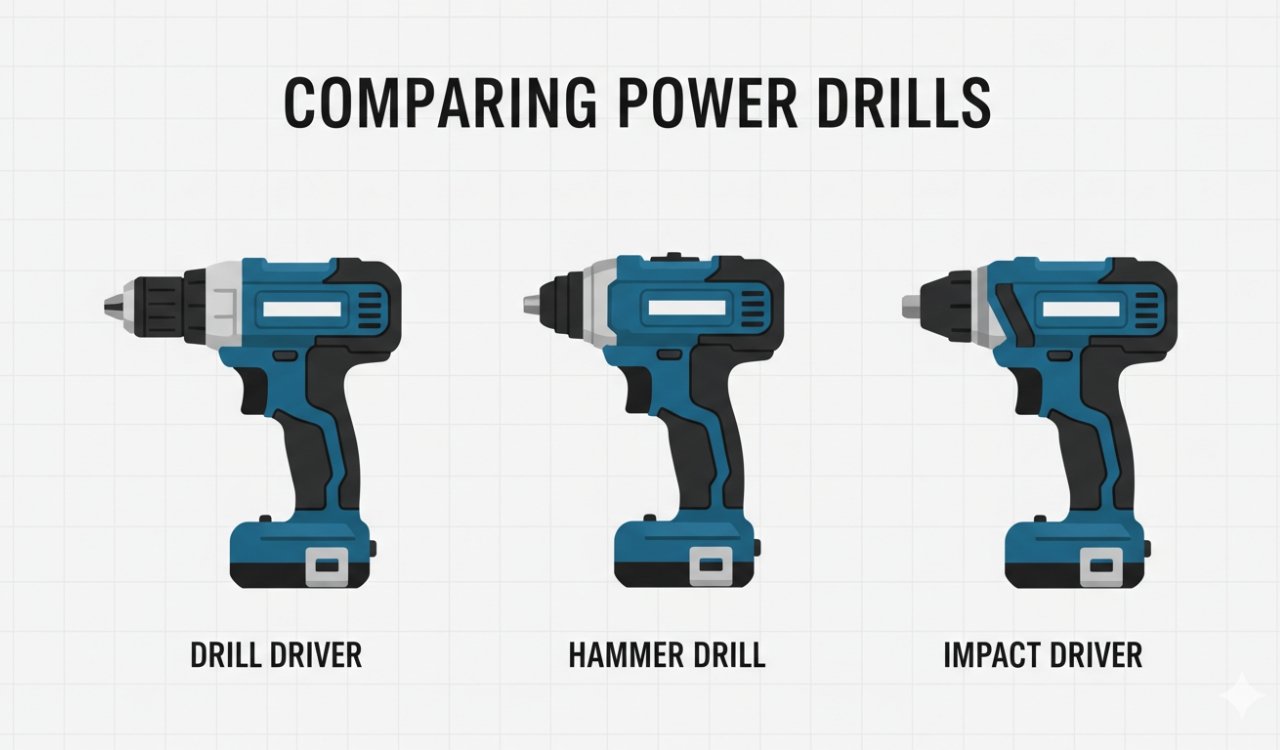
Comparison of drill driver, hammer drill, and impact driver showing different types of power drills for DIY use


To find the
best drill, you need to know which category fits your workload.

1. The Drill Driver

This is the standard power drill most people picture. It features a “chuck” (the part that holds the bit) that can take both round and hexagonal bits. It is perfect for drilling holes and driving screws into wood and metal.

2. The Hammer Drill

A hammer drill functions like a standard drill but adds a “hammering” action. As the bit rotates, it also pulses forward and backward rapidly. This “chipping” action is essential if you live in a home with brick, stone, or concrete walls. Without a hammer setting, drilling into masonry is nearly impossible and will burn out your bits.

3. The Impact Driver

While it looks like a drill, an impact driver is a different beast. It is designed specifically for driving long screws and bolts. It uses a different internal mechanism that applies “concussive” force. It’s a great secondary power tool but usually isn’t the best choice if you can only own one tool, as it isn’t designed for precision hole-drilling.


Key Features to Look for in a DIY Drill

When comparing models, ignore the flashy colors and focus on these technical specifications.

Voltage (The Power Source)

  • 12V: These are compact and lightweight. They are the best drill choice for people who mainly do light assembly, like IKEA furniture or hanging light pictures.
  • 18V (or 20V Max): This is the industry standard. An 18V power drill has the “grunt” to handle almost anything a house can throw at it.

Chuck Size

The chuck is the “jaw” of the drill.

  • 10mm (3/8″): Common on 12V drills; fine for most home use.
  • 13mm (1/2″): Found on 18V drills. This allows you to use larger drill bits for heavy-duty projects.

Brushless vs. Brushed Motors

You will see “Brushless” advertised everywhere. A brushless motor is more efficient, stays cooler, and lasts longer. However, it is also more expensive. For occasional DIY use, a “brushed” motor is perfectly fine and much more budget-friendly.

Speed and Torque Settings

Look for a drill with at least two physical gears:

  1. Gear 1 (Low Speed/High Torque): For driving screws without stripping them.
  2. Gear 2 (High Speed/Low Torque): For drilling clean holes through wood or metal.
FeatureImportance for DIYWhy?
Variable Speed TriggerHighAllows you to start holes slowly so the bit doesn’t slip.
LED Work LightMediumInvaluable when working inside dark cabinets or closets.
Keyless ChuckHighAllows you to change bits by hand without a specialized key.
Clutch SettingsHighPrevents you from driving a screw too deep into the wood.


Matching Your Drill to Specific Home Projects

To truly find the best drill, think about your “To-Do” list.

Task: Furniture Assembly

If your primary goal is putting together flat-pack furniture, a massive hammer drill is overkill. A lightweight 12V power drill is your best friend here. It won’t tire out your wrist, and the lower torque settings ensure you don’t crack the delicate particle board often used in modern furniture.

Task: Hanging Shelves and Curtains

This usually requires drilling into wall studs (wood) or masonry (brick). An 18V drill driver with a hammer mode is the gold standard here. You’ll need the power to get through the substrate and the control to ensure the shelf is level.

Task: Building a Garden Deck

Building a deck involves driving hundreds of long, weather-resistant screws into pressure-treated timber. This is where a standard drill might struggle. In this scenario, an impact driver (often sold in a “combo kit” with a drill) is the best drill for the job because it won’t “kick back” and strain your wrist.


The Importance of Ergonomics and Weight

A power tool is an extension of your hand. If it feels awkward, your work will suffer.

  • Balance: Pick up the drill. Does it tilt forward heavily? A well-balanced drill should feel centred in your palm when the battery is attached.
  • Grip: Look for “overmolding”—this is the rubbery texture on the handle. It absorbs vibration and prevents the tool from slipping if your hands get sweaty.
  • Weight: If you are frequently working overhead (like installing ceiling fans), every ounce matters. Consider a 12V model to save your shoulders from fatigue.

Safety First: Operating Your Power Tool Correctly

Even a DIY-friendly drill can be dangerous if misused.

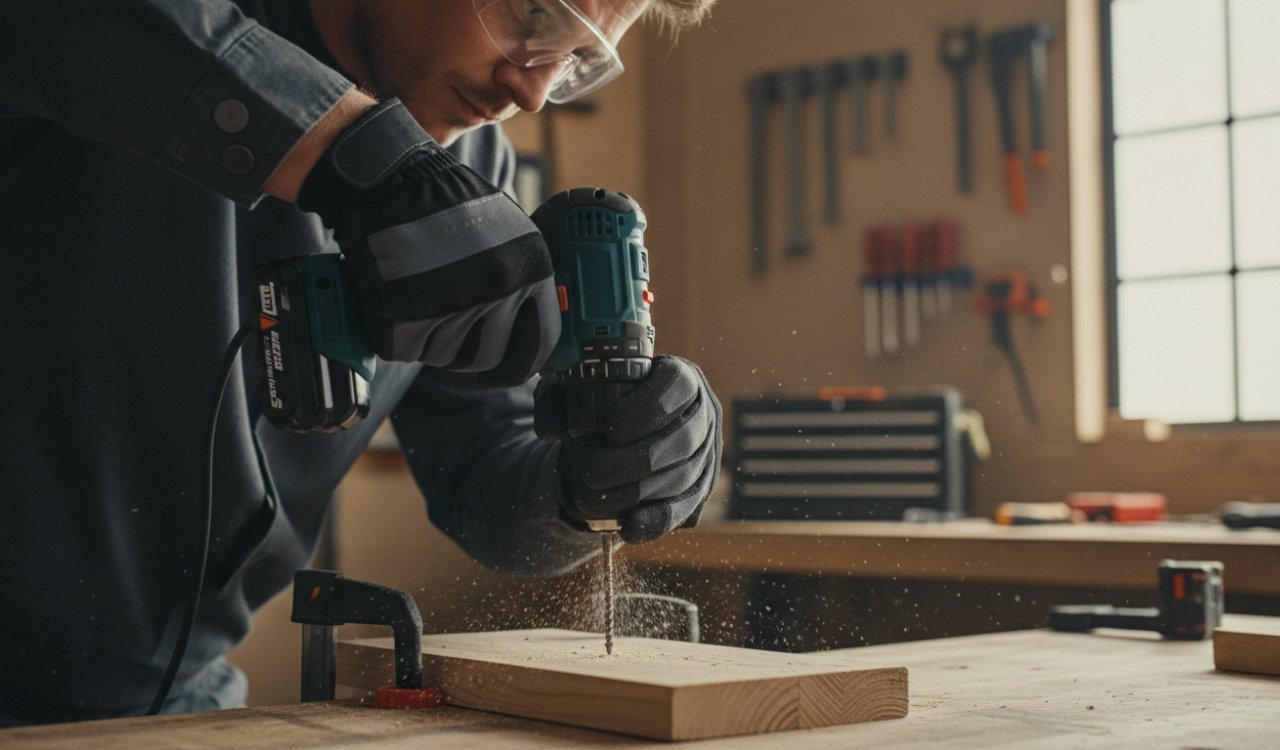
Person wearing safety glasses and gloves while using a cordless drill on a wooden board


  1. Protect Your Eyes: Small shards of wood or metal can fly out of a hole at high speeds. Always wear safety glasses.
  2. Check for Wires: Before drilling into a wall, use a stud finder with a “live wire” detector. Hitting an electrical cable is a mistake you only want to make once.
  3. Secure Your Work-piece: Never hold a small piece of wood in one hand while drilling with the other. Use a clamp or a vise.
  4. The “Kickback” Phenomenon: If a drill bit gets stuck while you are drilling, the body of the drill will try to spin in your hand. Hold the tool firmly with a locked wrist to avoid injury.


Maintenance Tips for Longevity

A high-quality power drill should last a decade or more if treated well.

  • Battery Care: Don’t leave your lithium-ion batteries in a freezing garage or a boiling hot shed. Extreme temperatures kill battery life.
  • Keep it Clean: Use a can of compressed air to blow dust out of the motor vents after a messy project.
  • Bit Maintenance: A dull drill bit makes the motor work twice as hard. If you see smoke or the bit isn’t “biting” into the wood, it’s time to replace it.
  • Storage: Store your tools in a dry place to prevent the metal chuck from rusting.


Conclusion: Making Your Final Choice

So, what is the best drill for you?

For the vast majority of homeowners, the winner is a cordless 18V Drill Driver with Hammer Action. This single tool is versatile enough to handle furniture, masonry, and general repairs. While the “brand hype” might tempt you toward professional-grade tools, remember that for DIY use, reliability and ergonomics matter far more than having the highest specs on the shelf.

Invest in a quality set of bits, keep your batteries charged, and don’t be afraid to start small. Your home isn’t going to fix itself, but with the right power tool in hand, you’ll be surprised at how much you can accomplish.


Frequently Asked Questions (FAQs)

  1. Is an 18V drill too powerful for a beginner? Not at all. While an 18V power drill has more potential power, the variable speed trigger and clutch settings allow you to use it very gently. It is better to have power you don’t need than to need power you don’t have.
  2. Can I use a drill as a screwdriver? Yes! Most drill drivers are designed specifically for this. Just make sure to adjust the torque clutch (the numbered ring near the chuck) to a lower setting so you don’t strip the screw head or sink it too deep.
  3. Why do some drills have two batteries in the box? This is for efficiency. You can use one battery while the other is on the charger. For large projects like building a fence, having a spare is essential to avoid downtime.
  4. What is the difference between a drill bit and a driver bit? A drill bit is designed to create a hole (it looks like a spiral). A driver bit is designed to turn a screw (it looks like a screwdriver tip). You will need a variety of both for most DIY projects.
  5. Do I need to buy the most expensive brand? Rarely. For DIY home use, “mid-range” brands offer incredible value. The best drill is the one that fits your budget while offering the core features like a key-less chuck, variable speed, and a lithium-ion battery.


Share your love!
Tools Tale

Tools Tale

Disclaimer: This site is owned and operated by Tools Tale. toolstale.com is a participant in the Amazon Services LLC Associates Program, an affiliate advertising program designed to provide a means for sites to earn advertising fees by advertising and linking to Amazon.com. This site also participates in other affiliate programs and is compensated for referring traffic and business to these companies.

Articles: 183

Leave a Reply

Your email address will not be published. Required fields are marked *