Physical Address
304 North Cardinal St.
Dorchester Center, MA 02124
Physical Address
304 North Cardinal St.
Dorchester Center, MA 02124
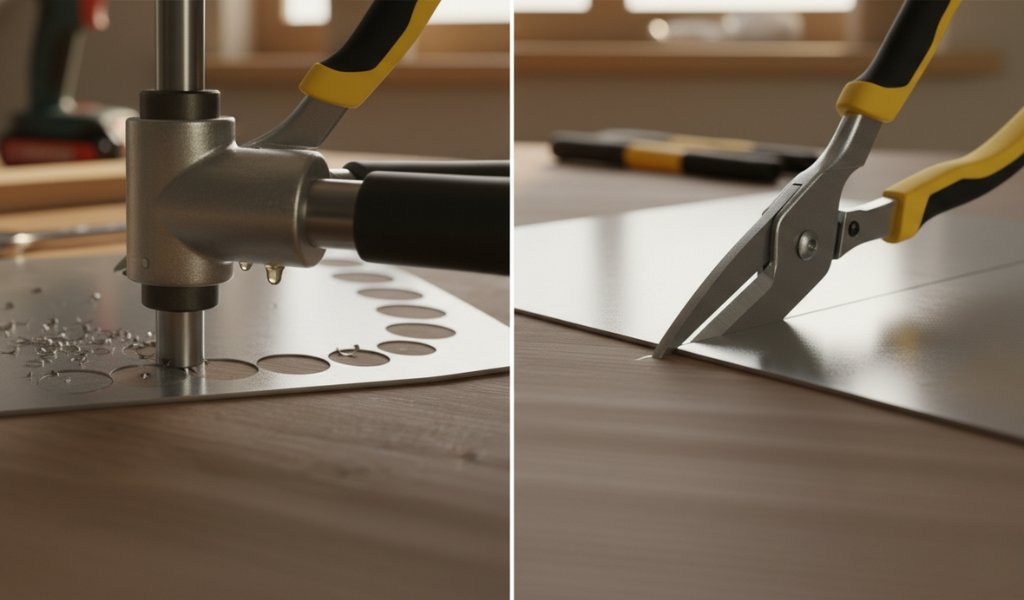
When it comes to metal fabrication, the question isn’t just about whether you can cut the material, but how cleanly, quickly, and accurately you can do it. For many DIYers and professionals alike, the debate of nibbler vs shears is a constant one. Both are essential metalworking tools, but they operate on entirely different mechanical principles and excel in very different scenarios. Many users compare nibblers vs shears to find the best metal cutting tool for their specific needs and projects.
Whether you are a metal roofer dealing with corrugated panels or an automotive enthusiast restoring a classic body frame, choosing between a nibbler and metal shears will determine the quality of your finished product. In this comprehensive guide, we will dive deep into the mechanics, pros, cons, and specific applications of these two powerhouses.
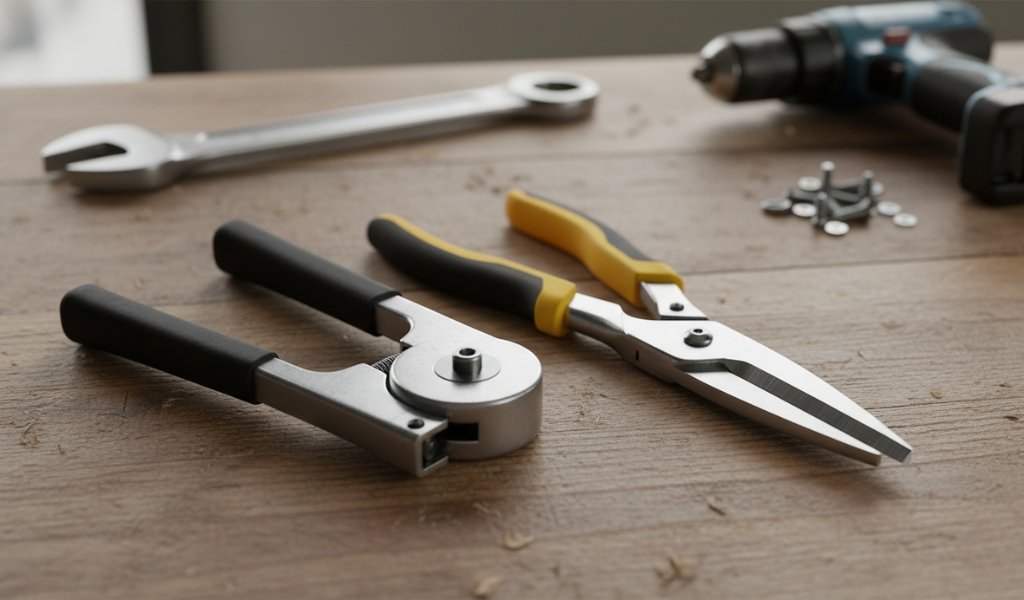
A nibbler is best for cutting curves, intricate shapes, and corrugated metal, while metal shears are ideal for fast, straight cuts on flat sheets. The right choice depends on your project type, material thickness, and precision needs.
Choosing between a nibbler vs shears can be downright confusing. Many experts agree that the confusion comes from the fact that both tools cut metal, but the way they cut makes all the difference. To provide a detailed explanation, we must look at the physics of the cut: one tool removes material to create a path, while the other displaces it.
When working with metal sheets, you will encounter various requirements: straight cuts, tight curves, intricate internal shapes, pierces, notches, or simple trims. A tool that excels at a 4-foot straight rip might be completely useless when you need to cut a 3-inch diameter circle out of the centre of a panel. Unless you have experience with both, you might find yourself struggling with the wrong tool for the job.
Before we look at the differences, it is important to note their similarities. Both nibblers and metal shears are designed to replace manual tin snips, providing more power and less physical fatigue. A detailed explanation of their shared traits shows they are both built for longevity and heavy use.
A metal nibbler is often described as the “beaver” of the metalworking world. If you look closely at its action, it literally “nibbles” away small semicircular bits of metal to create a path. To explain in more detail, the nibbler is unique because it doesn’t rely on leverage against the edge of the metal to work.
The tool utilizes a punch-and-die mechanism. A single blade (the punch) moves rapidly up and down inside a fixed die. As you push the tool forward, it punches out tiny “chips” or “slugs” of metal.
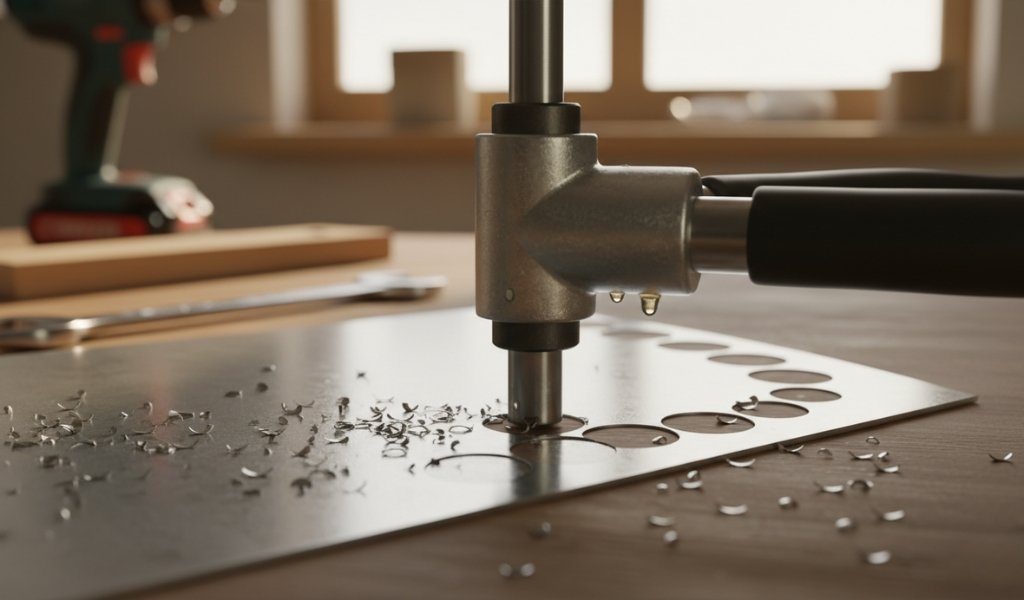
Because the punch is usually cylindrical and the head can often be rotated, the tool can rotate 360 degrees within the cut. This detailed mechanical advantage makes it the king of maneuverability.
Cons:
Think of metal shears as heavy-duty, motorized scissors. They are the workhorses of the industry for rapid, clean, linear cutting. To explain further, shears work by localized shearing stress, which is much more energy-efficient for long runs than punching individual holes.
Shears use two blades that pass each other—a stationary bottom blade and a moving top blade. This “clasping” action slices through the metal.
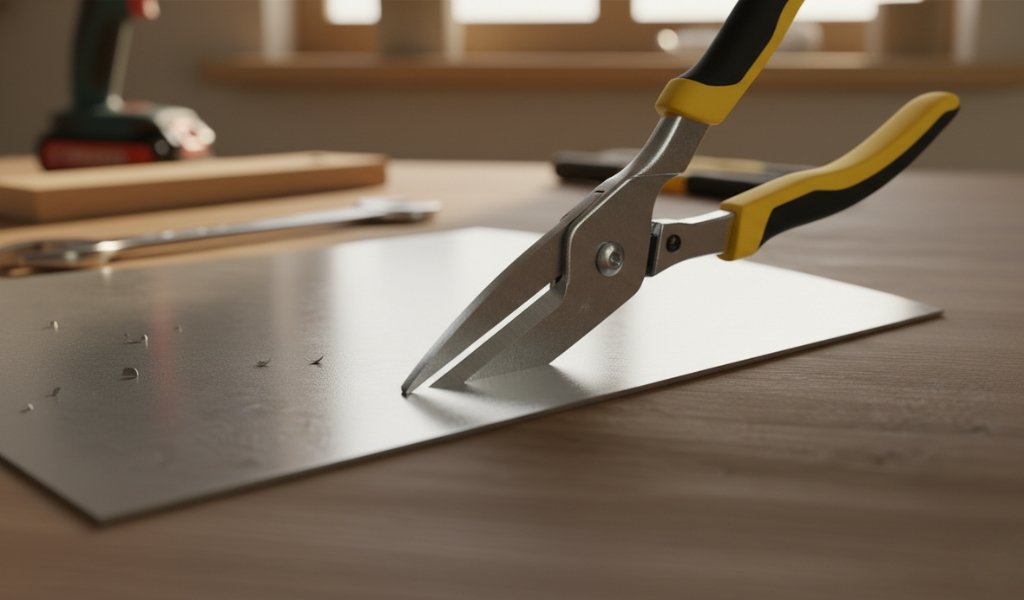
Because there is no material “removed” in single-cut versions, there is no waste, but the pressure can cause the metal to curl. A detailed explanation of double-cut shears reveals that they add a second stationary blade to create a “waste strip,” which keeps the main work-piece flat.
Cons:
This comparison helps you decide between a nibbler vs shears based on real-world applications, performance, cutting efficiency, and overall usability.
Electrical metal shears are generally built for heavier-duty jobs. A detailed comparison shows standard shears handle 16 to 20 GA, while high-end models can tackle 14 GA. Nibblers are better for thinner gauges, typically 10 GA to 18 GA. To explain: the thicker the metal, the more force the nibbler’s punch must exert, which can lead to faster tool wear compared to the rolling or slicing action of shears.
If you are racing across a 10-foot flat sheet, the shears win. However, if the path is winding or requires “notching,” the nibbler is faster because you don’t have to stop. A detailed explanation of precision shows that while shears are “straight-line accurate,” nibblers are “shape accurate.”
To give a detailed explanation of where these tools live, we’ve categorised them by common industry tasks.
| Use Case | Recommended Tool | Reasoning |
| Corrugated Roofing | Nibbler | The head fits into the valleys and over the peaks of the metal profile without crushing it. |
| Duct-work (Straight) | Shears | HVAC technicians need speed for long rectangular ducts; shears provide the fastest linear output. |
| Automotive Bodywork | Nibbler | Repairing wheel wells or rusted floor pans requires complex curves that only a nibbler can navigate. |
| Large Flat Sheets | Shears | Ideal for breaking down 4×8 sheets into smaller panels quickly and with minimal cleanup. |
| Internal Cutouts | Nibbler | Since you can start from a pilot hole, it’s the only way to cut a hole in the middle of a panel. |
Choosing between a nibbler vs shears depends on your cutting style, material type, project complexity, and the level of precision you need.
There is no “perfect” tool—only the right tool for the job. To explain in a detailed way:
In the world of metalworking tools, both the nibbler and metal shears deserve a spot in the workshop. The nibbler offers the surgical precision needed for shapes and corrugated materials, while shears offer the raw speed and cleanliness required for industrial-scale flat-work.
Before you buy, consider the gauge of metal you work with most often and whether your cuts are mostly straight or mostly curved.
Q: Do nibblers damage the paint on pre-painted metal sheets?
A: Generally, no. Because the nibbler doesn’t “drag” a large blade across the surface and doesn’t bend the metal, the paint/coating usually remains intact right up to the edge of the cut.
Q: Can I use a nibbler on stainless steel?
A: Yes, but ensure your tool is rated for it. Stainless steel is much harder than mild steel or aluminium, so you will need a punch and die specifically designed for harder alloys.
Q: Why are my metal shears leaving a ragged edge?
A: This is usually due to the “blade gap” being set incorrectly or the blades becoming dull. If the gap is too wide, the metal will “fold” rather than cut.
Q: Are the chips from a nibbler dangerous?
A: Extremely. They are small, razor-sharp, and tend to stick to the soles of shoes. Always wear eye protection and use a magnet or a vacuum to clean up immediately.