Physical Address
304 North Cardinal St.
Dorchester Center, MA 02124
Physical Address
304 North Cardinal St.
Dorchester Center, MA 02124


In the world of modern woodworking, efficiency and precision are the twin pillars of a successful project. Whether you are a seasoned professional artisan or a weekend DIY enthusiast operating out of a home garage, the quest for the perfect, gap-free joint is eternal. Enter the biscuit joiner. Often debated by traditionalists but undeniably indispensable in a high-production environment, this woodworking tool—sometimes referred to as a plate joiner—has revolutionized the way we approach material alignment and joinery.
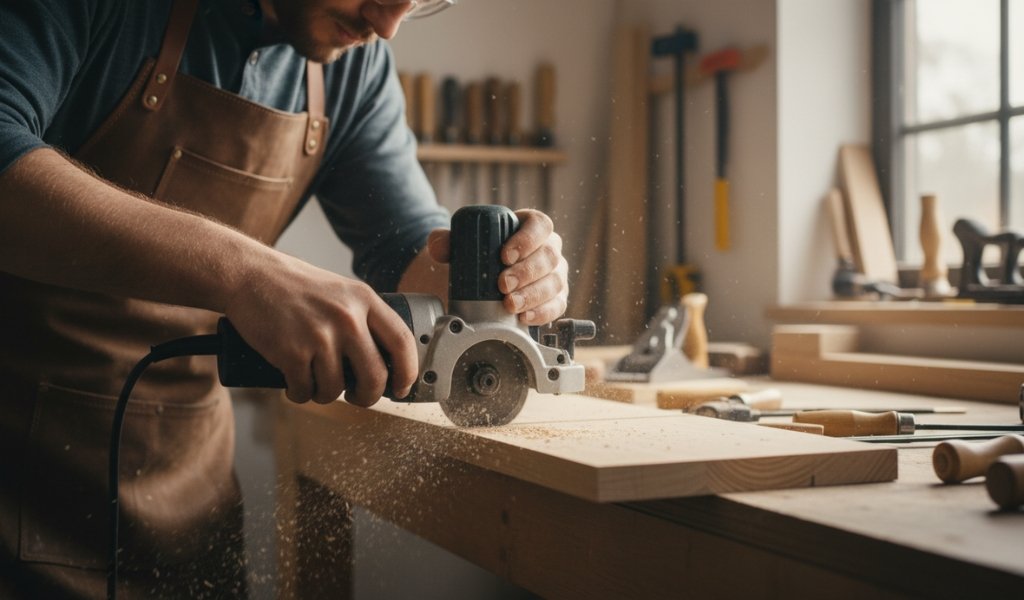
This comprehensive guide will dive deep into every nuance of the biscuit joiner, exploring its mechanical anatomy, the chemical science of its bond, and its diverse applications in high-end cabinetry and furniture making.
A biscuit joiner is a specialized, handheld power tool designed specifically to facilitate the joining of two pieces of wood. At its core, the tool is a plunge-cutting circular saw housed in a highly adjustable carriage. It is engineered to cut a precise, crescent-shaped slot into the mating edges or faces of wooden work-pieces.
The name “biscuit” comes from the small, oval-shaped, compressed wood wafers—typically made of dried and compressed beechwood—that are inserted into these slots. When these wafers are coated in a water-based glue and inserted into the slots, they provide a mechanical “key” that bridges the two pieces of wood. This woodworking tool is widely used by professionals to create fast and precise wood joints. It provides an efficient way to connect different carpentry elements and achieve perfectly aligned joints in woodworking projects, creating a perfect seamless joint for your woodworking projects in the nick of time.
How Does a Biscuit Joiner Work?
The magic of the biscuit joiner lies in the marriage of mechanical precision and the biological properties of wood expansion. Understanding this process is key to achieving professional-grade results.
The user marks a reference line across the two boards to be joined. The joiner’s base or fence is then aligned with this mark. When the motor is engaged and the tool is pushed forward, a small, 4-inch (100mm) blade plunges into the wood to a pre-set depth, carving out a semi-elliptical cavity.
The slots are then prepared with wood glue. It is vital to use a water-based adhesive (like PVA glue). When the compressed beech-wood biscuit is inserted into the slot, it initially fits with a small amount of “play.” This lateral wiggle room is actually a feature, not a bug; it allows the woodworker to nudge the boards into perfect longitudinal alignment before the glue sets.
Once the biscuit is seated and the boards are clamped, the moisture from the glue is absorbed by the compressed fibers of the beech-wood. In a process known as hygroscopic expansion, the biscuit swells significantly within the slot. This expansion creates a tight, high-friction “lock” that exerts internal pressure against the walls of the slot.
As the glue dries, the biscuit becomes a permanent internal bridge. This not only increases the glue-surface area but also ensures the two pieces of wood cannot move or shift relative to each other, even under seasonal wood movement.
To master the joiner, one must understand the ergonomics and mechanical components that allow for such high levels of accuracy.
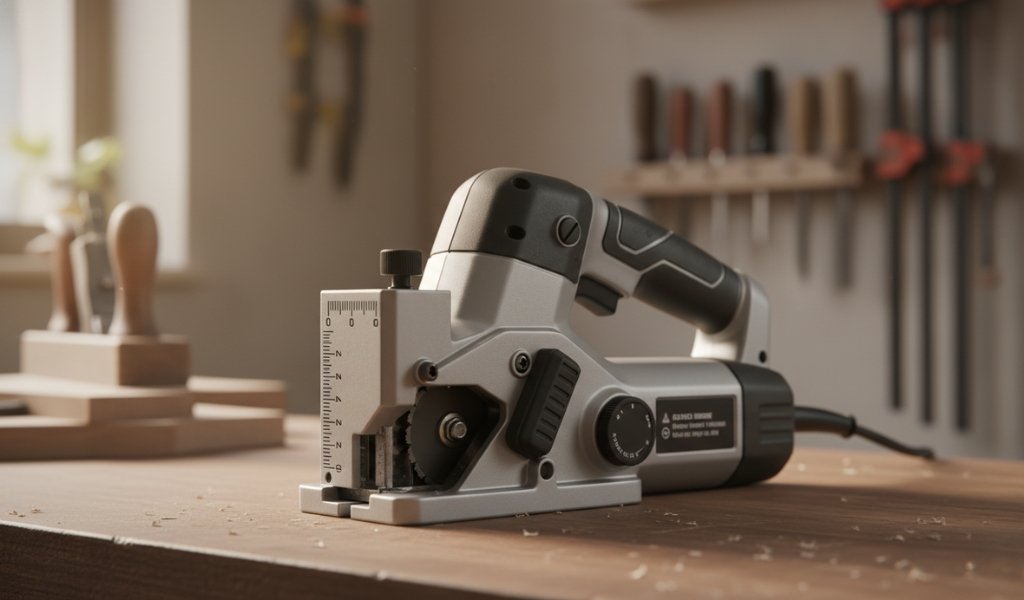
The biscuit joiner is far more than a one-trick pony. Its versatility allows it to solve numerous joinery challenges in the workshop.

This is the primary application for creating wide panels from narrow boards, such as for tabletops or cabinet gables. While glue alone is often strong enough for a long-grain-to-long-grain bond, the biscuits serve as “alignment specialists.” They ensure that the faces of the boards stay flush during clamping, which minimizes the need for heavy planing or sanding after the glue has cured.
Miter joints (typically 45-degree angles) are notoriously difficult to clamp because the lubricated glue surfaces want to slide past each other. By placing a biscuit in the center of the miter, you create a mechanical stop that keeps the corner perfectly square and aligned. It also reinforces the joint, which otherwise would rely on end-grain gluing—a notoriously weak connection.
In carcass construction, such as building bookshelves or basic cabinets, the biscuit joiner allows for quick, hidden fastening of “L” joints. By plunging into the end-grain of one board and the face-grain of another, the biscuit creates a strong, hidden connection that is far more aesthetic than using screws or nails.
When a middle shelf needs to be attached to a cabinet side, the biscuit joiner can be used to “blind” join the two. By using the tool’s base as a reference against a clamped straightedge, you can cut slots in the middle of a large panel with extreme accuracy.
For those new to the craft, the terminology can be a major stumbling block. While they sound nearly identical, these are two completely different machines with separate roles in the “milling-to-assembly” pipeline.
In short: Use the jointer to make the wood straight; use the biscuit joiner to stick it together.
What is a Biscuit Joiner Used For? Common Projects
Understanding the “why” and “where” helps justify adding this tool to your arsenal.
When building a dining table, you are often gluing up six or seven individual boards.
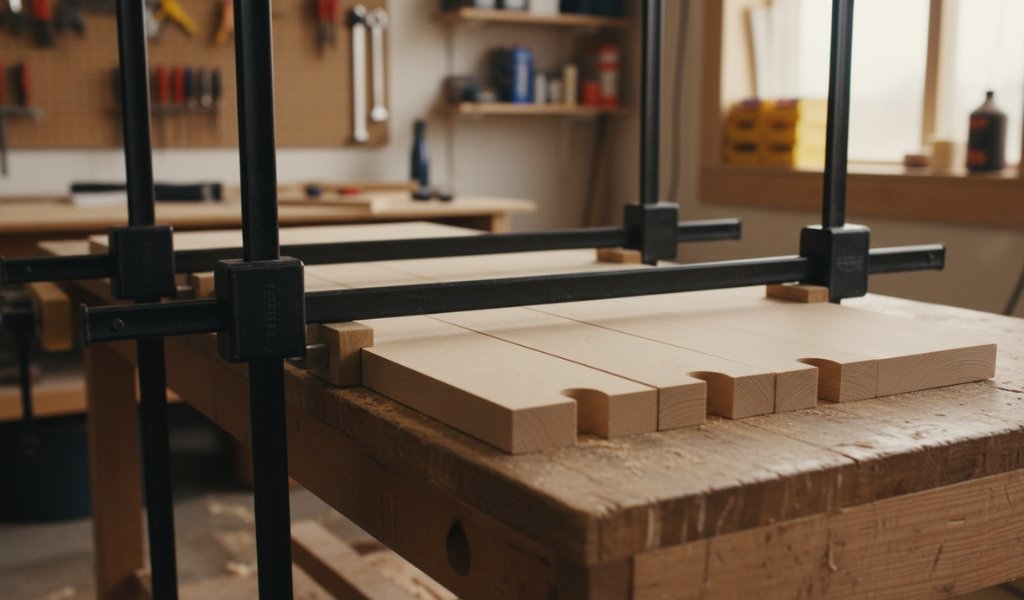
Without biscuits, it is nearly impossible to keep those boards perfectly flat across a 40-inch span. The biscuits act as internal stabilizers, ensuring the surface remains as flat as possible, saving hours of labor with a belt sander.
Professional cabinet makers use biscuits to attach face frames to cabinet boxes. This allows for a “fast and efficiently” built cabinet that has no visible nail holes on the front, providing that “perfect seamless joint” look.
For small boxes where a dovetail might be overkill or too time-consuming, the biscuit joiner provides a rapid alternative. Using small #0 biscuits, you can create sturdy, clean-looking drawers for shop furniture or pantry storage.
When using plywood for shelving, the “layers” of the plywood edge are unattractive. Woodworkers often glue a thin strip of solid hardwood to the front. Using a biscuit joiner here ensures the thin strip stays perfectly centered on the plywood edge during the gluing process.
When to Use (and Not Use) a Biscuit Joiner
As versatile as the tool is, it is not a universal solution. Discerning woodworkers know when to reach for the biscuit joiner and when to put it back on the shelf.
To move from “functional” joints to “seamless” artistry, follow these professional tips:
The woodworking world is full of “camps,” and some prefer different methods for the same tasks.
In conclusion, the biscuit joiner is an essential woodworking tool for any shop aiming for professional-grade results with modern efficiency. It strikes a perfect balance between the raw speed of mechanical fasteners and the hidden beauty of traditional joinery. Whether you are crafting “innovative woodcraft projects for your shop” or doing “garage woodcraft with the kids,” the ability to create seamless, perfectly aligned connections is a game-changer.
Now that you understand the mechanics, the chemistry, and the applications of the biscuit joiner, you are ready to tackle everything from simple boxes to heirloom-quality dining tables.
Yes! Biscuit joiners work excellently on plywood and are frequently used to attach solid wood edge-banding to plywood shelves.
Absolutely. Since MDF doesn’t have a grain structure, biscuits are a great way to add mechanical strength to glue joints in MDF cabinetry.
The most common alternatives are dowels, pocket screws, or traditional mortise and tenon joints. For simple alignment, some woodworkers also use “splines.”
Generally, no. Chairs undergo a lot of “racking” force (side-to-side stress). A biscuit joint is primarily for alignment and light reinforcement. For chairs, a mortise and tenon or heavy-duty dowels are preferred.