Physical Address
304 North Cardinal St.
Dorchester Center, MA 02124
Physical Address
304 North Cardinal St.
Dorchester Center, MA 02124


Woodworking is one of the most rewarding DIY skills you can master, but the secret to a professional-looking project isn’t just in the assembly—it’s in the finish. Whether you are restoring a vintage table or prepping wood flooring, knowing how to sand wood with an electric sander correctly is the difference between a masterpiece and a DIY disaster.

While hand sanding has its place, using an electric sander or a dedicated electric sanding machine saves hours of labor and provides a level of consistency that’s nearly impossible to achieve manually. In this comprehensive guide, we will dive deep into the world of sanding machines for wood, exploring techniques, safety, and the “grit” of the matter.
If you’ve ever tried to sand wood by hand on a large surface, you know how quickly fatigue sets in. An electric sander uses a high-speed motor to vibrate or rotate a sanding pad, doing the “muscle work” for you.
Before you start, you must choose the right tool.

Using a heavy-duty belt sander on a delicate veneer is a recipe for heartbreak.
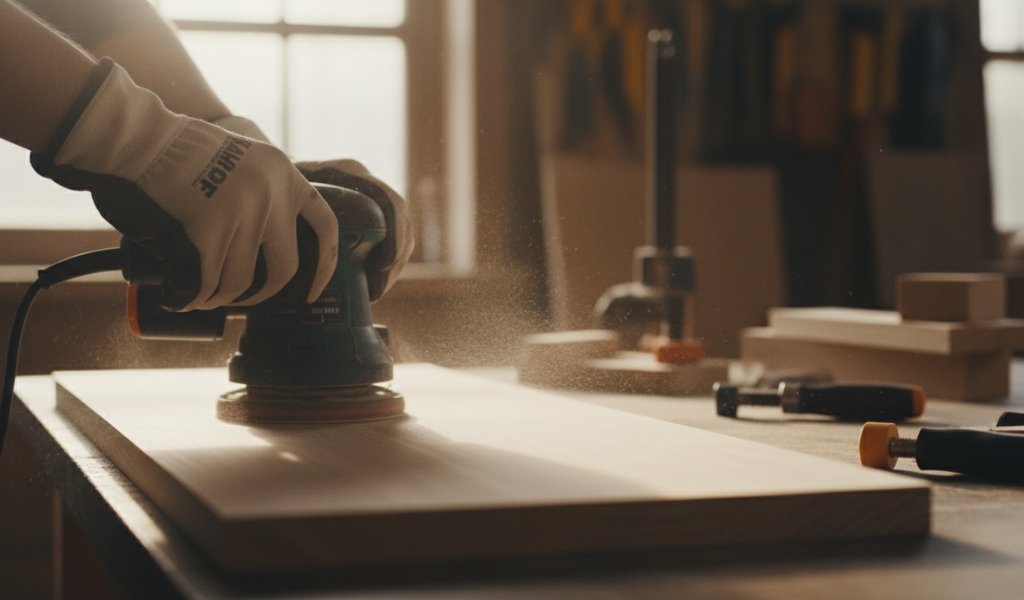
The “Swiss Army Knife” of Sanders. It moves in a circular motion while simultaneously oscillating in an ellipse. This ensures that no single part of the abrasive material travels the same path twice, virtually eliminating swirl marks. It is the best electric sanding machine for general furniture prep. Most use hook-and-loop (Velcro) discs for quick changes.
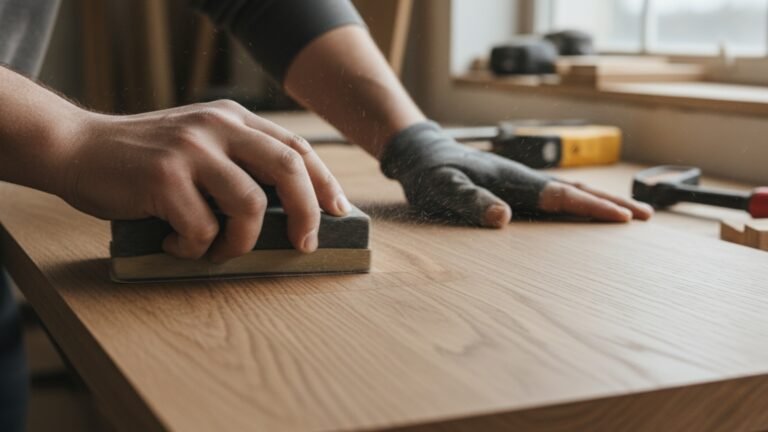
These are smaller, square-shaped tools. They are perfect for getting into corners where a round orbital sander cannot reach. They are often referred to as an electric hand sander because they fit comfortably in one hand and are easy to control for light-duty tasks. They typically use standard sandpaper sheets cut into halves or quarters, making them very economical.
The “beast” of the workshop. A belt sander uses a continuous loop of sandpaper. It is designed for rapid material removal. If you are dealing with incredibly rough reclaimed timber or need to level a flat surface quickly, this is your tool. However, be careful—it can gouge wood in seconds if left stationary. They are directional tools; you must always keep them moving.
Featuring a teardrop-shaped base, these are designed for intricate work, such as spindles on a chair or the corners of a window frame. The pointed “nose” allows you to reach into tight 90-degree angles that larger machines simply cannot access.
Sanding produces “fine dust,” which is more than just a nuisance—it’s a respiratory hazard. Certain woods, like cedar or walnut, contain natural oils that can be toxic when inhaled. To sand wood safely, you need:
| Item | Purpose |
| Electric Sander | Your primary tool for material removal. |
| P2 or P3 Respirator | To prevent inhaling fine wood dust. A standard surgical mask is insufficient for fine particles. |
| Safety Glasses | To protect against flying debris and grit that can spin off the pad. |
| Dust Extractor | A vacuum attached to your sander to catch dust at the source. This also keeps the sandpaper “cool.” |
| Tack Cloth | A sticky cloth used to remove every last speck of dust before staining. |
| Work Clamps | Vital for keeping the workpiece stationary so you can use both hands on the tool. |
Before touching the electric sanding machine to the wood, check for protruding nails, staples, or screws.
These will tear your sandpaper instantly and can damage the sanding pad. If you are working with reclaimed wood, use a metal detector to find hidden fasteners.
Don’t start with the finest paper. If the wood is rough or has an old finish, start with 80-grit. If it’s already relatively smooth, 120-grit is a safe starting point. Starting too fine will simply “polish” the dirt and old finish rather than removing it.
Never sand a piece of wood that isn’t clamped down. The torque of an electric sander can send a light piece of wood flying across the room. Use “non-slip” bench cookies or traditional clamps with wood scraps to protect the surface from clamp marks.
This is a professional secret. Between switching from 80-grit to 120-grit, vacuum the wood thoroughly. If a single grain of 80-grit sand stays on the board, it will get trapped under your 120-grit pad and act like a rock, leaving deep scratches.
Sandpaper is categorized by “grit” numbers, which represent the number of abrasive particles per square inch.

The Golden Rule: Never skip more than one grit level. If you start at 80, go to 120, then 180. Skipping from 80 to 180 will leave the deep 80-grit scratches visible under the finish.
Wood floor sanding is a different beast entirely. While a small electric hand sander can be used for edges, a full room requires industrial-grade sanding machines for wood.
When working on wood flooring, dust management is critical. Fine floor dust is highly flammable. Ensure your room is sealed off from the rest of the house with plastic sheeting and painters’ tape.
If you see tiny spiral scratches, your sander was likely moved too fast, or dust was trapped under the pad.
If you tilt the electric sander over the edge of a board, it will round off the sharp corner, ruining the joinery look.
If the wood has old resin, sap, or paint, it can melt from the friction heat and “clog” the grit.
An electric sanding machine is an investment. To make it last:
Mastering the electric sander is a rite of passage for any DIY enthusiast. It transforms the grueling chore of manual labor into a satisfying process of revealing the natural beauty of timber. By choosing the right sanding machine for wood, following the grit progression, and respecting safety protocols, you’ll achieve finishes that look like they came straight from a professional woodshop.
Now that your wood is smooth, the next step is protection! Would you like me to guide you through the best types of wood stains and varnishes for your specific project?
Q: Can I use an electric sander on wet wood?
A: No. Sanding wet wood will clog your sandpaper instantly and tear the wood fibers rather than cutting them. Furthermore, using an electric sanding machine near moisture poses a significant risk of electric shock. Always wait for wood to be below 12% moisture content.
Q: How often should I change the sandpaper?
A: If you find yourself pressing harder to get results, the grit is worn out. A good rule of thumb is to check the paper every 15 minutes of continuous use. If it feels smooth to the touch or appears “greyed out,” toss it. Fresh paper is cheaper than a ruined project.
Q: Is a belt sander better than an orbital sander for wood flooring?
A: For the main area of a floor, a drum sander (large belt) is necessary for leveling. However, for a DIYer doing a small patch of wood flooring, a random orbital sander is much safer as it is less likely to cause permanent damage to the floorboards.
Q: Why are there holes in my sandpaper?
A: Those holes are for dust extraction. When buying sandpaper for your electric hand sander, ensure the hole pattern matches the holes on the base of your machine (e.g., 5-hole vs. 8-hole). If they don’t align, the dust will stay on the wood and scratch it.
Q: Can I use an electric planer instead of a sander?
A: An electric planer is for “dimensioning”—removing large amounts of wood to change the thickness or level a board. It leaves a relatively rough surface with small “chatter” marks. You should always follow an electric planer with an electric sander to achieve a finish-ready surface.