Physical Address
304 North Cardinal St.
Dorchester Center, MA 02124
Physical Address
304 North Cardinal St.
Dorchester Center, MA 02124

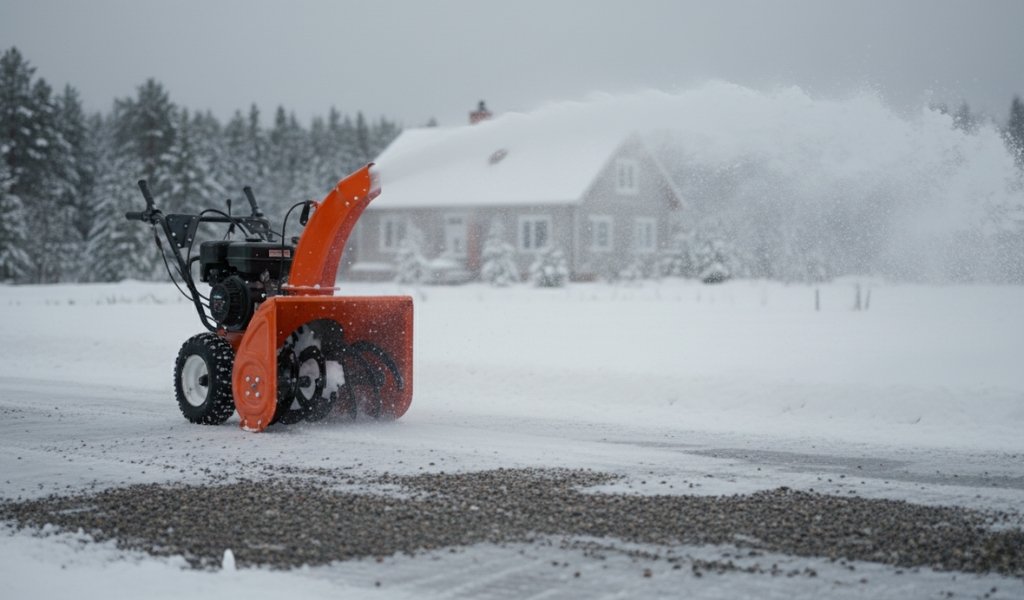
Winter transforms the landscape into a serene white wonderland, but for homeowners with a gravel driveway, that beauty often comes with a side of anxiety. While those with asphalt can simply drop their shovel or blower to the pavement and clear away every flake, the owner of an unpaved drive faces a tactical challenge.
If you’ve ever wondered, “Can I use a snow blower on gravel without launching my driveway into my neighbour’s yard?” the answer is a resounding yes—provided you have the right snow removal equipment and know how to calibrate it. In this comprehensive guide, we will explore the mechanics of snow blower use, the nuances of different gravel types, and how to master your lawn and garden equipment to survive the winter unscathed.
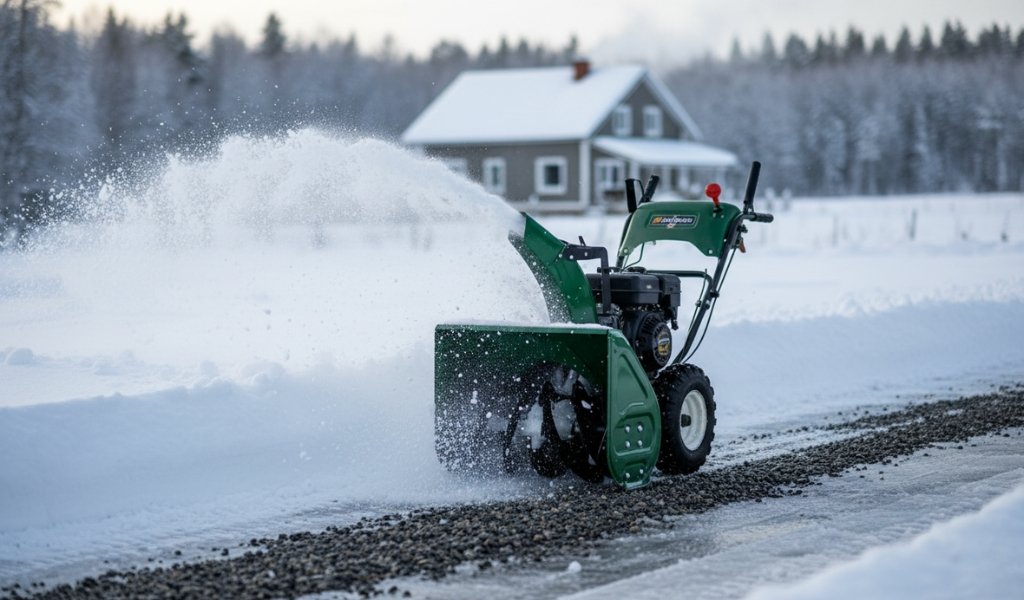
The primary conflict between a snow blower and a gravel driveway is the “suction” and “scoop” action of the machine. A standard snow blower is designed to create a vacuum-like effect to pull snow into the auger housing. On a hard, flat surface like concrete, this is efficient. On gravel, this same physics can lift stones as large as golf balls.
When a stone enters the housing, it encounters the auger (the corkscrew blade) and the impeller (the high-speed fan that throws the snow). Because stones are significantly denser than snow, they don’t just “flow” through the chute; they impact the internal components with massive kinetic energy. This leads to broken shear pins, dented discharge chutes, and potential injury to bystanders.
When selecting snow removal equipment for a gravel home, you must understand the two main categories of machines.
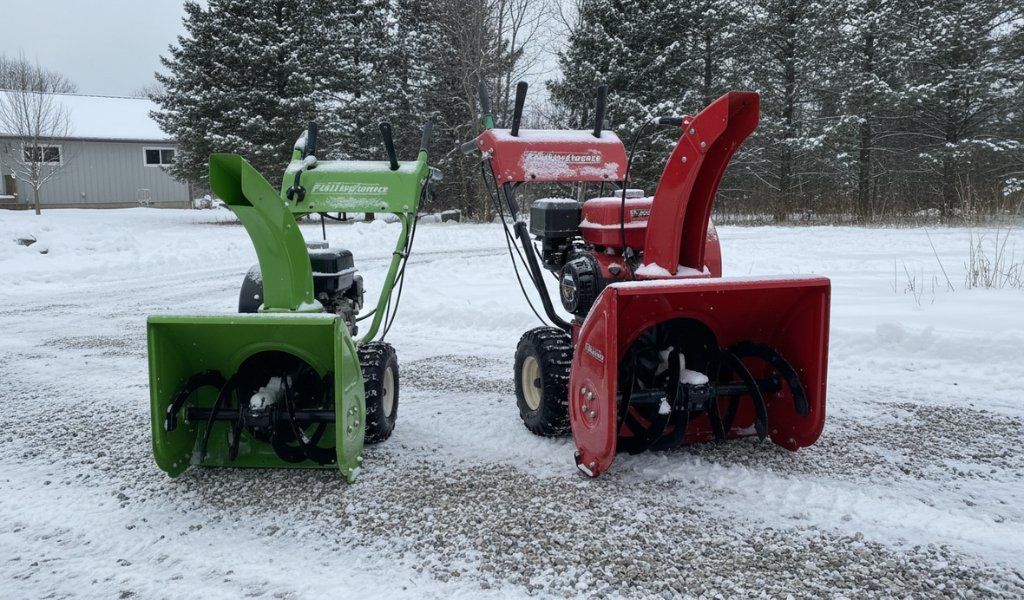
Single-stage blowers use a single high-speed rotor (often with rubber paddles) to both gather and throw the snow.
These are the gold standard for gravel driveway maintenance.
These are essentially two-stage machines with an added “accelerator” in the center. They are excellent for heavy, wet snow, but require the same height adjustments as two-stage models to prevent rock intake.
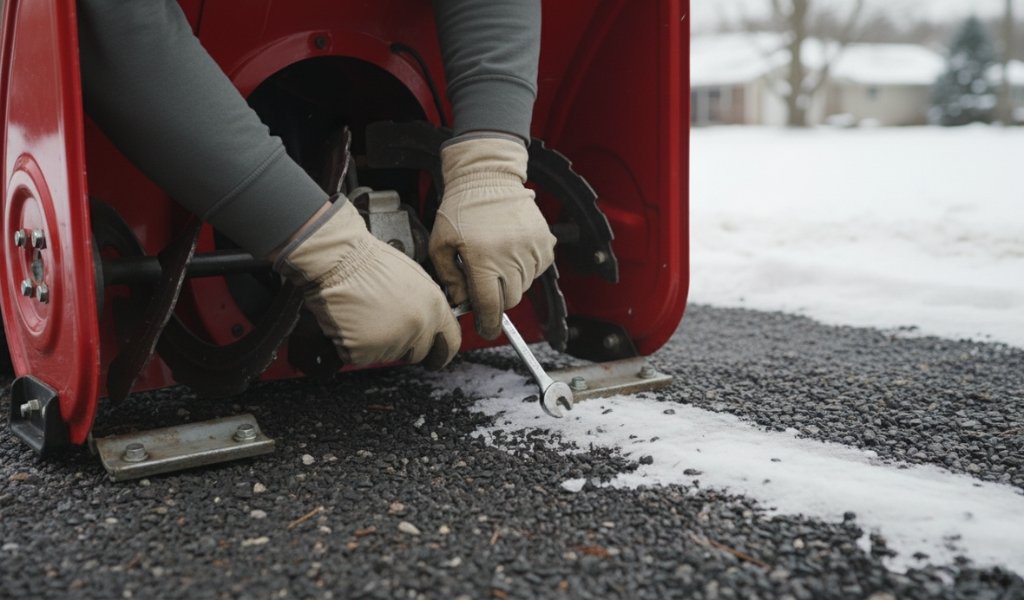
| Gravel Type | Particle Size | Snow Blower Strategy |
| Crushed Limestone | 0.5″ – 0.75″ | Very stable once packed. Easy to blow over. |
| Pea Gravel | 0.25″ – 0.5″ (Round) | Very loose. Skids will sink; set height to 1.5″. |
| Bank Run/Dirt Mix | Varied | Can become muddy; wait for a hard freeze before blowing. |
| Large River Rock | 2″ – 4″ | Danger! Do not use a blower; use a plow or shovel. |
Even with a perfectly adjusted machine, technique is everything.
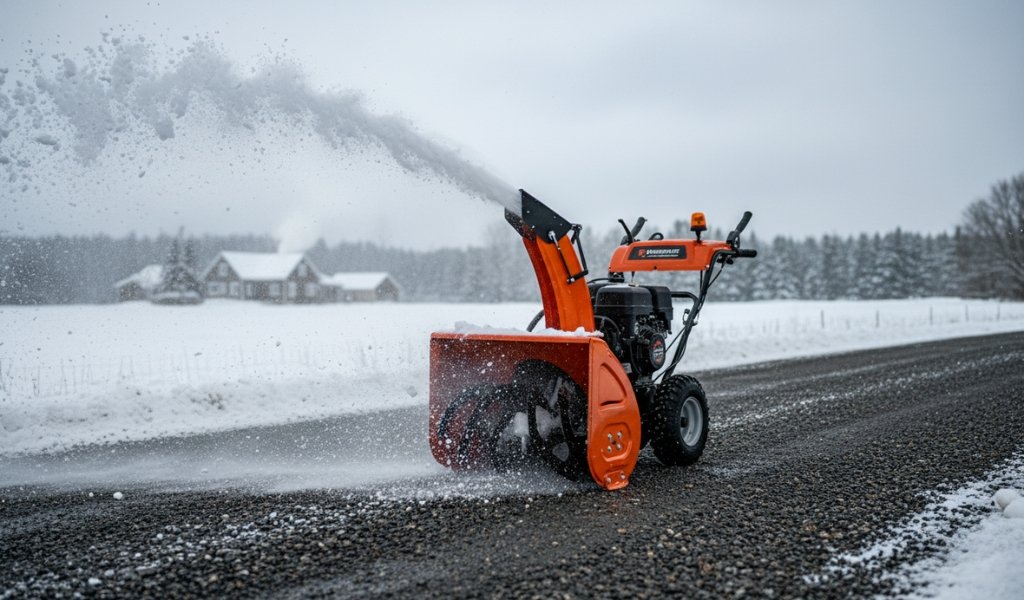
When you reach a particularly loose patch of gravel, slightly push down on the handles to lift the front of the blower. This ensures the skids don’t dig in if you hit a soft spot.
Never, under any circumstances, aim the discharge chute toward:
Even the best-adjusted blower might catch a “rogue” stone. By aiming the chute toward an empty field or a wooded area, you minimize the risk of a stone becoming a projectile.
Operate at a slower ground speed. If the machine begins to “labor” or make a metallic clicking sound, stop immediately. You may have a stone caught in the auger.
The “Pack It Down” Method:
Instead of blowing the first two inches of snow, many experienced rural homeowners drive their trucks over it or use a heavy roller. This packs the snow into the gravel, which then freezes into a “hardpack” or “ice cap.” Once you have a frozen base, you can lower your skid shoes slightly, as the gravel is now locked in ice and won’t be sucked up by the machine.
After every session on the driveway, perform a quick “post-flight” inspection:
Managing a gravel driveway during a harsh winter requires a blend of the right lawn and garden equipment and a disciplined approach. While it might be tempting to buy the cheapest snow removal equipment available, a high-quality two-stage snow blower is an investment that pays for itself by preventing property damage and machine failure.
By setting your skid shoes to the proper height and respecting the “frozen base” of your driveway, you can clear snow effectively while keeping your gravel exactly where it belongs.
A: Not if used correctly. If you leave a 1-inch “cushion” of snow, your gravel will stay in place. If you scrape the ground, you will likely need to buy several tons of replacement gravel every few years.
Q: Can I use an electric/battery-powered snow blower on gravel?
A: Yes, as long as it is a two-stage battery model. There are many powerful cordless two-stage blowers on the market today that feature the necessary adjustable skids.
Q: My skid shoes are wearing out quickly. What can I do?
A: Gravel is abrasive. If you have a long driveway, consider upgrading to “Armor” or “Heavy-Duty” aftermarket skid shoes. These are significantly larger and made of hardened materials designed for high-friction surfaces.
Q: What should I do if the snow is too deep for the 1-inch height setting?
A: For deep drifts, take “half-bites.” Instead of pushing the blower into the full width of the snow, clear only half the width of the machine at a time. This reduces the load and prevents the machine from “climbing” on top of the snow and then crashing down into the gravel.
Q: Is a snow blower better than a plow for gravel?
A: A snow blower is generally safer for the driveway itself. A plow blade often “digs in” and can move large amounts of gravel to the edge of your yard, whereas a blower (properly adjusted) only moves the snow.