Physical Address
304 North Cardinal St.
Dorchester Center, MA 02124
Physical Address
304 North Cardinal St.
Dorchester Center, MA 02124

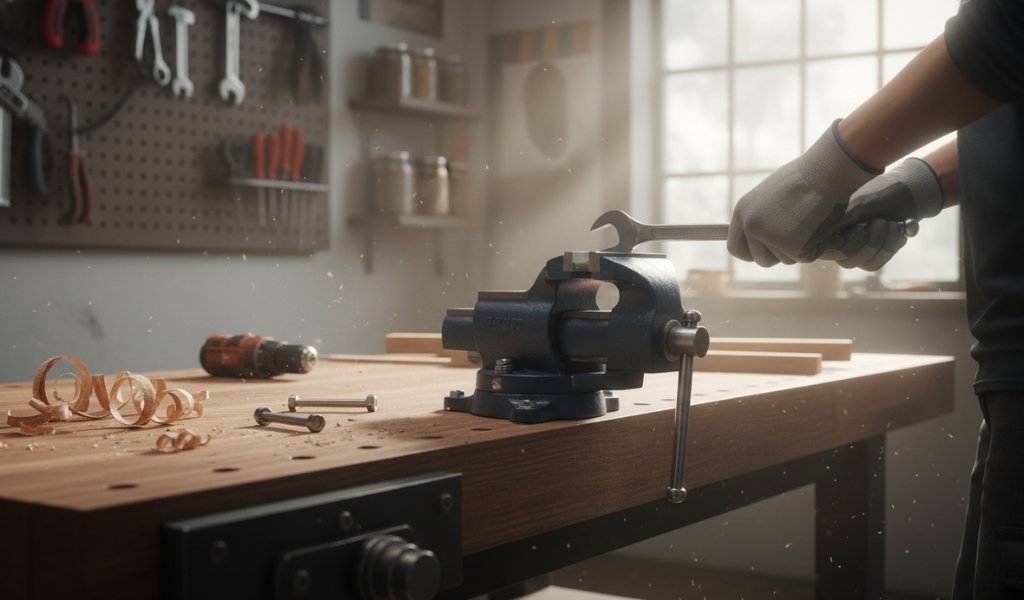
Learning how to install a bench vise correctly is the foundation of a safe and efficient workshop.
It is often said that it’s not a true workshop without a bench vise. Whether you are a professional “chippy” (carpenter), a dedicated metalworker, or a weekend DIY enthusiast, the bench vise is the literal heart of your workbench. It acts as a third hand—one with a grip far stronger than any human—allowing you to saw, sand, drill, and assemble with precision and safety.
In this comprehensive guide, we will explore the nuances of bench vise selection, the specific steps for a rock-solid vise mount, and how to ensure your equipment lasts a lifetime.
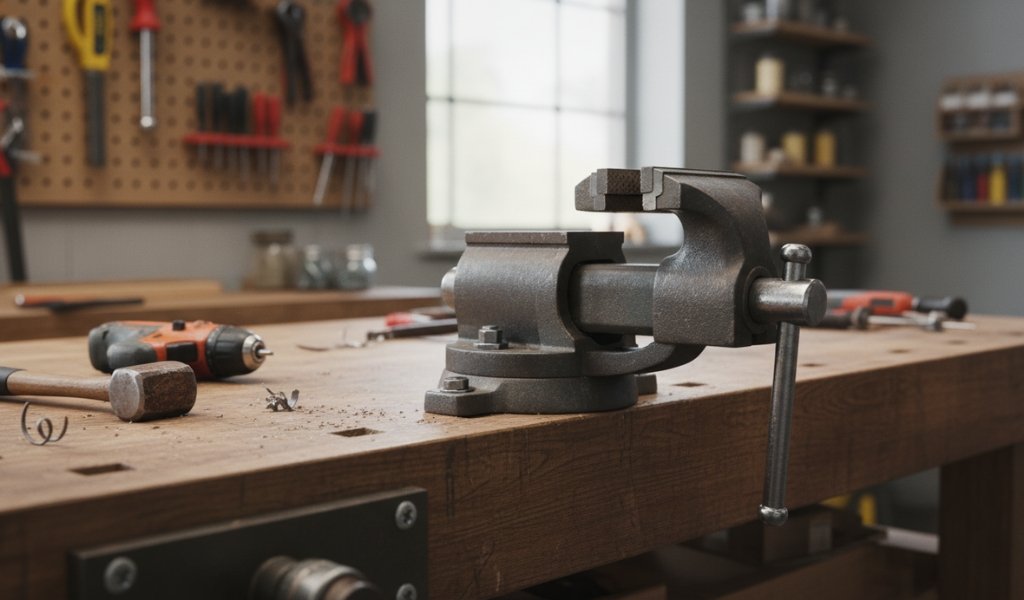
Aaron Barnett of Banging-toolbox famously suggests that vises are the most common sight in functional workshops for a reason. Their design is deceptively simple: two parallel jaws, a threaded adjustment screw, and a sturdy base. Yet, this simplicity allows for incredible versatility.
Learning how to mount a bench vise correctly is the difference between a tool that assists you and a tool that frustrates you. A poorly mounted vise will wobble, mar your work-pieces, or even break under pressure. This guide is designed to help you “avoid vices, but not vises” by mastering the installation process.
Before diving into the vise mount process, it’s important to understand the diverse ways this tool elevates your craft:
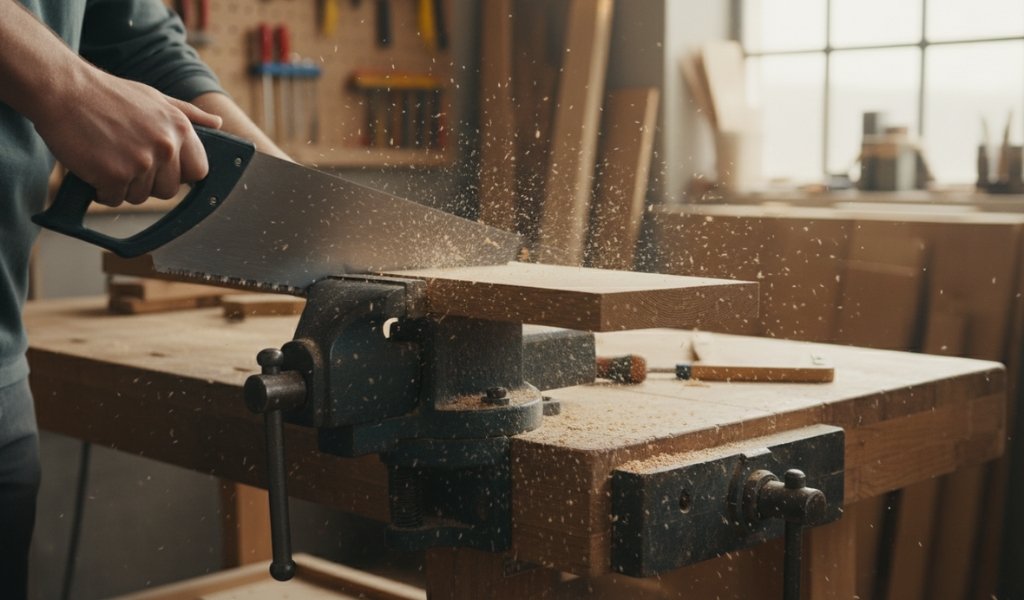
Not all vises are created equal. Choosing the right one depends entirely on your primary material.
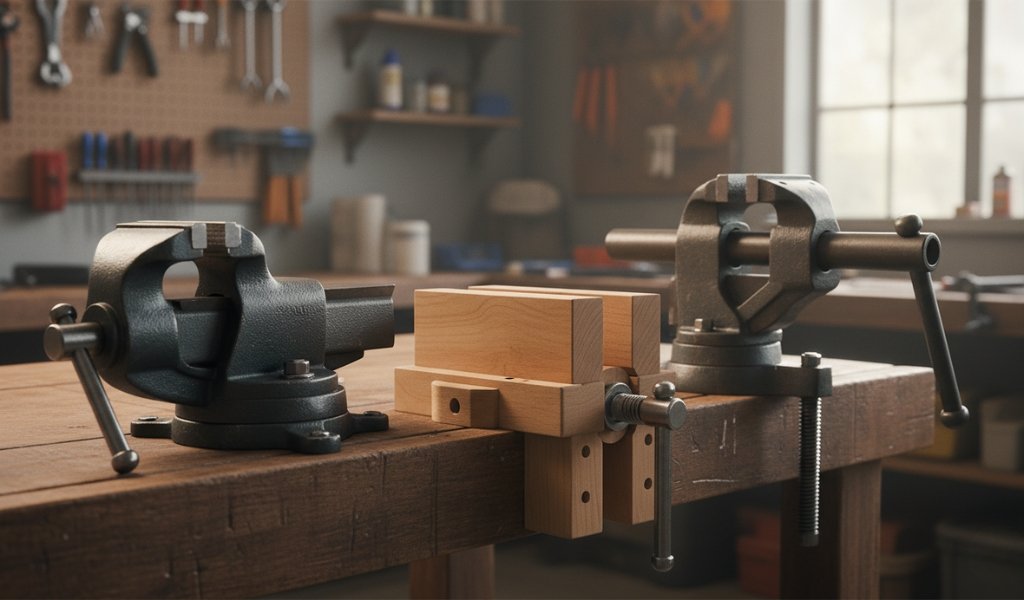
These are the heavy-duty titans of the shop. Usually made of cast iron or forged steel, they feature serrated jaws for maximum grip. They are designed to sit on top of the workbench. Many models include a “swivel base,” allowing you to rotate the vise to accommodate long pieces of metal.
Unlike their metal counterparts, woodworking vises are often mounted under the bench or flush with the edge. The jaws are typically smooth or lined with wood (jaw liners) to prevent “mushing” or denting the soft fibres of your project. If you must use a metalworking vise for wood, always place scrap wood “padding” between the jaws and your project.
Specialized for plumbers and those working with tubing, these feature V-shaped jaws or specialized “saddles” to cradle cylindrical objects. They come in “grip” (anchor) styles for a permanent hold and “non-grip” (saddle) styles for guiding movement.
Your vise mount is only as strong as the table it’s attached to. For the ultimate setup, a metal-framed workshop table is preferred. To get the best of both worlds, use a thick plywood top over the metal frame.
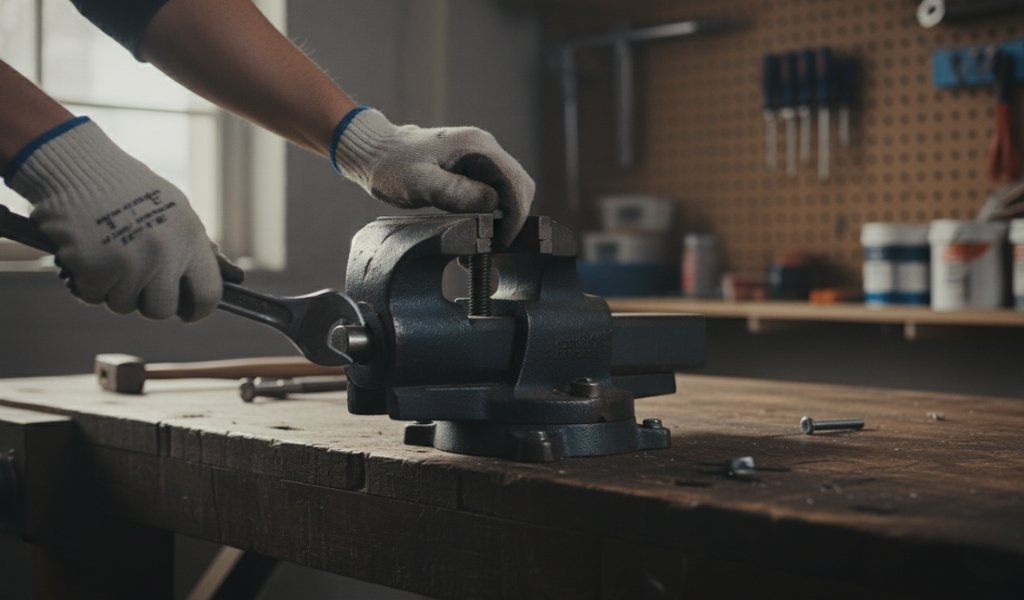
If you are building a custom woodworking station, the installation is a bit more involved as it often requires “mortising” or cutting into the bench.
Tools Needed:
Step-by-Step:
Metalworking vises are generally “bolt-on” affairs, making them the most straightforward to install.
Step-by-Step:
For those who prefer a DIY approach, pipe clamp vises can be made using standard cast iron pipes.
Step-by-Step:
A bench vise is a “buy it once” tool, but only if you take care of it.
To create a high-efficiency workstation, consider mounting these tools within arm’s reach of your vise mount:
The answer is: they work together. While a clamp (like a C-clamp or F-clamp) is portable and great for large panels, it lacks the sheer “clamping force” and stability of a mounted bench vise. The vise is your anchor; the clamps are your mobile support. For small, high-pressure tasks, the vise wins every time.
From a construction site to the hobbyist in a basement, the bench vise is the ultimate symbol of a functional workspace. By choosing the right model and ensuring a solid vise mount, you set yourself up for decades of successful projects. Work cleanly, work safely, and let your vise do the heavy lifting.
Q: Can I mount a vise to a plastic folding table? A: It is not recommended. Bench vises exert hundreds of pounds of force. A plastic table will likely crack or tip over. Use a solid wood or metal bench.
Q: Where is the best place on the bench to mount it? A: Usually on a corner. For right-handed users, the left side of the bench is often preferred so you can hold the work-piece with your left hand and tool with your right.
Q: What size vise should I buy for home use? A: A 4-inch to 5-inch jaw width is the “sweet spot” for most home DIY and automotive tasks.
Q: How do I stop my vise from marring delicate wood? A: You can buy rubber jaw covers or simply make your own out of scrap plywood or leather. These “soft jaws” protect the finish of your work-piece.
Q: Should I use carriage bolts or hex bolts for mounting? A: Hex bolts are generally better for metalworking vises as they allow you to get a wrench on both sides for maximum tightness.
Q: Is a swivel base worth the extra money? A: Yes. A swivel base allows you to rotate the vise to hold long items (like a bicycle frame or a long pipe) that would otherwise be blocked by the length of your workbench.