304 North Cardinal St. Dorchester Center, MA 02124
To provide the best experiences, we use technologies like cookies to store and/or access device information. Consenting to these technologies will allow us to process data such as browsing behavior or unique IDs on this site. Not consenting or withdrawing consent, may adversely affect certain features and functions.
Router Jig for Cutting Circles: How to Build and Use It Step-by-Step
Router Jig for Cutting Circles: How to Use Properly?
If you have ever tried to cut a perfect circle using a jigsaw or a bandsaw, you know the frustration of “close but not quite.” No matter how steady your hand is, those minor wobbles always seem to show up once the finish is applied. This is exactly where a router jig for cutting circles becomes one of the most useful tools in your workshop.
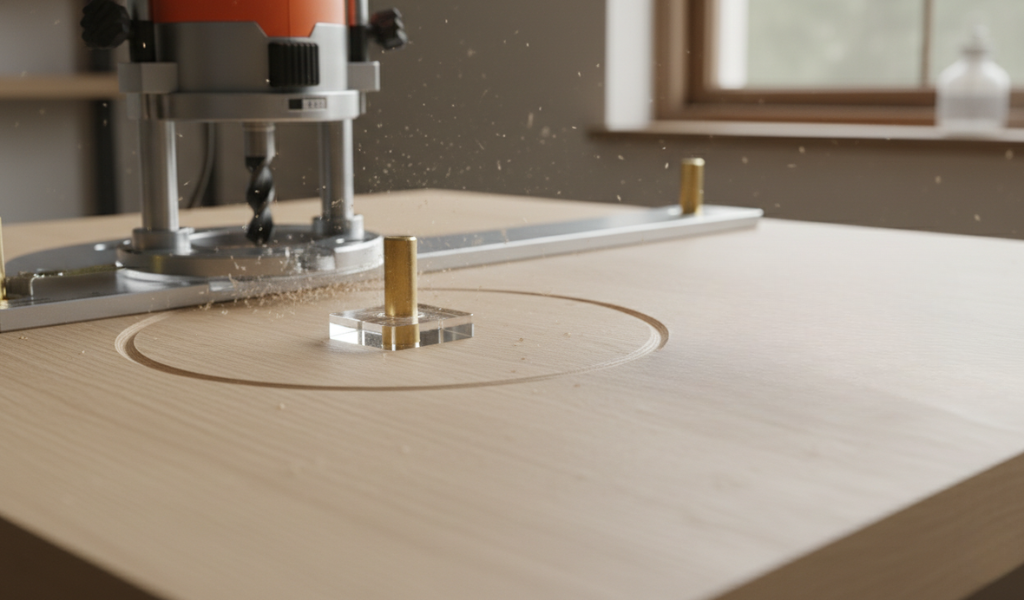
A router is naturally designed to follow a path, and when you pair it with a well-built jig, you transform it into a precision compass capable of cutting smooth, accurate arcs every time. Whether you are making a round tabletop, a speaker cutout, or a decorative arch, using a router jig is the professional way to get the job done. In this guide, we will walk through how to build, calibrate, and use a router jig for cutting circles to help you make cleaner, more accurate circular cuts. What Is a Router Jig for Cutting Circles?
A router jig for cutting circles is a guide attachment that lets a router spin around a fixed center point to cut accurate circles, rings, and arcs in wood, MDF, plastic, or similar materials.
Why You Need a Dedicated Circle Jig
Most woodworking power tools love straight lines. Table saws, jointers, and planers are all built on the philosophy of the “straight edge.” When a project demands a curve, many hobbyists reach for a handheld saw, but even with a lot of sanding, the results can look amateur.
A jig for cutting circles—often called a trammel—changes the game. Instead of relying on your eye-hand coordination, you are relying on a fixed pivot point. This ensures that every millimeter of the edge is an equal distance from the center. It’s the difference between a rough-looking project and one with clean, professional results.
Anatomy of an Accurate Router Jig
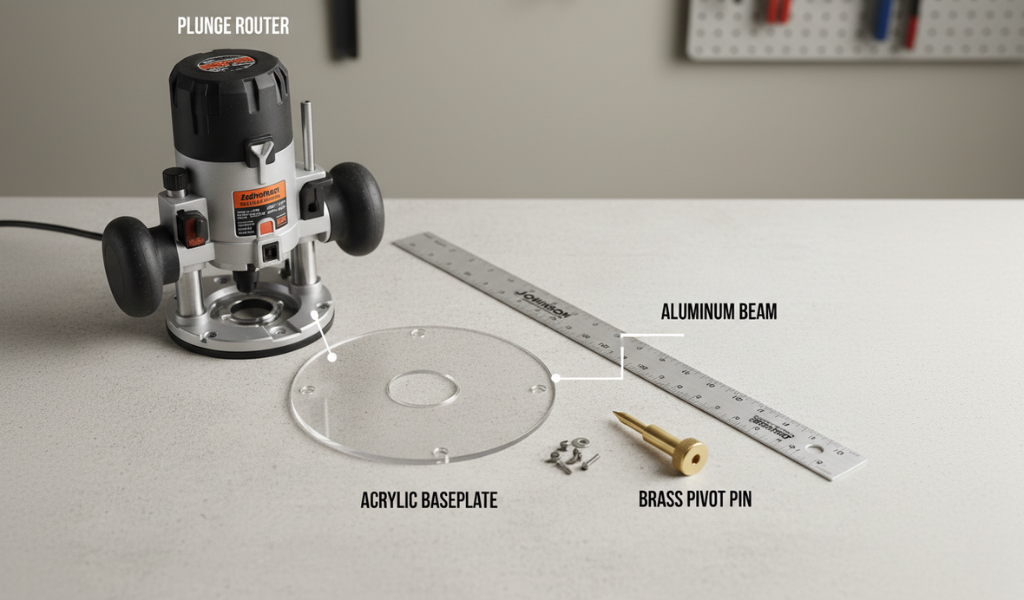
A basic router jig can be as simple as a scrap piece of plywood with a hole in it. However, if you want consistent results for various sizes, you need something a bit more sophisticated. A high-quality jig usually consists of three main parts:
The Baseplate: This replaces the standard factory base on your router. It needs to be flat and securely attached.
The Beam: This is the “arm” of the jig. While plywood works, using an aluminum ruler is a practical upgrade because it provides built-in measurements for quick adjustments.
The Pivot Point: This is usually a pin or a screw that anchors into the center of your workpiece. In adjustable jigs, this pin sits in a sliding block that moves along the beam.
Building Your Own Router Jig for Cutting Circles
You don’t need to spend a fortune on a store-bought version. Building a router jig for cutting circles is a great weekend project.
Materials You’ll Need:
A piece of 1/4″ acrylic or high-density plywood for the base.
An aluminum yardstick or a sturdy wooden lath.
A sliding block (can be made from hardwood).
A pivot pin (a 1/4″ shelf pin or a machine screw works well).
Knobs and T-bolts for the adjustable mechanism.
The Build Process:
Mount the Router: Remove the plastic base from your router and use it as a template to drill mounting holes into your new acrylic baseplate.
Attach the Beam: Secure your aluminum ruler or wooden arm to the baseplate. Ensure it is perfectly square to the center of the router collet.
The Slider: Create a block that can slide along the arm. This block will hold your pivot pin. By moving the block closer to or further from the router, you change the diameter of your cut.
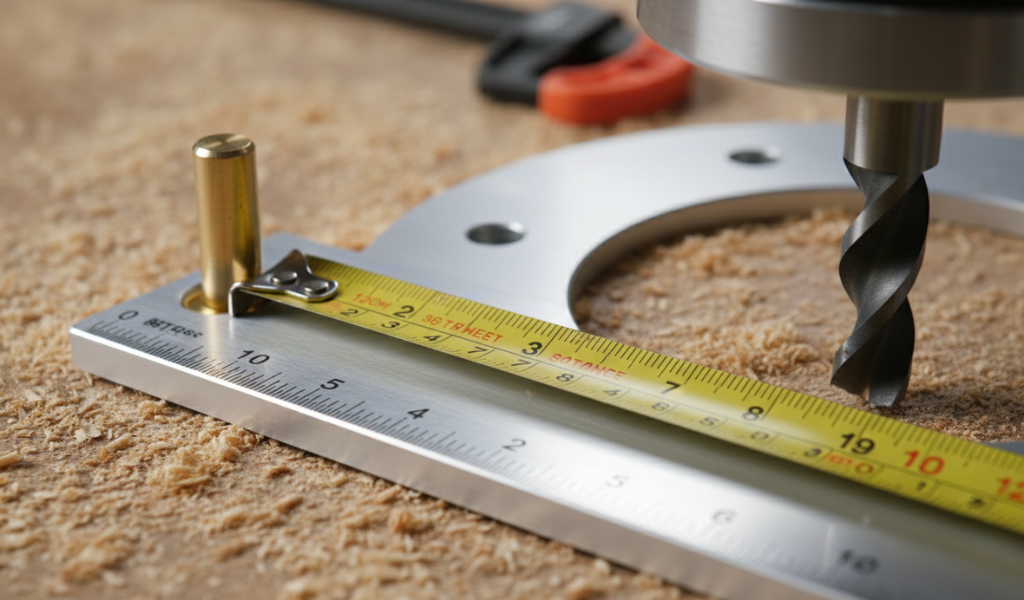
The Sight Glass: If you use an aluminum ruler, add a small acrylic window to your sliding block with a ‘scribed hairline’. This allows you to dial in an exact measurement without using a tape measure every time.
The Secret to Calibration: Getting the Radius Right
Accuracy is the soul of a jig for cutting circles. If your jig says 10 inches, but the circle comes out 10 and 1/8th, your joints won’t fit.
To calibrate your router jig, you must account for the thickness of the bit. If you are cutting the outside of a circle (like a tabletop), the measurement is taken from the pivot pin to the inside edge of the bit. If you are cutting a hole (like for a sink), you measure to the outside edge of the bit.
Expert Insight: I always recommend dedicating a specific bit—like a 1/2″ straight or up-spiral bit—to your jig. Calibrate the ruler markings to that specific bit. If you swap to a different diameter bit later, your ruler markings will be off!
Step-by-Step: Cutting Circles with Confidence
Once your jig is ready, it’s time to make some sawdust. Follow these steps for a clean, safe cut.
Step 1: Prep the Workpiece
Mark the center of your circle on the bottom side of your wood. Drill a small hole that matches your pivot pin. Note: If you don’t want a hole in your finished piece, you can hot-glue a small “pivot block” of scrap wood to the center and drill into that instead.
Step 2: Use a Sacrificial Surface
Never cut a circle directly on your workbench! Place a sheet of MDF or rigid foam insulation under your workpiece. This allows the router bit to pass through the wood and slightly into the base without damaging anything.
Step 3: The First Pass
Using a plunge router is a big advantage here. Set your depth to about 1/4″. Start the router, plunge into the wood, and sweep the jig in a counter-clockwise direction.
Step 4: The “Jigsaw Shortcut”
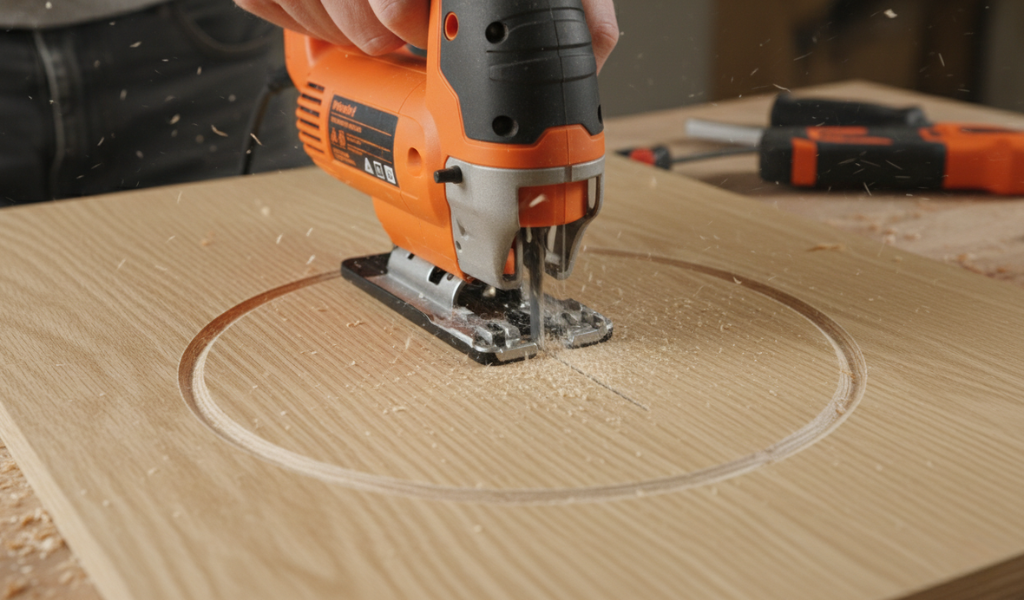
Routing through 1.5-inch thick oak creates a large amount of dust and wear on your bit. After your first shallow pass with the router jig, take the jig off. Use a jigsaw to cut out the circle, staying about 1/16″ inside the groove you just made.
Step 5: The Cleanup Pass
Put the router and jig back on. Now, the router only has to trim away a tiny bit of wood to leave a smooth clean edge. This prevents the motor from straining and keeps your bit from burning the wood.
Safety Tips and Bit Selection
When cutting circles, the physics are a bit different than straight routing.
Direction Matters: Always move the router counter-clockwise when cutting the outside of a circle. This ensures the bit is cutting “into” the wood, giving you better control.
Up-Spiral Bits: If you can, use a solid carbide up-spiral bit. These bits pull the chips up and out of the groove, preventing the jig from getting bogged down in sawdust.
Secure the Center: As you reach the very end of your cut, the center “waste” piece will want to move. If it shifts, it can kick the router back. Make sure both the workpiece and the center are double-sided taped or clamped down securely.
Advanced Techniques: Cutting Rings and Arcs
Once you master the basic router jig for cutting circles, you can start getting creative.
Creating Rings: To make a hollow ring, you simply perform two cuts from the same center point. Cut the larger outer circle first, then adjust the jig to a smaller radius and cut the inner circle. Just remember to secure the “ring” part with tape so it doesn’t fly off when the final cut is completed.
Cutting Arcs: If you are building a crib or a decorative doorway, you don’t need a full circle. You can use the same jig to swing an arc. Simply mark your start and stop points on the wood and carefully plunge and lift the router at those marks.
Common Mistakes to Avoid
Dull Bits: A dull bit will “chatter” as it moves through the grain, especially when moving from parallel to end grain. Always use a sharp router bit.
Too Deep a Cut: Trying to cut through 1-inch thick wood in one go is a recipe for a fire or a broken bit. Take multiple shallow passes.
Forgetting the Pivot Hole: If your pivot pin is loose in the hole, your circle will be lopsided. Use a drill bit that matches your pin exactly.
Inconsistent Feed Rate: If you stop moving the router while it’s running, it will leave a burn mark. Keep a steady, slow pace all the way around.
Conclusion
A router jig for cutting circles is one of the most useful tools for woodworkers. It removes the stress of trying to follow a line and replaces it with the consistent accuracy of a pivot. Next time your project calls for a curve, don’t reach for the sandpaper to fix a bad jigsaw cut. Reach for your router, set up your jig, and enjoy making a clean, accurate circle. Happy woodworking!
Frequently Asked Questions
Can I use a fixed-base router for a circle jig? You can, but it is much more dangerous. With a fixed-base, you have to “tilt” the running router into the wood to start the cut. A plunge router allows you to keep the base flat and safely lower the bit into the wood.
What is the smallest circle I can cut? This depends on the size of your router base. Most standard jigs can cut a circle as small as 6 or 8 inches. For “micro” circles, you might need a specialized small-base router or a different type of jig.
Do I need to sand the edges after routing? If you use a sharp bit and a cleanup pass, the edge should be nearly glass-smooth. A quick touch with 220-grit sandpaper is usually all that’s needed to remove any minor fuzz.
What wood is best for making the jig itself? High-quality Baltic Birch plywood or Phenolic (plastic) are best because they are incredibly stable and don’t warp. You want your router jig to stay perfectly flat over time.
How do I avoid the “center hole” on my finished project? As mentioned, you can use double-sided tape to attach a scrap block to the center of your piece. Drill your pivot hole into the scrap. When you’re done, pop the block off and wipe away any tape residue.
Is it better to buy a jig or build one? Building a router jig for cutting circles allows you to customize the length of the arm for your specific needs. However, commercial jigs often come with very precise micro-adjustment knobs which can be handy for high-tolerance work.
Can I cut circles in materials other than wood? Absolutely! With the right bit, you can use a router jig to cut perfect circles in plastics (like acrylic), MDF, and even soft metals like aluminum (though this requires specialized bits and cooling).
Share your love!
Tools Tale
Disclaimer: This site is owned and operated by Tools Tale. toolstale.com is a participant in the Amazon Services LLC Associates Program, an affiliate advertising program designed to provide a means for sites to earn advertising fees by advertising and linking to Amazon.com. This site also participates in other affiliate programs and is compensated for referring traffic and business to these companies.