Physical Address
304 North Cardinal St.
Dorchester Center, MA 02124
Physical Address
304 North Cardinal St.
Dorchester Center, MA 02124

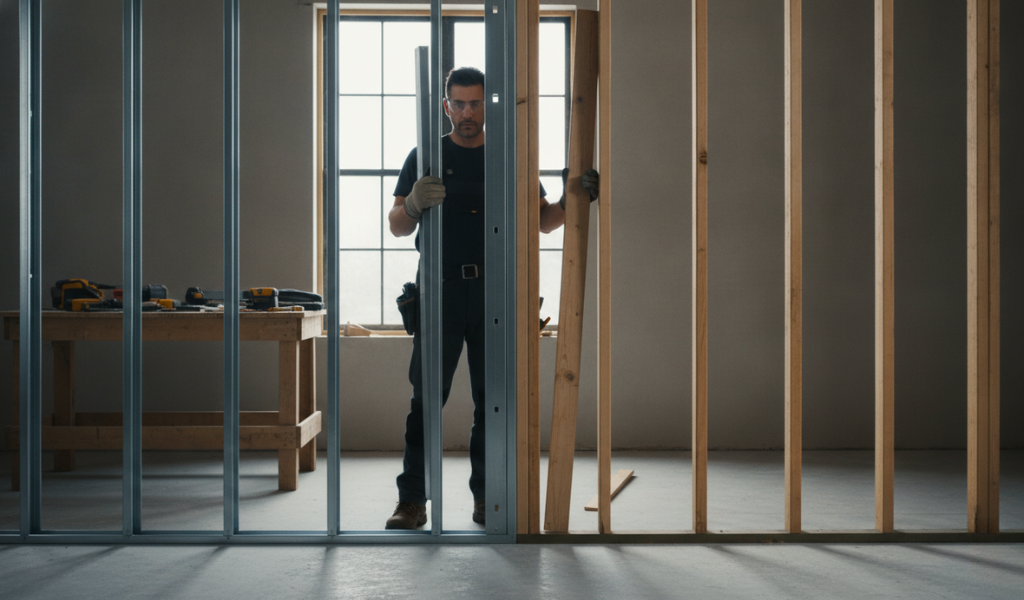
Starting a construction or room remodeling project means making a lot of foundational decisions. One of the biggest choices you will face early on is selecting the right framing material. The debate of Metal Studs vs. Wood Studs has been going on for years among professional builders and DIY enthusiasts alike. Both materials bring unique benefits and specific use cases that can dictate the long-term success of your walls.
Framing is the skeleton of your building. If you make the wrong choice, you might face issues with moisture, pests, or structural integrity down the road. This guide will walk you through the distinct characteristics of each material. We will look at cost, strength, durability, and ease of installation. By the end of this post, you will understand exactly which option fits your budget, timeline, and specific construction needs.
If you have ever walked through a commercial building under construction, you have likely seen silver frames outlining the future rooms. So, exactly what is a Metal Stud? Metal studs are vertical frames used in construction to build interior walls and ceilings. Manufacturers typically create these frames from aluminum or galvanized steel.
For decades, metal studs were almost exclusively found in large commercial or industrial projects. However, they have recently gained popularity in residential construction and home renovations.
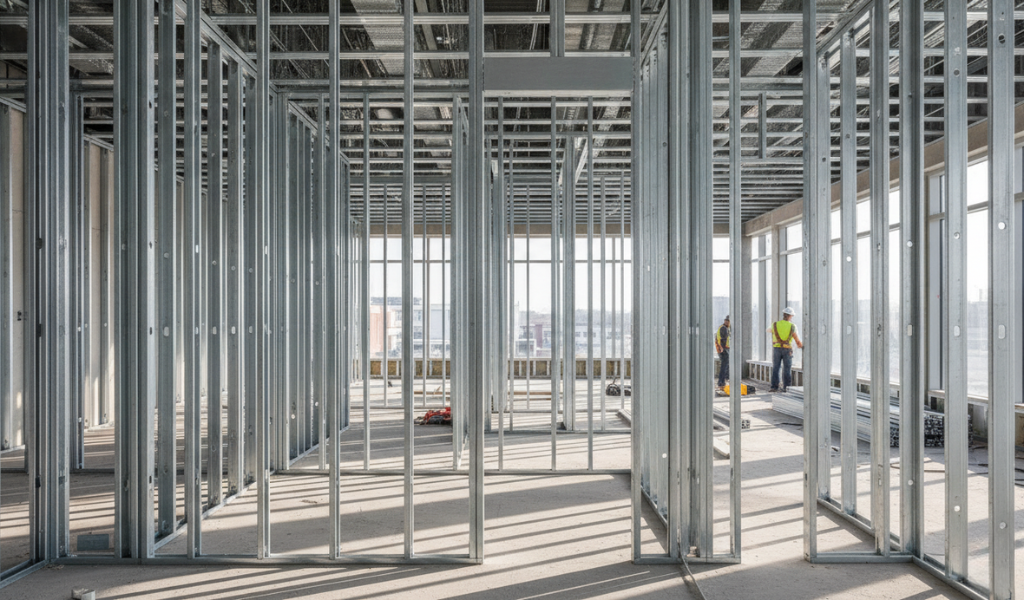
They are incredibly sturdy, surprisingly lightweight, and highly durable. Builders often use them to create partition walls, finish basements, and reinforce existing structures.
One of the biggest draws of metal framing is its predictability. Because metal studs are manufactured in a factory, every single piece is perfectly straight. You never have to worry about the bowing, twisting, or natural imperfections that sometimes happen with natural materials. Furthermore, metal offers excellent fire resistance and design flexibility, allowing builders to create precise angles and curved walls with ease.
Wood framing is the traditional method most people are familiar with. But what is a Wood Stud in technical terms? A wood stud is a vertical piece of lumber used in the construction of walls. These wooden pillars serve as the primary structural support for a building. They provide the necessary framework for attaching drywall panels, fiberglass insulation, and exterior wall siding.
Builders primarily use wood studs indoors and outdoors to ensure walls are strong enough to hold heavy loads, such as multiple stories or heavy roof materials. Wood is incredibly forgiving and easy to work with on the job site. A builder can quickly cut a piece of lumber with a standard circular saw to meet any specific framing requirement.
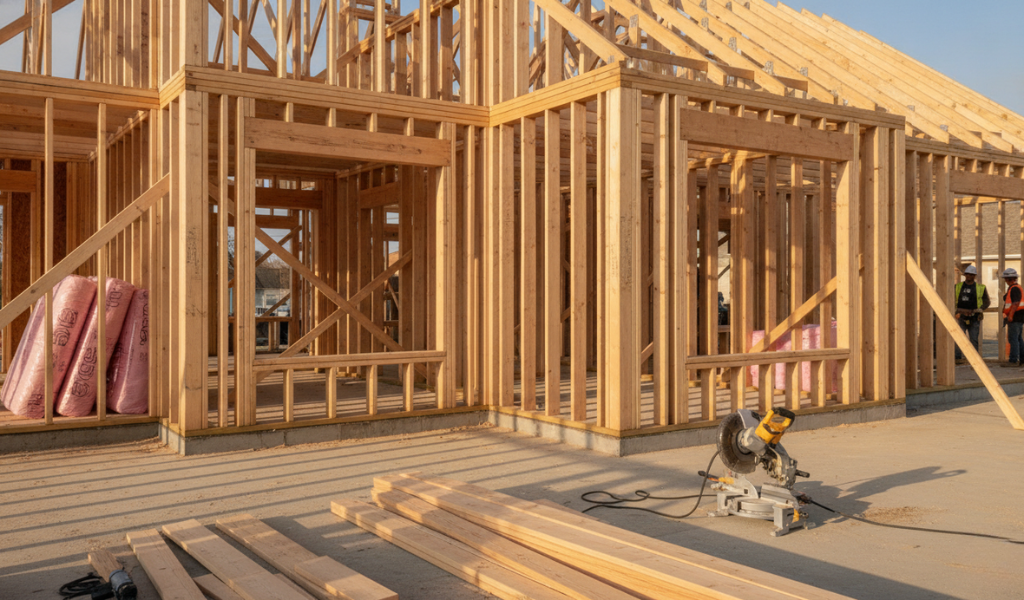
Wood studs are a staple in residential home building. They offer a classic, reliable structure that contractors have trusted for centuries. Because wood is a natural resource, these studs are abundantly available at almost any local hardware store. They provide excellent rigidity, making them the top choice for structural walls that must bear significant weight over a long period.
Understanding the dimensions of your materials is crucial for planning your wall thickness and structural stability. The sizes of metal studs and wood studs vary to accommodate different types of construction projects.
Metal studs use a gauge system to measure thickness. The most frequently used thickness for standard wall framing is 25-gauge. If you need a slightly different thickness, manufacturers also provide 20-gauge and 26-gauge options. A lower gauge number means a thicker and stronger metal.
When it comes to width, metal studs give you several specific choices. Standard widths include:
You can also purchase metal studs in a wide variety of lengths to suit different ceiling heights. Common length options include 48 inches, 54 inches, 58.5 inches, 72 inches, 90 inches, 96 inches, 120 inches, and up to 144 inches. This extensive variety means you can easily choose the exact configuration you need without doing a lot of cutting on site.
Wood studs are categorized by their width and depth in inches. Some of the most common measurements you will see at the lumber yard include 2 inches by 3 inches, 2 inches by 4 inches, and 2 inches by 6 inches. The 2×4 is the standard for most interior walls, while the 2×6 option is the thickest and can hold the most weight, making it ideal for exterior walls.
Wood studs generally come in standard lengths designed to match typical room heights. You will mostly find them available in 8-foot, 9-foot, and 12-foot lengths.
The greatest advantage of wood sizing is its modifiability. If you buy a 12-foot wood stud, you can easily cut it down into smaller pieces to frame around windows, doors, or custom architectural features.
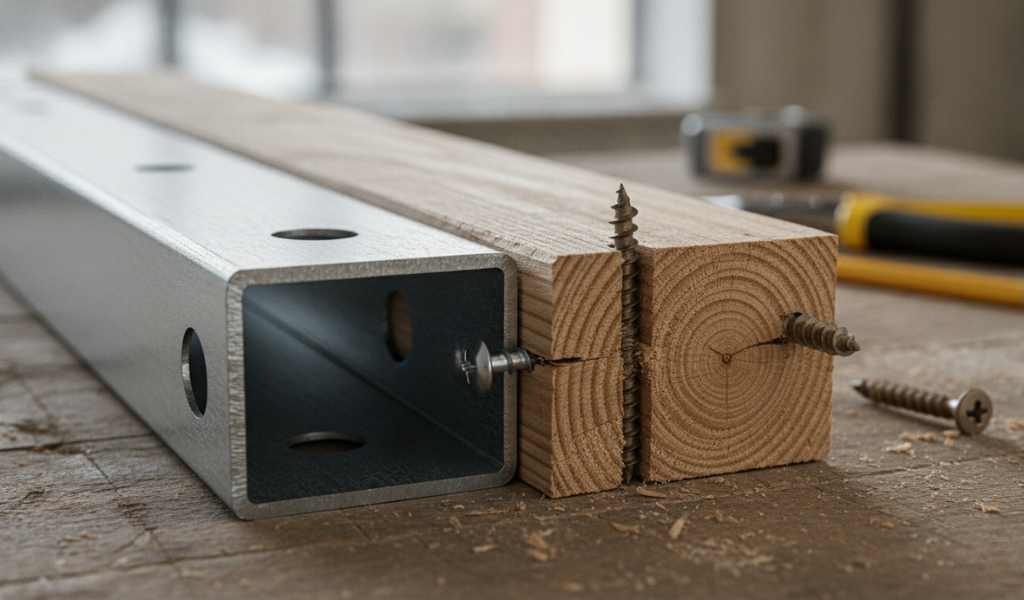
When comparing metal studs vs. wood studs, you have to look beyond just the raw material. Several important factors will influence how the wall performs over time. Here is a detailed breakdown of the main considerations.
Construction budgets are tight. The cost of studs often depends on the prevailing market demand and regional availability of materials. Generally speaking, metal studs are costlier than wooden studs. However, you can sometimes find thin-gauge metal models at prices very close to standard wooden studs. Wood remains a highly budget-friendly option because it is abundant and easy to source locally.
If you are building a wall that needs to hold up the second floor of a house, strength is your top priority. Thin gauge metal studs are prone to bending under extreme pressure. Therefore, builders do not prefer metal for walls bearing heavy structural loads. Wood studs are incredibly strong and can safely bear a very high load. They are the clear winner for heavy structural support.
Thicker metal studs offer a greater load-bearing capacity than their thinner counterparts. You can use heavy-gauge metal to support heavy plumbing fixtures or cabinetry. Thinner metal studs should only be used for non-load-bearing walls, like a simple interior room divider. Wood studs naturally take up a bit more space due to their solid mass. This solid mass allows you to confidently mount heavy kitchen cabinets or large televisions directly into the wood.
Safety is a major concern in building design. Metal studs are completely fireproof. They will not ignite or contribute fuel to a house fire. Wood studs are highly flammable and can easily catch fire. You must take care not to install unprotected wood near direct fire sources, as high heat can weaken the internal structure of the lumber.
Insects can destroy a building from the inside out. Metal studs are completely immune to termites, carpenter ants, and other wood-boring insects. This makes metal a fantastic choice for areas known for heavy pest activity. Wood studs are highly vulnerable to insect damage. If the lumber is not treated properly with chemicals, termites can severely compromise the structural integrity of a wood-framed wall.
When measuring long-term survival, metal studs are generally more durable than wood. Metal resists natural rotting, warping, and twisting over time. Wood studs are organic, meaning they can warp as they dry out, leading to wavy walls or popped drywall nails.
Moisture is the enemy of construction. Metal does not warp or swell when exposed to high humidity. However, bare metal is prone to rusting. To prevent this, you should always buy galvanized steel studs and use rust-resistant screws. Wood studs are highly prone to water damage. Direct exposure to moisture causes wood to swell, bend, or grow hazardous mold.
If you want a quiet bedroom or a soundproof home theater, pay attention to acoustics. Metal studs do not dampen noise effectively. Sound vibrations travel easily through the steel. You must use specialized sound-reduction insulation to create a quiet space with metal framing. Wood studs naturally absorb sound vibrations much better, helping to create a quieter environment in your home.
Both materials have different workflows on the job site. Metal studs are very light and easy to carry up flights of stairs. They often come with pre-marked points and punched holes for easy alignment. Wood studs are much heavier and might require two people to move in bulk. However, driving standard screws or nails into wood is incredibly fast and easy, which can significantly speed up the actual framing process.
Running utilities through walls is a standard part of construction. Metal studs often include pre-punched holes from the factory. This makes it highly convenient for electricians and plumbers to run wires and pipes through the wall without drilling. Wood requires manual drilling to create pathways for utilities, but it is soft enough that a good drill bit can make quick work of the job.
To help you make the best choice, let us look at how these materials perform in real-world scenarios.
Imagine you are finishing a damp basement. Basements are notorious for high moisture levels and occasional flooding. In this scenario, metal studs are often the smarter choice. Because they do not absorb water, you will not have to worry about the framing rotting behind your drywall if a small leak occurs.
Now, picture a kitchen remodel where you plan to install heavy, solid oak upper cabinets. You need maximum holding power. Wood studs are the better option here. The dense fibers of a 2×4 wood stud will grip the mounting screws tightly, ensuring your heavy cabinets stay firmly on the wall for decades.
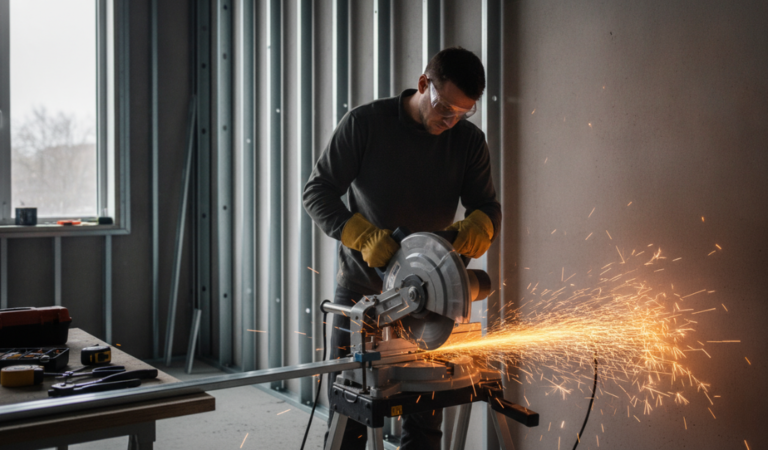
A great tip for DIYers is to use the right tools. If you choose metal, invest in a good pair of aviation snips to cut the tracks and use fine-thread drywall screws. If you choose wood, a reliable compound miter saw and a framing nailer will save you hours of physical labor.
Deciding between metal studs vs. wood studs comes down to the specific needs of your project. Metal studs shine when building interior non-structural partitions, finishing basements, or working in areas prone to termites. They offer excellent moisture resistance and keep your walls perfectly straight. On the other hand, wood studs provide unmatched rigidity and structural strength. They remain the undisputed champion for load-bearing walls and heavy installations.
Take the time to evaluate your budget, your environment, and the structural demands of your building. Armed with this knowledge, you are ready to start building walls that will stand the test of time. Be sure to check your local building codes before starting any major framing project, and share this guide with anyone planning a home renovation!
Yes, but you must use heavy-gauge structural steel framing designed specifically for load-bearing applications. The standard thin-gauge metal studs sold for interior partitions are not strong enough to support roof loads or exterior pressures.
Metal studs made of galvanized steel are coated in a layer of zinc to prevent rust. Under normal interior conditions, they will not rust. However, if they are continuously exposed to standing water or extreme salt air without proper sealing, corrosion can eventually occur.
Yes. Wood has a greater mass and natural density that helps absorb sound waves. Metal studs tend to vibrate and transmit sound more easily from one side of the wall to the other. You will need extra acoustic insulation if you want a quiet room built with metal frames.
You do not need heavy machinery. You can easily cut standard thin-gauge metal studs using a good pair of aviation snips. For faster cuts or thicker gauges, a circular saw equipped with a metal-cutting blade works perfectly.
Wood studs are generally more budget-friendly and widely available. The price of lumber fluctuates, but it usually stays lower than the cost of steel. However, when lumber prices spike, thin-gauge metal studs can become very competitive in price.
Yes. If the wood is not pressure-treated or protected by chemical barriers, pests like termites and carpenter ants can tunnel through the lumber. This severely weakens the wall. If you live in a high-pest area, metal framing eliminates this risk completely.