Physical Address
304 North Cardinal St.
Dorchester Center, MA 02124
Physical Address
304 North Cardinal St.
Dorchester Center, MA 02124

If you’ve ever watched a tire technician swap out wheels in under a minute, you’ve seen a butterfly impact wrench in action. This compact, air-powered tool is one of the most underrated pieces of equipment in any mechanic’s arsenal, yet many people still aren’t sure what it does or when to use it.
This guide covers everything you need to know about butterfly wrench uses, from automotive repair to heavy equipment maintenance. Whether you’re a professional technician or a weekend DIYer, by the end of this post, you’ll know exactly how this tool works, where it shines, and how to use it safely and effectively.
A butterfly wrench, also known as a butterfly impact wrench or twin hammer impact wrench, is a pneumatic (air-powered) tool designed to loosen and tighten bolts and nuts at high speed. It gets its name from the two wing-like handles on either side of the tool body, which allow the user to operate it with one hand and reverse the direction of rotation with a simple thumb motion.
Unlike a standard ratchet or adjustable wrench, the butterfly impact wrench uses rapid hammering bursts to break loose stubborn fasteners or drive them in quickly. This hammering mechanism delivers much more torque than a person could generate manually, making it ideal for high-demand tasks like tire changes, engine work, and industrial assembly.
The tool connects to an air compressor via a hose and is controlled by a trigger built into one of the side paddles. Most models run on compressed air at around 90 PSI, though the exact requirement varies by tool.
Understanding the parts of a butterfly impact wrench helps you use it better and maintain it properly.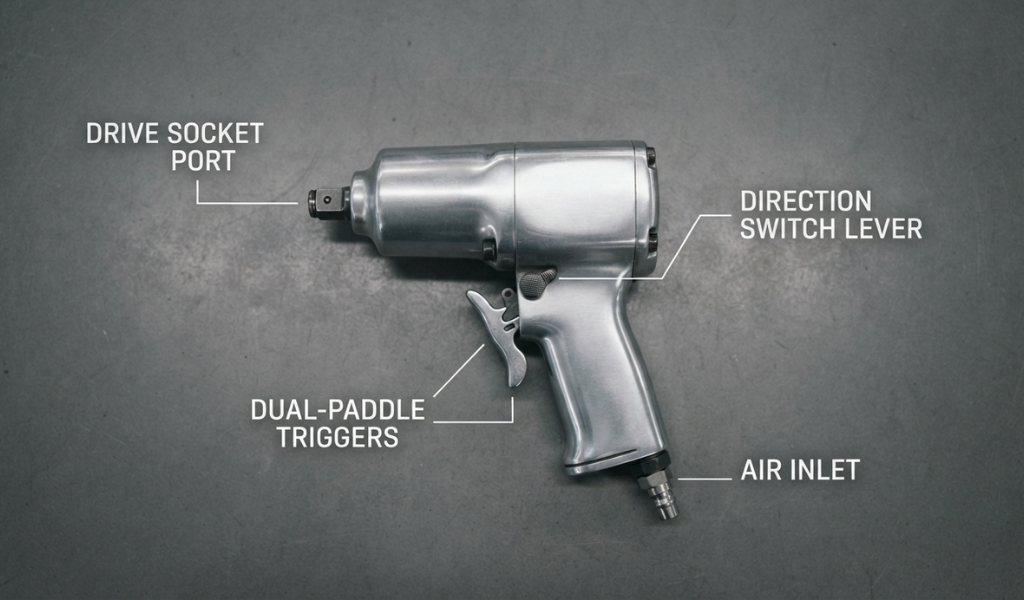
The drive socket port is the square-drive output at the front of the tool where you attach sockets. Common sizes include 1/2-inch and 3/8-inch drives. The twin paddle handles run along both sides of the tool body. One paddle acts as the trigger, while both together give you a secure, ergonomic grip. The direction switch is usually a small lever between the paddles that flips the tool between forward (tightening) and reverse (loosening) modes. The air inlet sits at the rear of the tool and connects to your compressor hose. Finally, the hammer mechanism inside the housing is what generates the impact torque that makes this tool so powerful.
Both tools do similar jobs, but they’re built differently and suit different situations.
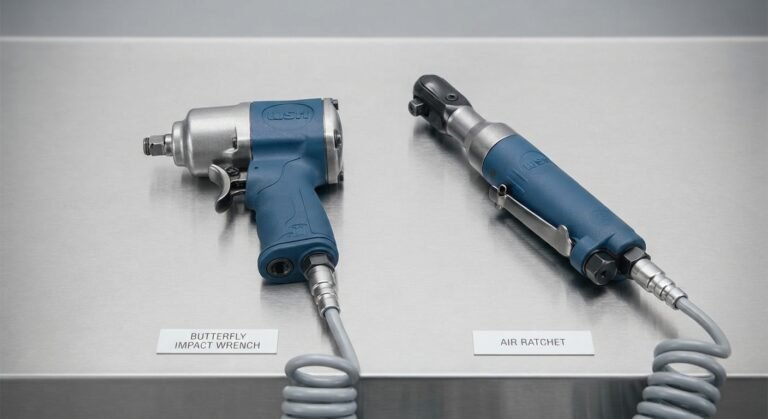
A standard impact wrench is typically pistol-shaped with a D-handle. It’s bulky but powerful, making it a great choice for high-torque applications where tool size isn’t a concern. A butterfly impact wrench, on the other hand, has an inline body. The paddles run along the length of the tool, which makes it noticeably slimmer and easier to use in tight spaces.
The inline design also makes the butterfly wrench faster than an air ratchet in many situations, since you’re getting impact force rather than just continuous rotation. For tasks like tire removal, the butterfly wrench is often the faster and more comfortable option, especially during long shifts where operator fatigue becomes a real issue.
Where a standard impact wrench might have more raw torque output, the butterfly wrench wins on compactness, maneuverability, and ease of one-handed operation.
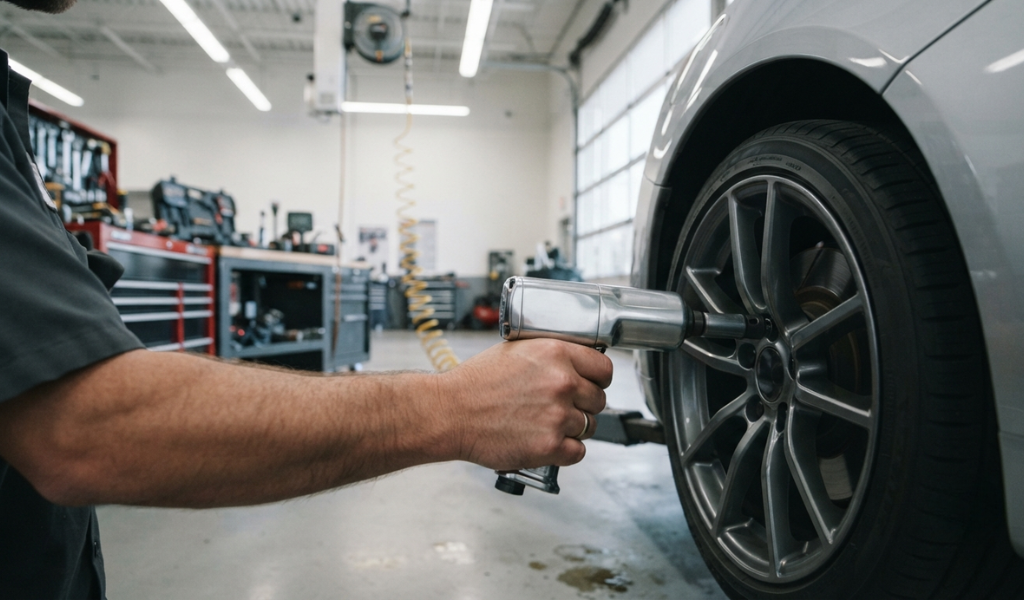
This is the most popular application. Butterfly wrenches are a staple in tire shops and automotive workshops because they make swapping tires fast and effortless. A technician can remove all five lug nuts from a wheel in seconds, replace the tire, and torque them back down without switching tools.
Beyond tires, the butterfly impact wrench is useful for removing brake caliper bolts, suspension components, exhaust bolts, and other fasteners that are difficult to break loose by hand. In body shop work, it handles screws and smaller bolts on panels and trim pieces.
On assembly lines, speed and consistency matter. Butterfly wrenches are used to drive bolts and screws in production environments where repetitive tightening tasks need to happen quickly without causing fatigue. Because the tool is compact and easy to handle with one hand, workers can hold a component in place with the other hand while driving fasteners simultaneously.
Large machinery, like excavators, bulldozers, and forklifts, uses heavy-duty fasteners that require serious torque to remove. Butterfly impact wrenches with higher torque ratings are used by equipment technicians to service these machines during routine maintenance and repairs. The compact body of the wrench makes it easier to access bolts in recessed or awkward locations on heavy equipment.
In metal fabrication shops and on construction sites, butterfly wrenches are used to bolt steel structures together, assemble scaffolding, and fasten heavy components. They handle hex bolts, carriage bolts, and structural fasteners with ease. When working with stainless steel fasteners or chrome hardware, a butterfly wrench with adjustable torque helps prevent overtightening, which can strip threads or crack materials.
From small independent garages to large dealership service centers, the butterfly impact wrench is one of the most-used tools on the shop floor. It speeds up routine tasks like oil changes, brake jobs, and wheel services, helping mechanics complete more work in less time.
In aerospace, precision and speed must coexist. Butterfly wrenches are used in assembly processes where lightweight, compact air tools are needed to reach fasteners in confined areas without compromising torque accuracy. Industrial manufacturing plants use them in similar ways, often pairing them with socket adapters and extension sets to reach difficult bolt locations.
Tractors, combines, and other agricultural machinery take a beating in the field. Maintenance technicians rely on butterfly impact wrenches to service these machines quickly, especially during harvest season when downtime is costly. The tool’s ability to handle heavy-duty bolts and its resistance to dusty, dirty environments make it a practical choice in farm settings.
You don’t need to be a professional mechanic to benefit from a butterfly wrench. DIY enthusiasts use them for home car maintenance, building metal furniture, working on motorcycles, and even assembling heavy-duty shelving and storage units. Entry-level butterfly wrenches are available at accessible price points from brands like Harbor Freight (HF), making the tool easy to pick up for home use.
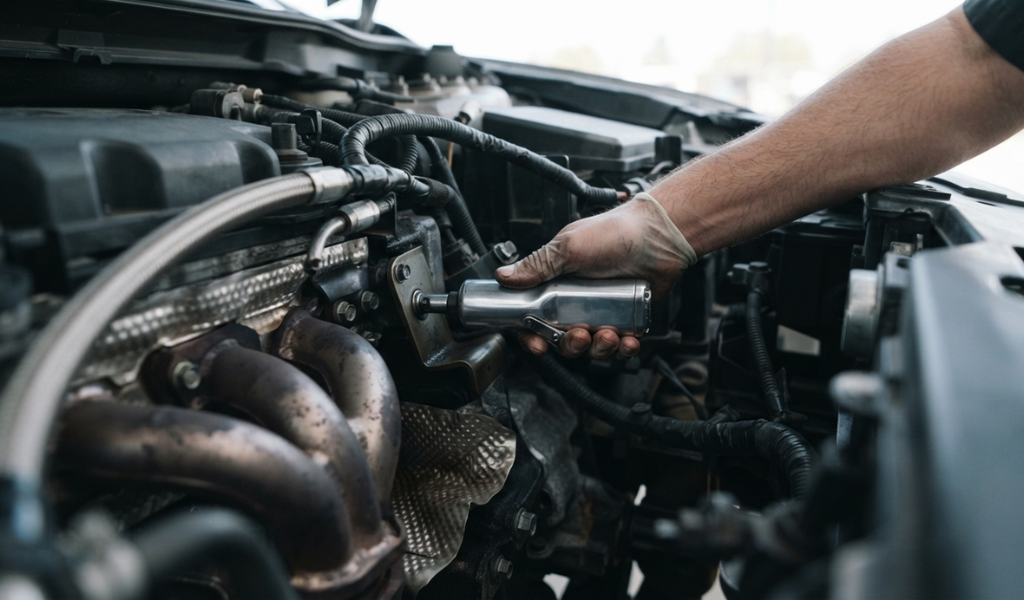
The inline body of the butterfly impact wrench is its biggest physical advantage. It can fit into spaces where a pistol-grip impact wrench simply won’t go. Under the hood of a car, behind engine components, or deep inside industrial machinery, the butterfly wrench’s slim profile means you can access fasteners that would otherwise require a much longer workaround.
The butterfly impact wrench operates faster than an air ratchet for most tasks. The twin-hammer impact mechanism delivers powerful rotational bursts that break loose even rusted or over-torqued bolts in seconds. For repetitive tasks like lug nut removal, the time savings add up significantly over the course of a workday.
The paddle design allows you to trigger the tool, control direction, and maintain a firm grip all with one hand. This frees up your other hand to hold parts in position, support a socket, or brace against a component. It’s a small detail that makes a big difference during complex repair jobs.
Because the tool absorbs much of the rotational force through its impact mechanism, your wrist and arm aren’t fighting against reaction torque the way they would with a manual ratchet or adjustable wrench. The ergonomic design of the paddles also distributes grip pressure more evenly, which reduces hand fatigue during extended use.
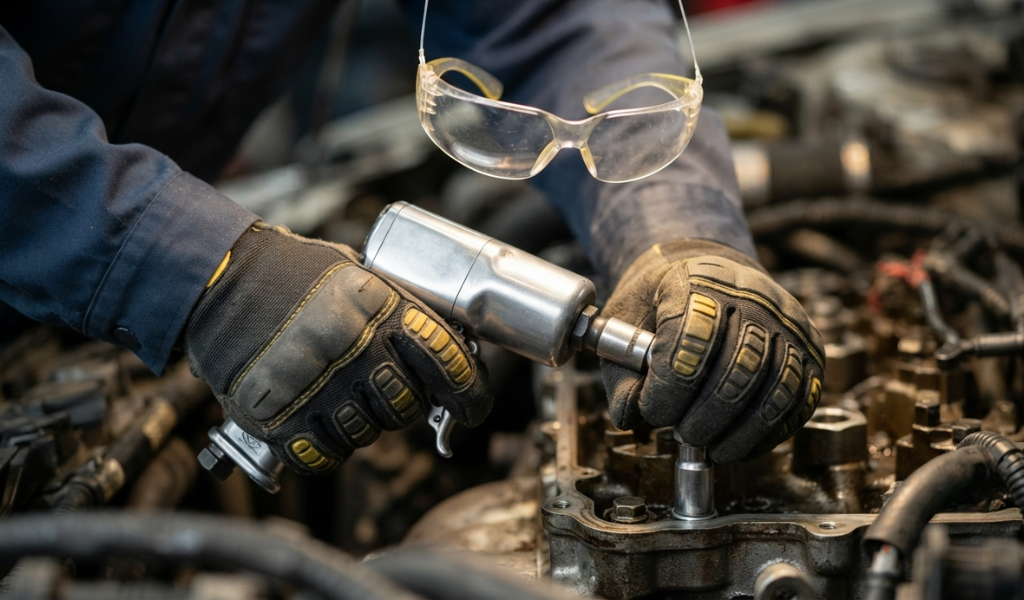
Always wear safety glasses when using any impact tool. Flying debris, rust particles, and metal shavings can become hazardous when fasteners break loose suddenly. Gloves are also recommended to protect against vibration and sharp edges.
Using the wrong socket size is a quick way to round off a bolt head or damage the socket itself. Always match the socket to the fastener size exactly. Use impact-rated sockets, not standard chrome sockets, as standard sockets can crack under the stress of impact torque.
Before you pull the trigger, confirm the direction switch is set correctly. For loosening bolts, the tool should spin counterclockwise (reverse). For tightening, set it to clockwise (forward). Driving a bolt in the wrong direction, even briefly, can cross-thread or damage the fastener.
Check the air hose connection for leaks or damage before starting. Inspect the socket drive for wear or cracks. Make sure the direction switch moves freely and clicks into position. A quick 30-second check before each use prevents accidents and extends the life of the tool.
Run your butterfly impact wrench at the manufacturer-recommended PSI, typically around 90 PSI. Running it below this pressure reduces torque output. Running it above the maximum can damage internal components and shorten the tool’s lifespan.
A few drops of pneumatic tool oil into the air inlet before each use keeps the internal hammer mechanism running smoothly. Skipping lubrication leads to faster wear on moving parts and a noticeable drop in performance over time.
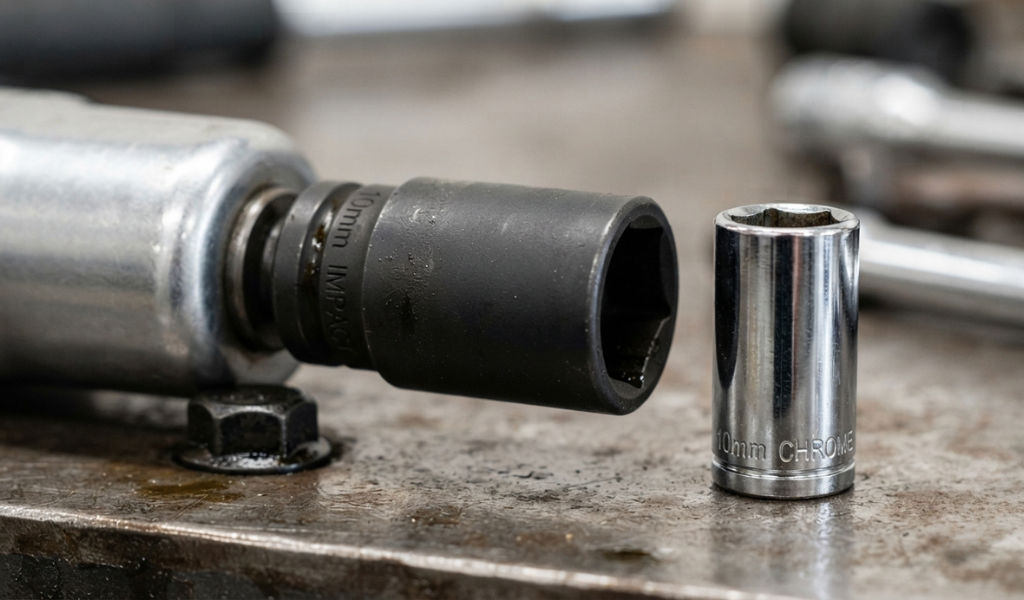
Impact-rated sockets are made from softer steel alloys that absorb shock without cracking. Standard chrome sockets are not designed for impact use and can shatter. Brands like Snap-on, Ingersoll Rand (IR), and Chicago Pneumatic (CP) offer reliable impact socket sets that hold up well under daily use.
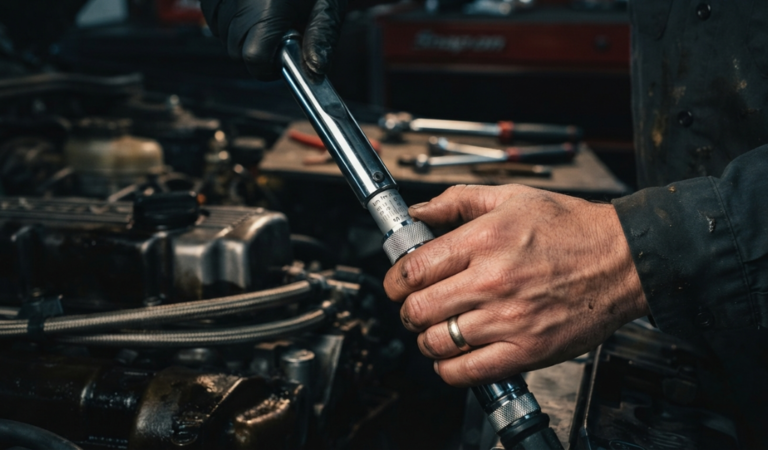
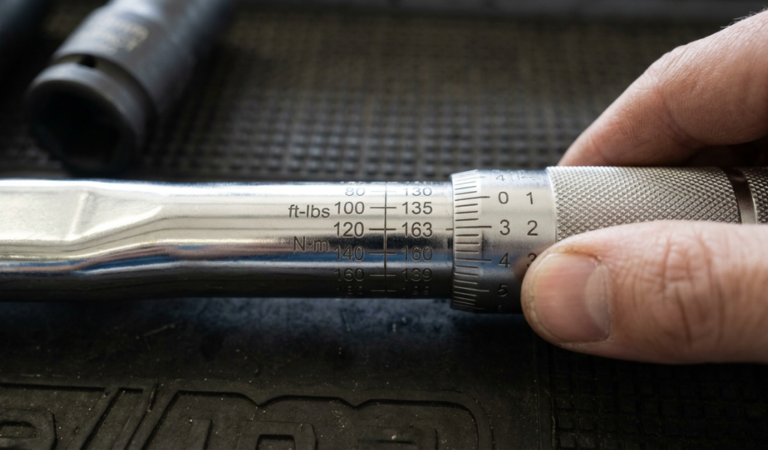
The butterfly impact wrench can generate significant torque, which means it’s easy to overtighten bolts, especially on aluminum components or smaller fasteners. Use the tool to snug bolts down, then finish with a torque wrench to reach the exact specification. This is especially important for lug nuts, where overtightening can warp brake rotors.
A socket that’s slightly too large, cracked, or worn will slip under impact torque. This rounds off bolt heads and can cause the socket to fly off the drive. Inspect your sockets regularly and replace any that show signs of wear.
Skipping oil, using a dirty air filter, or neglecting to check the hose fittings leads to gradual performance loss and eventual tool failure. Set a simple maintenance schedule and stick to it.
The butterfly impact wrench does the work for you. You don’t need to press hard or muscle the tool into position. Forcing it into angles it wasn’t designed for puts stress on the drive mechanism and can damage both the tool and the fastener.
Using the tool with an undersized compressor or a partially charged tank reduces torque output and puts strain on the motor. Make sure your compressor can deliver a consistent volume of air at the required PSI before starting a job.
Traditional butterfly impact wrenches are pneumatic and require an air compressor. They’re ideal for workshop settings where a compressor is already available. Cordless electric models have improved significantly in recent years and are a practical option for mobile work or locations where setting up an air supply isn’t convenient. For heavy daily use in a shop, air-powered models still tend to deliver better performance per dollar.
Match the torque rating to your most demanding application. For tire service and general automotive work, a wrench with 500 to 600 ft-lbs of reverse torque covers most tasks comfortably. For heavy equipment or industrial use, look for models rated above 800 ft-lbs. Speed is measured in RPM and IPM (impacts per minute); higher numbers mean faster fastener driving.
The 1/2-inch drive is the most versatile option and works with the widest range of sockets. A 3/8-inch drive suits lighter tasks and tighter spaces. If you’re working on heavy equipment, a 3/4-inch drive provides the extra power needed for large fasteners.
Hold the tool before you buy if possible. The paddles should feel natural in your hand, and the overall weight should be manageable for your typical workday. Look for non-slip grip surfaces and durable stainless steel or composite housing. A heavier tool isn’t always better; for overhead work or extended sessions, a lighter model reduces fatigue significantly.
The butterfly impact wrench is one of those tools that quietly makes everything faster once you start using it. Its compact size, one-handed operation, and ability to break loose stubborn fasteners make it genuinely useful across automotive repair, manufacturing, heavy equipment maintenance, and DIY projects.
If you’re just getting started, an entry-level model from Harbor Freight gives you a chance to learn the tool without a large investment. As your needs grow, brands like Snap-on, Chicago Pneumatic, and Ingersoll Rand offer professional-grade options built for years of daily use.
The key is understanding which tasks suit the tool, keeping it maintained, and using proper technique. Follow the tips and safety guidelines in this guide, and the butterfly wrench will become one of the most-reached-for tools in your collection.
What is a butterfly wrench used for?
A butterfly wrench is primarily used to tighten and loosen bolts and nuts quickly. Common applications include tire changes, automotive repair, industrial assembly, heavy equipment maintenance, and construction projects. Its compact inline design makes it especially useful in tight spaces where a standard impact wrench won’t fit.
What is a butterfly impact wrench?
A butterfly impact wrench is a type of pneumatic tool with two paddle-style handles running along the sides of the body. These paddles serve as the grip and trigger. The tool uses a twin-hammer impact mechanism to deliver high-torque bursts of rotation, making it faster and more powerful than a standard ratchet or air ratchet for most applications.
What’s the point of a spud wrench?
A spud wrench is a different tool entirely. It combines an open-end wrench with a tapered spike on the opposite end. The spike is used to align bolt holes in structural steel during construction, and the wrench end tightens the bolts once aligned. It serves a very specific purpose in ironwork and structural assembly, unlike the butterfly wrench, which is a general-purpose impact tool.
What is a monkey wrench tool?
A monkey wrench is an older style of adjustable wrench with a large flat jaw that opens and closes via a screw mechanism. It was once common in plumbing and general mechanical work but has largely been replaced by modern adjustable wrenches and specialized tools. It is not related to the butterfly wrench.
Can I use a butterfly wrench for home DIY projects?
Yes. A butterfly impact wrench works well for home projects like car maintenance, motorcycle repairs, and assembling heavy-duty metal furniture or shelving. Entry-level models are available at accessible price points, and a small air compressor is usually enough to power them for light to moderate home use.
What size drive should I choose for a butterfly wrench?
For most automotive and general repair work, a 1/2-inch drive is the best all-around choice. It accepts the widest variety of sockets and handles most common fastener sizes. A 3/8-inch drive suits lighter work and tighter spaces, while a 3/4-inch drive is reserved for heavy equipment and large industrial fasteners.
Is a butterfly wrench faster than an air ratchet?
In most situations, yes. A butterfly impact wrench delivers impact torque in addition to rotation, which allows it to break loose stuck or over-torqued fasteners much faster than an air ratchet. For repetitive high-volume tasks like lug nut removal, the difference in speed is noticeable, especially over a full workday.