Physical Address
304 North Cardinal St.
Dorchester Center, MA 02124
Physical Address
304 North Cardinal St.
Dorchester Center, MA 02124

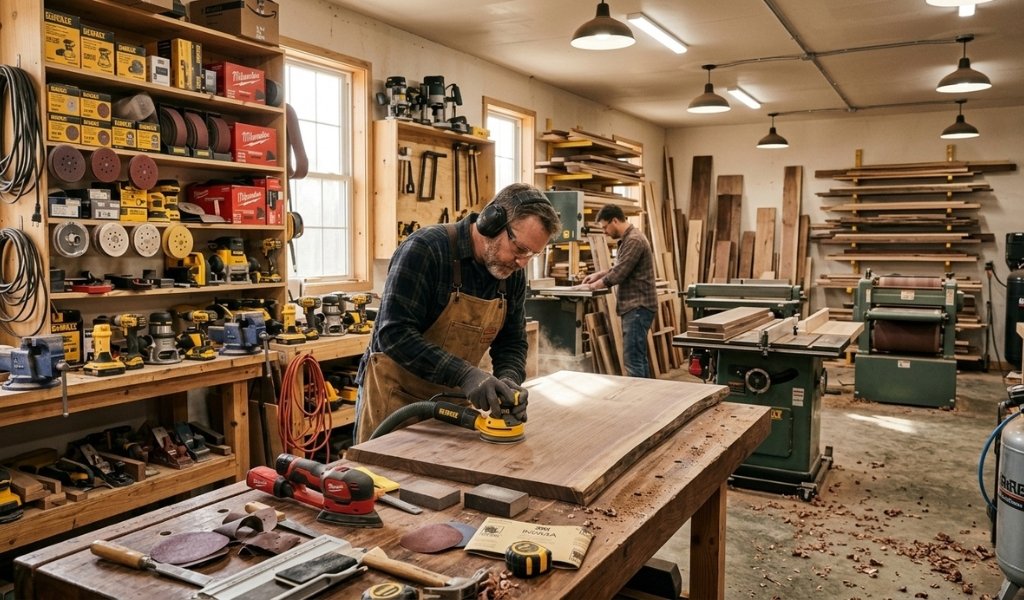
Few things separate a forgettable woodworking project from one you’re genuinely proud of. Surface prep is almost always the difference. Specifically, sanding done right, with the right tools transforms rough-cut lumber into furniture-grade work that looks and feels professional.
This guide covers everything you need to know about wood sanding tools: from the heavy-duty power sanders that rip through material removal to the precision hand sanding tools that handle delicate trim and intricate carved details. If you’re just getting started, you’ll want to pair this resource with our ultimate guide to woodworking sanding techniques for a complete picture of how technique and tooling work together.
Whether you’re refinishing wood furniture, building a cabinet from scratch, or tackling weekend DIY projects around the house, choosing the right sanding tools for wood will save you hours of frustration and produce noticeably better results.
Electric sanders dramatically speed up sanding work, reduce fatigue, and deliver more consistent results than doing everything by hand. But not every power sander is built for the same job. Here’s how the main types break down.
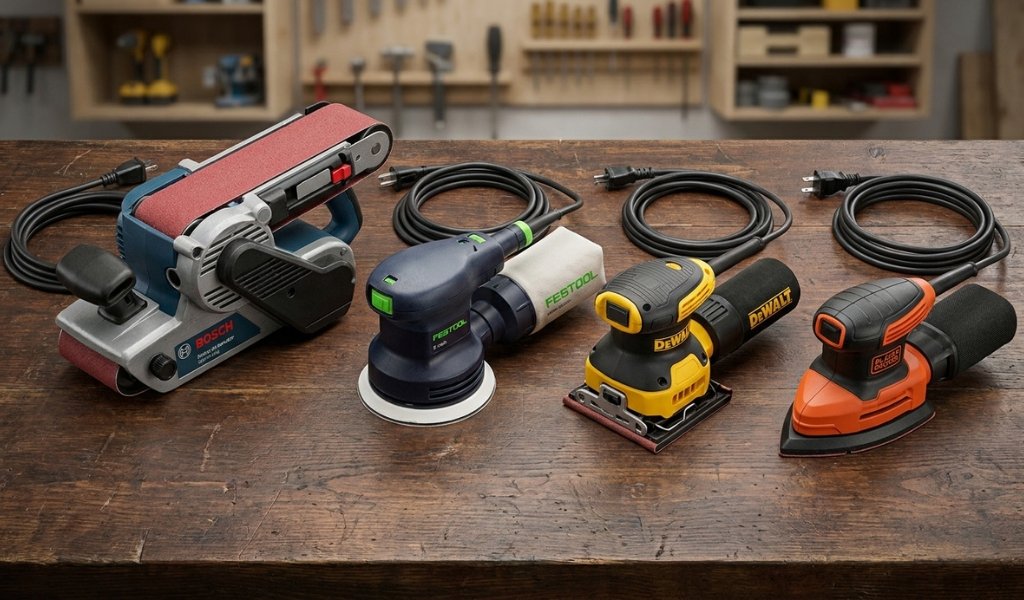
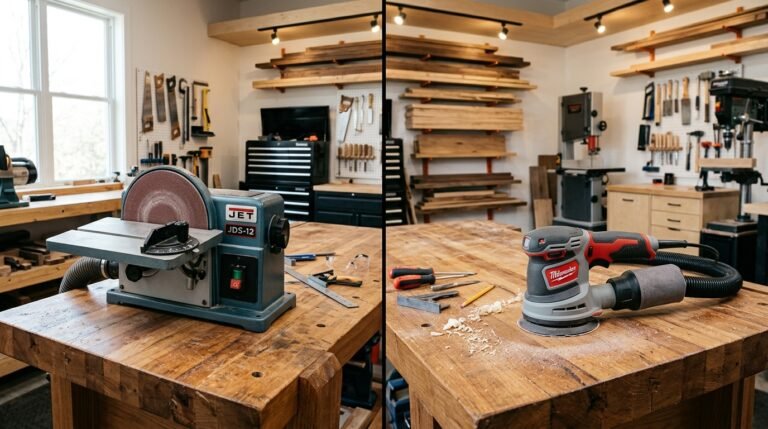
The random orbital sander is the go-to choice for most woodworkers and for good reason. Its pad moves in a simultaneous spinning and elliptical orbit pattern, which prevents the swirl marks and cross-grain scratches that plague older orbital sanders. The result is a genuinely smooth surface across wood grain directions, which makes this tool exceptional for finishing flat panels, tabletops, and wood furniture.
Most random orbit sanders use a 5-inch sanding pad with hook and loop attachment, making disc changes fast and tool-free. Variable speed control (typically ranging from around 8,000 to 12,000 OPM) lets you dial in the aggression level lower speeds for fine finishing, higher for rapid stock removal. Models from DeWalt and Makita sit near the top of the range in terms of durability and ergonomics, while budget-friendly options from Ryobi still deliver solid performance for hobbyists.
For a deeper breakdown of how to choose the right grit sequence and get the best results from this tool specifically, this section is designed to connect to a dedicated guide on random orbit sanders.
The palm sander, sometimes called a finish sander or sheet sander, takes a quarter or third of a standard sandpaper sheet and vibrates it at high speed. It’s a simpler, more affordable option than a random orbit sander, and it excels on flat surfaces where you need fine finishing rather than aggressive material removal.
Because palm sanders use cut sheet sandpaper rather than specialty sanding discs, replacement costs stay low, and you can easily cut any grit you need from 80 grit for heavier prep to 220 or 320 grit for final finishing passes. The tradeoff is that the straight-line vibration can occasionally leave faint scratch patterns, so they’re best reserved for less critical surfaces or final-stage smoothing on already-prepped wood.
This section connects naturally to a more detailed comparison of palm sander models, grits, and ideal use cases which we’ll cover in a dedicated post.
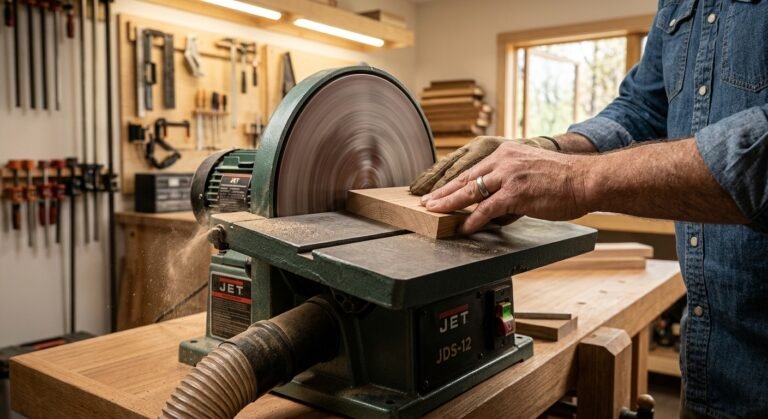
Belt sanders are aggressive machines. A continuous loop of abrasive material called sanding belts runs over two rollers at high speed, removing material faster than any other handheld sander. This makes them ideal for flattening wide boards, removing old paint or finish, and leveling glued-up panels where boards are slightly misaligned.
They’re not fine-finishing tools. Start with a belt sander on rough stock, then follow up with a random orbit sander to clean up the surface. Replacement belts come in a wide range of grits and widths, so it’s worth stocking assorted options. One important note: belt sanders require a confident, steady hand. Hesitate in one spot and you’ll sand a divot that takes significant time to correct.
Detail sanders sometimes called mouse sanders for their pointed triangular pad solve a specific problem: getting into tight spaces and corners where a standard orbital sander physically can’t fit. The pointed tip lets you work along edges, into inside corners, and around molding profiles with surprising precision.
They’re not fast, and they’re not meant for large surface areas. Think of them as a precision sanding tool for woodworking projects that have nooks and crannies you just can’t reach otherwise furniture joints, window casings, stair balusters, and similar detail work.
Power tools do the heavy lifting, but hand sanding tools are what give you control. For final finish passes, curved surfaces, and delicate work, there’s no substitute.
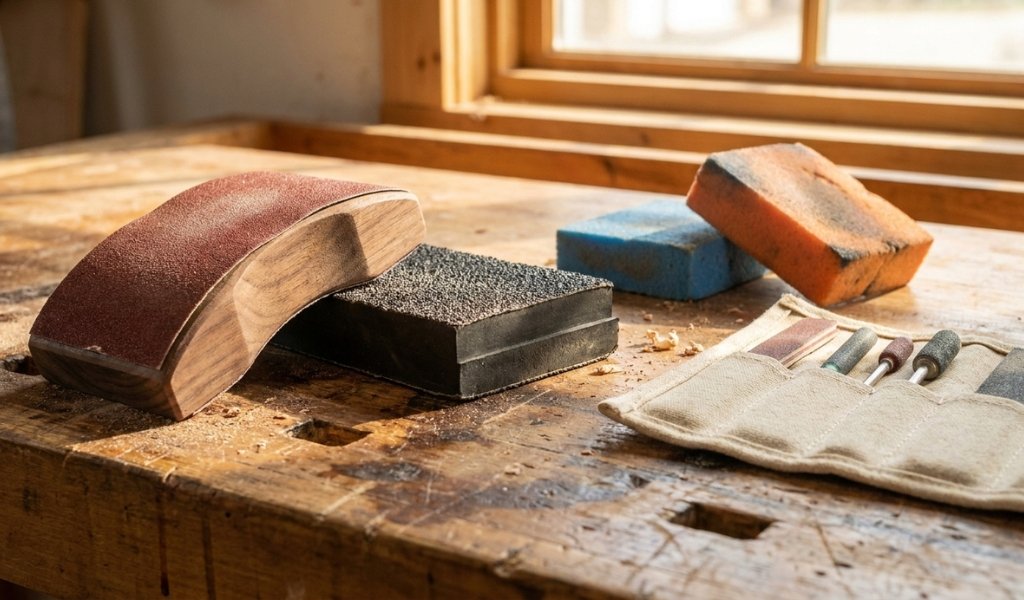
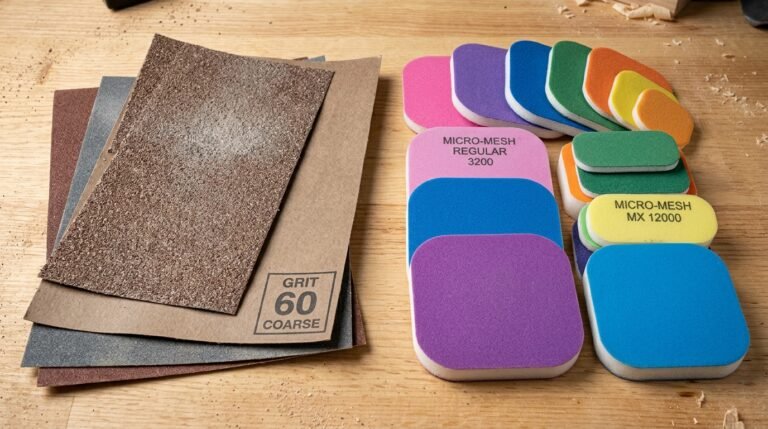
A sanding block is one of the simplest tools in woodworking, but it makes a real difference. Wrapping sandpaper around a flat block whether it’s a piece of scrap wood, a foam block, or a heavy-duty rubber version distributes pressure evenly across the surface, preventing the dips and valleys that come from sanding with fingers alone.
Wood blocks are fine for basic work, but rubber and foam sanding blocks are more forgiving and conform slightly to the surface. For furniture work and hand sanding flat panels, a firm foam block with hook and loop backing gives you good feedback without being overly rigid.
Sanding sponges are underrated. Their flexible foam core lets them conform to curved and contoured surfaces, chair legs, routed edges, shaped furniture components where a rigid block would just ride the high spots and miss the low ones.
Most sanding sponges are double-sided with different grits on each face, which makes them efficient for progressing through grits quickly. They’re also reusable: rinse, let dry, and they’re ready for more sanding work. For any project involving contour sanding, these belong in your kit.
Detail sanding sticks, essentially a narrow strip of abrasive material bonded to a thin backing let you work in the tightest spaces: grooves, carved details, inside profiles, and anywhere a standard sanding pad simply can’t reach. Some woodworkers make their own using sanding sleeves cut down from drum sanding attachments. Pre-made options offer consistent geometry and durability, which matters when you’re doing precision sanding on visible detail work.
Once you have your core sanders, a few attachments can significantly extend what you’re able to accomplish.
An angle grinder fitted with a sanding disc or abrasive flap wheel becomes a surprisingly capable shaping tool. This setup is particularly useful for rapid stock removal, sculpting wood, removing resin build-up, and working on irregular surfaces that would defeat a standard sander.
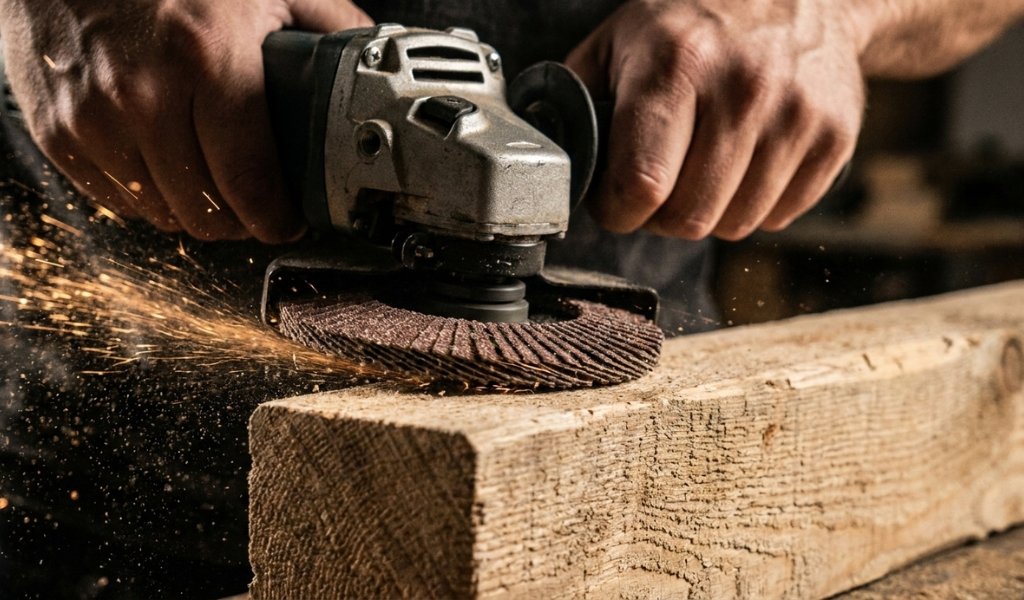
Flap discs where overlapping layers of abrasive material are arrayed around a central hub are among the most aggressive options. They cut fast and wear gradually, exposing fresh abrasives as the outer layers wear down. Sanding discs for angle grinders typically use a backer pad and hook and loop or pressure sensitive adhesive (PSA) attachment.
This area of tooling opens up into a broad range of techniques from wood sculpting to rapid surface prep on large timber so we’re planning a dedicated post that digs into angle grinder sanding disc types, grit selection, and best practices in detail.
Backer pads are the interface between your sander and your abrasive. They affect how a disc flexes, how evenly pressure is applied, and how quickly you can swap out worn abrasives. Most random orbit sanders use a standard 5-inch hook and loop backer pad, but aftermarket options including perforated mesh pads for dust collection and interface pads that add compliance for contour sanding give you more control over your results.
Mandrels serve a similar function for rotary tools and drill-mounted applications, providing the shank that holds sanding drums, sleeves, or wheels. For lathe work, drum sander attachments mounted on a mandrel are a standard way to handle curved and cylindrical workpieces. Matching the right mandrel to your tool and abrasive keeps everything running true and prevents wobble that causes uneven sanding.
Before you spend money on new sanding tools, it’s worth understanding the key variables that affect day-to-day usability.
Corded sanders deliver consistent power without worrying about battery runtime useful for long finishing sessions on large woodworking projects. Cordless models offer genuine freedom of movement and are increasingly competitive in terms of power output, especially premium options from Milwaukee and DeWalt running on high-capacity battery platforms.
For workshop use where you’re close to an outlet, corded often makes the most sense. For site work, furniture restoration in situ, or anyone who values a clutter-free bench, cordless is worth the investment.
Sanding generates enormous amounts of fine dust, the kind that clogs lungs and coats every surface in your shop. Good dust control isn’t optional. Most quality sanders include a dust port that connects to either an onboard dust bag, a shop vac, or a dedicated dust extractor via a hose.
Festool sanders are widely recognized for industry-leading dust extraction integration, designed specifically to pair with their CTL dust extractors and capturing over 99% of fine particles. For most DIYers, a mid-range sander connected to a decent shop vac with a fine dust filter handles the job well. Look for sanders with through-the-pad dust collection holes that align with your abrasive’s hole pattern that keeps the disc from loading up and clogging prematurely.
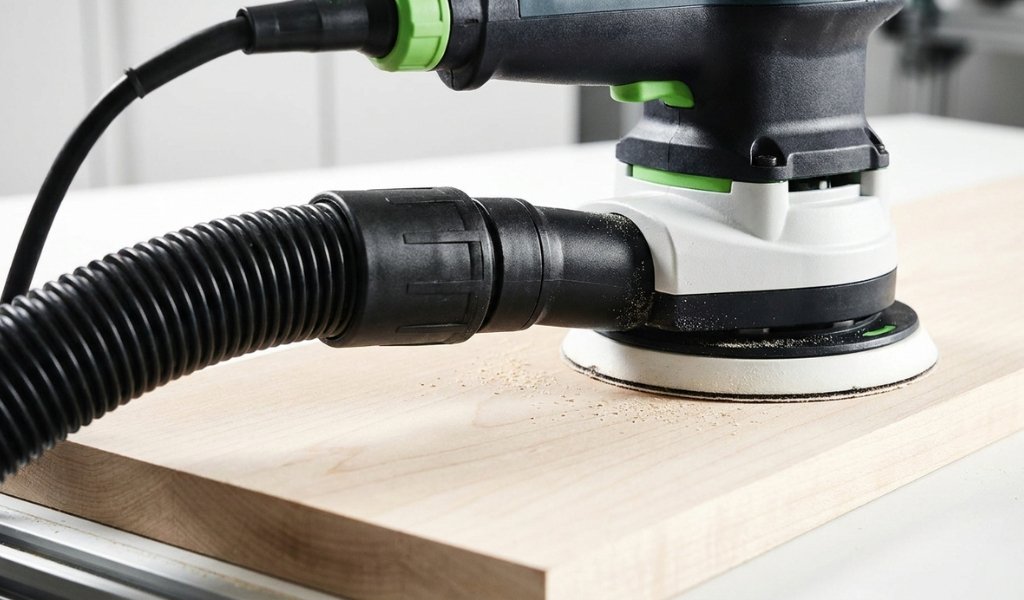
Hook and loop (similar to Velcro) is the dominant attachment system today. It lets you swap sanding discs in seconds without tools, which makes grit changes during a project quick and painless. Loop sanding discs pull cleanly away from the hook surface on the pad.
Pressure sensitive adhesive (PSA) discs use a peel-and-stick backing. They create a firmer, more rigid interface, which some woodworkers prefer for certain applications. The downside is that PSA discs are harder to remove without tearing, and repositioning isn’t really an option. For most beginners, hook and loop is the better starting point.
Four brands consistently dominate recommendations across skill levels:
All four offer replacement parts, replacement belts, and compatible accessories that are widely available, an important consideration when you’re building out a long-term workshop setup.
For most woodworking projects, a 5-inch random orbit sander is the best all-around choice. It handles both material removal and fine finishing, works across grain directions without leaving swirl marks, and accepts a wide range of hook and loop sanding discs from 60 grit up to 320 grit and beyond.
Detail sanders (mouse sanders) with a triangular pad are the top pick for corners and edges. For even finer work, carved profiles, narrow grooves, and intricate furniture details, sanding sticks or folded sandpaper strips work well in nooks and crannies that power tools simply can’t reach.
A corded random orbital sander from DeWalt, Bosch, or Ryobi is the best starting point. It’s versatile, forgiving, and inexpensive relative to the range of tasks it handles. Pair it with an assorted set of hook and loop sanding discs covering coarse through fine grits, and you have a capable setup for most beginner projects.
Power sanders require abrasives specific to their pad size and attachment type. A 5-inch random orbit sander needs 5-inch hook and loop sanding discs; a palm sander uses cut sheet sandpaper. Using the wrong abrasive, wrong size, wrong attachment, or wrong hole pattern for dust collection affects both performance and dust control.
Yes, power sanding generates significant fine dust. Connect your sander to a shop vac or dust extractor via the dust port hose for best results. Festool sanders paired with a dust extractor represent the gold standard for clean operation, but most mid-range sanders with a decent shop vac and fine-particle filter perform well enough for workshop use. Always wear a dust mask regardless of your collection setup.