Physical Address
304 North Cardinal St.
Dorchester Center, MA 02124
Physical Address
304 North Cardinal St.
Dorchester Center, MA 02124

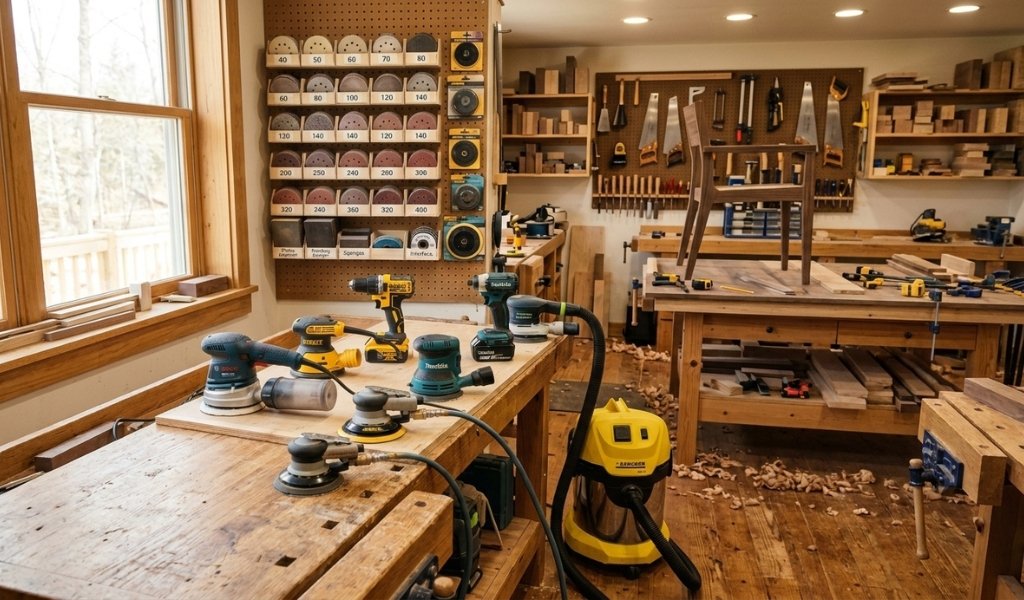
Random orbit sanders are the workhorses of any serious woodworking shop and for good reason. Few power tools deliver the combination of speed, versatility, and finish quality that a well-chosen random orbital sander can. Whether you’re stripping old paint from reclaimed lumber, leveling a glue joint, or chasing that mirror-smooth surface before applying your final coat, this tool earns its place on the bench every single time.
This guide covers everything: how these tools actually work, what specs matter when you’re shopping, how to evaluate quality beyond the spec sheet, and which models are worth your money in 2024. If you want a broader foundation before diving in, start with our ultimate guide to woodworking sanding techniques. It covers the full arc of the sanding process, from rough shaping to final finishing, and provides essential context for everything discussed here.
By the end of this post, you’ll know exactly which sander fits your workflow, which sandpaper grit progressions to use, and when to reach for a completely different tool altogether. Let’s get into it.
Walk into any professional cabinet shop or furniture studio, and you’ll find at least one random orbital sander within arm’s reach of every bench. These tools have earned that ubiquity. Unlike a traditional palm sander which moves in tight, predictable circles a random-orbit sander combines two simultaneous motions to produce results that are genuinely difficult to achieve any other way.
The result? Faster stock removal than a finishing sander, with a surface quality that rivals hand-sanding. That’s a rare combination in the world of abrasives, and it’s why so many woodworkers consider the random orbital sander their single most-used power tool.
The name isn’t just marketing language. There’s a real mechanical story behind it.
A random orbital sander moves its pad in two ways at once. The disc spins on its own axis like a conventional rotary sander while simultaneously tracing an elliptical orbit around a second point. These two motions are intentionally unsynchronized, which means the abrasive follows a path that never repeats itself.
The orbits per minute (OPM) rating on a sander’s spec sheet describes the frequency of that elliptical motion, while the RPM figure describes the disc’s spin speed. On most mid-range tools, you’ll see OPM figures between 8,000 and 12,000. The relationship between these two numbers and how smoothly the motor transitions between them under load has a major impact on real-world performance.
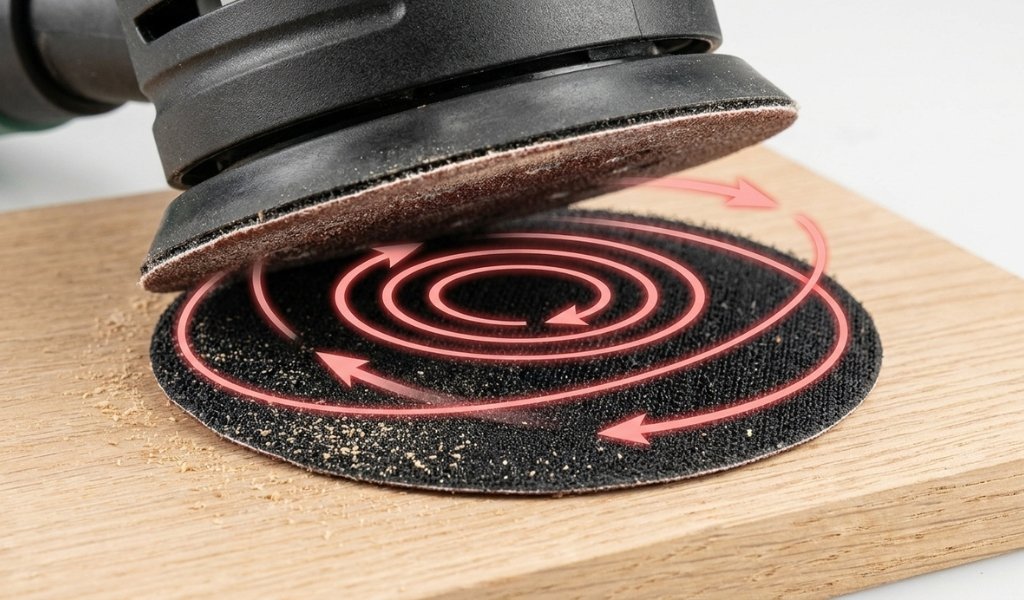
Swirl marks are the enemy of any fine finish, and they’re almost always caused by a sanding pattern that repeats. When an abrasive traces the same arc over and over, it creates micro-scratches that align in a consistent direction and those scratches catch light and become visible under a finish coat.
The random orbit eliminates this problem at the mechanical level. Because the two motions are unsynchronized, the disc never traces the same path twice. The scratches left in the wood are random in orientation, which means they scatter light evenly and disappear under finish. This is the core advantage over angle grinders, belt sanders, and conventional rotary tools when surface quality is the priority.
Not all random orbital sanders are created equal. Understanding what the numbers actually mean and what they don’t will save you from buying the wrong tool.
Corded models remain the workhorses of the category. A corded random orbital sander delivers steady power regardless of battery state, making corded sanders the preferred choice for long sessions, heavy stock removal, or shop environments where outlets are plentiful. Most quality corded models draw between 2.5-amp and 3.5-amp, which is sufficient for demanding hardwood work.
Cordless sanders have closed the gap significantly in recent years. Brushless motor technology, combined with high-capacity battery platforms like DeWalt 20V Max and Milwaukee M18 Fuel, now delivers performance that rivals corded and cordless comparisons favorably for most tasks. The trade-off is battery management and a small weight penalty from the battery pack factors worth weighing for extended use.
Pneumatic models are the choice in high-volume production environments. They’re light, durable, and fast, but require a compressor and hose setup that isn’t practical for most home shops or job sites.
The 5-inch sander is the dominant format in the market, and for most woodworking applications, it’s the right choice. 5-inch sanding discs are widely available in every grit, from coarse to ultra-fine, and the pad size suits everything from tabletop panels to chair rungs.
A 6-inch pad covers more surface area per pass, which speeds up work on large, flat panels, think wide tabletops, doors, or cabinet sides. The trade-off is reduced maneuverability in tighter areas and a slightly heavier tool. If your work skews toward large flat panels, the 6-inch is worth considering. For general-purpose use, the 5-inch wins.
Single-speed sanders are simpler and often less expensive, but they lock you into one operating range regardless of the material or task. Variable-speed models sometimes labeled variable-speed control let you dial back the OPM for delicate work on veneer, soft woods, or finish touch-up work, and open up full power for aggressive material removal on hardwoods.
Variable-speed models are worth the premium for most woodworkers. The ability to slow the disc for delicate work isn’t just a nice-to-have; on thin veneer or near finished edges, it’s the difference between a clean result and a ruined workpiece.
Specs on a box only tell part of the story. Here’s how to evaluate a random orbital sander where it counts.
Stock removal speed matters most when you’re leveling a glue-up, flattening a panel, or working through a coarse grit progression quickly. A sander that bogs down under moderate pressure wastes time and heats the abrasive unnecessarily, causing the sandpaper to clog faster.
Dust collection is equally critical, both for visibility and surface quality. Clogged abrasive cuts slower and leaves a worse surface. Look for a sander with a well-designed dust port that connects easily to a shop vac or dust extractor via a standard adapter. Some models include an integrated dust bag or canister, which is convenient for job site use, but a vacuum hose connection to a proper dust extraction system will always outperform any onboard dust bag for sustained, clog-free cutting.
The holes in the sanding pad must align with the holes in your sanding discs mismatched patterns significantly reduce dust extraction efficiency. Most quality discs use an 8-hole pattern compatible with standard hook and loop pads.
A sander that leaves a clean surface straight off the pad saves you time at every subsequent stage. Test surface quality by sanding with a consistent grit across the grain of a flat board, then examining the result under raking light. A quality tool leaves uniform, fine scratches with no visible swirl marks or directional patterns.
Handling comfort affects how long you can work productively. A well-balanced sander with a low-profile body and a rubberized grip reduces hand fatigue during extended sessions. Pay attention to where the power button is located. A sander that requires you to shift your grip to start or stop isn’t designed with the user in mind.
Vibration is a legitimate health concern for regular sander users. High vibration levels accelerate hand fatigue and, with prolonged exposure, can contribute to hand-arm vibration syndrome. Ergonomic design including vibration-dampening materials in the grip and motor mounts meaningfully reduces these effects.
When evaluating sanders, hold the tool at its natural operating angle and notice where the vibration transmits to your hand and arm. A well-damped tool feels smooth and controlled even at full speed. A poorly damped one transmits a harsh buzz that becomes exhausting within minutes. Ergonomics matter more than most buyers realize until they’ve spent a full day on a large project.
The market for random orbital sanders spans a wide range of price points and performance levels. Here are the standout options at each tier.
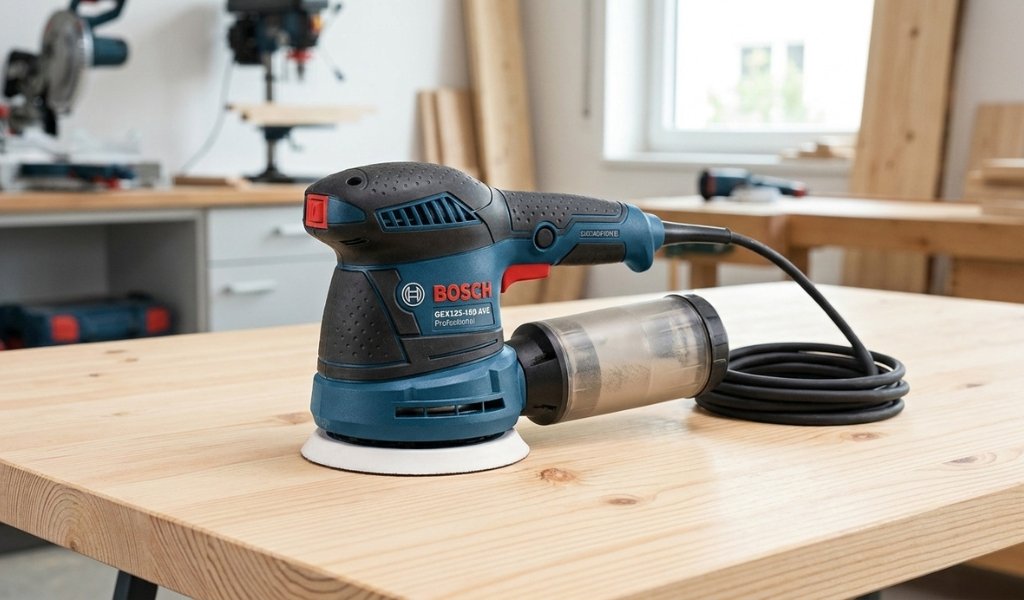
The Bosch ROS20VSC is the benchmark in the mid-range category. This corded random orbital sander packs variable-speed control into a compact, ergonomic body, with a 2.5-amp motor that delivers consistent power across hardwoods and softwoods alike. Its integrated dust collection system compatible with both the included dust canister and a standard shop vacuum adapteris among the cleanest in the class. The hook and loop pad replacement is tool-free, and the overall build quality inspires confidence for long-term use.
The Bosch ROS20VSC suits professional woodworkers and serious hobbyists alike. If you buy one random orbital sander for general shop use, this is the one.
Skil has long occupied the entry-level power tool space without sacrificing reliability, and their 5-inch random orbital sander continues that tradition. It lacks variable-speed control and the dust extraction efficiency won’t match premium models, but for occasional use, finishing work, or a first sander for a developing woodworker, it delivers solid results at a fraction of the price.
For woodworkers already committed to a cordless platform, the choice between DeWalt and Milwaukee often comes down to the batteries already in your shop.
The DeWalt DWE6423 (corded) and its cordless 20V Max counterpart are excellent all-around performers. The DeWalt 20V Max platform benefits from the brand’s wide battery ecosystem, and the sander itself delivers competitive stock removal with good dust collection. The brushless motor extends runtime and reduces maintenance.
Milwaukee M18 Fuel cordless sanders are built for demanding use. The brushless motor and robust build quality make these tools a genuine match for corded models in sustained work. Battery life on the M18 platform is exceptional, and the tool handles hard maple and dense exotics without complaint.
Choose DeWalt 20V Max if you prioritize battery ecosystem breadth and wide accessory availability. Choose Milwaukee M18 Fuel if raw performance and durability under heavy use are the deciding factors.
The Makita BO5041K is a favorite among furniture makers for its combination of smooth action, variable-speed control, and a pad design that delivers exceptional surface quality. Makita’s build quality is consistently excellent, and the Makita BO5030K the slightly simpler sibling offers similar handling at a lower price point for those who don’t need variable speed.
For fine furniture work, delicate work on figured wood, or situations where surface quality is the absolute priority, the Makita BO5041 earns its reputation.
Festool and Mirka occupy the professional premium tier, and both deliver performance that justifies the price provided your workflow demands it.
The Festool ETS EC 125 integrates seamlessly with the Festool dust extraction ecosystem, delivering near-zero dust output when paired with a Festool CT extractor. The brushless motor is exceptionally quiet and smooth, and the ergonomic body reduces fatigue during full-day sessions. This is a cabinet shop or finishing studio tool.
The Mirka DEROS takes a different approach, using an electric drive system that produces almost no vibration. Dust extraction performance is remarkable, and the DEROS handles everything from rough leveling to ultra-fine finish sanding without tool changes. Both are investments but for professionals who live behind a sander, they pay for themselves in output quality and reduced fatigue.
A random orbital sander doesn’t work in isolation. To get the best results, it needs to be part of a broader system: the right abrasives, the right grit strategy, and an understanding of when a different tool is the better choice.
For those building out or refining a complete wood sanding tools setup, the random orbital sander is typically the centerpiece, but it works best when supported by complementary tools and a disciplined approach to abrasive selection. You’ll find deeper coverage of how random orbital sanders fit within a full wood sanding tools workflow in our dedicated resource on that topic (/wood-sanding-tools/).
Grit progression is where many woodworkers leave quality on the table. The goal is to remove the scratches left by the previous grit with the next one working systematically from coarse to fine rather than skipping steps or starting finer than necessary.
A practical progression for most hardwood projects:
Never skip more than one grit step. Jumping from 80 to 150, for example, forces the finer grit to do work it’s not designed for; the coarser scratches remain visible under the finer surface, and they’ll show through your finish. Each disc in the progression should work until the previous grit’s scratches are completely gone before moving forward.
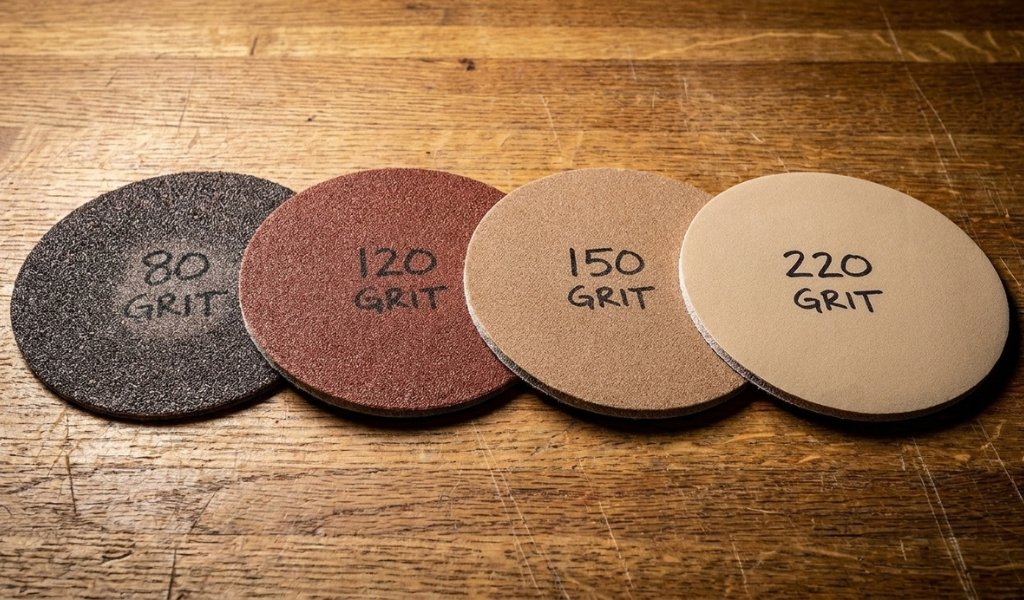
Sanding grit selection also depends on the species. Open-grained woods like oak and ash typically finish well at 150. Dense, fine-grained species like hard maple or cherry may benefit from an additional pass at 180 or 220 before finishing.
The random orbital sander excels at finishing work, but it’s not always the right tool. When material removal speed is the priority, stripping heavy paint, shaping curved surfaces, or leveling severely uneven lumber, an angle grinder fitted with an appropriate sanding disc or flap wheel can do in minutes what would take a random orbital sander much longer.
The angle grinder is an aggressive, directional tool that requires more skill to control, particularly on flat surfaces where uneven pressure creates low spots. It’s also significantly less suited for finish work close to edges or in areas where surface quality matters. Understanding when to switch tools and when to switch back to the random orbital sander for finish work is part of developing a complete sanding workflow. This topic deserves its own dedicated treatment, and we’ll be covering it in full detail in an upcoming guide to angle grinder sanding discs.
A random orbital sander is one of the few power tools that directly determines the quality of your final result, not just the efficiency of your process. The wrong tool, the wrong grit progression, or a machine that vibrates your hand numb after 20 minutes all show up in the finished piece.
The tools covered here from the reliable Bosch ROS20VSC to the professional-grade Festool and Mirka systems represent the real range of what’s available. Match the tool to your workload, invest in quality abrasives, and follow a disciplined grit progression, and the results will speak for themselves.
If you’re building out your shop from scratch or reconsidering your current setup, start with the Bosch for all-around versatility, add a cordless option from the DeWalt 20V Max or Milwaukee M18 Fuel platform if your work takes you off the bench, and step up to Festool or Mirka when your standards and your workflow demand it.
The term “random” refers to the unsynchronized combination of two simultaneous motions: the disc spins on its own axis while also tracing an elliptical orbit around a second point. Because these two motions are not synchronized, the abrasive never traces the same path twice creating a random sanding pattern that prevents the swirl marks and cross-grain scratches associated with conventional rotary sanders.
Random orbital sanders are used for surface preparation, stock removal, and finish sanding across a wide range of woodworking applications. Common uses include leveling glue joints, removing mill marks from rough lumber, sanding between finish coats, and preparing wood for staining or finishing. The tool is effective on flat panels, tabletops, cabinet faces, and furniture components.
For DIYers, the Bosch ROS20VSC offers the best combination of performance and value at a mid-range price. The Skil 5-inch random orbital sander is a reliable entry-level option for occasional use. For those already in the DeWalt ecosystem, the DeWalt 20V Max cordless sander provides excellent versatility without the cord.
Random orbital sanders are available in three power configurations. Corded models provide steady power with no battery management requirements and suit sustained shop use. Cordless sanders particularly those on the DeWalt 20V Max and Milwaukee M18 Fuel platforms offer portability and strong performance thanks to brushless motor technology. Pneumatic models are lightweight and fast, but require a compressed air supply, making them most practical in production shop environments.
Regular maintenance extends sander life significantly. Keep the dust port and collection system clear of buildup; a clogged dust extractor connection reduces efficiency and strains the motor. Inspect the hook and loop pad regularly and replace it when the surface no longer grips sanding discs firmly. Blow out the motor vents with compressed air periodically to prevent dust buildup inside the motor housing. For cordless models, follow the battery manufacturer’s storage and charging guidelines to maximize battery lifespan.