Physical Address
304 North Cardinal St.
Dorchester Center, MA 02124
Physical Address
304 North Cardinal St.
Dorchester Center, MA 02124

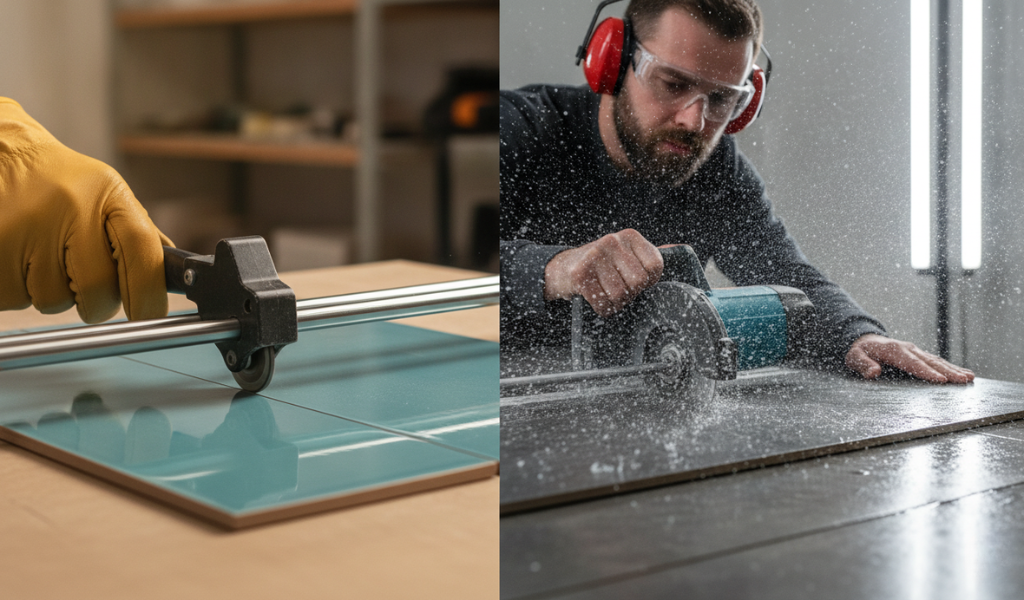
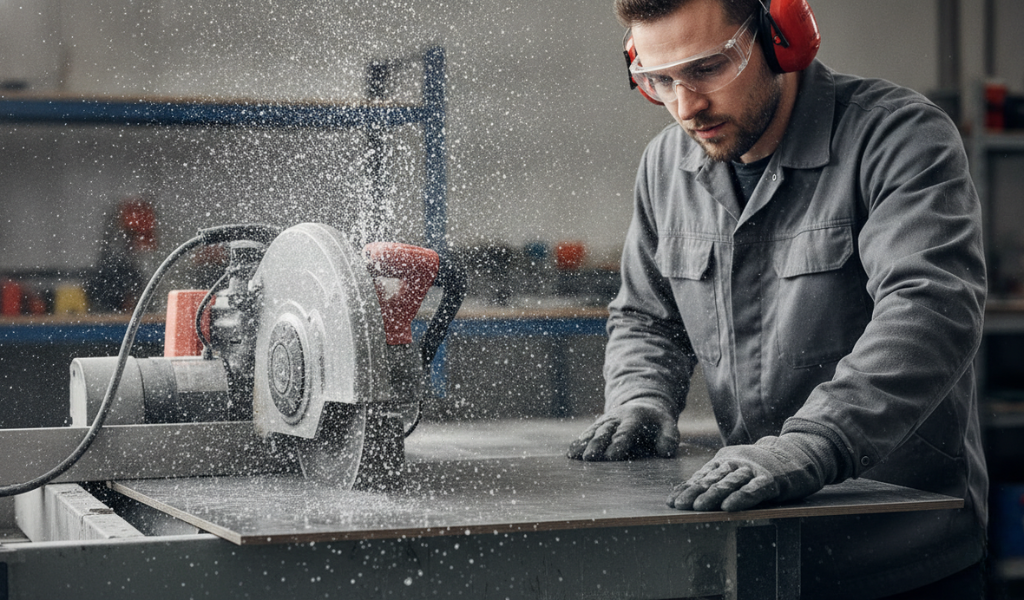
Taking on a tiling project can quickly transform a dull room into a stunning space. But before you can admire your beautiful new floor or kitchen backsplash, you have to cut the tiles to fit perfectly. This brings up a common dilemma for both DIY enthusiasts and professional contractors: should you use a manual vs. electric tile cutter?
Making the right choice depends heavily on your specific project, the materials you plan to use, and your overall budget. Using the wrong tool can lead to shattered tiles, wasted money, and a lot of frustration. This comprehensive guide will break down everything you need to know about these two popular tools. By the time you finish reading, you will know exactly which tile cutter belongs in your workspace.
Before you choose a cutter, know how to choose the right tile cutter for your project and look closely at your tile material. Ceramic, porcelain, glass, concrete, and natural stone each behave differently under a blade, and matching the tool to the material is the single most important step.
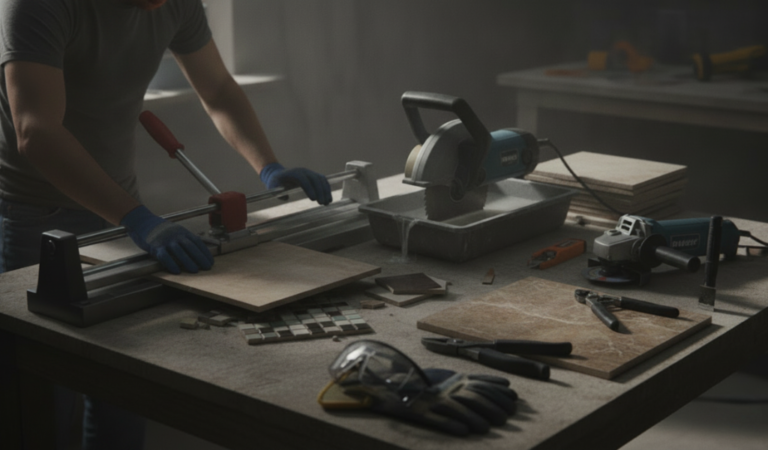
A manual tile cutter is best for ceramic tiles, straight cuts, and smaller DIY projects because it is affordable, portable, and easy to use. An electric tile cutter is better for porcelain, natural stone, large-format tiles, and complex cuts where greater power and precision are required.
Before you buy any tools, you need to understand the materials you are working with. Tiles come in many varieties, and each type reacts differently to cutting pressure and heat.
Ceramic tiles are incredibly common and relatively soft, making them quite easy to cut. They are created from sand, water, and clay, then baked in a kiln. Porcelain tiles are made from much denser clay and baked at higher temperatures, resulting in a harder material that requires a bit more effort to slice through. You might also work with natural stone, glass, or concrete tiles.
You also need to measure your space accurately. Measure the width and height of the entire area you plan to tile. Knowing the exact square footage will help you determine how many cuts you actually need to make. Always buy about ten percent more tile than your measurements dictate to account for waste, mistakes, and awkward corners.
If your project requires hundreds of cuts, your choice of tool will drastically affect how long the job takes and how tired you feel by the end of the day.
A manual tile cutter is a straightforward, hand-operated tool that looks somewhat like a car jack mounted on a metal base. It features a top-to-bottom crossbar, a carriage, and a small scoring wheel made of tungsten carbide or a similarly hard material.
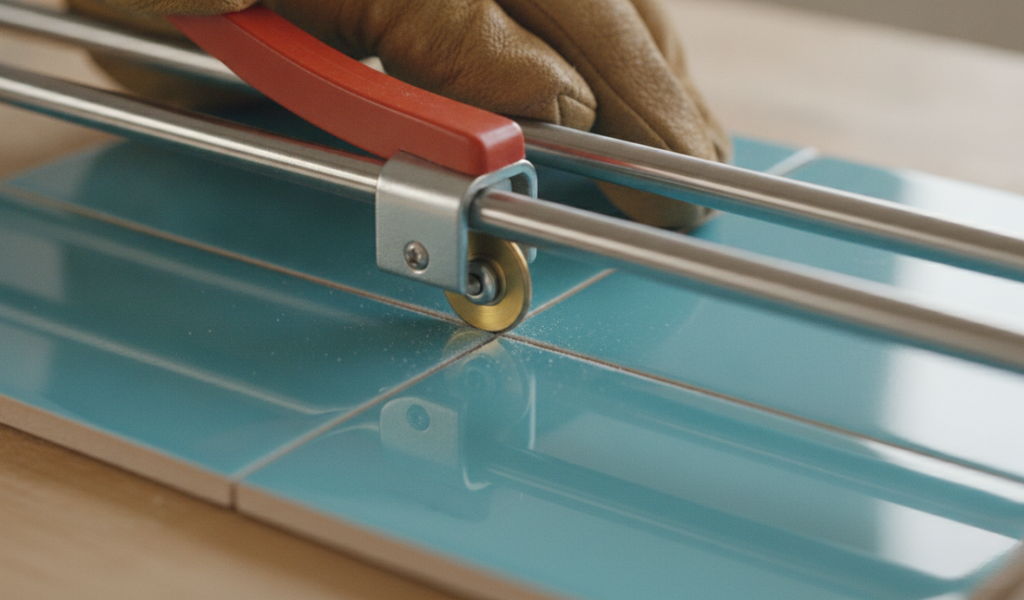
To use this tool, you place your tile on the base and align it with your measurement marks. You then press down on the handle to glide the scoring wheel across the surface of the tile. This creates a weak point in the glaze. Finally, you apply pressure with the tool’s breaking mechanism to snap the tile cleanly along the scored line.
Manual tools remain a staple in almost every tiler’s toolbox for several good reasons.
The Benefits:
The Drawbacks:
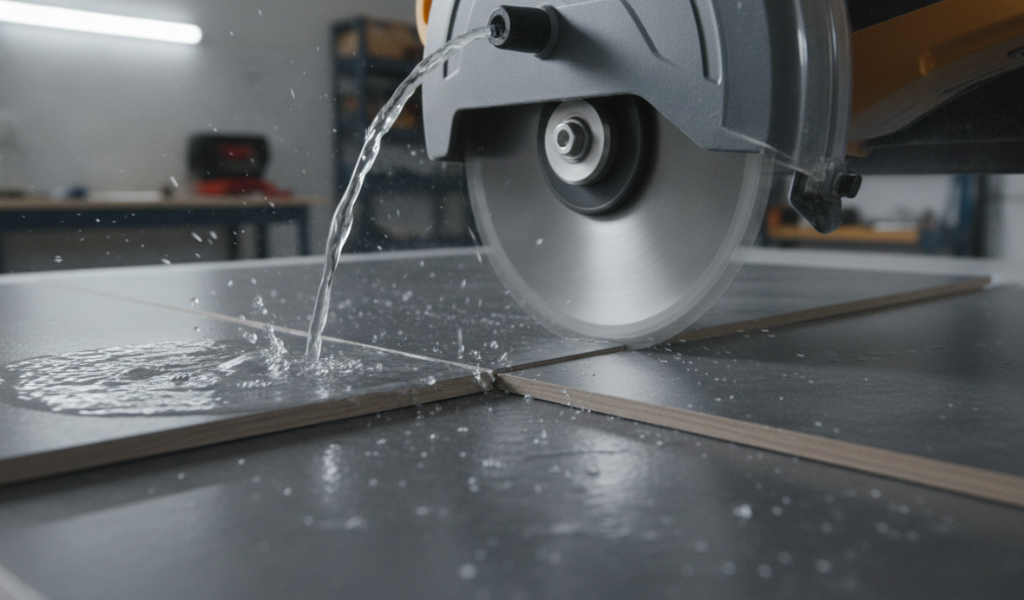
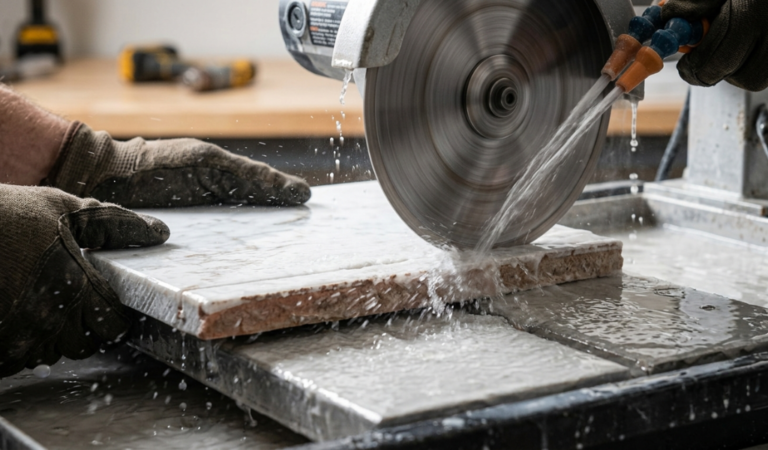
An electric tile cutter, frequently called a wet saw, functions very much like a traditional table saw. It features a motorized, spinning blade embedded with diamond dust. Because cutting dense tile generates an enormous amount of friction and heat, these machines use a constant stream or bath of water to keep the blade cool and prevent the tile from cracking.
You push the tile slowly through the spinning blade, allowing the diamonds to grind away the material rather than snapping it.
Electric wet saws are powerful machines designed to tackle the most demanding jobs.
The Benefits:
The Drawbacks:
When comparing a manual vs. electric tile cutter, It can feel daunting to gather all the necessary information before you start your first tile project, as there is a tremendous amount of in-depth installation advice intended for professionals that is far more than you need for a simple weekend DIY. So you have to weigh four main factors based on your specific daily tasks.
If you are installing a simple square backsplash in a kitchen, a manual cutter will handle ninety percent of the workload rapidly. However, if you are tiling a bathroom floor with multiple heating vents, plumbing pipes, and curved toilet flanges, an electric cutter is absolutely mandatory.
Soft ceramic tiles yield easily to the scoring wheel of a manual tool. But if you purchased beautiful, thick granite tiles for your entryway, a manual cutter will likely fail. Natural stone and thick porcelain demand the grinding power of a wet saw.
Living in a third-floor apartment makes running a wet saw very difficult. You have to carry the heavy machine downstairs, cut the tile, and run back upstairs to check the fit. In confined spaces or areas where you cannot make a mess, the manual cutter is the superior option.
Anyone can learn to score and snap a basic ceramic tile in about five minutes. Operating a wet saw requires you to understand blade alignment, water pump maintenance, and strict safety protocols to keep your fingers safe from the high-speed blade.
Tiling is a rewarding process that adds immense value and beauty to a property. Choosing between a manual vs. electric tile cutter ultimately comes down to the scope of your work, So here is
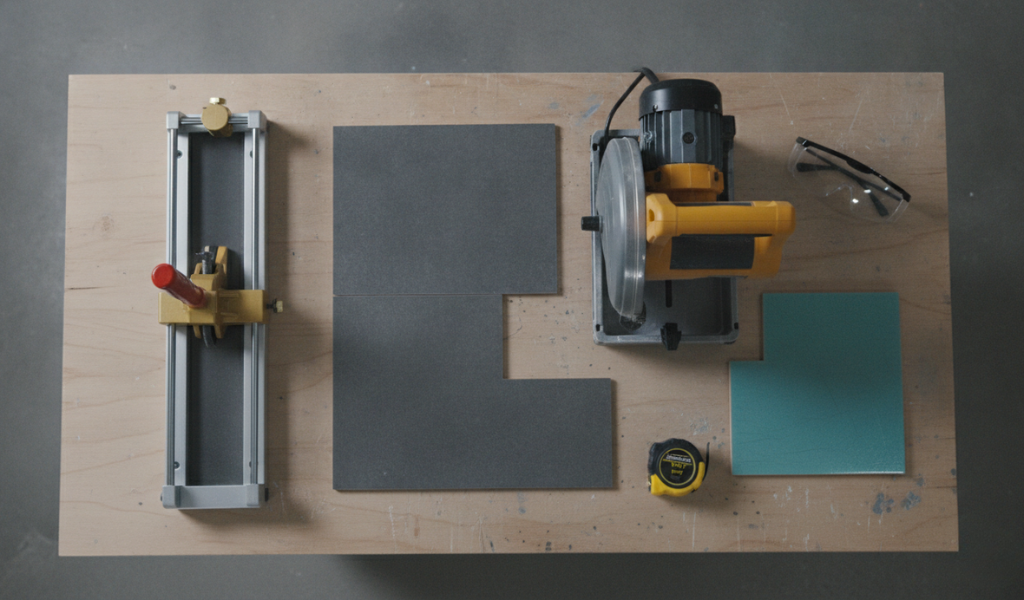
A manual tile cutter is your best friend for small jobs, basic ceramic tiles, and projects requiring mostly straight cuts. It saves you money, sets up in seconds, and keeps your workspace clean. On the other hand, an electric tile cutter is the heavy-duty workhorse you need for complex cuts, natural stone, and large-scale renovations.
If you want to ensure your tiling project goes off without a hitch, evaluate your materials and space carefully. Ready to get started? Explore our wide selection of professional-grade tile cutters today and equip yourself with the perfect tool for your upcoming renovation.
Yes, you can cut porcelain with a manual tool, but it requires a high-quality cutter with a sharp tungsten carbide scoring wheel. Because porcelain is dense, you must apply firm, even pressure when scoring. If the porcelain is exceptionally thick or textured, you will likely need an electric wet saw.
Most electric tile cutters feature a built-in water reservoir tray beneath the blade. The blade spins through this water to cool itself. You do not always need a garden hose attached, but you must frequently refill the reservoir tray as the water evaporates or turns into a thick slurry.
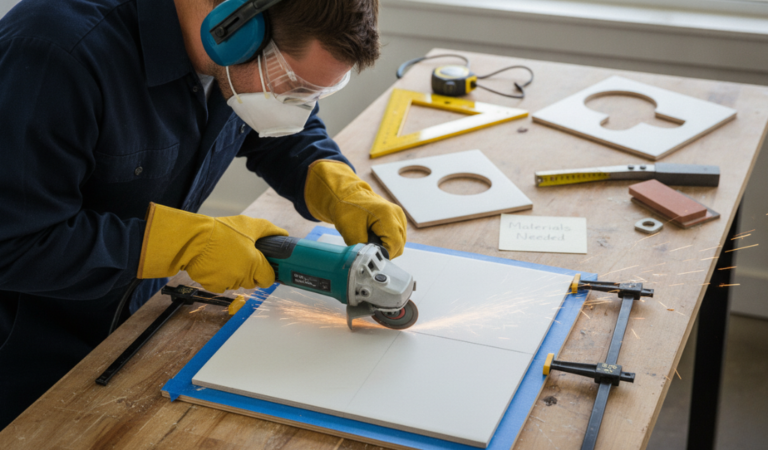
Manual cutters cannot make curved cuts. You will need an electric wet saw to make multiple straight relief cuts up to the curve’s edge, then break off the small pieces. Alternatively, you can use tile nippers to slowly bite away small chunks of the tile until you reach your desired curved line.
Uneven breaks usually happen for two reasons. First, you might not be pressing hard enough to create a deep, continuous score line. Second, you might be scoring the same line multiple times, which confuses the breaking mechanism. Always score the tile once with firm, steady pressure.
Like any power tool, electric cutters pose safety risks if used improperly. However, diamond tile blades are abrasive rather than toothed like wood saws. While you should never touch a moving blade, they are generally safer than traditional wood table saws. Always wear safety glasses and follow the manufacturer’s safety guidelines.
A manual cutter is vastly more beginner-friendly. It is safer, quieter, and allows you to practice cutting cheap ceramic tiles without setting up a messy water station. Start with a manual tool to learn how tiles behave before investing in a wet saw.