Physical Address
304 North Cardinal St.
Dorchester Center, MA 02124
Physical Address
304 North Cardinal St.
Dorchester Center, MA 02124


Walk into any well-stocked workshop and you’ll find at least one electric sander. Probably more. That’s not a coincidence, it’s because no other category of power tools does more to separate a mediocre finish from a professional one while saving you the time and effort of doing it all by hand.
Whether you’re flattening a rough-sawn board, stripping decades of paint from old furniture, or bringing a freshly built cabinet to a silky-smooth pre-finish prep, the right electric sander transforms a grueling task into a controlled, repeatable process. The challenge is knowing which tool to reach for, what specs actually matter, and how to avoid buying a model that ends up collecting dust on a shelf.
This guide covers it all. From understanding the mechanics of how electric sanders work, to breaking down every major type by application, to decoding the key features that separate a capable tool from a frustrating one. If you want a deeper foundation on the broader process of sanding including grit progression, technique, and hand-sanding fundamentals that resource covers the full spectrum. But if your goal right now is to find the right electric sander for your next project, you’re in the right place.
An electric sander is a handheld or benchtop power tool that uses a motorized mechanism to move an abrasive surface typically sandpaper or a sanding disc across a workpiece at high speed. Instead of pushing sandpaper manually across wood, the motor does the reciprocating, oscillating, or rotating motion for you. The result is faster material removal, more consistent pressure, and far less physical fatigue over long sessions.
The motion type varies by sander category. Random orbital sanders move a 5-inch sanding pad in a simultaneous spinning and elliptical orbit. Belt sanders drive a continuous loop of sanding belts between two rotating drums. Detail and mouse sanders oscillate a small triangular pad at high frequency to reach tight spaces. Each motion has a specific mechanical advantage designed for a particular task or surface geometry.
At the core of every electric sander is the motor either a brushed motor or a more efficient brushless motor paired with a sanding pad or belt, a dust collection port, and some form of speed control. The quality of each of these components determines how well the tool performs over time.
Hand sanding has its place particularly on profiles, edges, and intricate detail work. But for flat panels, large surfaces, furniture refinishing, or any project requiring consistent stock removal across a wide area, hand sanding introduces too many variables: uneven pressure, inconsistent grit contact, and significantly slower throughput.
Electric sanders solve these problems through mechanical consistency. A random orbital sander applies uniform pressure across the entire sanding pad with every pass. A belt sander removes material at the same rate whether it’s the first minute or the twentieth. That repeatability is what makes it possible to sand a dining tabletop to 220-grit perfection without introducing high spots, low spots, or directional scratches.
For DIY projects, the efficiency gain is equally important. A task that might take 45 minutes of hand sanding can be completed in under 10 with the right electric sander and the right grit. That speed doesn’t come at the expense of quality when used correctly, modern electric sanders produce smoother, more uniform surfaces than most hand-sanding methods can reliably achieve.
The random orbital sander is the most widely used electric sander in both DIY and professional woodworking for good reason. Its defining feature is a dual-action sanding motion: the 5-inch sanding pad rotates on its own axis while simultaneously moving in an elliptical orbit. This randomized motion prevents the abrasive from cutting in a single direction, which effectively eliminates swirl marks the circular scratch patterns that plagued earlier single-action orbital designs.
Random orbital sanders accept hook-and-loop sanding discs across the full grit range, from 40-grit for aggressive stock removal down to 220-grit for pre-finish surface prep. The sanding pad connects to a backing pad with rubber suspension, which helps dampen vibration and maintain flat contact across the workpiece.
For versatility, nothing in the handheld category comes close.
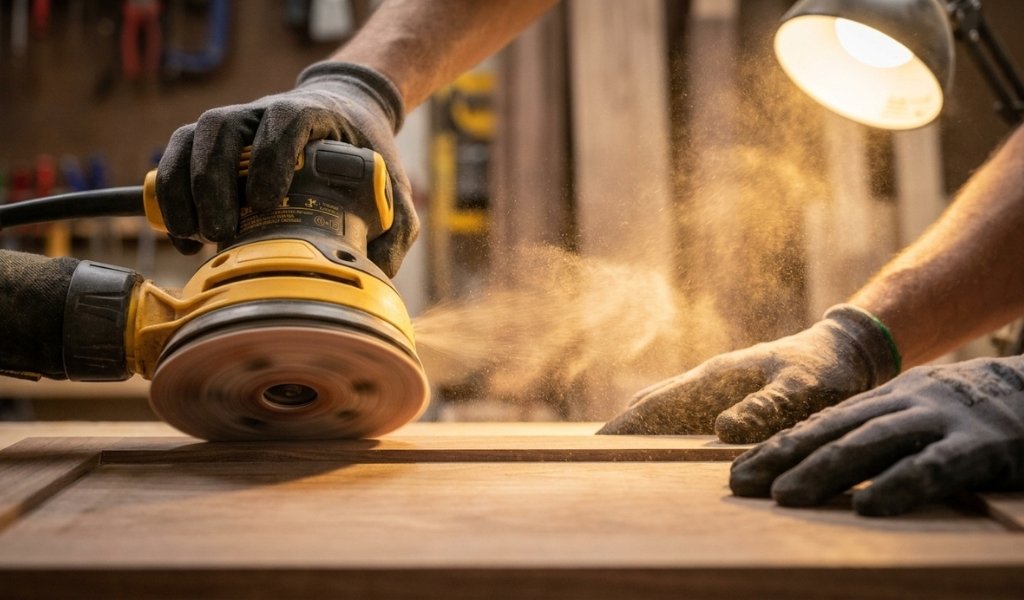
A quality random orbital sander handles furniture construction, paint removal, deck refinishing, and final-coat prep with the same tool and a grit change. Models like the Bosch ROS20VSC and the Dewalt random orbital sander are frequently cited by professional woodworkers as reliable daily drivers, offering variable speed control, efficient dust collection systems, and robust build quality at an accessible price point.
If you can only own one electric sander, this is the one to buy.
Belt sanders are purpose-built for aggressive material removal. A continuous sanding belt available in widths typically ranging from 3 to 4 inches wraps around two drums driven by a high-torque motor. The belt moves in a single, linear direction at high speed, making it exceptionally effective at flattening wide panels, leveling glue joints, stripping old paint and finish from large surfaces, and knocking down rough lumber quickly.
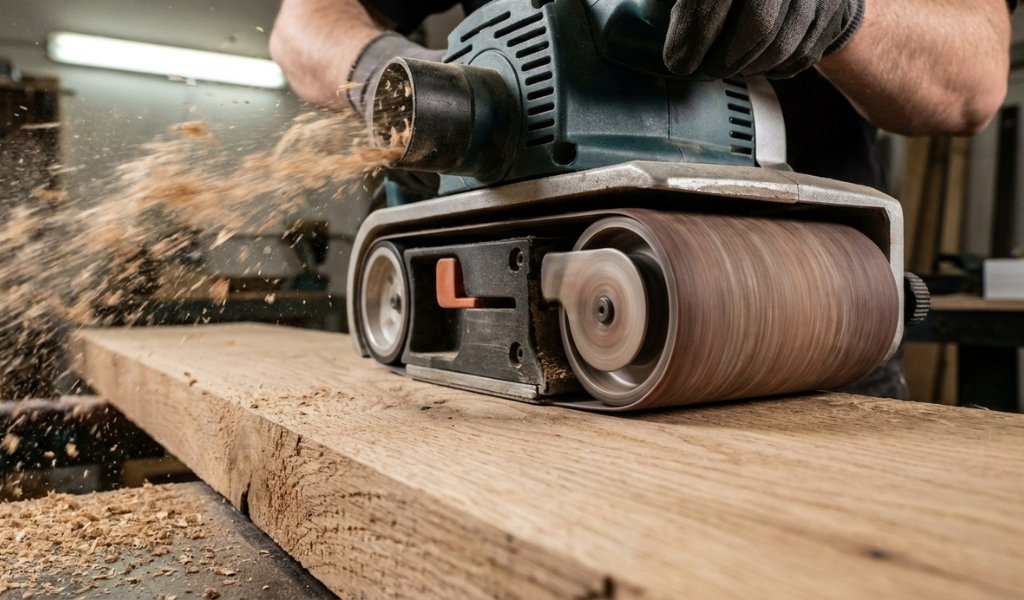
The tradeoff is that belt sanders require a confident, steady hand. Because the sanding motion is directional, pausing or tilting the tool even slightly can create deep gouges or ridges that take significant effort to sand out. Experienced users keep the tool moving at a consistent pace with the belt running parallel to the wood grain.
Belt sanders are available in corded and cordless configurations. Corded models deliver sustained power without battery limitations, which matters when you’re running the tool continuously through heavy stock removal sessions. For portable or job-site use, cordless models from Milwaukee and Makita have closed the gap significantly with brushless motor technology and high-capacity battery platforms.
This is not a finishing tool. It’s a material removal tool and in that role, it’s unmatched.
Standard 5-inch sanding discs can’t reach everywhere. Inside corners, narrow edges, furniture aprons, window trim, and intricate carved details all demand a more compact, maneuverable tool. That’s where detail sanders and mouse sanders sometimes called palm sanders fill the gap.
Detail sanders use a small triangular sanding pad that oscillates at high frequency. The pointed tip of the pad fits directly into 90-degree corners, making it the right tool for sanding inside cabinet joints, baseboards, stair risers, and any surface where a round pad simply won’t fit. The compact, lightweight body allows one-handed operation with good control in confined spaces.
Mouse sanders are a slightly larger variant with a broader triangular or rounded pad profile. They’re less aggressive than belt sanders but more targeted than random orbital models, sitting comfortably in the middle of the power-vs-precision spectrum.
Both types accept sandpaper sheets cut or purchased to fit the pad profile. Hook-and-loop attachment systems make changing sandpaper fast, and most models include a dust collection port for connecting to a shop vacuum. For furniture restoration, trim work, and any detail-oriented DIY application, a quality detail sander is a worthwhile addition to any kit.
Sheet sanders also called finish sanders or pad sanders use a flat, rectangular sanding pad that accepts quarter- or half-sheet sandpaper. The pad oscillates in a tight, controlled pattern rather than rotating or orbiting, which produces a very consistent, fine finish on flat surfaces. Their rectangular profile is especially useful for sanding right up to edges and into corners without rounding them off.
Sheet sanders are gentler than belt sanders and more suited to fine finish work than heavy stock removal. They’re a reliable choice for final surface prep on furniture panels, cabinetry faces, and any flat surface where you need a uniform scratch pattern before applying stain or topcoat.
Drywall sanders occupy a different niche entirely. These are long-handled, pole-mounted tools designed specifically for sanding drywall seams and joint compound on walls and ceilings. Most drywall sander models include an integrated vacuum port or dust collection system sometimes with HEPA filtration because drywall dust is extremely fine, spreads rapidly, and poses a serious respiratory hazard. A dustless drywall sanding setup, connecting the tool directly to a vacuum with a HEPA filter, is the standard approach for interior renovation work.
Motor power determines how much load an electric sander can handle without bogging down. For random orbital sanders, motors typically range from 2.0 to 3.0 amps on corded models. A 2.5-amp motor handles most general woodworking tasks comfortably. Step up to 3.0 amps if you’re regularly sanding hardwoods or pushing through aggressive grits under sustained load.
OPM orbits per minute measures how fast the sanding pad completes its elliptical motion. Higher OPM means faster material removal; lower OPM produces a finer finish with less heat buildup. A single-speed sander at a fixed OPM limits your flexibility. Variable speed control, typically adjusted via a dial on the tool’s body, lets you match the sanding speed to the task. Lower speeds for fine finishing or delicate surfaces; higher speeds for stock removal on robust hardwoods.
Vibration is another specification worth examining. Prolonged use of a high-vibration sander causes fatigue and reduces precision over time. Better models including several from Bosch, Makita, and Milwaukee incorporate vibration dampening systems into the handle and motor housing. This is particularly relevant for palm sanders and random orbital models used for long, continuous sessions.
The corded vs. cordless decision comes down to how and where you work. Corded electric sanders deliver consistent power without interruption, plug in and run for as long as the task requires. For stationary workshop use, a corded model is typically the more economical choice and eliminates battery management entirely.
Cordless sanders have improved dramatically with the shift to brushless motor technology and higher-capacity battery systems. The Dewalt 20V Max random orbital sander, for example, runs on the same battery platform as a full range of Dewalt power tools, a meaningful advantage if you’re already invested in that ecosystem. Similarly, Makita’s 18V LXT orbital sander delivers consistent performance across extended sessions on a high-capacity battery.
The Bosch ROS20VSC remains a benchmark corded random orbital sander well-regarded for its variable speed range, vibration control, and efficient dust collection system. For those prioritizing portability across job sites or working in spaces without convenient power access, cordless models from Milwaukee, Makita, and Dewalt offer comparable performance with the freedom of a battery-powered platform.
Skil also offers capable, budget-friendly corded options for DIYers who need reliable performance without a professional price tag.
Dust management is not a secondary concern. Fine sanding dust becomes airborne quickly, poses health risks with sustained exposure, and contaminates finish coats if it settles back onto a prepared surface.
Most electric sanders include some form of built-in dust collection. Entry-level models attach a dust bag directly to the tool’s exhaust port functional but limited in capacity and filtration efficiency. Better models offer a dust canister with a larger volume and easier emptying. High-end configurations include a dedicated vacuum port designed for direct connection to a shop vacuum via a hose, dramatically reducing airborne particles at the source.
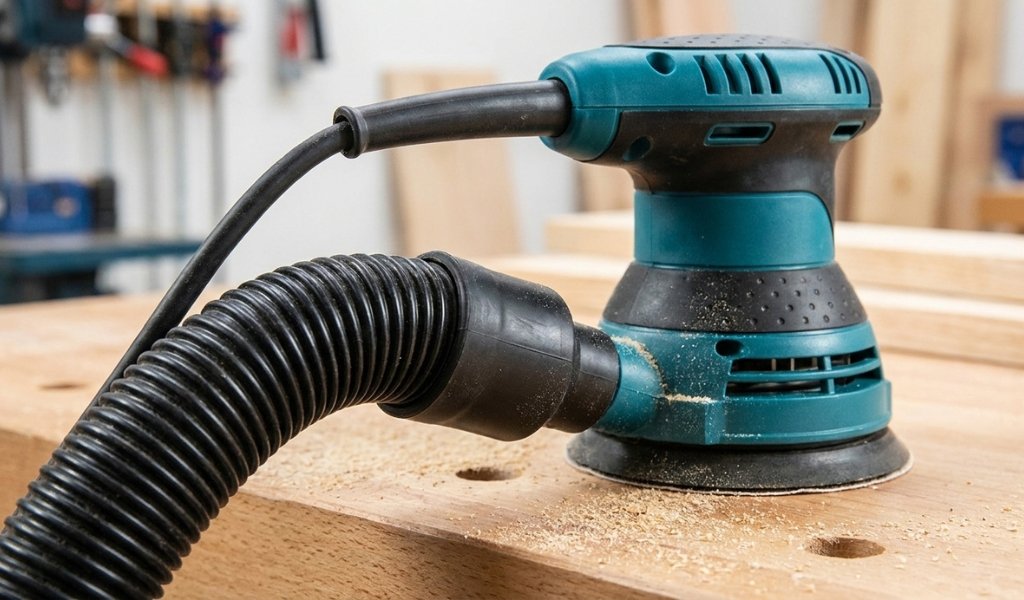
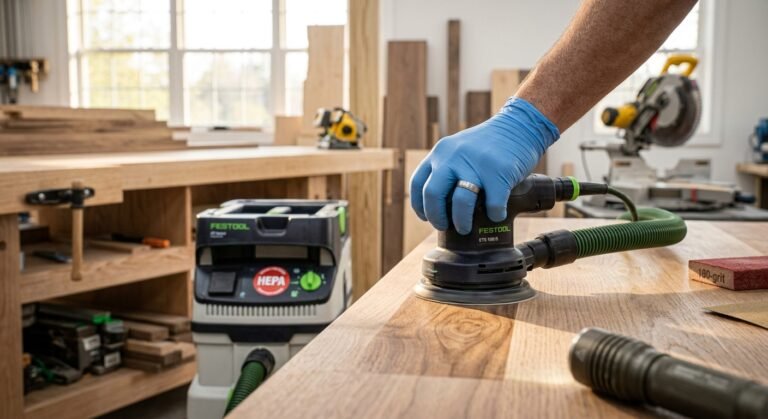
For drywall applications, a dustless setup connecting a drywall sander to a vacuum with HEPA filtration is effectively mandatory for indoor use. HEPA-rated systems capture particles as fine as 0.3 microns, providing meaningful protection against the finest sanding dust that a standard dust bag simply cannot retain.
When evaluating any electric sander, check whether the vacuum port matches standard hose diameters and whether the tool’s dust collection system includes a micro-filter. A well-designed dust collection system extends sandpaper life, keeps the work surface clean between passes, and makes post-sanding cleanup significantly faster.
For almost any project involving wood prep, paint removal, or surface refinishing, yes an electric sander is worth the investment. Even an entry-level random orbital sander cuts sanding time dramatically compared to hand sanding and produces more consistent results across large, flat surfaces. For occasional DIY use, a mid-range corded orbital sander in the $60–$120 range delivers professional-grade performance without a significant outlay.
For general woodworking, a random orbital sander is the most versatile and practical choice. It handles both material removal and fine finish prep, works with a wide range of sanding discs, and leaves no directional scratch pattern. If your projects regularly involve heavy stock removal or flattening wide panels, adding a belt sander to the kit gives you the aggressive cutting power that a random orbital can’t match. For detail and trim work, a mouse or detail sander completes the setup.
Yes, with the right grit and the right tool. A belt sander with 40–60 grit sanding belts is the fastest option for stripping old paint from large flat surfaces. A random orbital sander with 60–80 grit discs handles paint removal from furniture and smaller surfaces more controllably, with less risk of gouging. For intricate surfaces or moldings, a detail sander with coarse-grit sheets reaches areas that larger tools cannot. Always follow up with progressively finer grits to remove the scratch pattern left by the coarse material before applying any new finish.