Physical Address
304 North Cardinal St.
Dorchester Center, MA 02124
Physical Address
304 North Cardinal St.
Dorchester Center, MA 02124

Every finish starts with a simple question. What should I sand with? Most people grab a pack of sandpaper because that is what the hardware store shelf offers. Then a friend mentions micromesh, and suddenly the choice feels harder. The micromesh vs sandpaper debate is common among woodworkers, car detailers, boat owners and pen turners, and the answer is not as simple as “one is better.”
They are different tools made for different jobs. In this guide you will learn how each one is built, how the grit numbers work, where each one shines, and what they really cost over time. We will also look at Mesh Sanding Discs vs Paper, because that comparison confuses a lot of people shopping for a random orbital sander. By the end you will know exactly what to buy for your next project.
Before comparing anything it helps to know what each product is. The names sound similar but the products behave very differently in your hand.
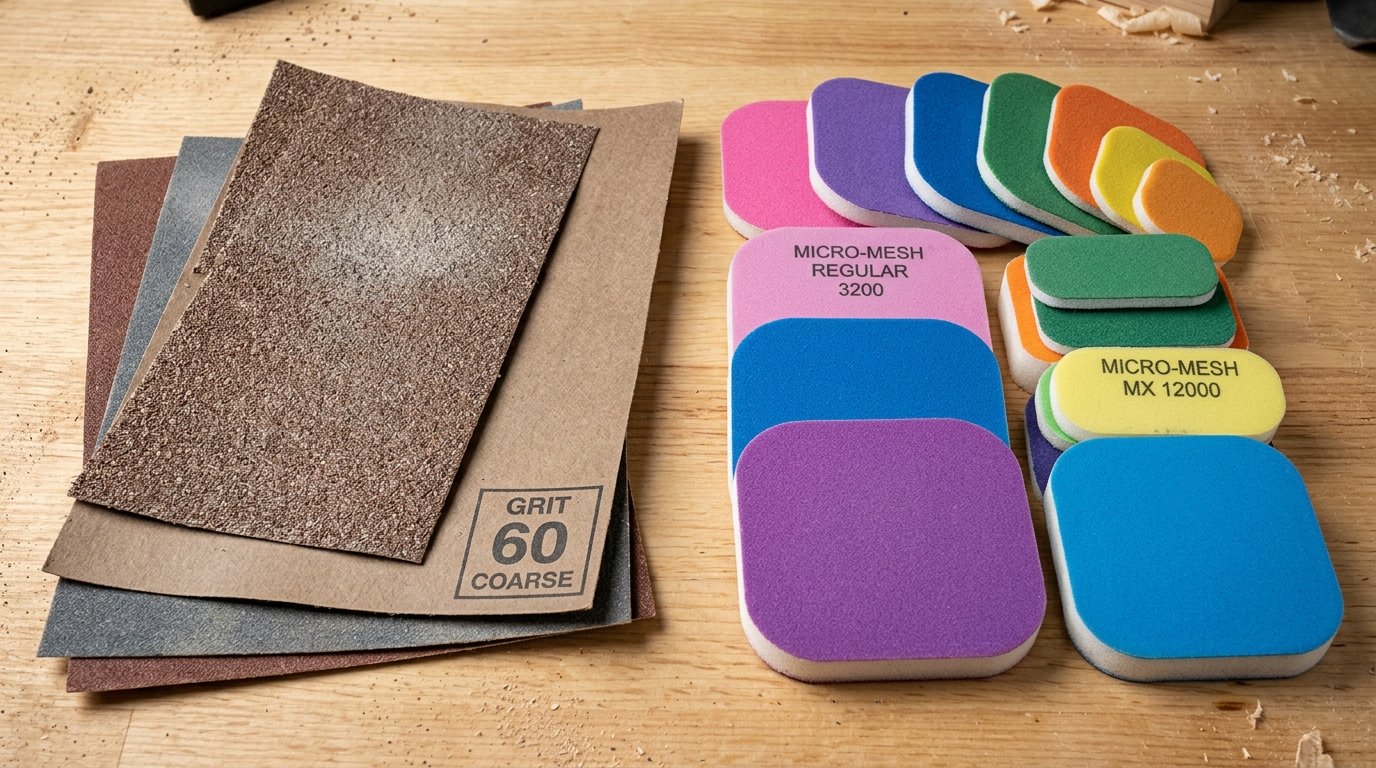
Sandpaper is the classic abrasive most of us grew up using. It is a sheet of paper or cloth with tiny hard grains glued to one side. These grains are usually aluminum oxide, silicon carbide, garnet or zirconia. When you rub the sheet across a surface each grain acts like a tiny chisel and cuts away a little material. That cutting action is how sandpaper removes old paint, smooths rough wood and shapes edges.
There are two main ways to use it. Dry sanding is the everyday method for wood, drywall and metal. Wet sanding uses water to carry away debris and keep the paper from clogging. Wet or dry sandpaper with a silicon carbide grain is a favorite in auto body shops for that reason.
Sandpaper is made for stock removal and leveling. If you need to knock down a rough board or strip a layer of varnish, it does the job fast. The downside is that the grains are sharp and fixed in place. Once they dull or fall off the sheet the paper stops cutting well. Most sheets are also stiff, which means they follow flat areas well but struggle on tight curves.
Micro-Mesh is a brand of soft, flexible sanding cloth sold by Micro-Surface Finishing Products. Over time many people started using micromesh as a general word for this type of fine finishing pad, much like people say “Band-Aid” for any bandage. The product is built on a soft cloth backing with a layer of foam or rubber in some versions. 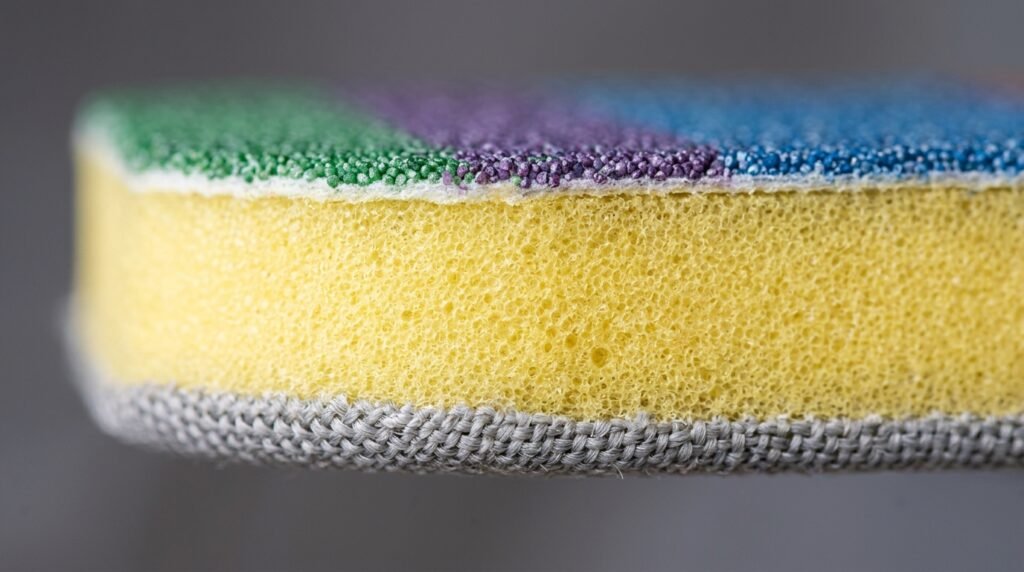 Tiny abrasive particles, usually aluminum oxide or silicon carbide, are bonded into that layer in a very even pattern.
The key difference is purpose. Micromesh is not made to remove a lot of material. It is made to refine a surface that is already smooth. Think of it as the bridge between regular fine sandpaper and polishing compound. It takes a surface that looks dull or hazy and turns it into something glossy and clear.
Because the backing is soft the pad hugs curves and contours without leaving flat spots. You can fold it around a pen blank or wrap it over a curved fender edge. It also holds up to water and cleans easily, which gives it a long working life.
One point of confusion is worth clearing up. The word mesh also shows up in a second product, which is the open weave sanding disc made for power tools. These look like a screen covered in grit and they are not the same thing as Micro-Mesh pads. We will cover them in the next section.
Once you place the two side by side the differences show up fast. They affect how the tool feels, how it cuts and how long it lasts.
The abrasive grains in both products can be the same mineral. Aluminum oxide is common in both. The real difference lies in how the grains are held and what sits behind them.
Standard sandpaper uses a paper or cloth backing with a resin coat that locks the grains in place. The result is a stiff sheet with sharp, uneven grains standing proud of the surface. This gives an aggressive cut and a rougher scratch pattern.
Micro-Mesh uses a soft cloth backing and a cushioned layer under the abrasive. The grains are very fine and spaced evenly. Since the backing flexes the pressure spreads out as you sand. That is why a micromesh pad leaves a uniform haze instead of deep lines.
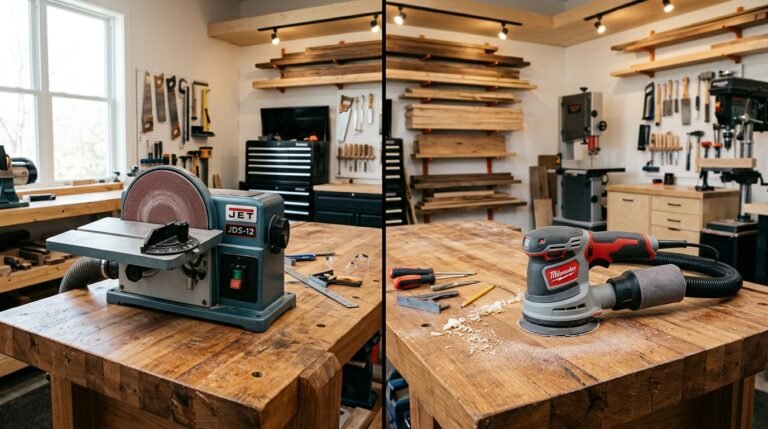
Now for the other kind of mesh. Mesh sanding discs use a woven net as the backing. The open holes let dust pass through, so the disc clogs far less than a paper disc. Paper discs have a few punched holes and the rest is solid. In the Mesh Sanding Discs vs Paper comparison the mesh version stays cooler and lasts longer on drywall and painted surfaces. 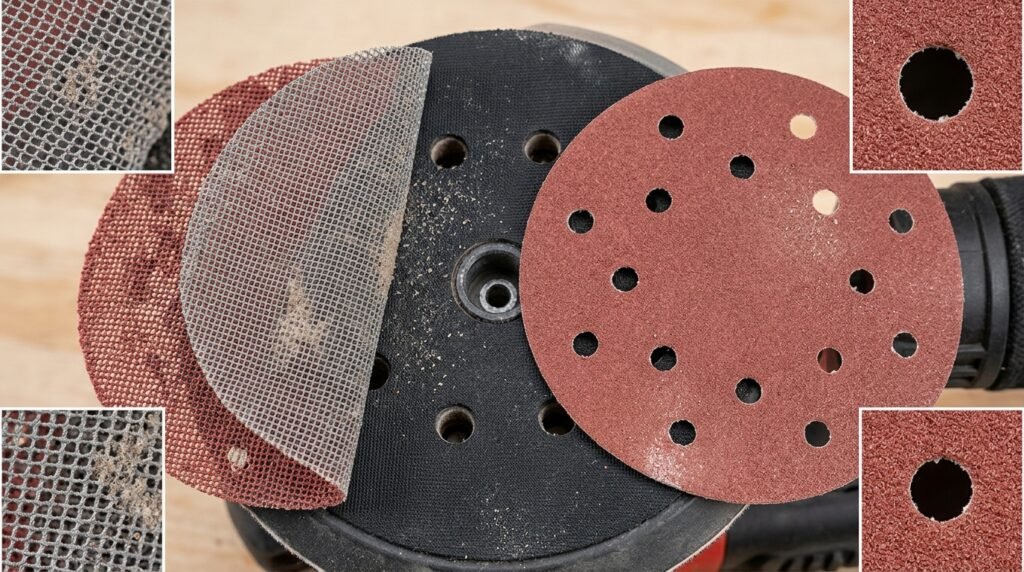 Paper discs are cheaper and still fine for quick wood work. You get more dust control with mesh but less feedback and a slightly softer cut.
So when someone says mesh they may mean a soft finishing pad or a vented net disc. Check the product description so you do not buy the wrong one.
Grit numbers can be confusing because there is more than one system. In North America most sandpaper follows the CAMI scale, set by the Coated Abrasives Manufacturers Institute and now tied to ANSI standards. Europe uses FEPA, which marks grits with a P in front, such as P400 or P1200.
Up to about 180 the two scales are close. Past that point they drift apart. A FEPA P1200 sheet is a bit finer than a CAMI 1200 sheet would be, if one even existed. This matters if you buy sandpaper from different brands. A P800 sheet from a European maker and an 800 grit sheet from a US maker will not leave the same scratch.
Micro-Mesh has its own rating that runs from 1500 up to 12000. You will see steps such as 1500, 1800, 2400, 3200, 3600, 4000, 6000, 8000 and 12000. These numbers are not a direct match for CAMI or FEPA. They describe a different abrasive system and they only make sense inside the Micro-Mesh range. As a rough guide the first pad at 1500 behaves like very fine wet sandpaper in the 1500 to 2000 zone. Each step after that polishes more than it cuts.
A good habit is to move up one step at a time. Skipping from 1500 to 8000 leaves scratches that the finer pad cannot remove. Work through each grade until the previous scratch pattern is gone.
This is where micromesh wins the long game. A sheet of regular sandpaper wears out as the grains dull and clog. Once it gets loaded with dust or paint you throw it away. Wet and dry paper lasts a bit longer but it still breaks down.
Micro-Mesh pads can be rinsed under water and used again. Many users report that a single pad finishes dozens of small jobs. Rinse it after each use and let it dry flat. The soft backing does not crack or tear as easily as paper.
Mesh sanding discs also last longer than paper discs because the open weave sheds dust. You can tap or wash many of them to clear the debris. A paper disc is usually done after one or two big jobs.
One warning applies to both. Never reuse a pad after it has touched a coarser grit without rinsing well. A single stray grain from a rough pad will scratch your polished surface and you will not notice until the light hits it.
Choosing the right one comes down to the stage of the job. Rough work needs one tool and final polish needs another.
Sandpaper is the right pick whenever you need to remove material. Stripping paint from a door is a good example. So is smoothing a rough board, shaping a corner or flattening wood filler. In these cases the sharp grains do the heavy work.
Here is a real example. A friend of mine rebuilt a set of old oak chairs. He started with 80 grit to take off decades of varnish. Then he moved to 120 and finished at 220 before applying stain. Micromesh would have been useless at the start because it is too fine to touch old varnish.
Car owners use sandpaper too. A deep scratch in clear coat often needs 1000 to 2000 grit wet paper to level the area. Body shops also use it on primer, filler and rust spots. Any job that needs shaping or leveling belongs to sandpaper.
A few tips help here. Use a sanding block on flat surfaces so you do not create waves. Change paper before it clogs since a clogged sheet burns paint and scratches deeper. Sand with the grain on wood to hide marks.
Micromesh shines in the last stages of finishing. It is the tool you reach for when the surface is already smooth and you want shine.
Pen turners love it for acrylic and resin blanks. After turning and sanding to about 600 they run through the micromesh pads from 1500 to 12000. The pen comes out with a glass look and no compound is needed.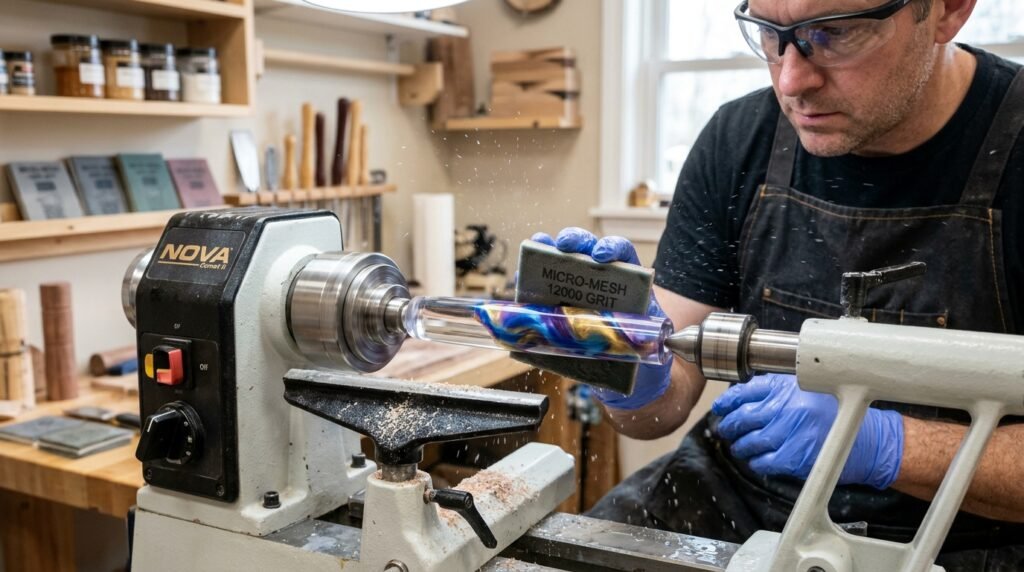 Luthiers use it to polish guitar finishes and fretboards. Boat owners use it on fiberglass gelcoat to remove haze before waxing.
In auto detailing it works well on headlight lenses and clear coat swirls. A cloudy headlight can look new again after a wet pass with 3200 then 4000 then 6000. Pilots and restorers use it on acrylic canopies and aircraft windows to remove fine scratches without distortion.
Woodworkers use it between coats of lacquer or shellac to knock down dust nibs. The soft pad levels tiny bumps without cutting through the film.
Some quick tips. Use water or a light lubricant for the best results. Keep your hand pressure light and let the pad do the work. Wipe the surface between grades so old grit does not follow you into the next step.
At first glance micromesh looks expensive. A small kit of pads can cost as much as a whole stack of sandpaper. A pack of 20 sheets of wet and dry paper may cost around ten dollars. A set of micromesh pads in the same range costs several times more.
But price per sheet is the wrong way to look at it. A better way is cost per job. Sandpaper is a consumable. You use it up and buy more. If you finish a few pens or polish a few headlights each month you may burn through a pack in weeks. Micro-Mesh pads can often handle many projects when you rinse and store them properly.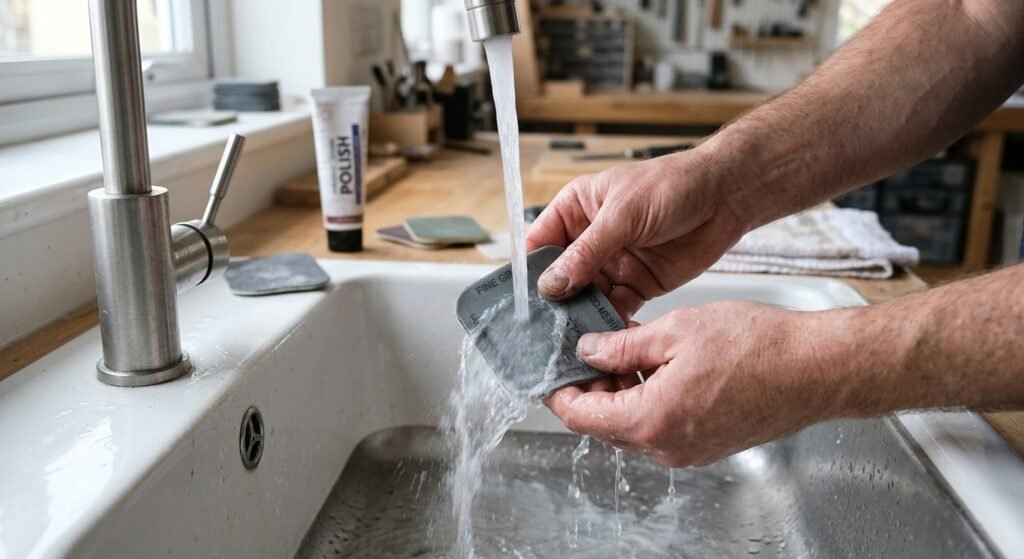
Let us run a simple example. Say you detail cars on weekends. You use roughly one sheet of 2000 grit paper per car. At fifty cars a year that is fifty sheets. A set of micromesh pads might cover the same work with a few replacements. The pads cost more up front but the yearly spend can end up lower.
The story changes for rough work. Using micromesh to strip paint would waste money since the pad wears out fast against heavy material. Sandpaper is far cheaper per square foot for that task.
For power tools the same logic applies. A mesh sanding disc costs more than a paper disc. Yet a mesh disc often outlasts three to five paper discs on drywall or painted trim because it clogs less. If you sand a lot the savings add up. If you sand once a year a pack of paper discs is the smarter buy.
My advice is simple. Keep a stack of regular sandpaper for rough and medium work. Add a micromesh kit once you start caring about gloss and clarity. That combination covers almost every project without wasting money.
Neither is better in every case. Sandpaper is better for removing material and shaping a surface. Micromesh is better for polishing and refining a surface that is already smooth. Most good finishes use both. In the micromesh vs sandpaper question the real answer is to use each one at the right stage.
Only for very fine work. Micromesh starts around 1500 on its scale so it cannot remove paint, rust or deep scratches in any useful time. Use sandpaper first and then switch to micromesh once the surface is even.
There is no exact match because the two scales are different. The 1500 Micro-Mesh pad acts close to 1500 to 2000 grit wet sandpaper. Higher pads such as 6000 and 12000 are finer than any common sandpaper and they work more like a polish.
Yes. Micromesh is made to work wet and most users prefer it that way. Water keeps the surface cool and carries away debris. It also stops the pad from loading up.
They are better for dust control and lifespan. The open weave lets dust escape so the disc stays cooler and cuts longer. Paper discs cost less and work well for light jobs. If you do a lot of sanding with a random orbital sander, mesh discs usually pay for themselves.
Rinse the pad in clean water after each use and rub it gently with your fingers. Let it air dry flat. Store each grade in a separate bag so grit does not mix. Replace the pad if it feels worn or if the surface begins to tear.
It matters once you go above 180. A P-rated FEPA sheet and a CAMI sheet with the same number can leave different scratches. Stay with one system through a project so each step lines up with the last one.
The best way to think about micromesh vs sandpaper is as a team and not a contest. Sandpaper does the hard work of cutting, leveling and shaping. Micromesh takes over when the surface is smooth and ready for shine. Add a mesh disc to your power sanding kit and you also get better dust control and a longer lasting abrasive.
Before your next project ask yourself one thing. Am I removing material or polishing it? If you are removing, reach for sandpaper. If you are polishing, grab micromesh. Start with a basic grit range and a small micromesh set, work up one step at a time and you will see the difference right away.
Now it is your turn. Pick one small project this weekend, maybe a scratched headlight or a wooden pen, and try the full process. Your finish will tell you more than any article can.