Physical Address
304 North Cardinal St.
Dorchester Center, MA 02124
Physical Address
304 North Cardinal St.
Dorchester Center, MA 02124

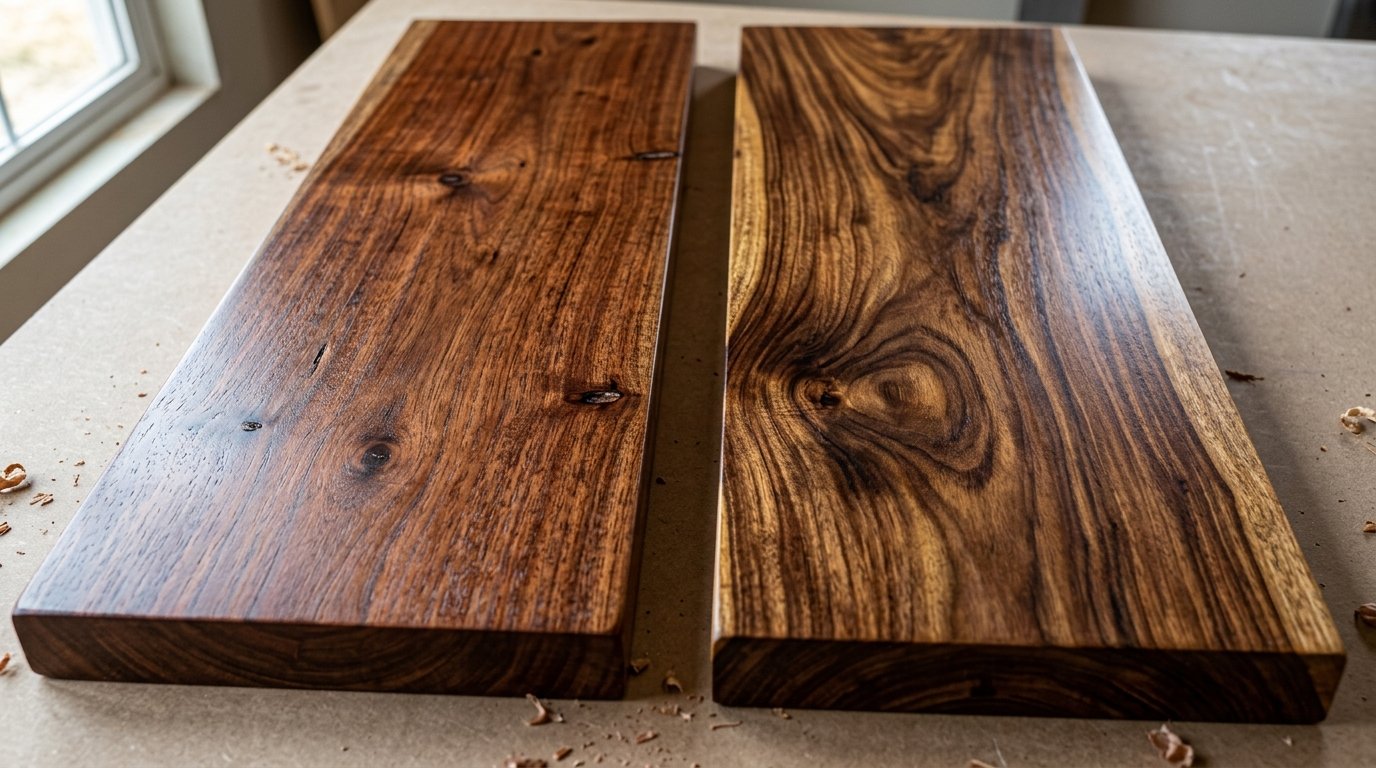
You are standing in a furniture shop and the salesman tells you the table in front of you is solid wood. You ask which one, and he says kikar. Another shop down the road says its best seller is sheesham. Both look strong, both cost less than teak, and both claim to last for years. So how do you pick? The kikar wood vs sheesham wood question is a common one in South Asia, where these two timbers fill most homes and workshops.
The choice matters more than it seems. The wrong timber can crack, bend, or look rough after a few seasons, while the right one can serve your family for decades. This guide breaks down both woods in plain words, covers strength, looks, pests, price, and the environment, and helps you decide. Along the way we will also touch on acacia wood vs sheesham wood, since kikar is actually a type of acacia, and that detail confuses many buyers.
Before comparing the two, it helps to know where each timber comes from and what it is normally used for. Both are hardwoods, which means they come from broadleaf trees and are denser than softer woods like pine. That is why both are popular types of wood for furniture, but their stories are quite different.
Kikar is the local name for a thorny tree called Vachellia nilotica, which was earlier known as Acacia nilotica. In different regions it goes by babul, babool, or Egyptian thorn. It grows across India, Pakistan, Africa, and the Middle East, and it handles hot dry land very well. You will often see it along roadsides and farm edges.
The tree is usually small and twisted, so the logs are not as wide or straight as many other timbers. The wood itself is dense and heavy with a dark reddish brown heartwood and a pale yellow outer layer. For centuries villagers have used kikar for farm tools, cart wheels, fence posts, and firewood because it is tough and does not break easily.
In furniture making kikar is valued as a budget friendly and tough choice. You will find it in simple beds, door frames, chairs, and rustic tables. Because it is a type of acacia, you will sometimes see shops label it as acacia wood. That is not wrong, but it can be confusing, since many different acacia species are sold under that name and they are not all equal in quality.
Sheesham, also called Indian rosewood, comes from the tree Dalbergia sissoo. It grows in the northern parts of India, Pakistan, Nepal, and Bangladesh, and it likes river plains and moist soil. It is a taller and straighter tree than kikar, which gives woodworkers longer and wider boards.
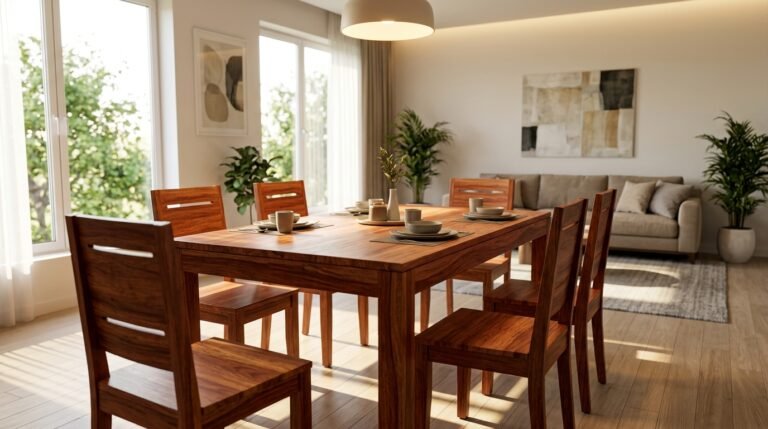
The heartwood runs from golden brown to deep chocolate with darker streaks, and the outer sapwood is lighter. The wood is heavy and strong but also easier to carve and polish than many other hardwoods. That is the reason sheesham wood furniture is so popular for beds, dining tables, wardrobes, and carved panels. It has been a favorite in Indian homes for generations and it has also become a hit in export markets.
Sheesham is considered one of the best sheesham quality hardwoods for the price, which makes it a common pick when people want solid wood furniture that looks rich without paying for teak. Many handcrafted furniture makers love it, because it takes detail well and holds its shape when it is dried properly.
Now comes the heart of the matter. Both timbers are tough, but they behave differently in daily life. Let us look at the three things that matter most to buyers: strength, looks, and resistance to bugs and fungus.
Both woods are dense and heavy. Sheesham usually has a Janka hardness rating of around 1,600 to 1,700 pounds force, and its density is near 800 kilograms per cubic meter. Kikar is comparable and in many cases a little harder and heavier. Exact numbers vary from source to source because trees differ by age, soil, and region, so treat any single figure as a rough guide.
What this means in everyday use is simple. Both resist dents, scratches, and heavy loads far better than softer timber. A kikar dining table can handle rough use, and a sheesham bed can carry heavy weight for years. For most households the difference in hardness is too small to notice.
The bigger difference is stability and workability. Kikar can be hard on tools because of its density and its tendency to have knots and twisted grain. It may also move or crack when it is not seasoned well. Sheesham is more stable and easier to cut, drill, and join. If a carpenter is working with both, he will usually say sheesham is the more pleasant wood to handle, while kikar demands sharper blades and more patience.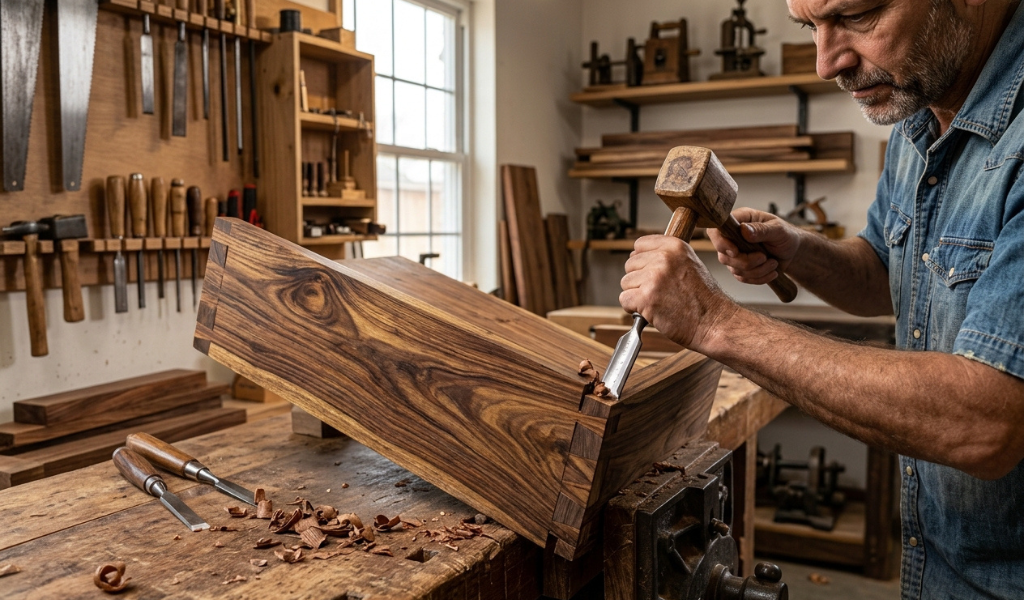
A real life example comes from a carpenter in Punjab who builds both kinds of beds. He says kikar frames last forever in a farmhouse but sometimes show hairline cracks in the first winter, while sheesham frames come out smoother and stay straight. Both are good durable wood, but one asks for more care in the workshop.
This is where sheesham wins for most buyers. Its grain is rich and flowing with soft swirls, dark streaks, and golden tones that glow under a clear polish. It feels smooth to the touch and looks refined, which suits both modern and traditional rooms. Each board is a little different, which gives every piece its own character.
Kikar has a plainer and rougher look. The heartwood is a deep reddish brown, sometimes almost purple, but the grain is tight and less lively. The wood often has small knots and color patches from the mix of dark heartwood and pale sapwood. Some people enjoy this rustic character, especially in farmhouse or country styles. Others find it too uneven for a clean look.
Both timbers darken over time with sunlight and age. Sheesham deepens into a warm rich brown, while kikar turns dark and sometimes slightly dull. Stain and polish can improve either one, but kikar needs more work to look smooth. If looks are your first priority, sheesham is the safer bet.
Here kikar shines. The heartwood of the kikar tree has a strong natural defense against termites, borers, and rot, which is one reason villagers trust it for fence posts that sit in the ground. 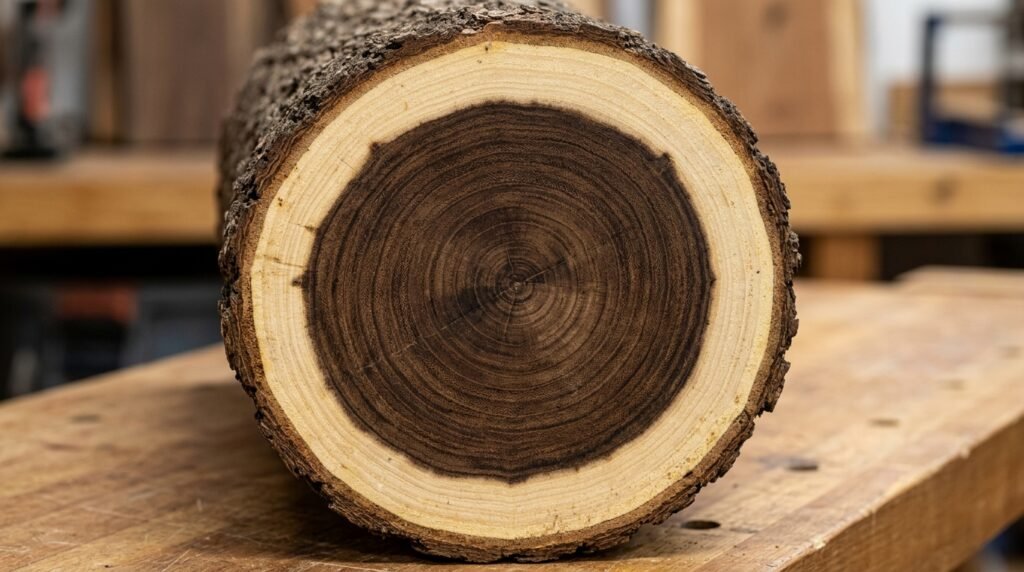 Its high density and natural tannins make it hard for insects and fungus to get in. Of the two timbers, it is usually the more pest resistant when you use only the heartwood.
Sheesham also holds up well. Its heartwood has natural oils and extractives that discourage pests, and it handles moisture better than many softer woods. But it is not termite proof. The pale sapwood is vulnerable, and furniture made from poorly selected boards can be attacked in damp or untreated conditions.
The truth is that neither timber should be left alone in a wet place. Whichever you pick, ask the maker to treat it with a proper preservative, keep it away from damp walls, and check the legs and joints once or twice a year. Good airflow and a sealed finish are the best insurance against pests and fungus, no matter which wood you buy.
Price is a big part of any buying choice, and this is where kikar often has an edge. It is usually cheaper than sheesham because the tree is common, grows quickly, and is not tightly regulated. Kikar boards are also shorter and narrower, so the wood is less expensive per piece, though large table tops can be harder to source. A kikar bed might cost 20 to 30 percent less than the same bed in sheesham, although prices change with location and the quality of the work.
Sheesham sits in the middle of the market. It costs more than kikar and most other local woods but much less than teak. Teak wood is considered the top choice for luxury furniture and outdoor use because of its natural oil and extreme durability, and it carries a big price tag to match. Many buyers who cannot afford teak look to sheesham as a smart step down that still looks high quality.
When it comes to how long each piece lasts, both can serve for 25 to 50 years with proper care. Sheesham furniture often keeps its good looks longer, since it stays smooth and holds polish well. Kikar furniture can outlast it in tough conditions or semi-outdoor use, because of its bug resistance, but it may need refinishing sooner to look fresh.
Think about cost per year and not just the price tag. A well made sheesham dining set that lasts thirty years often turns out cheaper than a budget piece you replace twice. A kikar bench for the veranda might be the best value of all. The right wood depends on where the furniture sits and how it will be used.
More buyers now care about where their wood comes from, and this is an area where the two timbers differ a lot. Kikar is a fast growing and hardy tree that thrives on poor soil and needs little water. It is widely grown on farms and used for fuel and fodder as well as timber, so it is easy to find and not under heavy pressure. In some countries such as Australia it is even considered an invasive weed, so harvesting it can help local land. That makes it a fairly low impact choice, as long as it comes from legal and managed sources.
Sheesham is a different story. Demand for the timber has grown fast, and in many areas the trees have suffered from disease and heavy cutting. The genus Dalbergia, which includes sheesham, is listed under CITES Appendix II, which means trade is controlled and exporters need proper papers. Some assessments also list the species as vulnerable. That does not mean you should avoid it. It means you should buy from a trusted maker who can show that the wood came from plantations or farm grown trees.
Availability follows the same pattern. Kikar is easy to find in small and medium sizes, though large clean boards can be hard to come by. Good quality sheesham is easy to buy in India and Pakistan, but prices are rising and fake labels are common. Some cheaper furniture sold as sheesham is actually mixed with other woods or made from veneer. Ask to see the grain on the underside and the edges, and ask for a receipt that names the species. Choosing furniture from certified or farm grown sources protects both your money and the forests.
There is no single winner, because the best wood for furniture depends on what you need. Choose sheesham if you want beauty, smooth finish, and carved designs. It is the better pick for bedroom sets, dining tables, wardrobes, and any piece that will sit in the middle of your living room.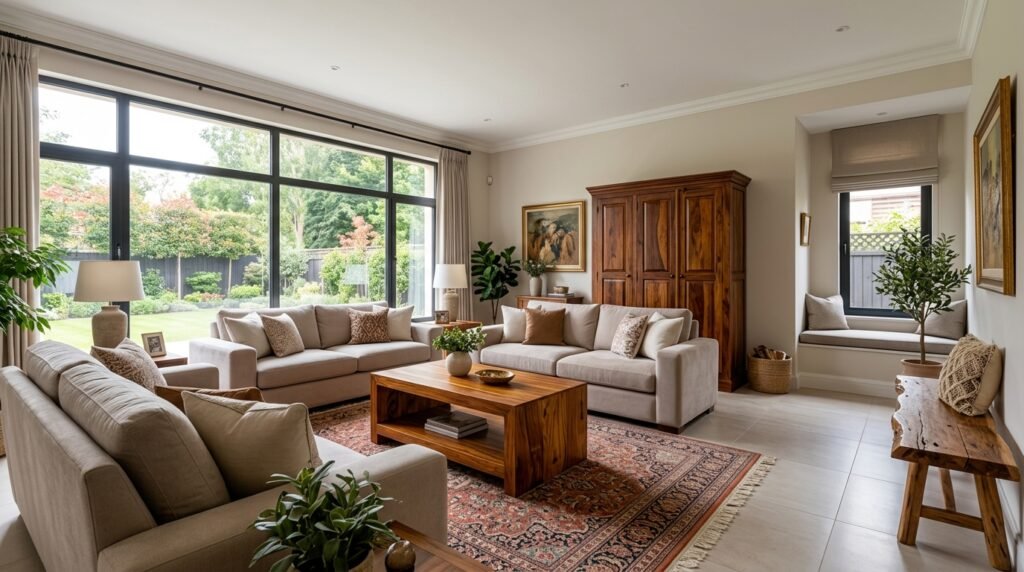 It is easier to craft, looks more refined, and is easier to find in a wide range of furniture styles.
Choose kikar if you want a tough, budget friendly timber that stands up to bugs and rough use. It is a great fit for rustic benches, door frames, storage chests, and farmhouse or semi-outdoor furniture. Just be ready for a plainer look and ask the maker to season the wood well to prevent cracks. If you compare acacia wood vs sheesham wood in general, remember that kikar is one of the stronger acacias, but many cheap acacia boards on the market are softer and less reliable.
If your budget is large and you want something for a garden or a patio, teak is still the top choice. For most families who want good looks and long life without paying luxury prices, sheesham is the sweet spot, and kikar is the practical workhorse.
Before you buy, visit a showroom, touch the surface, and look at the edges and joints. Ask about drying, treatment, and source. Then pick the timber that fits your room, your budget, and your style. A little care today means furniture you will love for decades.
Yes. Kikar is hard, heavy, and resistant to pests, so it works well for sturdy furniture. It is best for rustic and practical pieces, and it should be well seasoned to avoid cracks.
They are close in strength. Kikar is often a bit harder and denser, while sheesham is more stable and easier to work. For normal home use both are strong enough.
Yes. Kikar, babul, and babool are different local names for the same tree, Vachellia nilotica. It is also called Egyptian thorn or gum arabic tree.
In most cases sheesham looks nicer and has a smoother grain. Acacia is a large group of trees and quality varies a lot. Some kinds, like kikar, are very strong, but others are softer and less durable, so check the exact species.
They can be used in semi-outdoor spaces such as a covered porch if sealed and maintained. Kikar handles weather and insects a little better. For fully open spaces, teak wood is the better choice.
Kikar is usually cheaper. Sheesham costs more because it is in higher demand and has a more attractive grain. Both are less expensive than teak.
Look for a golden to dark brown color with darker streaks and a smooth grain that runs through the whole board. Check the edges and the back of the piece, since veneer or paint can hide cheaper wood. Always ask for a bill that names