Physical Address
304 North Cardinal St.
Dorchester Center, MA 02124
Physical Address
304 North Cardinal St.
Dorchester Center, MA 02124

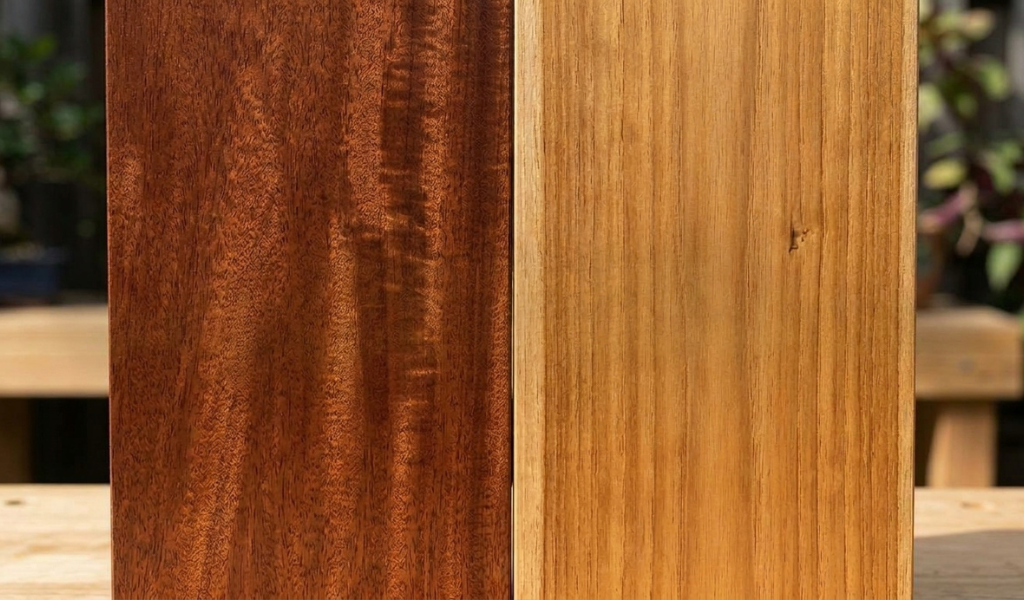
You are standing in a showroom, running your hand over two gorgeous tables. One has a deep reddish-brown glow. The other has a warm golden tone. The seller says both are premium, and both come with a big price tag. So how do you choose? If you have been stuck on mahogany vs teak wood, you are in good company. These two woods are the stars of the furniture world, and people have loved them for hundreds of years.
The truth is that neither one wins every time. Each wood type has strengths that shine in the right spot. Teak is famous for outdoor furniture because it shrugs off rain and sun. Mahogany is loved for fine furniture indoors because of its smooth grain and rich color. If you’ve already been comparing tropical hardwoods, you may have explored whether rubber wood vs teak wood better suits your needs. Picking the best wood for furniture really depends on where the piece will live, how much care you want to give it, and how much you want to spend.
In this guide we will walk through the differences between teak and mahogany in simple terms. You will learn what each wood is, how they compare on strength, weather resistance, looks, and price, and which one fits your home best.
Before comparing them, it helps to know where each wood comes from and what makes it special. Both are hardwoods that grow in warm climates, and both have been used for ships, doors, and fine furniture for centuries. But they come from different trees and behave in different ways.
Mahogany is a hardwood from tropical trees in the Americas and Africa. When people say genuine mahogany, they usually mean Honduran mahogany, also called big-leaf mahogany. It grows in Central and South America and is the classic choice for high-end furniture. African mahogany comes from a different tree family but looks and works in a similar way, and it is often a bit cheaper.
Be careful with the name. Several woods get sold as mahogany even though they are not related to the real thing. Philippine mahogany, for example, is a different species with a coarser look. If a deal seems too good to be true, ask the seller exactly which species you are buying.
The color of mahogany starts as a light pinkish tan and slowly deepens into a rich reddish-brown. It has a fine and even texture. The grain is often straight, though some boards show an interlocked grain that creates a ribbon-like shimmer. That shimmer is one reason mahogany is so popular in desks, dining tables, and cabinets. It cuts cleanly, sands smoothly, and takes stain and polish beautifully.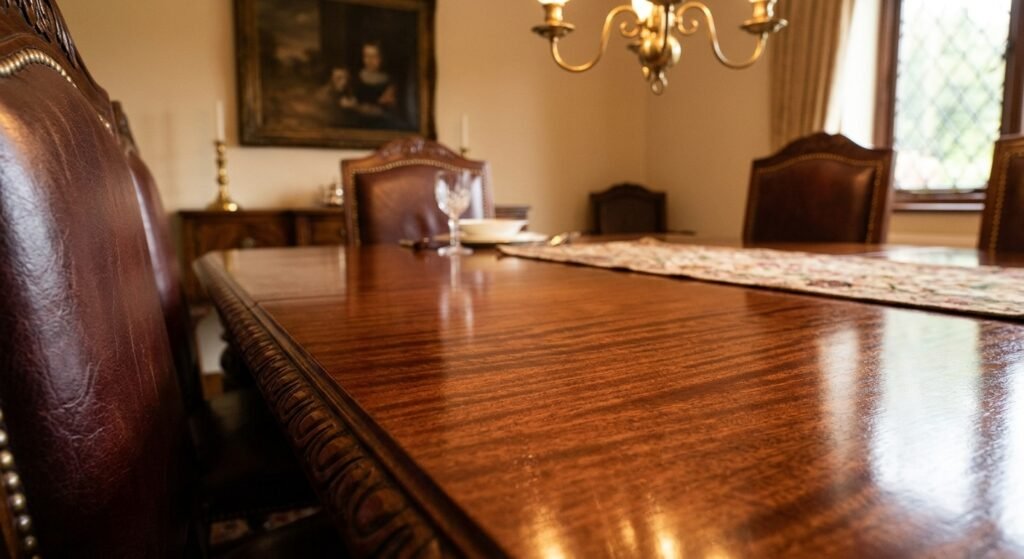
Mahogany is also fairly easy to work with. Woodworkers like it because it carves well and holds nails and screws without splitting. Compared with other premium woods like walnut, mahogany tends to be lighter in weight and a bit softer, which makes it friendly to hand tools.
There is one important detail about its supply. Honduran mahogany is regulated under international trade rules because of past over-harvest. Look for certified or legally sourced wood so you can enjoy your furniture without guilt.
Teak comes from a tall tree native to Southeast Asia, mainly Myanmar, India, Thailand, and Indonesia. Today much of it is grown on plantations. Teak wood is known for one big thing: a very high natural oil content. These oils, along with a tiny amount of natural silica, make the wood highly resistant to water, rot, and insects. That is why teak has been the top pick for ship decks and garden benches for generations.
Teak is a dense and tough wood. The grain is usually straight, with a slightly rough, oily feel. Fresh cut teak has a golden-brown hue, sometimes with darker streaks. It is harder to work than mahogany because the silica can dull saw blades, and the oils can make gluing tricky. But once a piece is built, it lasts for decades.
When buying, pay attention to where the wood comes from. Old growth teak from natural forests is rich in oil and prized, but it is rare and costly. Plantation teak is more common and still good, though it may have a lower oil content and a lighter color. Ask for certified wood to make sure it was harvested in a responsible way.
Now let’s put them side by side. When people compare teak and mahogany wood, the first question is often how tough each one is.
Hardness is measured by the Janka test, which checks how much force it takes to press a small steel ball into the wood. Here are rough numbers:
So teak is harder than mahogany, though the gap is not huge. Both are far tougher than soft woods like pine, and both resist everyday dents better than many other woods. If you drop a heavy pan on a teak table, it is a little less likely to leave a mark. Mahogany can still handle normal family life well.
Weight is another clue. Teak is denser and heavier. A teak dining set feels solid when you lift it, which is great for outdoor chairs that need to stay put in the wind. 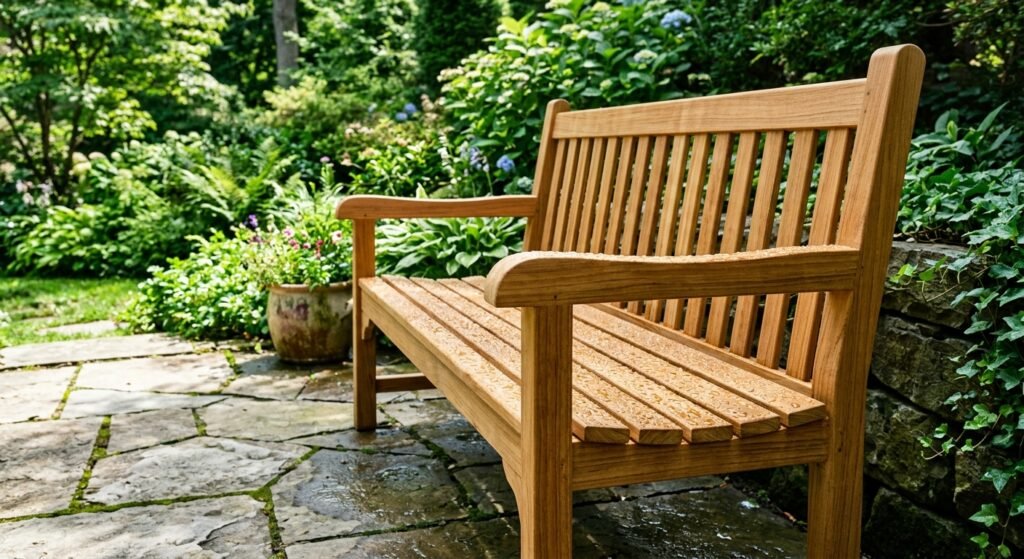 Mahogany is lighter, so furniture is easier to move around the house. Many people find this a plus for indoor chairs and side tables.
Strength is where both do well. They are stable woods that do not warp or twist much once they are dried. Mahogany has a very steady structure, which is why fine furniture makers love it for doors, drawers, and tabletops that need to stay flat. Teak is steady too, and its natural oils help it keep its shape through hot summers and wet winters.
Here is a real-life example. A friend bought a mahogany desk 25 years ago for his home office. It still has no wobble in the joints and only a few light marks on the top. Another friend has a teak bench on her porch that has sat in the rain every year since 2008. Both pieces are going strong. They just live in very different places.
In simple terms, teak wins on raw hardness and density, while mahogany wins on ease of use and lighter weight. For indoor furniture the difference is small. For rough outdoor use it starts to matter more.
This is the part that often settles the debate. If you plan to place a piece outside, weather resistance matters more than almost anything else.
Teak is the clear leader for outdoor use. Its oils push water out of the grain and protect against decay, fungus, and termites. A teak table can sit in rain, snow, and strong sun for many years with little harm. Because of this, teak outdoor furniture often comes with long warranties. The wood is also less likely to crack or split when it goes through wet and dry cycles. Even if you do nothing to it, it will hold up. Over time it fades to a soft silver gray, but the wood itself stays sound.
Mahogany handles moisture fairly well, but it is not in the same league. It has some natural resistance to rot, which is why it was used in old boats. But it needs protection when exposed to the elements. Without a good finish, rain and sun can dry it out, darken it, and cause cracks. If you want to use mahogany outside, you must seal it with a marine grade varnish or a quality outdoor oil and reapply the coating every year or two. In short, mahogany requires more maintenance than teak when kept outdoors.
Indoors, the story changes. In a dry, steady room, both woods perform very well. A mahogany bookshelf, bed, or dining table will last for generations. Teak indoors is great too, though many people feel its practical benefits are wasted when there is no rain to fight. For indoor furniture, mahogany often gives you more beauty for the money.
One more point is humidity. In very damp homes, such as beach houses or bathrooms, teak is safer. Its natural oils resist mold and swelling. Mahogany can still work there, but it will need a sealed finish and more care.
Here are a few care tips to keep both woods in shape:
If you want the best wood for outdoor furniture and little work, teak is the winner. If your piece stays inside, mahogany is just as good and often more elegant.
Looks are personal, and this is where many people make their final call.
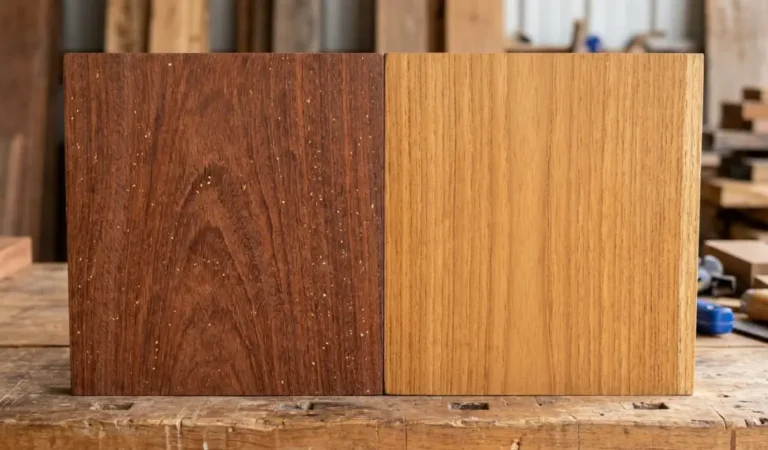
Mahogany has a deep, formal, and classic look. Its reddish-brown color gets richer as the years go by, and a good polish makes the grain glow. The fine and even texture looks smooth and refined. This is why you see mahogany in libraries, offices, and traditional dining rooms. It pairs well with dark floors, brass fittings, and warm lighting. If you picture a polished antique desk, you are probably picturing mahogany.
Teak has a warmer and more relaxed charm. The golden honey tone feels natural and calm, and it fits well with modern, coastal, and Scandinavian styles. The grain is straight and slightly bold, and you may see darker lines running through it. Teak feels a little oily to the touch, which many people find pleasant.
Aging is where the two really split. Mahogany darkens gently and stays warm in color for a lifetime, especially when it is kept indoors and protected by a finish. Teak, on the other hand, changes more if it lives outside. 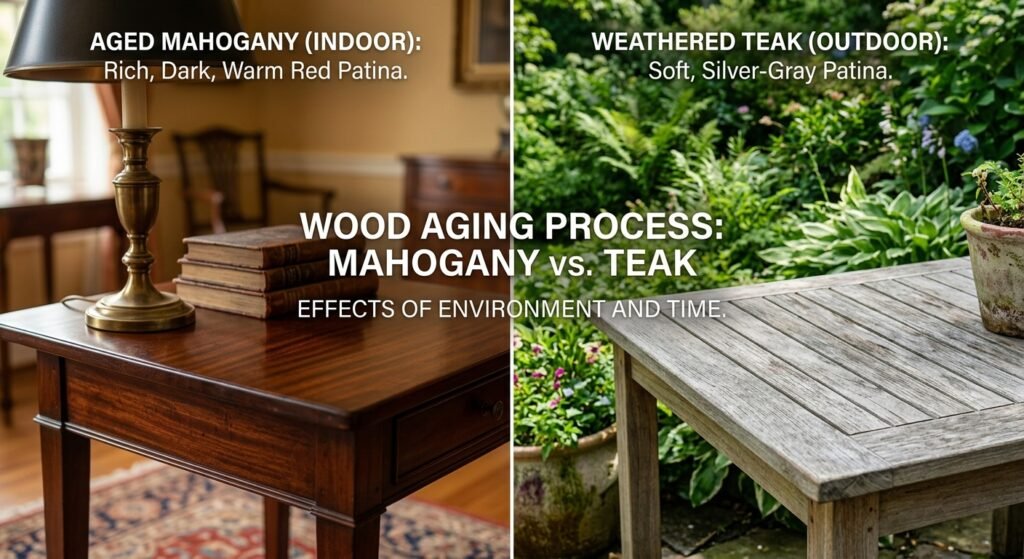 Left bare, it turns from honey gold to a soft silver gray. This weathered patina is loved by many designers. It looks calm and natural, like driftwood. If you prefer the original golden color, you can apply teak oil or a special sealer every few months, though this adds work.
A helpful tip is to look at the wood in the light of your room. Colors change under different bulbs and sunlight. Ask for a small sample board and place it where the furniture will go. Live with it for a few days before you decide.
Another tip is to think about the rest of your home. If you already have a lot of dark wood, golden teak can brighten the room. If your space is full of light tones, a mahogany piece will add depth and contrast.
Both woods are premium, and neither is cheap. But they do not cost the same.
Teak is generally more expensive than mahogany, and teak may be much higher in price when you shop for high-grade or old growth boards. Demand is strong, and good supply is limited. Plantation teak has helped lower prices a bit, but it is still a high-end wood. Expect to pay noticeably more for a teak table than for a similar mahogany table.
Mahogany costs less on average, especially African mahogany, which is often a smart buy for good looks at a gentler price. Honduran mahogany costs more because supply is controlled. Prices also vary by grade, board width, and how the piece was made. A solid wood dining table will cost far more than a veneered one, no matter which species you choose.
So which gives better value? It depends on where you place it. Teak costs more up front, but outdoors it needs less upkeep and can last 30 to 50 years or more, so you save money over time. Mahogany costs less up front, but for outdoor use you may spend extra on sealers and care. Indoors, mahogany is often the better value because you get the same long life at a lower price.
For availability, teak furniture is easy to find in garden and patio stores, while fine mahogany pieces are found more in traditional furniture shops and antique markets. Both woods can be bought as boards from lumber dealers if you want to build your own. Always check for certified wood, and be wary of cheap sets that claim to be teak or mahogany but are made of look-alike wood or thin veneers.
Here are some shopping tips:
| Feature | Mahogany | Teak |
|---|---|---|
| Origin | Central and South America, Africa | Southeast Asia, plantations worldwide |
| Janka hardness | About 830 to 900 lbf | About 1,000 to 1,150 lbf |
| Weight | Medium | Heavy and dense |
| Natural oil content | Low | High |
| Color | Reddish-brown, deepens with age | Golden-brown, fades to silver gray outdoors |
| Grain | Fine, straight or interlocked | Straight, slightly coarse |
| Outdoor use | Possible with regular sealing | Excellent with little care |
| Indoor use | Excellent | Very good |
| Maintenance | Moderate to high outdoors | Low |
| Price | Medium to high | High to very high |
| Best for | Fine indoor furniture, desks, cabinets | Outdoor furniture, decks, humid spaces |
The mahogany vs teak wood debate has no single winner. It comes down to the right wood for your project. If you want furniture for a patio, garden, or poolside, teak is the safer choice. Its oils and density keep it strong through rain and sun with little work. If you want a beautiful piece for your dining room, bedroom, or office, mahogany gives you a rich color and smooth look at a lower price.
Before you buy, think about three things: where the piece will live, how much care you are willing to give, and what your budget allows. Look closely at the wood species, check that it is real solid wood, and choose certified timber when you can.
Ready to decide? Visit a local shop, touch both woods, and ask for samples. If you are still unsure, tell us where you plan to put your furniture in the comments, and we will help you pick the best match.
Is teak better than mahogany? For outdoor use, yes. Teak has more natural oil and holds up to rain and sun with little care. For indoor furniture, mahogany is just as good and often costs less.
Can I use mahogany for outdoor furniture? Yes, but it needs protection. Seal it with a quality outdoor finish and reapply it every year or two. Without sealing it can dry out, darken, and crack.
Which wood is more expensive, teak or mahogany? Teak usually costs more, especially old growth or high-grade boards. African mahogany is the more budget-friendly option, while Honduran mahogany sits in the middle.
Does teak need oiling? Not for protection. Teak keeps itself safe with its own oils. You only need teak oil if you want to keep the golden color instead of letting it turn silver gray.
How long does each wood last? Well-made teak or mahogany furniture can last 30 years or more with normal care. Teak outdoors can last even longer, while mahogany indoors can be passed down for generations.
Is Honduran mahogany the same as other mahoganies? No. Honduran mahogany is the classic true mahogany. African mahogany is a close cousin with a similar look, and some woods sold as mahogany, like Philippine mahogany, are different species.
Which wood is better for a humid climate? Teak is the safer pick. Its oils resist moisture, mold, and decay. Mahogany can work if it is well sealed and cared for.