Physical Address
304 North Cardinal St.
Dorchester Center, MA 02124
Physical Address
304 North Cardinal St.
Dorchester Center, MA 02124

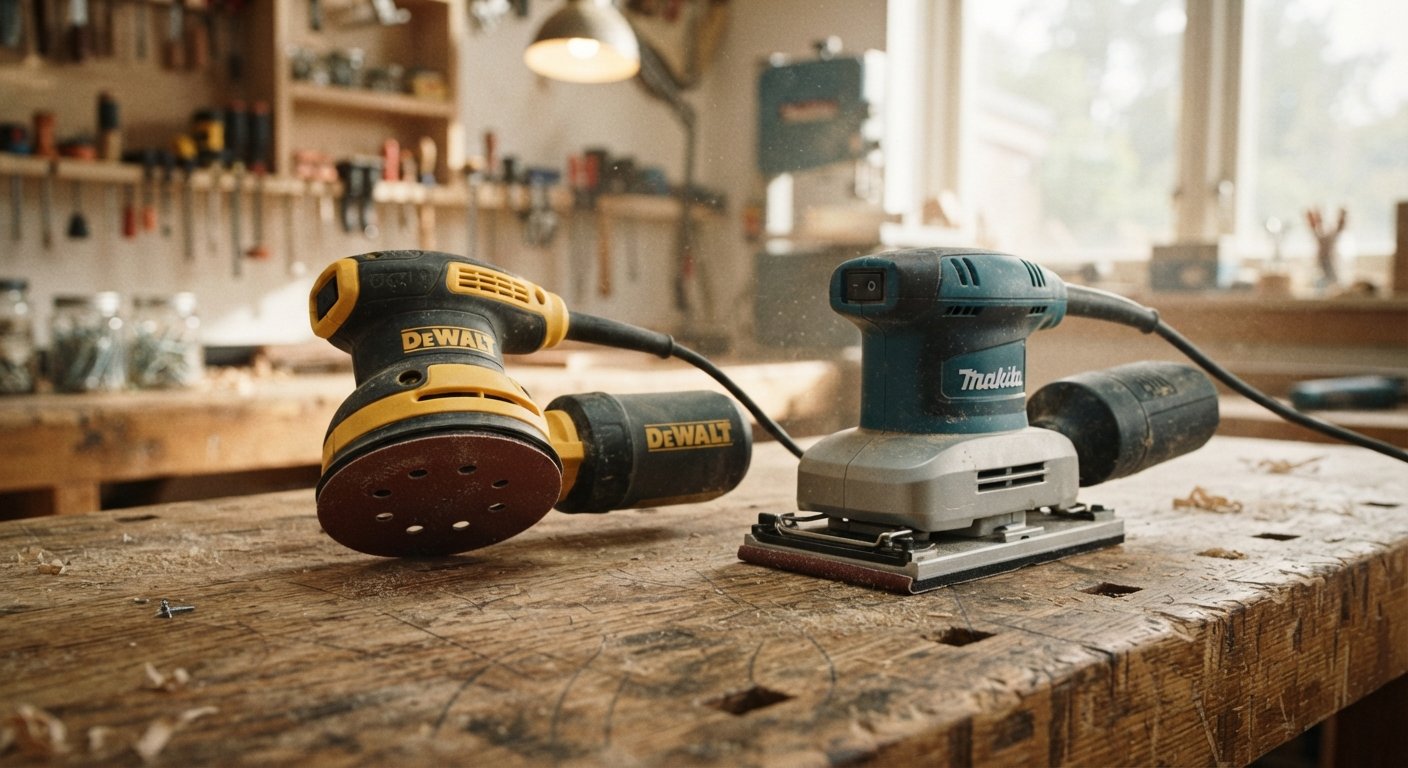
If you have ever stood in the tool aisle wondering whether to grab an orbital sander or a sheet sander, you are not alone. Both tools promise smooth surfaces and less elbow grease, but they work in different ways and suit different jobs. Picking the wrong one can mean swirl marks on your favorite table or hours of extra sanding time. This guide breaks down everything you need to know about orbital sander vs sheet sander so you can choose the right tool for your next project without any guesswork.
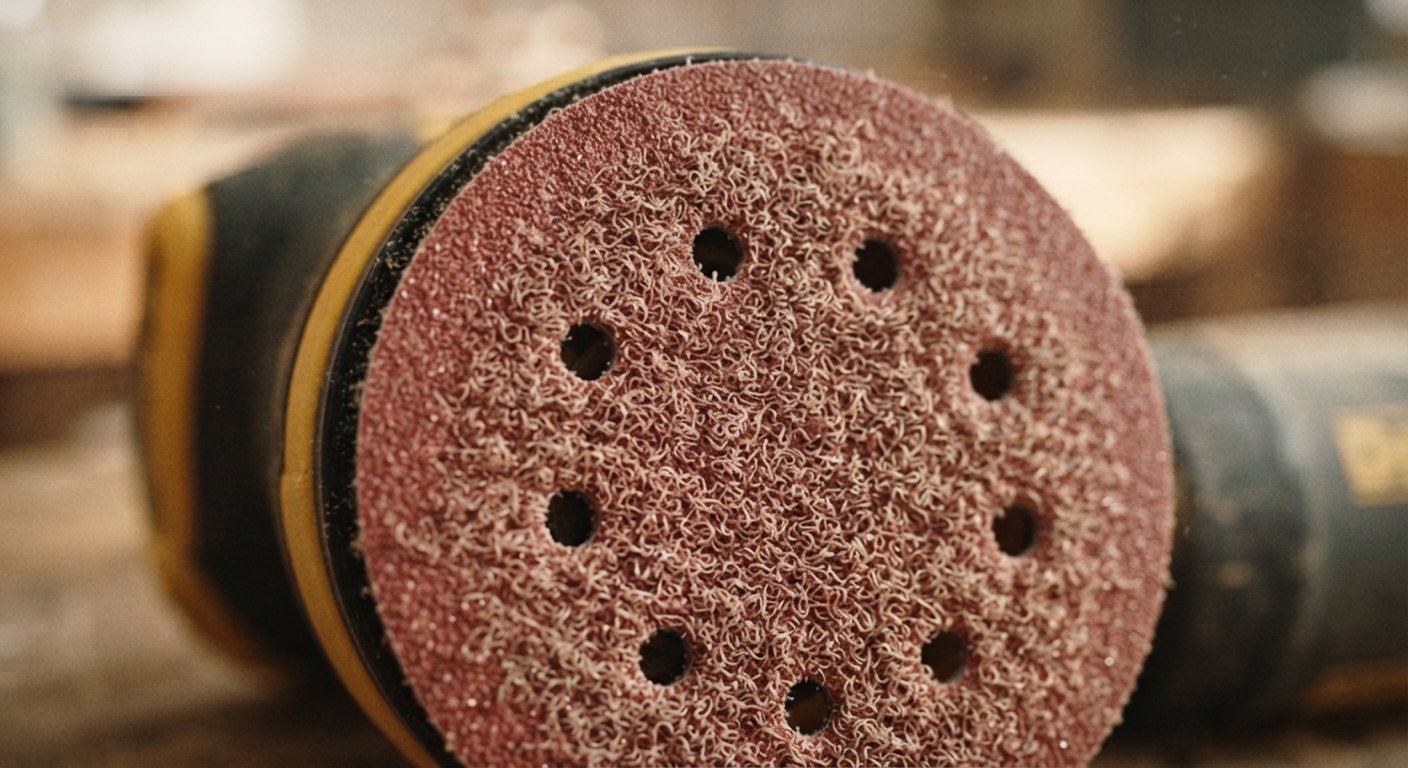
An orbital sander is a handheld power tool that uses a round sanding pad to smooth wood, metal, or painted surfaces. It gets its name from the small circular pattern the pad follows while it works. Woodworkers and DIY fans reach for this tool because it is light, easy to control, and forgiving even for beginners. You will often see it called a random orbital sander when the pad spins and orbits at the same time, which is the most common version sold today.
The sanding disc on this tool usually attaches with hook and loop backing, so swapping grits takes only a few seconds. Because the pad is round rather than square, it glides across curves and flat panels with equal ease. This makes it one of the most versatile sanders you can own for general home projects.
The motor inside spins the pad in tight circles while also moving it in a random, oval-shaped pattern. This dual motion is the secret behind its performance. Since the pad never repeats the exact same path twice, it does not carve visible circular scratches into the wood the way older single-direction sanders sometimes do.
This random pattern means you can sand along the grain, against the grain, or even in circles without much worry about damaging the surface. The tool removes material fairly quickly on coarse grit and smooths things out nicely once you move to finer paper. Most models run on electricity or compressed air, and the vibration level stays fairly low compared to belt sanders, which reduces hand fatigue during long sessions.
This tool shines when you need a fast, even finish on furniture, cabinets, doors, and trim work. It handles both flat surfaces and gentle curves, making it a favorite for refinishing chairs, tables, and wooden shelves. Many hobbyists also use it to prep surfaces before painting or staining since it leaves a clean, scratch-free base for the finish to sit on.
Car enthusiasts sometimes use a similar version, called a dual action polisher, to buff paint and remove light imperfections on vehicle bodies. In the workshop, it is also handy for smoothing out filler or putty after repairs, rounding sharp edges, and removing old varnish before a fresh coat goes on.
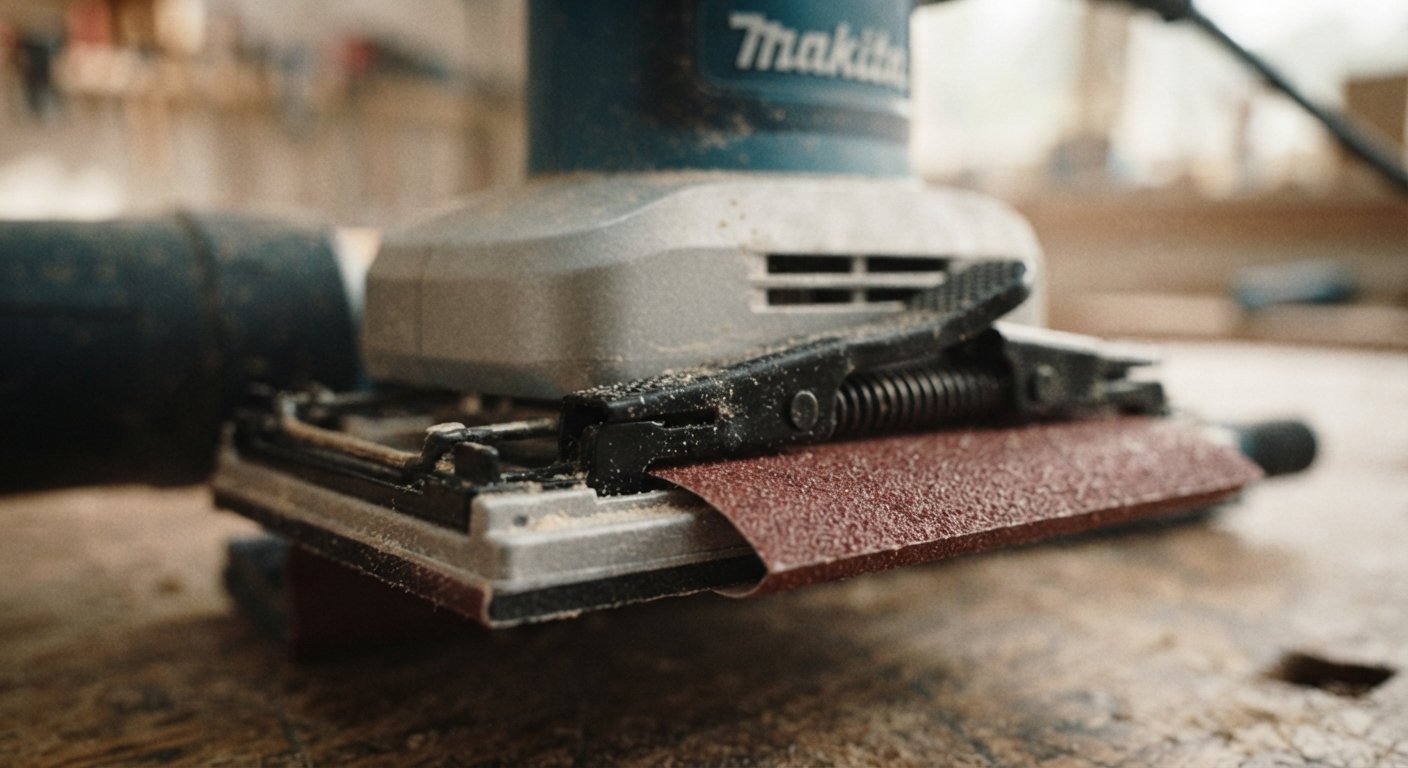
A sheet sander, sometimes known as a finishing sander or palm sander, uses standard rectangular sandpaper sheets that clamp onto a flat base. Unlike the round pad on its counterpart, this tool moves in a tight back-and-forth or small circular motion across the surface. It is often smaller and lighter, which makes it easy to hold with one hand for detail work.
Because it uses regular sheets of sandpaper cut to size, replacing paper is simple and inexpensive. This sander is commonly found in home workshops where light touch-up sanding is more common than heavy material removal.
The base plate vibrates in small orbits, moving the sandpaper across the surface at a gentle pace. This action is much less aggressive than what you get from a spinning disc, which is exactly why this tool is prized for finishing rather than stripping. The motion smooths out minor imperfections without digging into the wood.
Since the sanding sheet stays flat against the surface the entire time, this sander is particularly good at reaching into corners and along straight edges where a round pad might struggle. The trade off is speed. Material removal happens slowly, so this is not the tool to reach for when you need to strip old paint or level rough lumber quickly.
This tool is best suited for light sanding jobs like smoothing painted walls, prepping drywall patches, or giving furniture a final pass before applying varnish. It also works well on flat panels such as doors, tabletops, and plywood sheets where a fine, even texture matters more than speed.
Many people keep one in their toolbox specifically for between-coat sanding when painting furniture, since it lightly scuffs the surface without removing too much material. It is also a solid choice for beginners who want a simple, easy to control tool without worrying about motor speed settings or aggressive cutting action.
The core difference between these two tools comes down to movement. The round pad sander spins and orbits at once, creating a random pattern that resists visible scratch marks. The rectangular sheet tool moves in a smaller, more controlled orbit or straight line motion, which limits its cutting power but improves precision on flat areas.
When it comes to speed, the round pad model wins by a good margin. Its spinning action covers more surface area per minute and removes material at a noticeably faster rate. The flat sheet tool takes its time, which can be frustrating on bigger projects but works fine for small touch-ups where speed is not the priority.
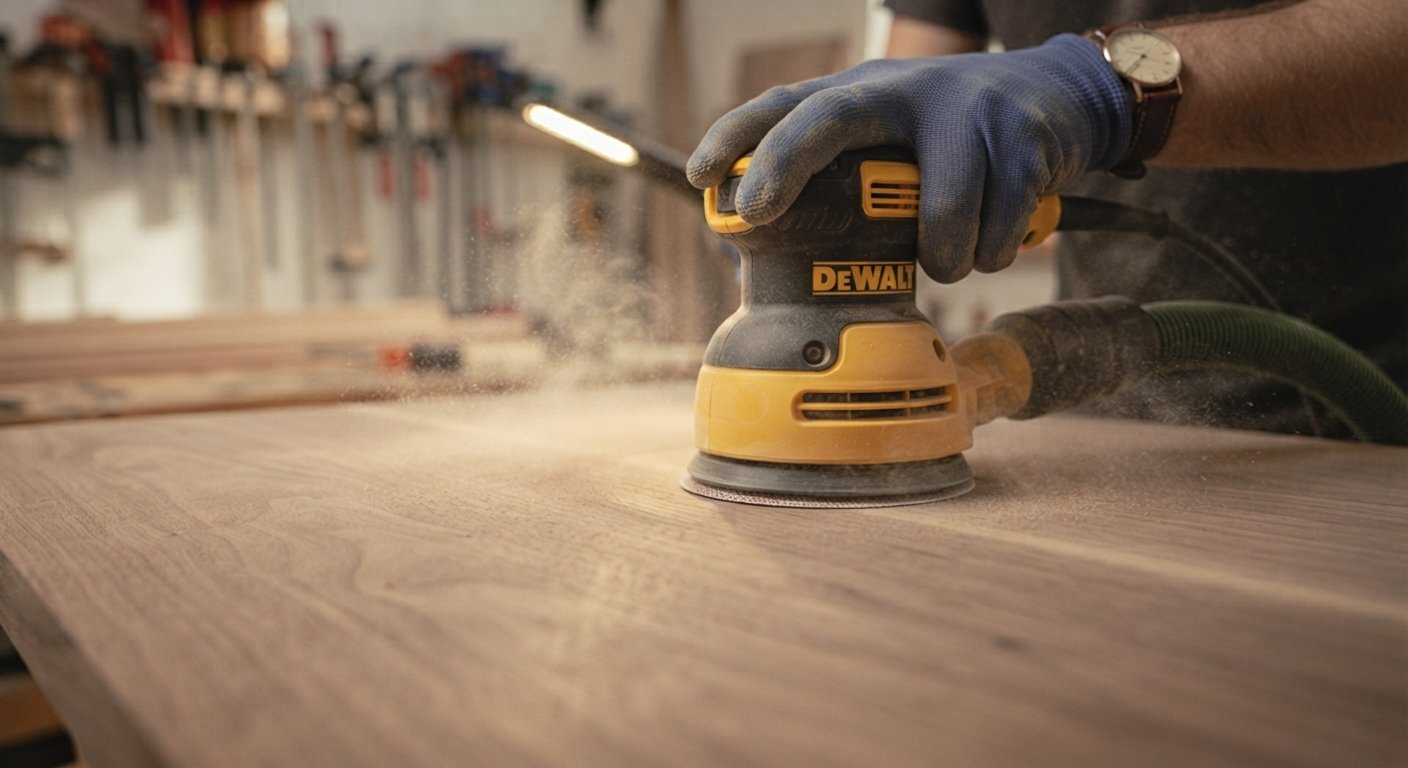
Because of its random orbit, the round pad tool leaves a finish with no visible pattern, which is ideal before staining wood since stray scratches can show through the stain. The flat sheet tool can sometimes leave faint straight-line marks if you push too hard or use worn out paper, though on light finishing passes this is rarely an issue.
If your project involves stripping paint, leveling uneven boards, or removing old finish quickly, the round pad tool is the better pick. Its faster spinning action combined with coarser grit options lets it chew through material in a fraction of the time. This makes it the go-to choice for restoration projects or anything involving rough, damaged wood.
The flat sheet tool simply is not built for heavy material removal. Its gentle back-and-forth motion is designed for finesse rather than force. Trying to use it for stripping paint or leveling rough lumber will test your patience and likely wear out the motor faster than intended. Save this tool for lighter tasks instead.
Thanks to its randomized motion, this tool produces an incredibly smooth, swirl-free surface once you work through the grits from coarse to fine. Many professional finishers rely on it as their final sanding step before staining or sealing because it leaves such a clean base.
While it will not remove material fast, the flat sheet tool produces a very fine and even texture, especially on flat panels. It is often used as the very last pass before painting since its gentle action will not create noticeable marks or gouges, particularly useful on soft woods that scratch easily.
For refinishing chairs, tables, and cabinet doors, the round pad tool generally performs better because it handles curves and flat sections with equal skill. It also speeds up the process significantly when you are working through several coats of old finish.
When tackling big flat areas like tabletops, doors, or wide plywood sheets, either tool can work depending on your goal. If you need to remove a lot of material first, start with the round pad version, then switch to the flat sheet tool for a final smoothing pass.
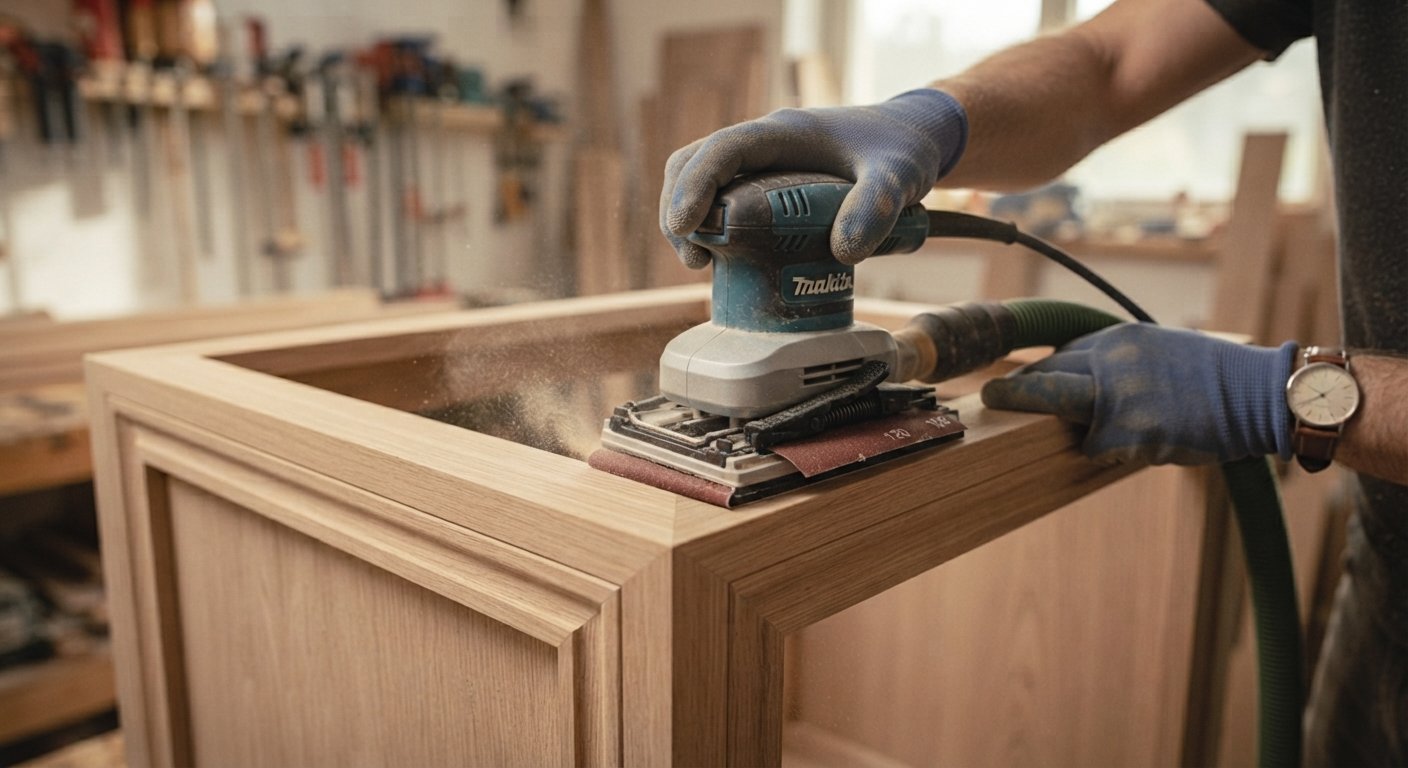
The flat sheet tool has an advantage here since its square shape and small size let it get into corners that a round pad cannot reach. Detail work near trim, moldings, and tight edges often turns out cleaner with this tool in hand.
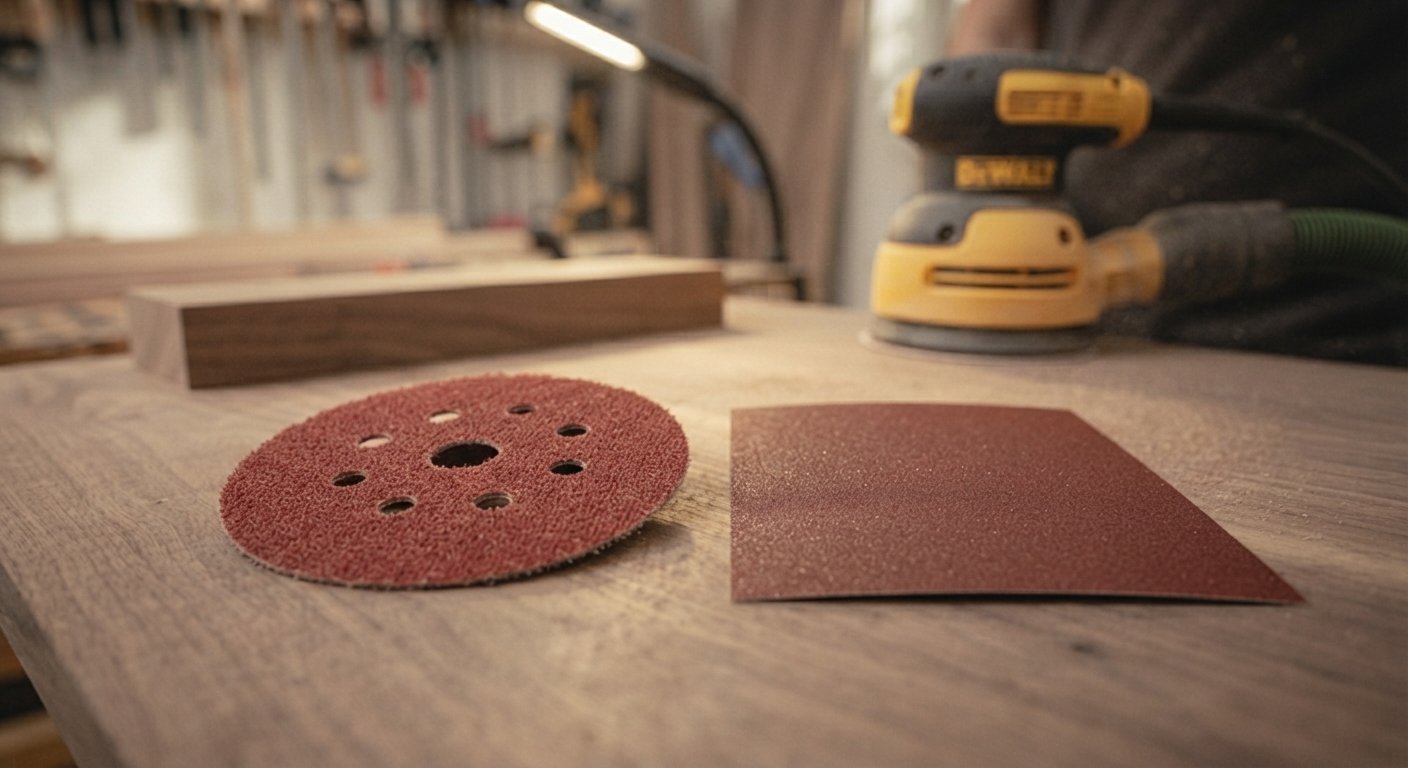
These tools typically use round sanding discs that attach with hook and loop backing, making changes quick and mess free. Grits range from very coarse, around 40 to 60, for aggressive material removal, up to very fine, around 220 or higher, for polishing before a finish coat.
This tool uses standard rectangular sheets, usually a quarter or third of a full size sandpaper sheet, which clip or clamp onto the base. Grit options are similar in range, though most users stick to medium and fine grits since the tool is rarely used for heavy stripping work.
Both tools are beginner friendly, though the round pad version tends to have a slight edge in comfort due to its ergonomic grip and lower vibration. Many current models include a dust collection bag or port that connects to a shop vacuum, keeping your workspace cleaner and reducing airborne dust.
The flat sheet tool is generally lighter and easier to maneuver in tight spaces, which some users prefer for detail work or overhead sanding. Dust collection on these models is usually a smaller bag attached to the tool itself, which works fine for light jobs but may need frequent emptying during longer sessions.
The round pad tool offers fast material removal, a swirl-free finish, and versatility across flat and curved surfaces. It handles a wide range of projects from heavy stripping to fine polishing simply by changing grits. On the downside, it can be slightly bulkier to hold, and using it carelessly on soft wood may cause uneven spots if you press too hard in one area.
The flat sheet tool is lightweight, affordable, and excellent for detail work along edges and corners. Sandpaper sheets are cheap and widely available, making it an economical choice for occasional use. However, its slower material removal rate and limited power make it a poor choice for heavy duty jobs, and it can leave faint line patterns if not used carefully.
If you only plan to own one sander for general home projects, the round pad version is usually the smarter investment. It handles a wider variety of tasks, works faster, and delivers a professional looking finish without much learning curve.
Many contractors and finish carpenters keep both tools on hand, using the round pad model for bulk sanding and the flat sheet tool for precision work near edges and corners. Having both covers every situation you are likely to run into on a job site.
Think about the type of work you do most often. If you frequently strip old finishes or sand large surfaces, prioritize the round pad tool. If your projects mostly involve light touch-ups, painted furniture, or detail work in corners, the flat sheet tool might be all you need. Many people eventually end up owning both since they complement each other so well.
Choosing between these two sanding tools really comes down to the kind of work you do. The round pad version brings speed, power, and a smooth swirl-free finish, making it the better all-around pick for most home workshops. The flat sheet tool earns its place for detail work, corners, and gentle finishing passes where precision matters more than speed. Rather than picking one over the other permanently, consider what your current project demands and choose accordingly. If your budget allows, having both tools in your workshop will cover nearly every sanding task that comes your way.
Can I use an orbital sander instead of a sheet sander for everything?
You can use it for most tasks, but it may struggle to reach tight corners and edges as cleanly as a flat sheet tool. Keeping both on hand covers more situations.
Which tool is better for beginners?
Both are beginner friendly, though the round pad version has a slightly gentler learning curve since its random motion is more forgiving of small mistakes.
Do these tools work on metal surfaces?
Yes, both can be used on metal with the right sandpaper grit, though the round pad tool tends to perform better on curved metal parts.
How often should I change the sandpaper?
Change it as soon as you notice reduced cutting power or visible wear on the grit. Worn paper slows down your work and can leave uneven marks.
Is dust collection necessary when sanding indoors?
It is highly recommended. Both tools can produce fine dust that irritates your lungs, so using the built-in dust bag or connecting to a shop vacuum keeps your space safer and cleaner.
Which tool is quieter to use?
Sheet sanders are generally quieter due to their gentler motion and smaller motor, making them a good choice for apartment workshops or noise sensitive environments.
Can these tools be used on already painted furniture?
Yes, both work well for scuffing painted surfaces before a new coat, though the flat sheet tool is often preferred for this task since it removes less material and reduces the risk of sanding through the paint layer.