Physical Address
304 North Cardinal St.
Dorchester Center, MA 02124
Physical Address
304 North Cardinal St.
Dorchester Center, MA 02124

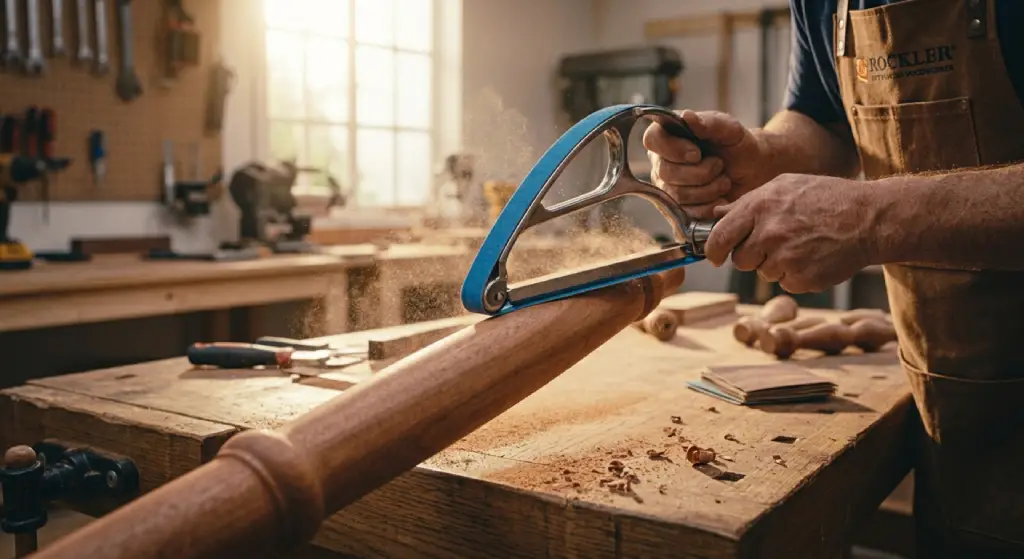
Sanding curves has always been one of the trickiest parts of woodworking. A flat piece of wood is easy to smooth with a belt sander or a simple sheet of sandpaper, but curved surfaces like chair spindles, turned legs, and decorative edges need a different approach altogether. This is where the Rockler sanding bow comes into the picture, offering woodworkers a simple yet effective way to sand curves without losing shape or detail.
If you have ever tried sanding a curved table leg or a bowl-shaped project with regular sandpaper, you know how frustrating it can be. Flat sandpaper tends to flatten out curves instead of following their natural shape, and that ruins the final look of your project. The Rockler sanding bow was designed specifically to solve this problem, and in this article, we are going to break down everything you need to know about it, from its design and features to real hands-on testing results.
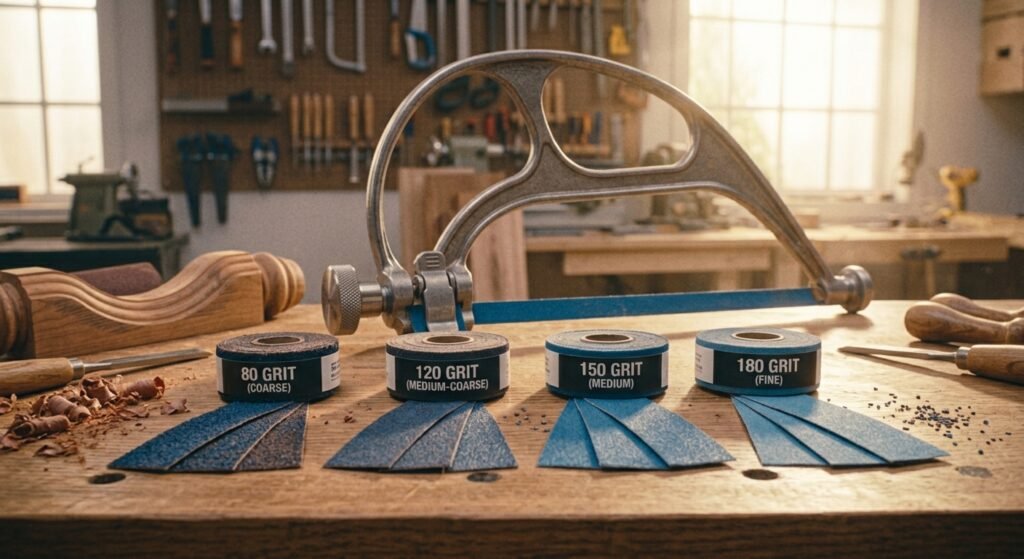
The Rockler sanding bow is a specialized hand tool made for sanding curved and contoured wood surfaces. Unlike a standard sanding block or belt sander, this tool uses a flexible sandpaper strip stretched across a bow-shaped frame, similar to how a bow saw works. This design allows the sandpaper to bend and conform to curves, grooves, and edges that flat tools simply cannot reach.
Rockler Woodworking and Hardware, a well-known brand among woodworkers, created this tool to fill a gap that many hobbyists and professionals have struggled with for years. Whether you are shaping chair spindles, smoothing a scroll saw project, or refining the curves on furniture, the sanding bow gives you more control and consistency than sanding by hand alone.
The Rockler sanding bow is built with durability and comfort in mind. The frame itself is typically made from a lightweight but sturdy material that can handle repeated tension without warping. At both ends of the bow, there are grips or handles that allow the woodworker to hold the tool steadily while applying even pressure.
The sandpaper used in the sanding bow is not your standard sheet. It comes in a flexible strip form, usually available in a range of grits such as 80, 120, 150, and 180, allowing you to choose between coarse and fine sanding depending on the project. Coarse grits are great for shaping and removing material quickly, while fine grits give you that smooth, finished surface woodworkers aim for.
One of the standout features of this tool is its replacement sandpaper system. Instead of buying a brand new tool every time your sandpaper wears out, you simply replace the strip. This makes the sanding bow both cost-effective and environmentally friendly, since you are not throwing away the entire tool each time.
The tension mechanism is really what makes the Rockler sanding bow unique. At each end of the bow frame, there is a tightening system, often a screw or clamp mechanism, that lets you adjust how much tension is applied to the sandpaper strip. This is similar to how a coping saw or bow saw blade is tensioned.
When you tighten the mechanism, the sandpaper strip becomes taut and ready to flex along curved surfaces. This tension is what allows the sandpaper to bend into concave areas and stretch across convex curves without losing contact with the wood. The result is a more even sanding job compared to using your hands or a flat sanding block, which often leaves uneven pressure points.
Adjusting the tension also lets you control how aggressive or gentle the sanding action is. Looser tension works well for delicate detail work, while tighter tension is better suited for faster material removal on larger curved surfaces.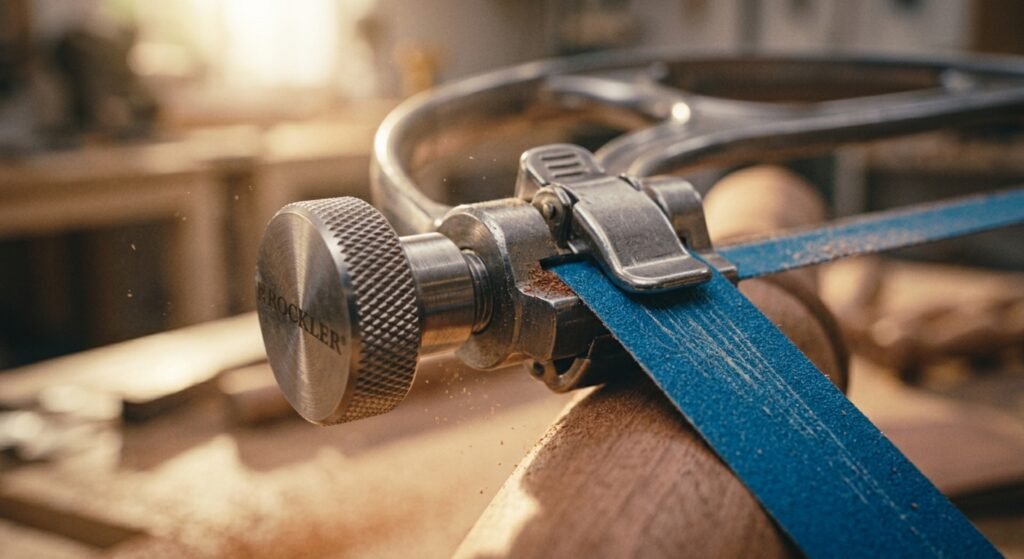
Reading about specifications is one thing, but how does the Rockler sanding bow actually perform in a real workshop? We put it to the test on a few common woodworking projects to see how it handles different curved shapes.
Chair spindles and turned table legs are some of the hardest shapes to sand by hand. Their rounded, often tapering surfaces make it nearly impossible to get an even finish with flat sandpaper or a basic hand sander. During testing, the sanding bow proved to be a huge time-saver here.
By wrapping the flexible sandpaper strip around the spindle and applying gentle back-and-forth motion, the tool was able to follow the curve of the wood naturally. This meant no flat spots, no uneven sanding marks, and a smooth, rounded finish from top to bottom. Compared to sanding by hand, which often leaves inconsistent pressure and missed spots, the sanding bow delivered a more uniform result in less time.
For woodworkers who regularly build chairs, stools, or any furniture with turned components, this tool quickly proves its worth. It reduces the physical strain of holding sandpaper with your fingers for extended periods, which can be tiring and sometimes lead to uneven pressure.
Beyond spindles, we also tested the sanding bow on various concave and convex edges, like scalloped drawer fronts and curved table edges. This is where the bow truly shines. The flexible nature of the sandpaper strip allowed it to hug the inside curve of concave cuts while also adapting to the outward curve of convex shapes.
On a decorative curved table edge, the sanding bow smoothed out tool marks left by a router or band saw far more efficiently than sandpaper wrapped around a dowel. The consistent tension kept the sandpaper flat against the wood surface throughout the sanding motion, which gave us a clean, even finish without digging into the wood or leaving divots.
For detail-oriented projects, such as carved decorative pieces or curved furniture joints, this level of control makes a noticeable difference. Instead of fighting with the shape of your project, the tool works with it, which honestly makes the whole sanding process feel less like a chore.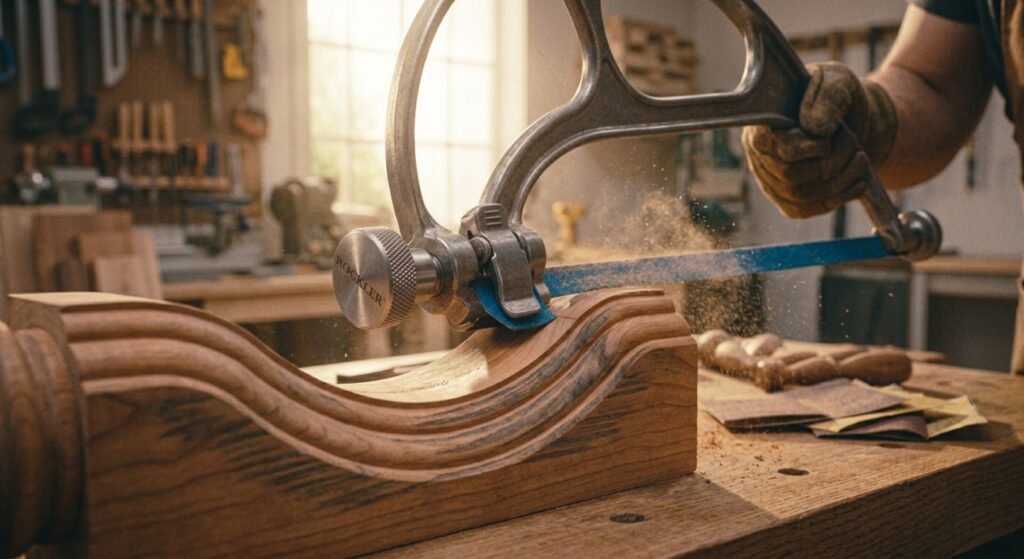
Like any woodworking tool, the Rockler sanding bow comes with its own set of strengths and limitations. Here is an honest breakdown based on our research and hands-on testing.
Pros:
Cons:
Overall, the pros clearly outweigh the cons for anyone who frequently works on curved woodworking projects. The main thing to keep in mind is that this tool is meant to complement your existing sanding tools, not replace them entirely.
So, should you add the Rockler sanding bow to your woodworking toolkit? If you regularly work on projects involving curves, like chair spindles, turned table legs, decorative edges, or scroll saw pieces, then the answer is a confident yes. This tool fills a gap that most standard sanders and hand sanding methods cannot address effectively.
For woodworkers who mostly build flat furniture pieces like bookshelves or cabinets, this tool might not see as much use, since belt sanders and orbital sanders are better suited for flat surfaces. However, even occasional curved details, such as rounded edges or decorative accents, can benefit from having a sanding bow on hand.
The combination of adjustable tension, replaceable sandpaper, and a comfortable grip makes this tool a practical investment for both hobbyists and professional woodworkers. It is not going to replace your entire sanding setup, but it will absolutely make curved sanding jobs faster, easier, and more precise.
If you want a smooth, professional-looking finish on your next curved woodworking project, picking up a Rockler sanding bow from Rockler Woodworking and Hardware is a smart move. It is a small tool that solves a big problem, and once you try it, you will probably wonder how you managed curved sanding jobs without it.
What is a Rockler sanding bow used for?
A Rockler sanding bow is used for sanding curved and contoured wood surfaces, such as chair spindles, turned legs, and decorative edges. Its flexible sandpaper strip and bow-shaped frame allow it to follow curves that flat sanders cannot reach.
What grits are available for the Rockler sanding bow?
The sanding bow typically works with a range of grits, including coarse options like 80 grit for shaping and finer grits like 120, 150, and 180 for smoothing and finishing.
Can I replace the sandpaper on the sanding bow?
Yes, the Rockler sanding bow uses replaceable sandpaper strips. Once a strip wears out, you can simply swap in a new one instead of replacing the entire tool.
Is the Rockler sanding bow good for beginners?
Yes, the tool is fairly easy to use once you understand how to adjust the tension. Beginners may need a little practice to find the right tension for different curves, but the learning curve is minimal.
Can the sanding bow be used on flat surfaces?
The sanding bow is specifically designed for curved surfaces. For flat surfaces, a belt sander or orbital sander will give you better and faster results.
Where can I buy the Rockler sanding bow and replacement sandpaper?
You can buy the Rockler sanding bow and its replacement sandpaper strips online through the Rockler Woodworking and Hardware store, or at select woodworking hardware shops.
How does the tension mechanism affect sanding results?
The tension mechanism controls how tight the sandpaper strip is across the bow frame. Higher tension works well for faster material removal, while lower tension is better suited for delicate detail work and fine finishing.