Physical Address
304 North Cardinal St.
Dorchester Center, MA 02124
Physical Address
304 North Cardinal St.
Dorchester Center, MA 02124

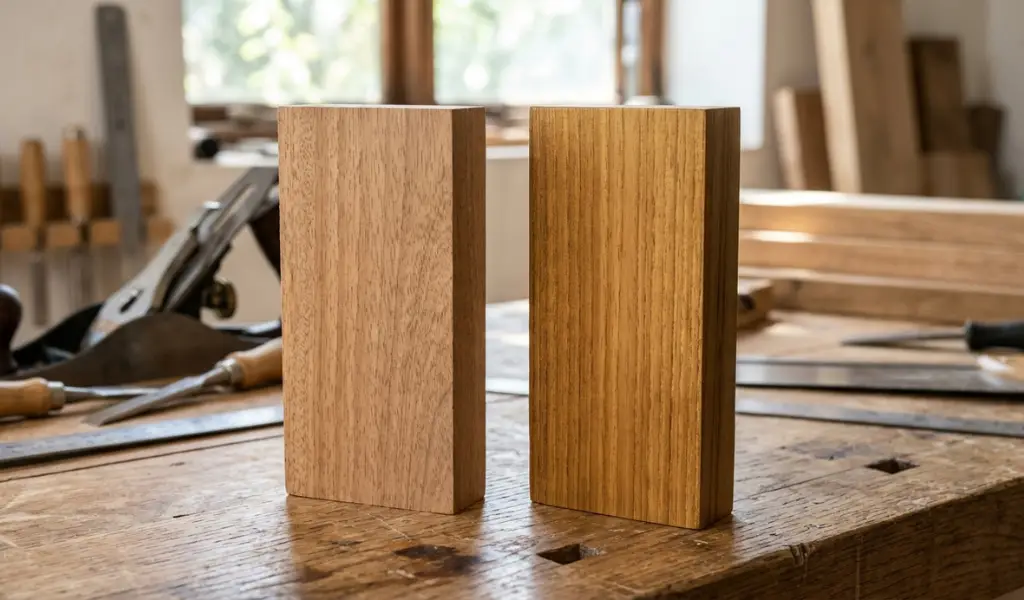
Standing in a timber shop with two sample blocks in your hands is harder than it sounds. One is a warm golden brown and costs a lot. The other looks close enough and costs much less. That is the heart of the Hollock wood vs. teak wood question, and it is one that many home buyers, carpenters, and builders face before they sign off on a new set of doors, a bed, or a floor.
You may also have seen people compare rubber wood vs teak wood or put sheesham wood next to teak in the same breath. All of these comparisons come from the same worry: how do you get good looks and long life without paying a fortune? In this guide we will look at both timbers in plain language. You will learn where each one comes from, how strong and durable they are, how they handle moisture and termites, what they cost, and which one fits your project best.
Both Hollock and teak are hardwood, which means they come from broadleaf trees and not from pine or fir. That alone puts them a step above most softwood used in cheap shelving and packing boxes. But hardwood is a wide family. A hardwood can be dense and oily like teak, or lighter and plainer like many of the timbers sold as budget furniture wood. Knowing what each tree gives you is the first step to picking the right one.
Hollock wood comes from a large deciduous tree that grows in the forests of Northeast India, Bangladesh, Myanmar, and nearby hill regions. In Assam and across the eastern belt it has been used for decades in house building, plywood, tea boxes, and local furniture. The tree grows tall and straight, which gives carpenters long clean logs to work with.
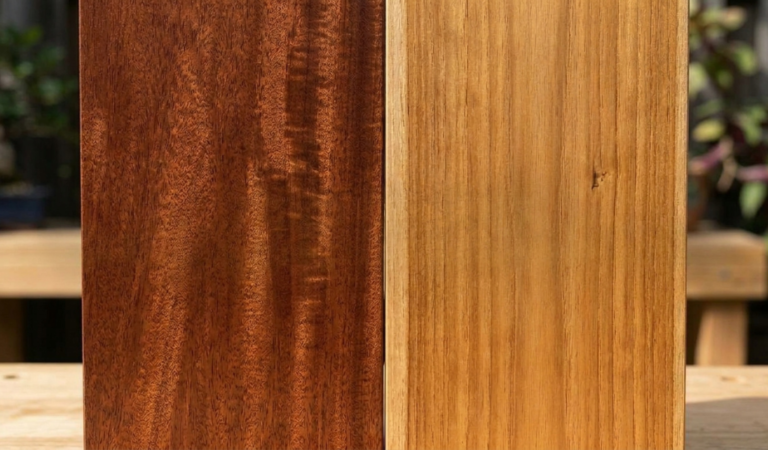
The colour of Hollock is usually a light to medium brown with a slight yellow or pinkish hue. The grain is mostly straight, sometimes with a gentle wave, and the surface feels medium coarse. It does not have the rich golden glow of teak, but a good coat of polish brings out a warm and pleasant tone. Fresh cut Hollock is easy to saw, plane, and nail, which is why many workshops like it for large jobs where speed and cost matter.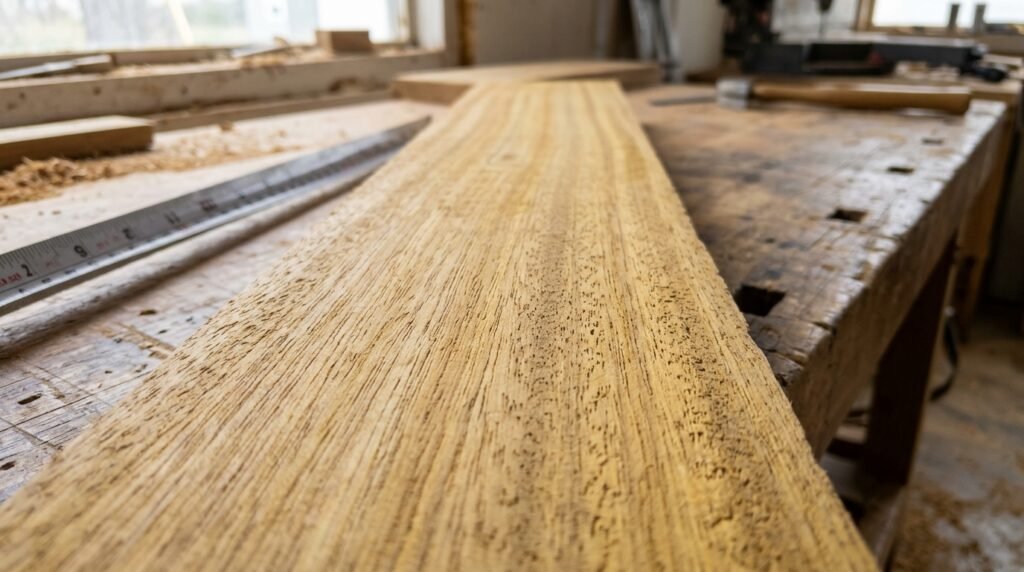
It is a moderately strong timber. It is firm enough for door frames, window frames, beams, panels, beds, and cupboards. However, it does not carry the natural oil content that teak has, and that makes a big difference in how long it lasts if left unprotected. Untreated Hollock can attract borers and termites. Proper seasoning and a coat of preservative turn it into a good everyday timber for indoor use.
One small note on names. In some markets people mix up Hollock with Hollong, a different tree that is heavier and stronger. If you are buying from a local supplier, ask for the botanical name or see a cut sample. A trusted seller will not mind.
Teak wood has been the gold standard for ships, palaces, and fine furniture for hundreds of years. The tree grows naturally in India, Myanmar, Thailand, and Laos, and large plantations now exist in Indonesia, Africa, and Latin America. Teak is famous for a reason. The heartwood holds a natural oil and a small amount of silica that give it strong resistance to water, rot, and insects.
The colour is a rich golden brown that slowly deepens over the years into a warm honey tone. If left outside without sealing, it ages into a soft silver grey that many people find lovely. The grain is mostly straight with an even texture and a slightly oily feel when you rub it. Quality teak has a beautiful grain pattern that looks elegant in both classic and modern furniture designs.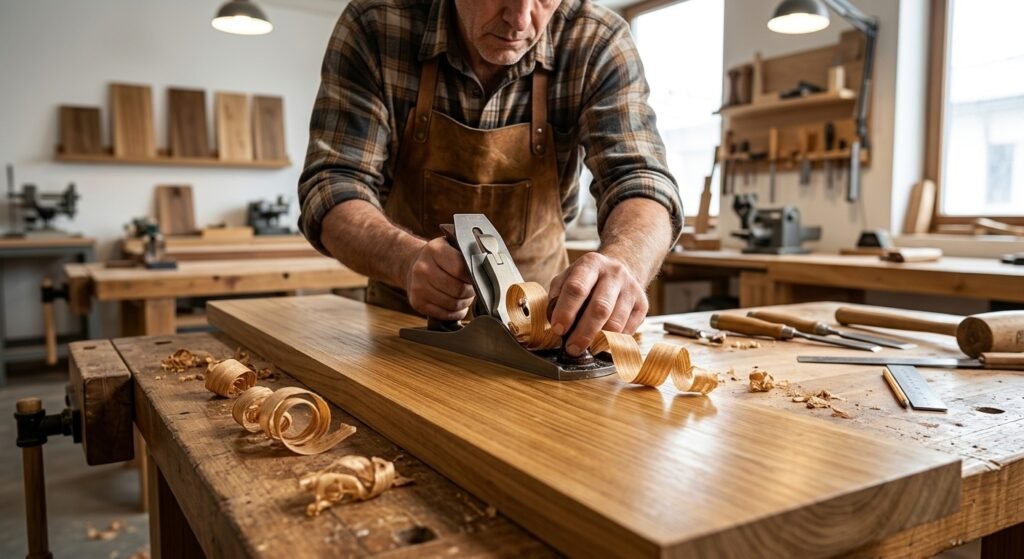
In terms of density, teak sits in the medium to heavy range. It is sturdy but not too heavy to carry, and it holds screws and joints very well. Genuine teak is also one of the most stable timbers you can buy. It shrinks and swells very little when the weather changes, which means doors do not stick and tabletops do not crack as easily.
The trade off is the price tag. Teak is premium timber, and demand has kept it that way for a long time. A well made teak wood furniture piece can serve a family for fifty years or more, so many people see it as a long term buy and not just a cost.
Let us put the two timbers side by side and see what you really get with each one.
Hardness and density. Teak has a Janka hardness rating of about 1,000 pounds force, which puts it in the middle of the hardwood range. It is similar to or a little harder than red oak. It resists dents from daily use, so a teak dining table handles plates, bags, and children well. Hollock is a bit softer. It is a dense wood compared with softwood, but it will show dents and scratches sooner than teak. For a hallway floor or a busy kitchen counter, that difference matters.
Strength. Both timbers are good for structural jobs. Teak has strong bending and compression strength for its weight, which is why it was used for ship decks and heavy beams. Hollock is also fairly strong and works well for door frames, rafters, and wooden planks. For heavy loads over long spans, teak is the safer pick. For standard homes where the load is modest, Hollock does the job without trouble.
Grain and looks. Teak has an even, straight grain with natural golden streaks. Hollock has a plainer pattern with a slightly coarser feel. If you want the premium look and the aesthetic that goes with it, teak wins. If you prefer a light and quiet surface that takes paint, stain, or a dark finish, Hollock gives you a good canvas. Some carpenters like to stain Hollock to match teak for budget friendly cabinets, and when done well, only a trained eye can tell the difference at a glance.
Workability. Hollock is easy to cut and shape, and it takes nails, glue, and screws without much fuss. Teak is also workable, but its natural oil and silica can dull blades faster, and gluing sometimes needs extra care. Craftsmanship counts with both. A skilled woodworker will get a clean finish from either one, while a rushed job will show in the joints no matter how good the timber is.
Real life example. A family in a small town ordered a double bed in Hollock and a matching dining table in teak. After eight years the bed frame is still firm and looks fine, with a few small dents on the edges. The teak table shows almost no wear except for a deeper, richer colour. Their carpenter told them it was a smart split: use the premium wood where the daily wear is highest, and the budget wood where it gets less abuse.
This is where the two timbers part ways the most. Moisture, sunlight, and pests will test any wood sooner or later, and your choice should depend on where the furniture will live.
Teak is the clear winner for outdoor furniture. Its natural oil and tight grain repel water, and the heartwood resists rot and fungus. It also resists termites well, because insects dislike both the oil and the silica inside the wood. You can leave a teak bench in the garden, on a balcony, or by a pool for years with minimal maintenance. A light coat of teak oil once or twice a year keeps the golden colour. If you skip the oil, the surface turns silver grey, but the wood underneath stays sound.
Hollock has no such built in shield. It can handle indoor conditions very well, especially in dry rooms like bedrooms, living rooms, and offices. In humid places or moisture prone areas such as bathrooms and covered patios, untreated Hollock may swell, warp, or get attacked by termites and borers. If you must use it in these spaces, seal it properly. Use a good preservative, a water resistant varnish or paint, and keep the legs off wet floors. Treated Hollock lasts longer, but it will still need more care than teak.
Dimensional stability is another big point. Teak moves very little as the weather changes, so doors and window frames made of teak keep their fit through monsoon and summer. Properly seasoned Hollock is stable enough for indoor furniture, but it can change shape more in swings between wet and dry months. Kiln drying helps a lot here, so ask your supplier how the logs were dried.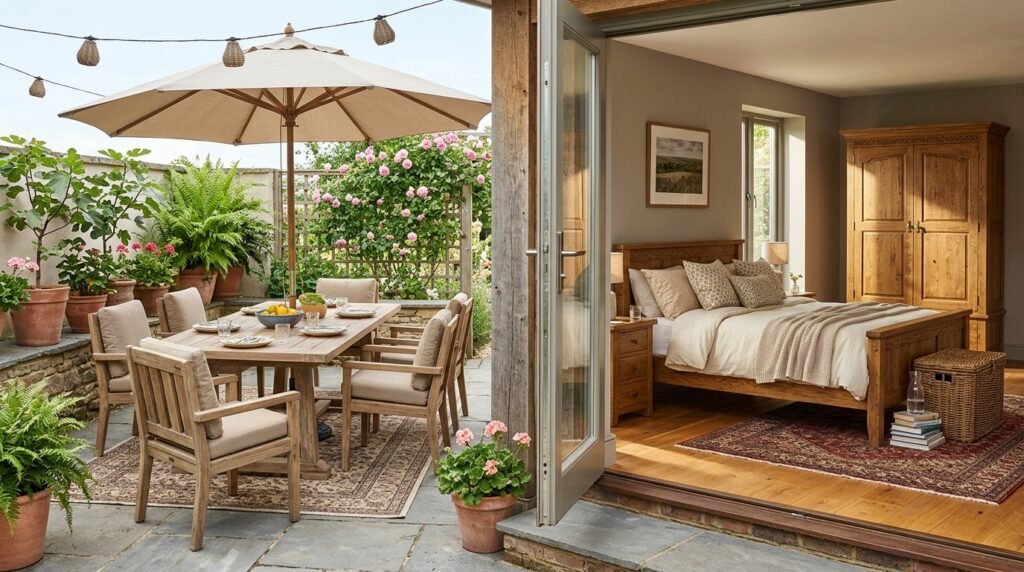
Sunlight matters too. Strong exposure to sunlight fades most woods. Teak holds up better because of its oils, and the fading is gentle. Hollock may lighten or darken unevenly if left unfinished in a sunny window spot. A UV resistant polish helps both timbers, but Hollock needs it more.
A quick tip for coastal homes: in places with salty air and heavy rain, teak is worth the extra spend for doors, window frames, and any outdoor seating. For the inner rooms, Hollock with good sealing is a fair budget choice.
Price is often the deciding factor, and here Hollock has the edge. It usually costs a fraction of what teak does, sometimes less than half, depending on grade and region. Because it grows widely in the Northeast and nearby forests, local suppliers can often provide it in large sizes without long waiting times. For people building a full house or furnishing several rooms, that saving can be big.
Teak is more expensive for a few reasons. The trees take many years to mature. Natural teak forests are protected in many countries, so most wood on the market comes from plantations in Indonesia, Africa, or South Asia. Quality teak also costs more to harvest, season, and transport. Add the global demand for luxury furniture and flooring, and the price stays high. Prices also change with grade. Old growth heartwood with straight grain costs the most. Plantation teak with lighter colour and more knots costs less but still sits above most local timbers.
But the cheapest wood is not always the cheapest choice. Think about cost efficiency over time. A teak door frame might cost more up front, yet last for decades with almost no care. A Hollock frame may need treatment, repair, or replacement sooner in a humid home. If you divide the total spend by the years of use, teak often looks very fair for items that must last, like outdoor furniture, main doors, and flooring in busy rooms.
On the other hand, Hollock makes plenty of sense for things like wardrobes, beds, storage units, bookshelves, and interior panels. These pieces are not exposed to the weather, so you pay for what you really need. There is also a middle path. Use teak for the parts that show or face wear, such as table tops and door frames, and use Hollock for inner frames and hidden structure. Many furniture makers already work this way to bring prices down without hurting the final look.
A few buying tips help you avoid common traps:
First, ask for a clear label. Some sellers mix teak with cheaper timbers or sell veneer over plywood and call the whole piece teak. Genuine teak has a slight oily feel and a faint leathery smell when freshly cut. If the price looks too good to be true, it probably is.
Second, check the seasoning. Properly seasoned wood has a lower moisture level and is less likely to crack. Ask your supplier or carpenter how long the logs were dried.
Third, compare quotes. Visit two or three suppliers and look at actual boards, not just photos. A trusted supplier will show you the grain and explain the grade.
Fourth, think about alternatives for budget projects. Sheesham wood, also called shisham or Indian rosewood, is another popular home furniture choice. It is heavy and strong with attractive dark streaks. Many buyers compare teak and sheesham when they want a durable look at a lower price. Engineered wood and plywood also have a place in kitchens and wardrobes, but they do not last as long as solid wood when exposed to water.
Here is a quick view to help you compare the two timbers before you decide. Keep in mind that values vary by grade, region, and drying method, so use this as a guide and not as a fixed rule.
| Feature | Hollock Wood | Teak Wood |
|---|---|---|
| Type | Deciduous hardwood | Deciduous hardwood |
| Colour | Light to medium brown with a yellow or pink hue | Golden brown that deepens with age |
| Grain | Mostly straight and medium coarse | Straight, even, and oily |
| Hardness | Moderate | Medium to hard (about 1,000 lbf) |
| Natural oil content | Low | High |
| Termite resistance | Fair, needs treatment | Very good |
| Moisture resistance | Fair when sealed | Excellent |
| Dimensional stability | Good when kiln dried | Excellent |
| Best use | Indoor furniture, doors, panels, plywood | Outdoor furniture, flooring, doors, boats |
| Maintenance | Regular sealing and care | Minimal maintenance |
| Price | Budget friendly | Premium |
| Availability | Common in Northeast India and nearby regions | Widely available but costly |
If you read only one row of this table, make it the use row. Match the wood to the room and the weather, and you will rarely regret your pick.
A simple way to decide is to ask three questions. Will this piece sit outdoors or in a damp room? Will it face heavy daily use? Do I want it to last for decades? If you answer yes to any of these, lean toward teak. If the answers are no and your budget is tight, Hollock with good finishing is a smart and honest choice.
The Hollock wood vs. teak wood debate does not have one winner. Teak gives you beauty, strength, moisture resistance, and decades of service. Hollock gives you a friendly price, good workability, and solid performance in dry indoor spaces. Teak is best for doors, floors, and outdoor pieces. Hollock is best for beds, cupboards, panels, and similar items where cost matters and the weather stays away.
Before you buy, check the grade, ask about seasoning, and visit your supplier in person. If you can, mix the two timbers to get premium looks where they count and savings where they do not. Ready to start your project? Take this guide to your carpenter, ask for sample blocks of both woods, and see which one feels right in your hands. If you found this useful, share it with a friend who is planning a new home or a furniture upgrade.
Not in every way. Teak is harder, more water resistant, and more stable, so it lasts longer in tough conditions. Hollock is a good everyday timber for indoor use and costs much less. The right pick depends on where you plan to use it.
It is possible, but not ideal. Hollock lacks the natural oil that protects teak from rain and termites. If you do use it outside, treat it well with a preservative, seal it with a weather proof finish, and keep it covered when you can.
Look for a straight golden brown grain, a slightly oily feel, and a faint leather like smell on a fresh cut. Teak is also fairly heavy for its size. Ask for the botanical name Tectona grandis and buy from a trusted supplier.
Teak is better for a floor because it resists dents, moisture, and foot traffic. It also stays stable through seasonal changes. Hollock can work for low traffic rooms like bedrooms if it is well seasoned and sealed.
Sheesham is dense, strong, and has attractive dark grain, and it costs less than teak. Teak has more natural oil and handles moisture and termites better. Many buyers pick sheesham for indoor furniture and teak for outdoor use.
Only in a limited way. Untreated Hollock can be attacked by termites and borers. Proper seasoning and a coat of anti termite treatment make a big difference. Teak resists termites on its own because of its oils.
Rubber wood is cheap and easy to work with, but it is softer and less resistant to moisture and pests than teak. It suits indoor items like shelves and kids furniture. For outdoor use or long term durability, teak is a far safer bet.