Physical Address
304 North Cardinal St.
Dorchester Center, MA 02124
Physical Address
304 North Cardinal St.
Dorchester Center, MA 02124

Picture your toolbox. You probably have a few screwdrivers, a tape measure, and something heavy to hit things with. For a lot of folks getting into their first DIY projects, that striking tool is always a standard metal claw hammer. You might even grab a scrap piece of wood to place over a delicate surface before swinging away, just hoping you do not leave an ugly dent. But as you take on more advanced woodworking or home improvement tasks, you quickly realize that one tool cannot do it all.
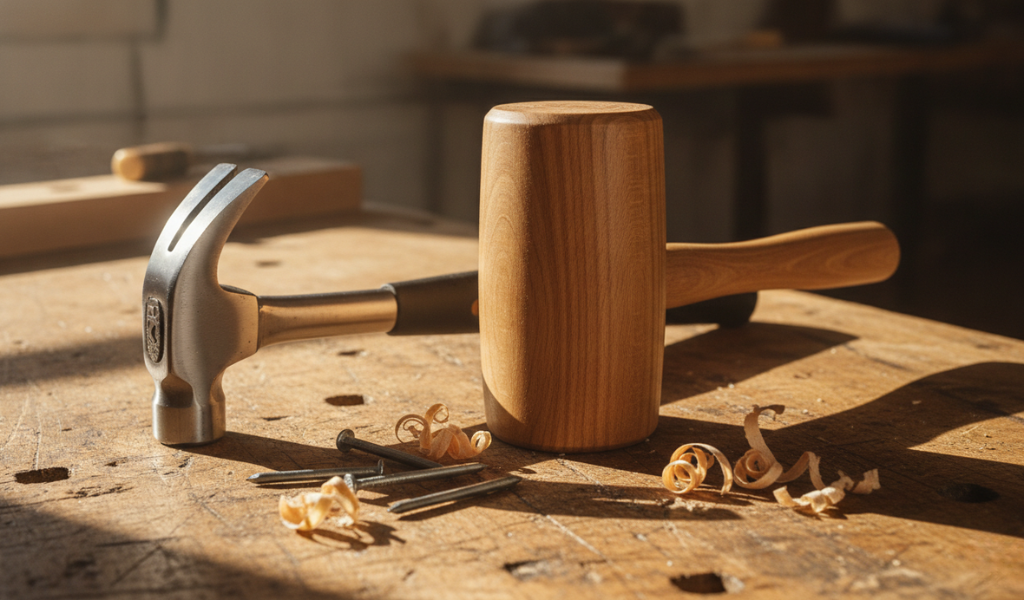
Understanding the true difference between Wood Mallets and Hammers is a massive step forward in any builder’s journey. While they might look like they do the exact same job, they are built for entirely different purposes. Using the wrong one can easily ruin your hard work, snap your delicate tools, or even cause an injury.
In this comprehensive guide, we are going to explore exactly why you need both tools in your workshop. We will break down what each tool does best, share some practical insights from the workbench, and help you decide exactly which one to grab for your next big project.
To start things off, let us look at the gentler giant of the striking world. What Is a Mallet exactly? A mallet is a type of striking tool that features a large, broad head. Unlike standard tools made of forged steel, mallet heads are crafted from softer materials. You will often find them made of solid wood, dense rubber, or thick plastic.
A wooden mallet, specifically, is a staple in any traditional woodworking shop. It typically has a large, blocky, or cylindrical wooden head attached to a wooden handle. The entire purpose of this design is to deliver a solid, heavy blow without actually damaging the material you are hitting. Because the head is large and slightly softer than metal, it spreads the force of the blow over a wider area.
You can think of a mallet as a tool of persuasion rather than a tool of destruction. It coaxes pieces of wood together. It gently taps a tight-fitting joint into place. It drives a sharp steel chisel deep into a block of oak without shattering the delicate wooden handle of the chisel itself.
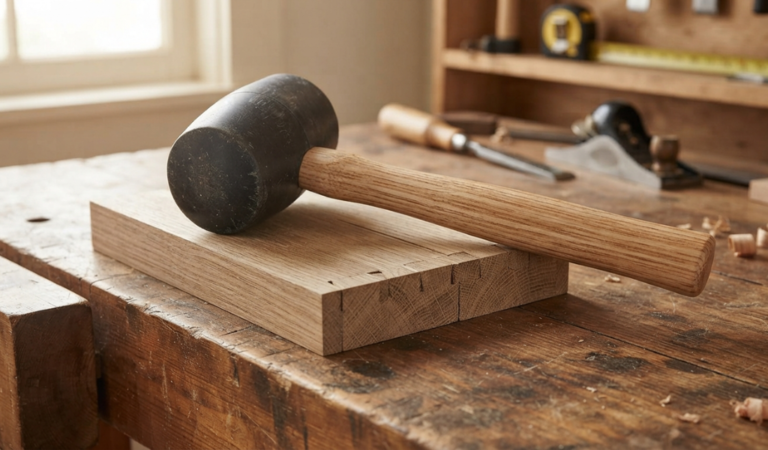
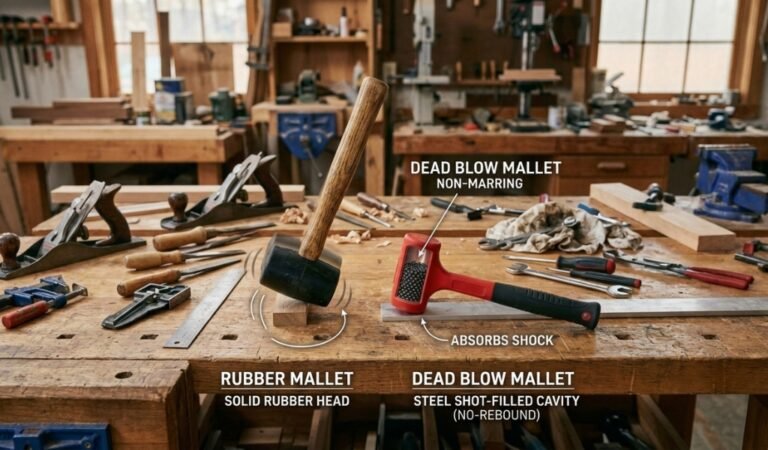
There are a few variations you might spot in a hardware store. A rubber mallet is amazing for tapping together metal shelves or laying down delicate tile floors. A plastic or rawhide mallet is often used in leatherworking to stamp patterns without cutting through the material. But the classic wood mallet remains the absolute favorite for furniture makers and carpenters who need reliable force without leaving behind nasty marks.
Now we move on to the heavy hitter. What Is a Hammer? A hammer is a high-impact hand tool built for driving fasteners, breaking things apart, and doing the heavy lifting of the construction world. It features a dense, heavy head—almost always made of forged steel—attached to a handle made of wood, fiberglass, or metal.
The face of a hammer is relatively small. This is a very intentional design choice. By putting the heavy weight of the steel head behind a very small striking face, the tool concentrates all of its energy into a tiny point. That concentrated force is exactly what you need to push a thick metal nail deep into a stubborn piece of lumber.
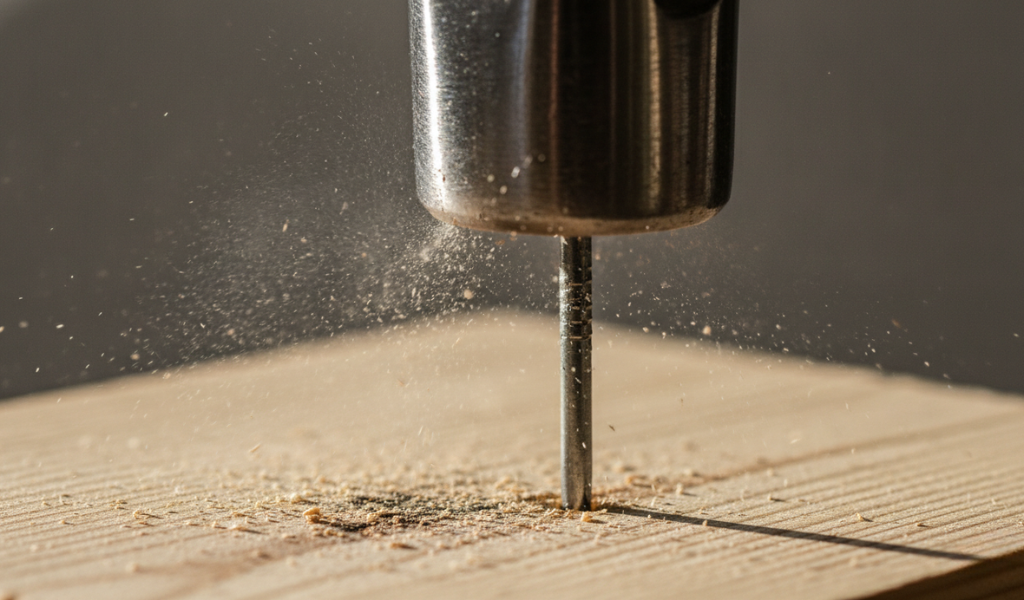
Hammers come in many shapes and sizes to handle very specific tasks. The classic claw hammer has a flat face for driving nails and a curved, forked back for pulling them out. A ball-peen hammer is a favorite for metalworkers, featuring a rounded back used to shape and harden metal surfaces. Then you have the sledgehammer, which is basically a massive steel block on a long stick, meant purely for knocking down walls and driving heavy stakes into the dirt.
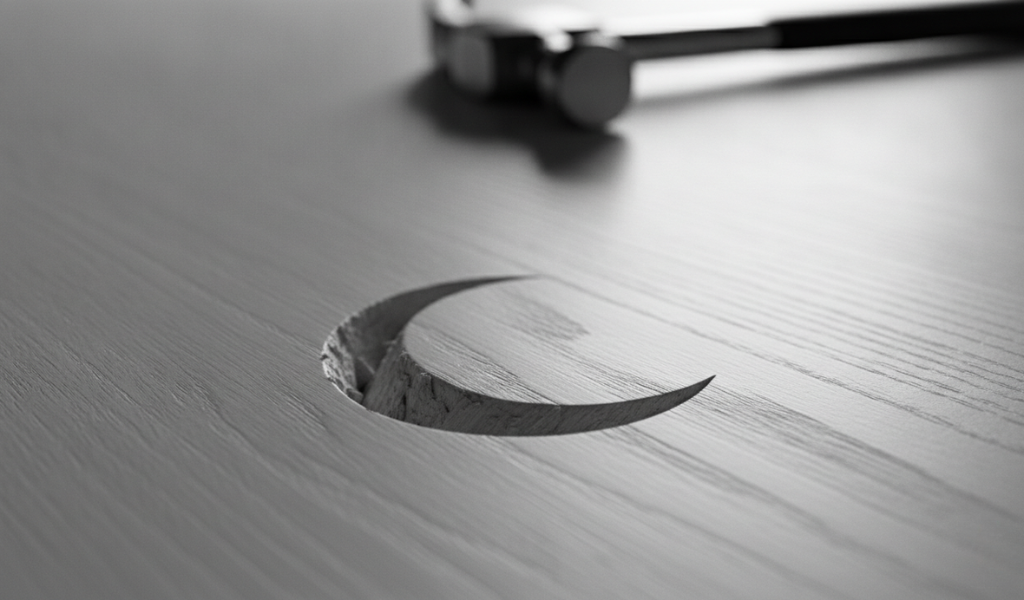
Hammers are all about brute strength and raw impact. They do not care about being gentle. If you strike a soft piece of pine wood with a steel hammer, you are going to leave a deep, permanent crescent-shaped dent in the wood. It is an indispensable tool for framing a house or hanging a picture frame, but it is a terrible choice for delicate assembly work.
Now that we know the basic definitions, let us dive deep into the Mallet vs Hammer – Key Differences. Choosing between the two comes down to understanding how force, material, and surface area work together.
Head Material and Hardness
The most obvious difference is what the tool is made of. A hammer features a hardened metal head. A wood mallet features a head made of solid timber, usually a tough hardwood like beech or hickory. This material difference dictates everything else about the tool. Metal does not yield, meaning a hammer transfers sharp, stinging shock directly into whatever it hits. Wood yields just slightly, absorbing a tiny bit of the impact and protecting the surface.
Surface Area and Impact Distribution
Take a look at the striking face of a hammer. It is usually about the size of a coin. All the power of your swing is focused right on that tiny circle. This is great for nails, but bad for soft surfaces. A wood mallet has a striking face that is much larger, sometimes three or four inches across. When you hit a piece of furniture with a mallet, the force is spread out evenly across a wide area. This prevents the tool from crushing the wood fibers.
Tool Preservation
You should never strike metal against metal if you can avoid it, especially when working with cutting tools. If you use a steel hammer to strike a chisel with a wooden handle, the metal will quickly split and destroy the handle. Even if the chisel has a plastic handle, repeated hammer strikes will eventually crack it. A wood mallet is the perfect companion for a chisel because the wood-on-wood impact is safe, transferring energy smoothly without destroying your expensive cutting tools.
Weight and Balance
Hammers tend to carry all their heavy weight right at the very tip of the metal head. This creates a swinging momentum that drives nails efficiently. Wood mallets are often bulkier, but the weight is distributed a bit differently. They feel incredibly balanced in the hand, allowing for controlled, repetitive tapping rather than massive, wild swings.
Knowing When to Use a Mallet will save you a lot of frustration and ruined materials. The general rule of thumb is this: if you want to move something, shape something, or fit something together without leaving a mark, grab the mallet.
Using Chisels and Gouges
As mentioned earlier, a wood mallet is the only tool you should use when working with chisels. Whether you are carving a decorative pattern into a wooden bowl or cutting out a hinge mortise on a door frame, the mallet gives you precise control over the depth of your cut. The soft thud of a wooden mallet on a chisel handle is one of the most satisfying sounds in a workshop.
Assembling Furniture
If you are putting together a chair, a bookshelf, or a cabinet, you will often deal with tight-fitting wood joints like dovetails or mortise and tenons. Pushing these together by hand is often impossible. Tapping them together with a metal hammer will crush the wood and ruin the piece. A wood mallet allows you to firmly knock the joints together safely.
Tapping Dowels
Wooden dowels are often used to connect two pieces of wood seamlessly. You need a bit of force to drive a tight dowel into its hole, but striking it with a metal hammer will easily snap or splinter the delicate dowel. A quick tap with a mallet drives it home perfectly.
Working with Sheet Metal or Leather
While wood mallets are famous in carpentry, they are also handy elsewhere. Leatherworkers use mallets to strike metal stamps, leaving beautiful impressions in the leather without damaging the stamps themselves. Auto body workers sometimes use specialized mallets to gently bend and shape thin sheet metal without creating sharp, ugly creases.
On the flip side, knowing When to Use a Hammer is just as important. A hammer is your best friend when you need raw driving power and you are working with hard fasteners.
Driving and Pulling Nails
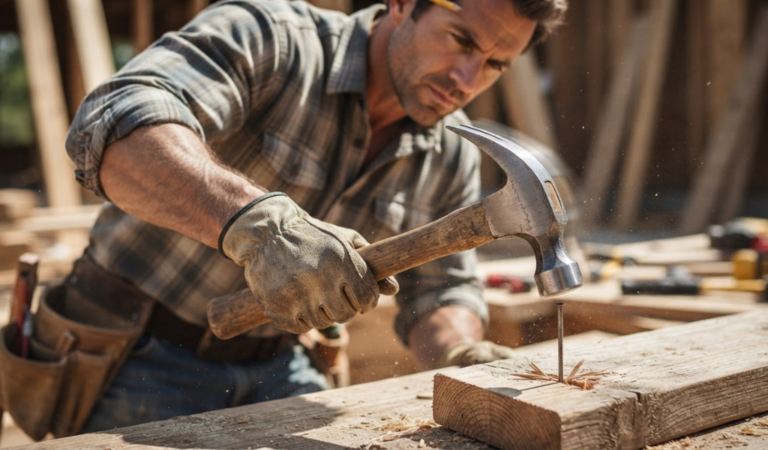
This is the job the hammer was born to do. The heavy steel head and concentrated striking face easily push metal nails through thick timber. The claw on the back is expertly designed to grip the head of a bent nail and pry it out with excellent leverage. You cannot drive a nail properly with a wood mallet; the metal nail will simply chew up the face of your wooden tool.
Demolition Work
If you need to break apart old wooden pallets, knock down some drywall, or smash up light concrete, a hammer is the tool for the job. The steel head is durable enough to withstand the abuse of smashing into rigid, abrasive materials. A wood mallet would splinter and break if you tried to use it to knock down a wall.
Metalworking
Forging metal, setting heavy steel rivets, or bending thick iron requires serious force. Blacksmiths and metalworkers use specialized heavy hammers to shape red-hot steel on an anvil. The hardened face of a steel hammer can take the heat and the impact without deforming.
To really bring this home, let us look at some real-world workshop scenarios where choosing the right tool makes all the difference.
I clearly remember building my very first coffee table. I had carefully cut out all the pieces, sanded them down, and was ready to assemble the frame. The wooden joints were just a little bit tight. I did not own a mallet at the time, so I grabbed my standard claw hammer. I thought if I just tapped very lightly, it would be fine. I was wrong. Even a light tap from the steel hammer left a permanent, half-moon dent right in the middle of a beautiful piece of oak. I had to spend an extra hour sanding the wood down just to hide my mistake.
Here are a few expert tips to keep in mind:
At the end of the day, building a capable toolbox is not about finding one magical tool that does everything. It is about matching the right tool to the specific task at hand. The difference between Wood Mallets and Hammers is clear once you see them in action.
A hammer provides the raw, concentrated force needed to drive heavy metal fasteners and handle rough construction work. A wood mallet delivers the broad, gentle persuasion needed to fit delicate wooden joints together and drive cutting tools without causing damage. Both tools deserve a permanent spot on your workbench.
If you have been struggling to put together your woodworking projects without leaving dents behind, do yourself a massive favor. Head to your local hardware store and pick up a high-quality wood mallet. Your projects, your chisels, and your patience will thank you for it!
Can I use a rubber mallet instead of a wood mallet for woodworking?
Yes, a rubber mallet can be used for some woodworking tasks like assembling furniture. However, rubber tends to bounce back slightly upon impact, which can make driving chisels feel awkward. Some cheap rubber mallets can also leave dark scuff marks on light-colored wood. A solid wood mallet is generally the better choice for traditional carpentry.
Why does my hammer have a textured pattern on the striking face?
Some framing hammers feature a textured or “waffle” face. This pattern is designed to grip the head of a large nail and prevent the hammer from slipping during a heavy swing. These are great for rough construction framing, but you should never use a waffle-faced hammer on finish carpentry, as it will leave a severe patterned dent in the wood.
How do I maintain my wood mallet?
Wood mallets require very little maintenance. Keep them dry to prevent the wood from swelling or cracking. You can occasionally wipe the head down with a light coat of boiled linseed oil to keep the timber conditioned. If the striking face eventually becomes too dented and uneven from years of use, you can gently sand it flat again.
Can a hammer damage my chisels?
Absolutely. You should never strike a chisel handle with a metal hammer. The concentrated shock of the steel hammer will cause wooden handles to mushroom, split, and eventually break. It can also shatter plastic or composite handles. Always use a mallet when striking a chisel.
What is the best weight for a beginner’s hammer?
For general household DIY projects, hanging pictures, and light repairs, a 16-ounce claw hammer is the perfect middle ground. It is light enough to swing comfortably without getting
Are there different types of wood mallets?
Yes. You will typically see two main styles. The “joiner’s mallet” has a large, flat, angled head designed to strike flat surfaces perfectly. A “carver’s mallet” is totally round and looks a bit like a heavy wooden bell. The round shape means you do not have to worry about the orientation of the mallet in your hand when you are making quick, repetitive taps on a carving tool. red, but heavy