Physical Address
304 North Cardinal St.
Dorchester Center, MA 02124
Physical Address
304 North Cardinal St.
Dorchester Center, MA 02124

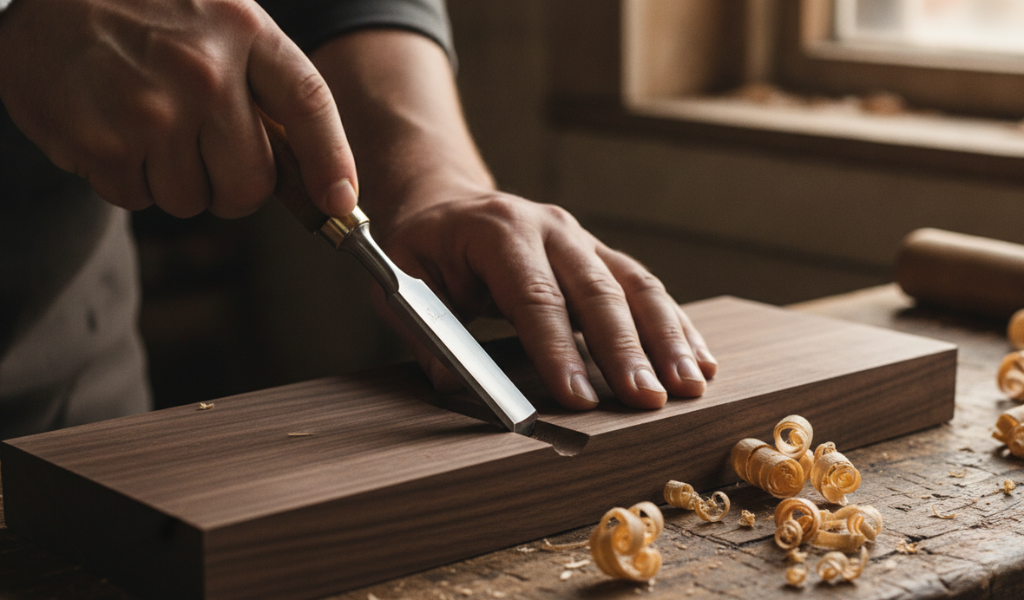
Ask any seasoned woodcarver about how to choose wood carving mallet and their most underrated tool, and many will point to the humble mallet. It rarely gets the spotlight that chisels and gouges do, but the right one can make the difference between clean, controlled cuts and an aching arm by lunchtime. If you’ve ever wondered how to choose a wood carving mallet that actually suits your hands and your projects, you’re in the right place.
A mallet does more than just hit things. It controls force, protects your tools, and keeps your wrist from doing all the heavy lifting. Pick the wrong one and you’ll fight your work the entire time. Pick the right one and carving starts to feel effortless.
In this guide, we’ll walk through what a mallet is, the main types of wood carving mallets, and the simple factors that help you land on the best wood carving mallet for your bench. By the end, you’ll know exactly what to look for before you spend a cent.
Let’s start with the basics what is a mallet and how to choose wood carving mallet rightly . A mallet is a striking tool with a large head, usually made from wood, rubber, urethane, or metal. Unlike a regular hammer, which has a small steel face, a mallet spreads its force over a wider, softer surface. This is exactly why carvers reach for one. It delivers a solid, even blow without chewing up the handles of your chisels and gouges.
The head is the part that does the work. The handle is what gives you control. Together they let you tap with precision or drive with power, depending on the job in front of you.
So what is a mallet used for once you’re at the bench? In short, it provides controlled force. When you strike the end of a chisel or gouge with a mallet, you push the cutting edge through the wood in a steady, predictable way. Your free hand stays on the tool to guide the cut, while the mallet supplies the muscle. So making of the mallet is a important thing.
This matters more than you might think. Pushing a gouge through how to choose wood carving mallet hardwood by hand tires you out fast and makes fine details tricky. A few light taps with a mallet, on the other hand, give you cleaner lines and far less fatigue. Carvers also use mallets for roughing out large shapes, where consistent power saves a lot of time and energy.
Worth noting: not every mallet is meant for striking tools. Some, like the dead blow, are built for tapping pieces together rather than hitting a chisel. We’ll get into that below.
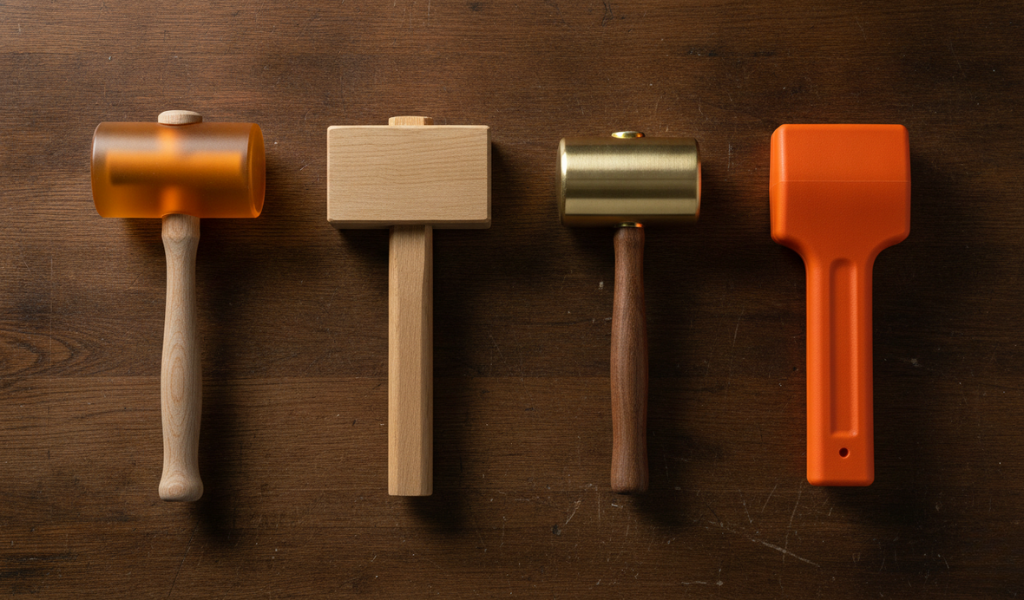
There are several types of wood carving mallets, and each one has a job it does best. Knowing the differences between mallets and hammers helps you avoid buying the wrong tool for your style of work. Here’s a rundown of the most common options that questions about how to choose wood carving mallet wisely.
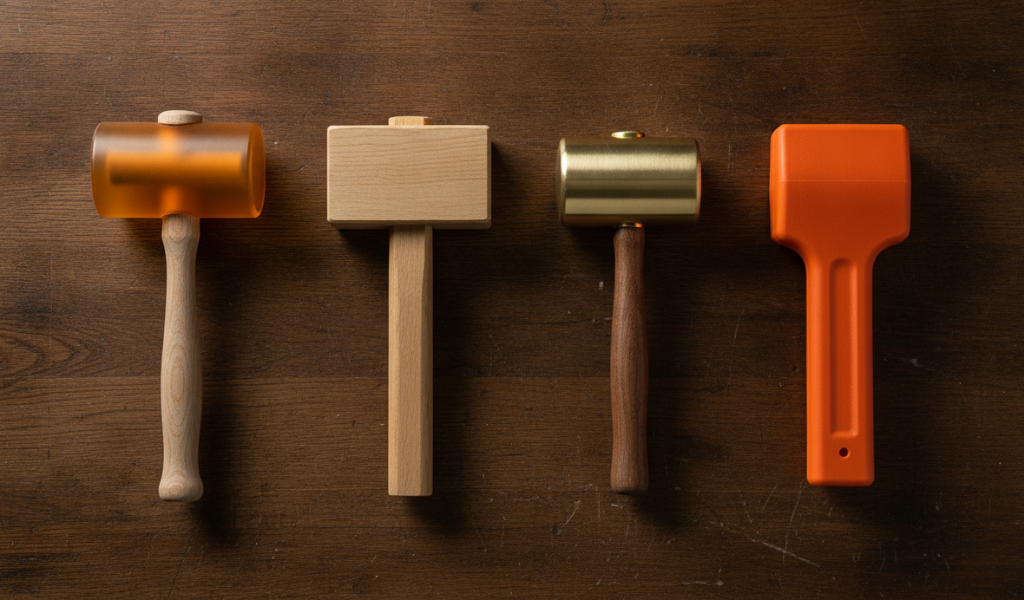
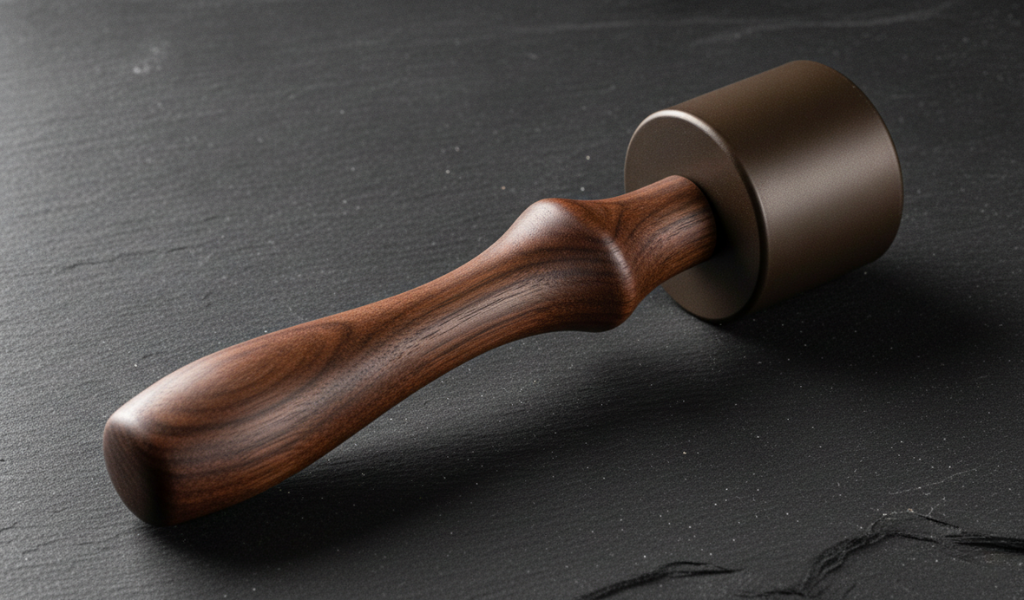
The carver’s mallet is the classic choice for most woodcarvers. It has a rounded, cylindrical head, sometimes turned from a single piece of wood. That round shape is the secret to its appeal. Because there’s no flat face to line up, you can strike your chisel from almost any angle without breaking your rhythm.
Carver’s mallets come in a range of sizes and weights, so you can match the tool to the force you need. The best versions pair a comfortable handle with a urethane head. The urethane directs energy straight into the chisel rather than back into your hand, and it’s gentle on your tool handles too. For detail work and general carving, this is usually the mallet people fall in love with first.
A joiner’s mallet looks quite different. It has a large, square head with angled, flat sides and is made from hard wood. The head and handle are two separate pieces fitted together, which means you can replace either part if it wears out over the years.
This is your power tool. When you need to drive a chisel hard through tough stock or remove a lot of material, the joiner’s mallet delivers. The flat faces give you a big striking surface, though they do require you to square up your blows a little more deliberately than a round head does.
The journeyman’s mallet is the compact specialist. It’s small, usually fitted with a brass head, and built for moments when you need real power in a tight spot. The dense brass packs a surprising punch for its size, making it ideal for precise, controlled work where a larger mallet simply won’t fit.
If you carve fine details or work in cramped areas of a piece, this little tool earns its place on the bench quickly.
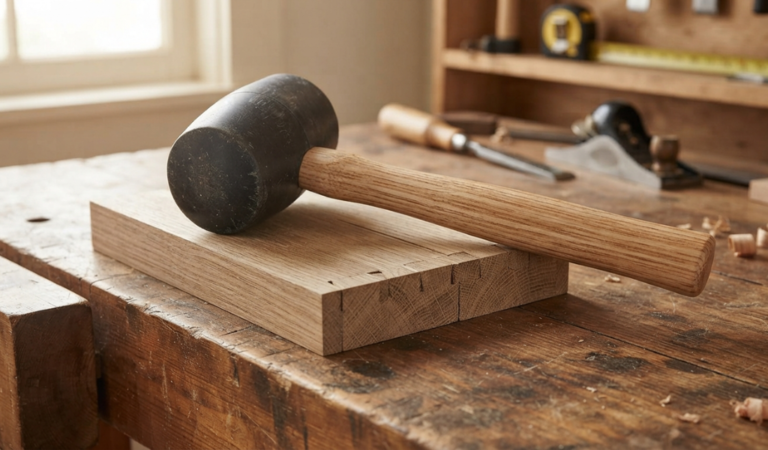
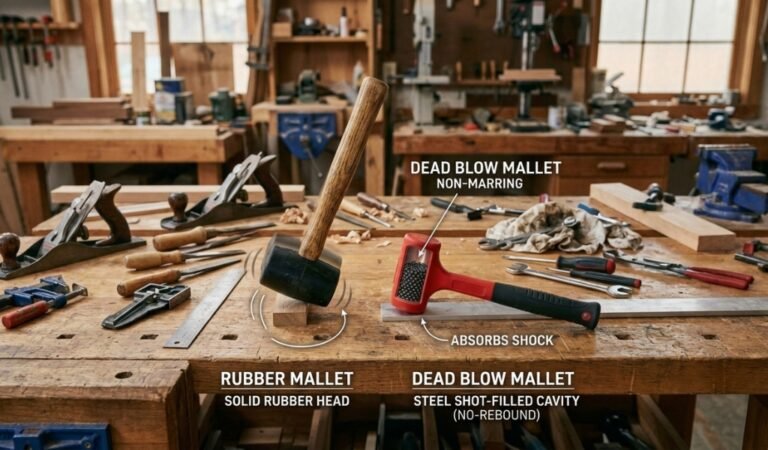
Many people already own a rubber mallet, and in a pinch it’ll do the job. The soft rubber head won’t damage your chisel handles, which is a real plus. The trade-off is power. A rubber mallet bounces and absorbs energy, so it can’t deliver the same crisp, driving blow as a tool designed for carving.
Think of it as a reasonable starting point if you’re testing the waters, but not a long-term replacement for a proper carver’s mallet.
The dead blow mallet is a bit of an outlier here. It isn’t meant for striking chisels and gouges at all. Instead, carvers and woodworkers use it to tap parts together during assembly. Its head is usually filled with metal pellets or sand, which adds weight and stops the mallet from bouncing back after impact.
That no-bounce quality is its whole point. You get a firm, controlled tap without the rebound, which is perfect for nudging joints into place without marring the surface. A textured handle helps you keep a steady grip while you work.
Knowing the types of mallets is half the battle. The next step is matching one to your hands, your wood, and the kind of carving you do. Here are the factors that matter most.
Weight and size. This is the big one. A heavier mallet does more of the work for you, which means less effort per blow and less arm fatigue over a long session. Dense, weighty heads are generally best for driving through hardwood. That said, a single mallet won’t cover every job. Many carvers keep a couple of sizes on hand: a lighter one for detail and a heavier one for roughing out. If you’re just starting, a mid-weight carver’s mallet around 12 to 16 ounces is a safe, versatile pick.
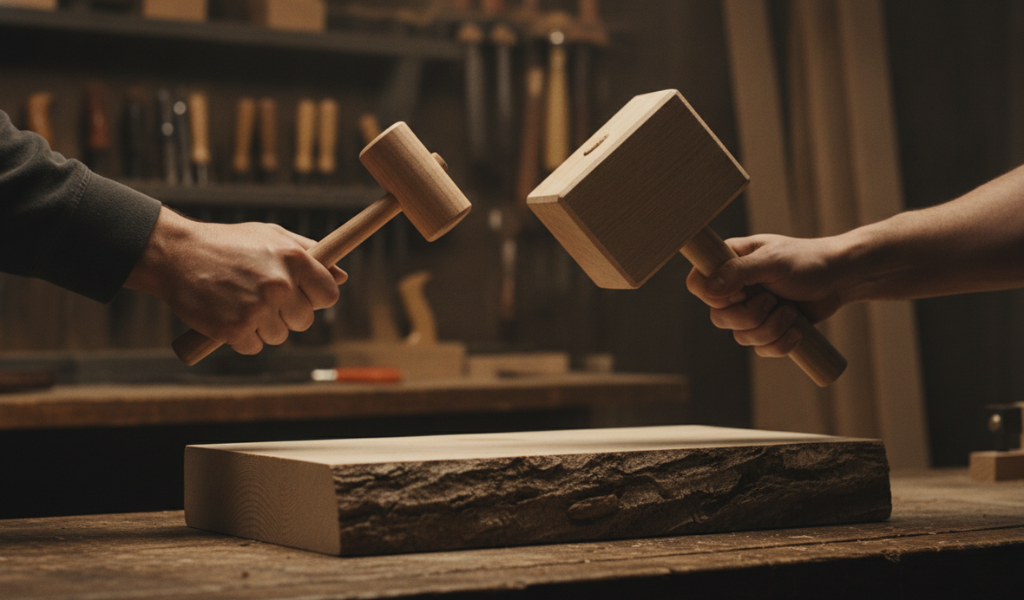
Head material. The material decides how the force travels and how kind the mallet is to your tools. Urethane heads are a favorite because they channel energy into the chisel without jarring your hand, and they protect wooden tool handles from splitting. Hardwood heads offer solid power and a traditional feel. Brass brings concentrated force in a small package. Rubber is gentle but light on power. Choose based on the balance of force and protection you want.
Handle comfort. Your hands are the tools you can’t replace, so don’t overlook the grip. A comfortable handle reduces strain and friction, especially during long carving sessions. Look for a shape that feels natural in your palm and a finish that won’t slip when your hands warm up. If you carve often, this single factor can save you a lot of soreness.
Durability. A good mallet should take a beating without denting, chipping, or shedding its handle. Quality materials and solid construction pay off here. A well-made mallet is one of those tools you buy once and use for years.
Here’s a quick real-life example. A beginner carving spoons from basswood doesn’t need a heavy joiner’s mallet. A light to mid-weight carver’s mallet with a urethane head gives plenty of control for gentle work. Meanwhile, someone roughing out a large oak bowl will want serious weight behind each strike. Same hobby, very different tools.
HYou can feel hammer ere is some tips that might helps you how to choose wood carving mallet wisely and a few small habits will keep your mallet and your tools in great shape:
Choosing a wood carving mallet really complicated so you need to understand how to choose wood carving mallet and thats comes down to three things: weight, head material, and handle comfort. Get those right and you’ll carve with more control, more power, and a lot less fatigue. You may feel that Hammers and Mallet will be the same thing but no , there are lots of difference between hammers and mallets. Beginners do well with a mid-weight carver’s mallet and a urethane head, while experienced carvers often build a small collection to handle everything from delicate details to heavy roughing.
The best wood carving mallet is the one that feels like an extension of your arm. Take a moment to think about the wood you carve, the size of your projects, and how long your sessions tend to run. With those answers in mind, you’re ready to choose with confidence.
Now it’s your turn. Grab a quality mallet, pair it with a few sharp chisels, and start turning blocks of wood into something beautiful. Your best carving is waiting on the other side of that first tap.
What is a mallet, and how is it different from a hammer?
A mallet is a striking tool with a large, soft head made from wood, rubber, urethane, or brass. A hammer has a small, hard steel face. The mallet’s wider, softer head spreads force gently, which protects chisel handles and gives you more control during carving.
What is the best wood carving mallet for beginners?
For most beginners, a mid-weight carver’s mallet around 12 to 16 ounces with a urethane head is the best choice. It offers a good balance of control and power, works from any striking angle, and won’t damage your tool handles.
How heavy should my wood carving mallet be?
It depends on the work. Lighter mallets suit detail carving, while heavier ones are better for roughing out large pieces or working with hardwood. A mid-weight option in the 12 to 16 ounce range covers most general carving needs.
Can I use a rubber mallet for wood carving?
Yes, a rubber mallet will work in a pinch and won’t harm your chisel handles. The downside is power. It absorbs and bounces energy, so it can’t deliver the firm, driving blow of a dedicated carver’s mallet. It’s fine to start with, but most carvers upgrade.
What is a dead blow mallet used for?
A dead blow mallet is used to tap pieces together during assembly, not to strike chisels and gouges. Its head is filled with metal pellets or sand, which prevents bouncing and gives a firm, controlled tap without marking the surface.
Why are carver’s mallets round instead of flat?
The round, cylindrical head lets you strike your chisel from any angle without lining up a flat face first. This keeps your carving rhythm smooth and natural, which is why so many carvers prefer the round shape for detail and general work.
How do I take care of my wood carving mallet?
Store it in a dry place away from direct sun to prevent cracking, check that the head stays firmly attached to the handle, and clean off dust after use. With basic care, a quality mallet can last for many years.