Physical Address
304 North Cardinal St.
Dorchester Center, MA 02124
Physical Address
304 North Cardinal St.
Dorchester Center, MA 02124

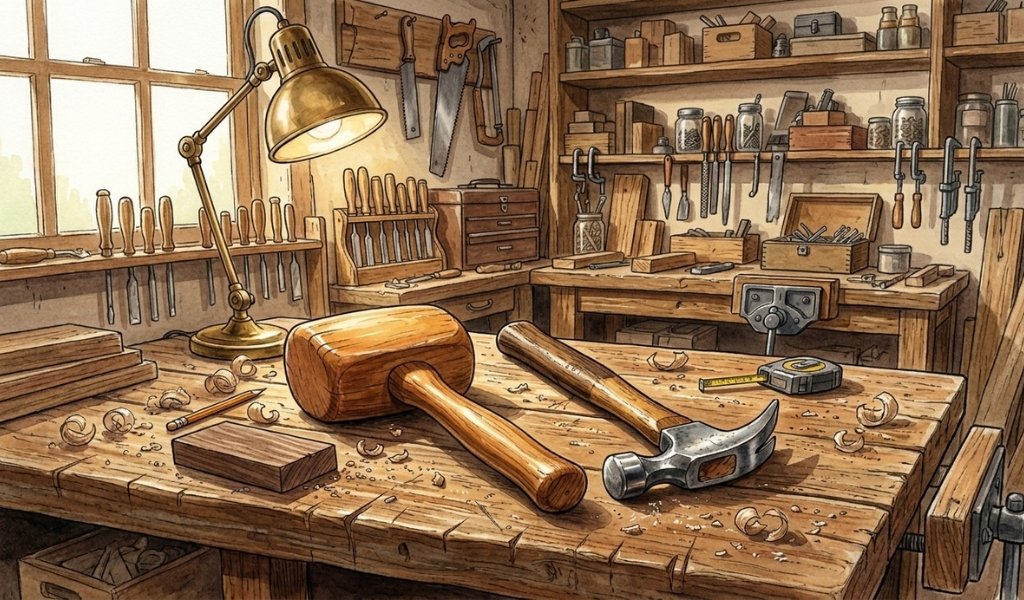
Pick up the wrong striking tool on a woodworking project, and you’ll know about it fast. A steel hammer head against a fine dovetail joint can split wood in a single swing. A rubber mallet against a stubborn nail won’t drive it anywhere. Both tools look similar at a glance handle, head, striking force but they exist for fundamentally different purposes.
Understanding the differences between hammers and mallets isn’t just trivia for carpenters. It’s practical knowledge that protects your workpieces, extends the life of your chisels, and makes every task more efficient. Whether you’re assembling joinery, driving nails into hardwood, or tapping ceramic tiles into a mortar bed, the right striking tool changes everything about how the job goes.
For a deep dive into the soft-headed side of this comparison, the guide on What Is a Mallet? Types, Uses, and Selection Tips covers mallet construction, types, and selection in thorough detail. This post focuses specifically on the comparison where each tool excels, where it fails, and how to choose the right one for the task in front of you.
Both hammers and mallets are hand tools built around the same basic concept: a weighted head attached to a handle, used to deliver a controlled blow. That’s roughly where the similarity ends. The materials, the striking force distribution, the rebound behavior, and the appropriate applications diverge significantly between the two.
A hammer is a striking tool with a metal head almost always hardened steel designed to drive fasteners, break materials apart, or shape metal through high-impact force. The head has two sides: the face, which strikes the nail or workpiece, and the peen (or poll), which varies in shape depending on the type of hammer.
The most familiar version is the claw hammer, a 16 oz to 20 oz tool with a flat striking face on one side and a curved claw on the other for pulling nails. The ball-peen hammer, by contrast, has a rounded peen designed for shaping metal and setting rivets, a staple in metalworking and fabrication shops. The Warrington hammer, popular in fine woodworking and cabinet making, features a cross-peen for starting small nails and tacks without mashing your fingers.
Beyond those, the category expands into lump hammers (also called club hammers), used for heavy masonry and demolition work, and sledgehammers, which scale up the same concept for breaking concrete, driving stakes, and demolition tasks requiring substantial force.
What all hammers share is a hardened steel head. That hardness is the source of both their strength and their limitation. Steel can drive a nail through dense hardwood without deforming, but it will also dent, scratch, or split any surface that can’t withstand the impact. Using a claw hammer to assemble a furniture joint or drive a wooden chisel is a fast way to damage both.
A mallet is a striking tool with a head made from softer materials than steel typically wood, rubber, nylon, plastic, or rawhide. That softer head is the defining feature. It allows the mallet to deliver meaningful striking force while absorbing enough of the impact to prevent surface damage on the workpiece or the tool being driven.
Mallets have been in use since the Stone Age, with examples found in ancient gravesites and archaeological digs across multiple continents. Early craftspeople understood the same principle that guides modern woodworkers: not every task benefits from maximum hardness. Sometimes controlled force matters more than brute force.
The mallet category spans a wide range. A wooden mallet used for chisel driving in fine carpentry looks very different from a rubber mallet used to seat tiles, which looks different again from a dead-blow mallet used in automotive assembly. Each one applies the soft-headed concept to a specific set of tasks and surface protection requirements. The head material, weight, and face design all shift depending on what the mallet is built to do.
The most fundamental difference between hammers and mallets is head material, and that material dictates how impact force is distributed on contact.
A hardened steel hammer head concentrates force into a small, dense striking surface. This focused energy is exactly what you need to drive a nail through timber; the steel face doesn’t compress on impact, so virtually all the kinetic energy from your swing transfers directly into the fastener. That efficiency is why hammers have remained the tool of choice for driving nails across various industries for centuries.
Mallet heads work differently. A wooden mallet head, typically made from beechwood or hornbeam, compresses very slightly on contact. This compression spreads the force across a slightly larger area and absorbs a small percentage of the impact, which is enough to protect a chisel handle or a wood surface from damage. A rubber mallet compresses more noticeably, spreading force even further and reducing peak pressure on the workpiece. Nylon and plastic mallet faces sit somewhere between wood and rubber in terms of hardness and force distribution.
The practical consequence: hammers deliver more concentrated, penetrating force. Mallets deliver broader, more distributed force. For driving nails, concentrated force wins. For assembling wooden pieces, driving chisels, or positioning tiles without marring the surface, distributed force is what you want.
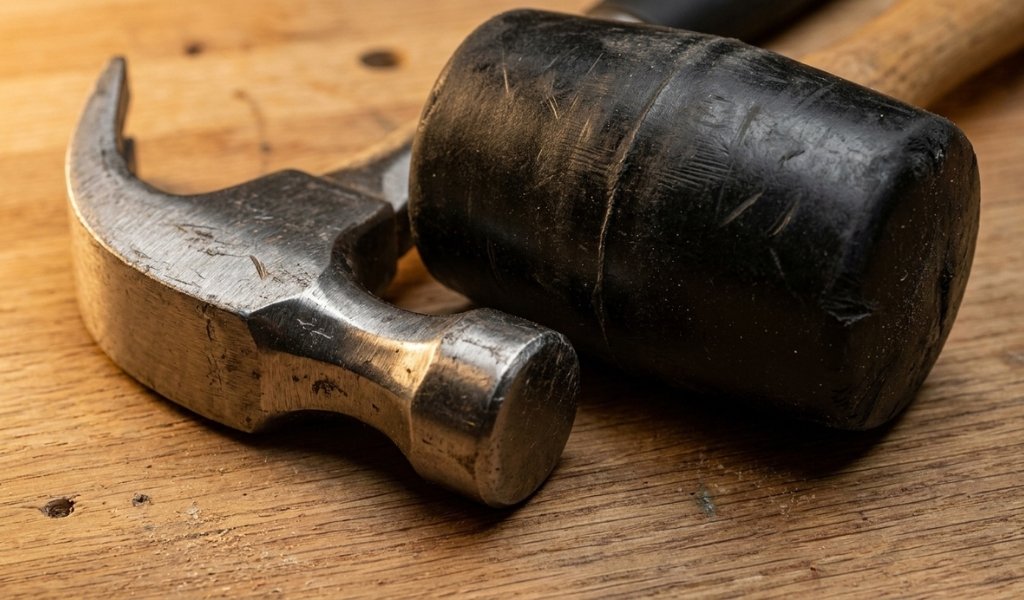
A steel hammer face will leave a mark on almost any surface it contacts directly wood, finished metal, ceramic, and even concrete can show dents or scuffs from a steel head. This is rarely a problem when the hammer is striking a nail head, since the nail acts as an intermediary. But any situation where the hammer face contacts the workpiece directly introduces real risk of surface damage.
Mallets are specifically engineered to minimize this risk. A rubber mallet, for example, can tap a ceramic tile directly into a mortar bed without cracking the glaze or chipping the edges. A wooden mallet can strike the end of a mortise-and-tenon joint to seat it without denting the wood fibers. A nylon-faced mallet can tap an aluminum panel into position without leaving any trace of the blow.
This distinction matters most in woodworking and finishing work, where surface damage is visible and sometimes irreversible. It also matters in upholstery work, where a rubber or rawhide mallet can drive tacks and staples through fabric without damaging the material underneath. Leatherworking similarly relies on soft-faced mallets to set stamps, drive stitching chisels, and shape material without tearing or marking the leather surface.
Rebound is a factor that’s easy to overlook until you’ve spent an hour fighting it. When a steel hammer strikes a hard surface, it bounces back with significant energy; this is the rebound effect. For most nailing tasks, you can manage this naturally. But in precision work, excessive rebound wastes energy, reduces accuracy, and accelerates fatigue.
Rubber mallets have their own rebound issue. The elastic properties of rubber cause the head to spring back after each strike, which can pull the blow off-target on the follow-through. For extended work sessions, this repeated bounce adds up and increases wrist and elbow strain.
Dead-blow mallets solve this directly. The hollow head, filled with steel shot or sand, shifts forward on impact and absorbs the rebound energy internally. The result is a near-zero-bounce strike that delivers almost all of its energy into the target. For assembly work, persuading furniture joints together, seating components in manufacturing, or knocking automotive parts into alignment dead-blow control dramatically improves both efficiency and precision.
Ergonomic handles also play a role here. Fiberglass handles absorb vibration better than wooden ones, reducing the shock transmitted to your hand and wrist on each strike. For tasks requiring hundreds of blows, that difference in handle material has a meaningful effect on fatigue levels by the end of the day.
Hammers belong in any situation where the primary goal is driving fasteners or delivering high-impact force to a hard material. Here’s where each type earns its place:
Claw hammer: The daily driver for framing, finish carpentry, and general construction. Use it for driving nails into dimensional lumber, pulling nails from boards, and any nailing task where speed and penetrating force matter more than surface protection.
Ball-peen hammer: The metalworker’s companion. The ball-shaped peen is designed for shaping metal, setting rivets, and peening over bolts. It’s also used to strike cold chisels and punches in metalworking applications, where a wooden mallet would be far too soft.
Lump hammer / club hammer: Built for heavy-duty nailing, driving cold chisels through masonry, and demolition tasks where substantial force is required.
Warrington hammer: A specialist tool for fine woodworking and joinery, particularly useful for driving small nails and tacks with the cross-peen before switching to the face for the final drives.
None of these belong anywhere near finished wood surfaces, assembled joints, or tasks requiring surface damage prevention.
Mallets step in wherever surface damage prevention, controlled force, or tool protection becomes a priority:
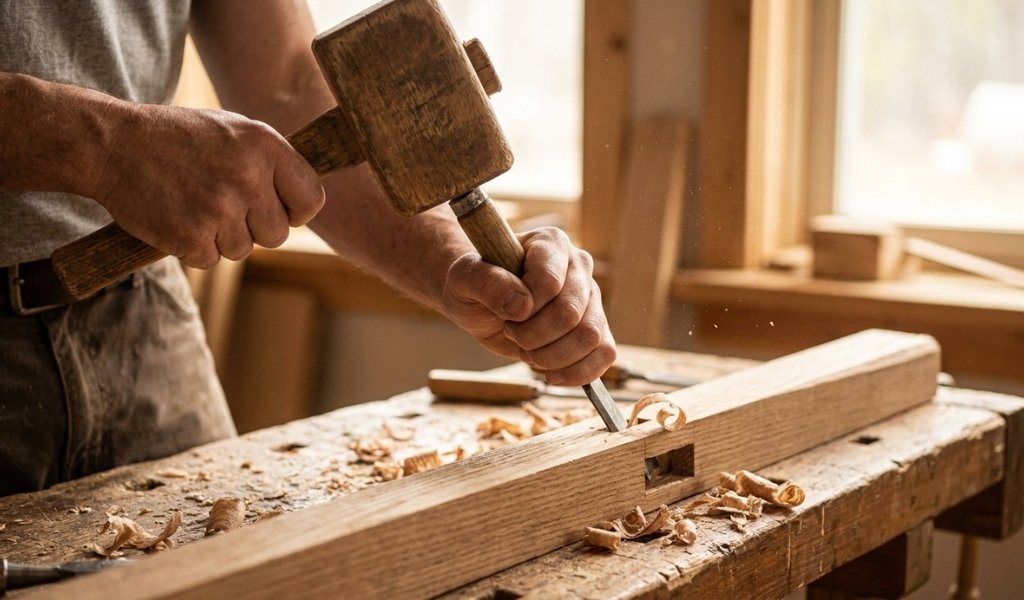
Chisel driving in woodworking: This is the core application for wooden and bench mallets. Driving a chisel to cut a mortise, pare a joint, or shape a profile requires repeated, controlled blows to the chisel handle. A metal hammer would crack or split a wooden chisel handle within a single session. A mallet distributes the blow across a larger surface area, protecting the handle and giving you better tactile feedback on the depth of each cut.
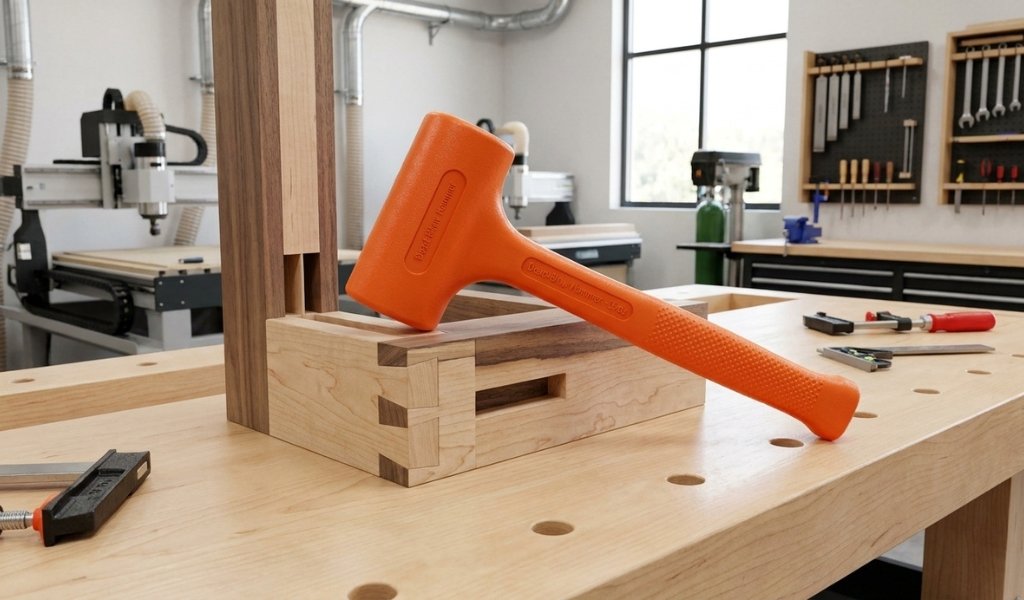
Joinery and assembly: Assembling dovetail joints, mortise-and-tenon joints, or any tight-fitting joinery requires persuasion without force. A rubber or dead-blow mallet seats the joint without splitting the wood or denting the surface.
Upholstery work: Rubber and rawhide mallets drive tacks and staples through fabric and padding without tearing the material or leaving impressions.
Leatherworking: A carver’s mallet or rubber mallet drives stitching chisels, stamps, and tooling through leather without tearing or overstretching the material.
Tiling and flooring: A rubber mallet seats tiles, pavers, and laminate planks without cracking glazed surfaces or chipping edges.
The striking tool category extends well beyond the basic hammer-or-mallet choice. Several specialized tools occupy the space between or beyond the two:
Dead-blow mallet: As described above, a hollow-headed mallet filled with lead shot or steel shot that eliminates rebound on impact. The polyurethane or plastic outer casing protects finished surfaces, making dead-blow mallets standard in automotive shops, furniture assembly, and anywhere surface damage prevention and zero-bounce control are both required.
Maul: A heavy, long-handled tool that resembles an oversized hammer. Mauls are used for splitting wood (in combination with a wedge) and driving large stakes. The wooden or fiberglass handle provides the leverage needed to generate high striking force, while the large head distributes that force over a wider area than a sledgehammer.
Beetle: A traditional carpentry tool, essentially a large wooden mallet with a cylindrical head. Beetles are used for heavy driving tasks setting timber pegs, driving stakes, and assembling large wooden structures where a standard mallet would be too light and a metal hammer would cause surface damage. Traditional timber framers still use beetles for peg-and-mortise assembly.
Plastic mallet: Plastic mallets occupy the space between rubber and wooden mallets. They’re harder than rubber, which makes them useful when you need more force than rubber delivers but less surface aggression than wood. Common in automotive assembly, cabinetmaking, and general workshop use. Some plastic mallets have interchangeable faces, allowing you to swap between softer and harder striking surfaces on the same tool.
Rawhide mallet: A niche but valuable tool for leatherworking and jewelry making. The rawhide head is firm enough to deliver precise, controlled blows but won’t mark or scratch delicate metal surfaces. Often used for shaping and forming sheet metal or driving leather stamps.
The softer head that makes a mallet useful for surface protection also makes it inappropriate for certain tasks. Here’s when you should leave the mallet in the drawer and reach for the right hammer:
Driving nails: A mallet head compresses on impact and distributes force broadly. Nails need concentrated, penetrating force. Using a rubber or wooden mallet to drive nails is inefficient at best the energy dissipates before it fully seats the fastener and can split or bruise the wood around the nail at worst.
Striking metal chisels and punches: Cold chisels, center punches, and metal drift pins are designed to be struck with a metal hammer. A wooden mallet will split on contact with a steel punch after repeated use. A rubber mallet lacks the force density needed for metalworking.
Heavy demolition: If you need to break concrete, split large timbers, or drive substantial masonry anchors, a sledgehammer or lump hammer is the right call. Mallets lack both the mass and the striking surface hardness for demolition work.
Tasks requiring fastener setting: Any application that requires setting a bolt, staple, or tack through hard material demands a steel-faced hammer. Mallets won’t generate the focused force needed.
The main difference between a hammer and a mallet is the material of the head. A hammer has a hardened steel head designed to drive nails and deliver high-impact force to hard materials. A mallet has a softer head made from wood, rubber, nylon, plastic, or rawhide that delivers controlled force without marring, denting, or splitting the workpiece or the tool being struck. This distinction determines which tasks each tool is suited for.
Use a mallet instead of a hammer whenever surface damage prevention is a priority or when you’re driving another tool, such as a chisel, that has a wooden handle. A metal hammer face will split a wooden chisel handle, dent soft metals, crack ceramic tiles, and bruise finished wood surfaces. A mallet applies enough force to do the job while protecting both the workpiece and the tool. For woodworking, joinery, upholstery, tiling, and assembly work, a mallet is the correct striking tool.
For most woodworking tasks particularly chisel driving, joint assembly, and fitting mallets are the better choice. A wooden or bench mallet drives a chisel cleanly without damaging the handle or the wood surface. A dead-blow or rubber mallet seats dovetail and mortise-and-tenon joints without splitting the timber. That said, hammers still belong in the woodworking shop for tasks like driving nails, setting brads, and any application where a fastener needs to penetrate the material.
Not effectively. A rubber mallet head compresses on impact, which spreads the striking force rather than concentrating it. Driving nails requires focused, penetrating force that a rubber head cannot deliver efficiently. In a pinch, a rubber mallet might partially drive a small nail into very soft wood, but it won’t seat the nail cleanly and risks bruising the surrounding wood surface. Use a claw hammer or finish hammer for driving nails.
Avoid using a mallet when the task requires concentrated, high-impact force or when you are striking hardened metal tools directly. Do not use a mallet for driving nails, striking cold chisels or metal punches, demolition work, or any heavy-duty application where a sledgehammer or lump hammer is appropriate. A mallet’s soft head is an asset for surface protection and controlled striking; it becomes a liability when the job demands the hardness and force density of a steel-headed hammer.
Knowing the difference between a hammer and a mallet is straightforward once you understand the head material and what it means for force distribution and surface interaction. The real skill lies in matching the tool to the task quickly and confidently and understanding when one simply cannot substitute for the other.
For everyday use, a quality claw hammer and a rubber mallet cover the majority of DIY and light carpentry tasks. Add a wooden mallet when you move into chisel work and joinery, and a dead-blow mallet when assembly precision becomes critical. Each tool earns its place through specific performance, not overlap.
If you’re building out your workshop toolkit from scratch, a solid foundation starts with understanding not just what each tool does, but how to maintain and care for it. A well-maintained hand tool lasts decades and performs consistently and that starts with knowing which tool belongs in your hand for each specific job.
For a broader reference on tool selection and long-term care, a reliable hand tools selection and care guide will help you make smarter purchasing decisions and keep every tool in your kit performing at its best.
The right striking tool doesn’t just make the job faster. It makes the result cleaner, protects your materials, and reduces the chance of costly mistakes. Choose accordingly.