Physical Address
304 North Cardinal St.
Dorchester Center, MA 02124
Physical Address
304 North Cardinal St.
Dorchester Center, MA 02124


If you’ve ever left a can of paint near a heat source and wondered whether that was a smart idea, you’re not alone. Questions about paint flammability come up more often than people expect, especially for hobbyists, professional painters, and DIYers working in enclosed spaces. The main question we’re tackling here: is acrylic paint flammable?
The short answer is that standard acrylic paint is generally not considered flammable in the traditional sense. But there’s a lot more to it than that. The full picture depends on whether the paint is wet or dry, what type of acrylic you’re using, and how it’s being stored or applied. Get those factors wrong, and even a “safe” paint can become a hazard.
This guide covers everything you need to know about acrylic paint and fire risk, from what’s inside the can to how to handle, store, and dispose of it properly. Whether you’re a first-time crafter or a seasoned artist, understanding these basics can protect your workspace, your health, and your home.
Acrylic paint is a synthetic, water-based paint that has been a favorite among artists and DIY enthusiasts since it was first introduced commercially in the 1950s. Unlike oil-based paints, not like spray paints and which require solvents like mineral spirits to thin and clean up, acrylic paint uses water as its primary carrier. That’s one of the reasons it’s considered safer and more user-friendly than many other paint types.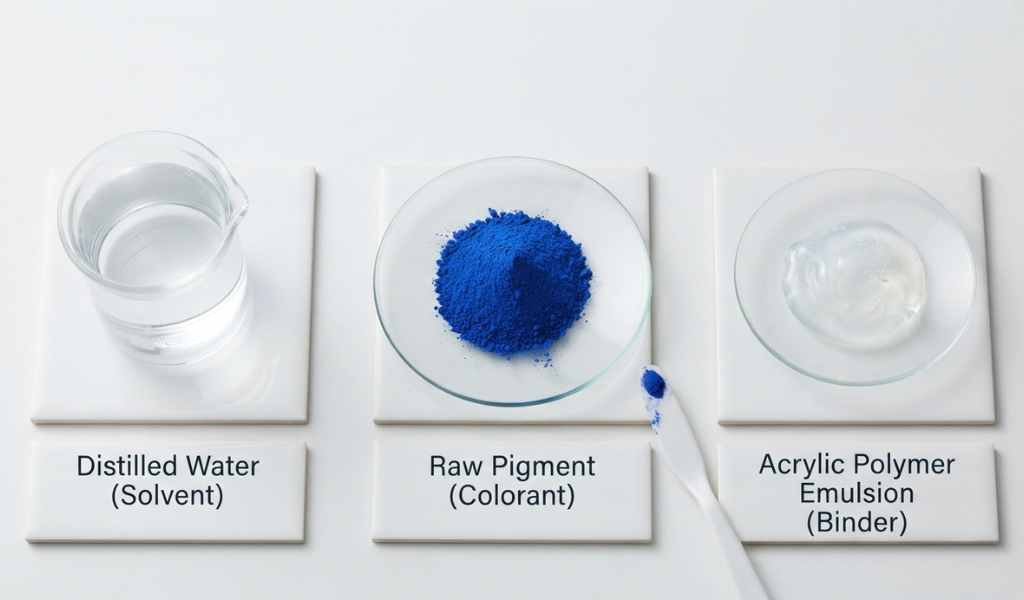
At its core, acrylic paint is a suspension of pigment particles in an acrylic polymer emulsion. When you brush it onto a surface, the water evaporates, and the polymer particles bind together to form a flexible, durable film. This process is what gives acrylic paint its fast-drying quality and its excellent adhesion to a wide variety of surfaces.
Understanding what’s inside acrylic paint helps explain its chemical behavior around heat and fire. Most acrylic paints contain three main components:
Pigment: This is what gives paint its color. Pigments can be organic or inorganic and are generally stable chemical compounds. On their own, most pigments are not flammable.
Acrylic polymer emulsion: This is the binder that holds the pigment together and helps it stick to surfaces. It is made up of acrylic resin particles suspended in water. Once the water evaporates, the resin forms a plastic-like coating.
Water: The primary solvent in most standard acrylic paint. Because water is used instead of a flammable solvent like turpentine or naphtha, acrylic paints are significantly less likely to ignite than oil-based paints.
Some formulations also contain small amounts of additives like preservatives, thickeners, and stabilizers. These are usually present in very small quantities and don’t significantly affect flammability under normal conditions.
Not all paints carry the same fire risk. One of the most important distinctions to understand is the difference between water-based and solvent-based paints.
Water-based paints, which include latex and acrylic paints, use water as their primary liquid component. Because water is non-flammable, these paints don’t pose the same ignition risk that solvent-based products do. They’re widely used in homes, schools, and studios precisely because they are considered safe to use indoors.
Solvent-based paints are a different story. These include oil-based paints, certain enamel paints, and spray paints that contain flammable propellants. They use chemical solvents such as mineral spirits, naphtha, or acetone as their carrier. These solvents are highly flammable liquids that can easily ignite when exposed to an open flame, a spark, or excessive heat. The NFPA (National Fire Protection Association) classifies many solvent-based paints as flammable or combustible depending on their flash point.
When people ask whether paint is flammable, the type of paint matters enormously. Lumping all paints together is a mistake that can lead to serious safety oversights.
Standard acrylic paint is not classified as flammable. Because it’s water-based and contains no significant amount of flammable solvents, it does not meet the technical definition of a flammable liquid, which requires a flash point below 100°F (37.8°C) according to NFPA guidelines.
That said, “not flammable” doesn’t mean “completely safe around fire.” At extremely high temperatures, acrylic paint can soften, melt, or release fumes. And while the paint itself may not catch fire easily, the surface it’s applied to might. Context matters.
There’s also an important distinction to make within the acrylic category. Some specialty acrylics, particularly those designed for industrial use or mixed with solvent-based mediums, may have a higher fire risk than standard artist-grade or craft acrylics. Always check the product label and the Safety Data Sheet (SDS) before working with any paint in a space with heat sources or poor ventilation.
Wet acrylic paint, meaning freshly applied or still in liquid form, is generally not flammable under typical conditions. Since the paint is mostly water at this stage, it has a very low risk of ignition. You would need an extreme heat source to cause any combustion, and even then, the water content makes ignition unlikely.
However, there are a few things worth noting. If a wet acrylic paint has been modified with certain mediums, retarders, or additives that contain flammable solvents, the overall mixture could carry a higher fire risk than pure acrylic. Some people mix acrylic paint with products like isopropyl alcohol to speed up drying or achieve particular effects. Alcohol is a flammable liquid, so that combination changes the equation significantly.
Another consideration is fumes. Wet acrylic paint can emit mild fumes in enclosed spaces. These are not typically at levels that pose a fire risk, but poor ventilation can cause fume buildup, which may be hazardous to inhale over time. Always work in a well-ventilated area when painting indoors.
Once acrylic paint has fully dried, it forms a plastic-like polymer film. At this stage, the water has completely evaporated and what remains is a solid resin. Dry acrylic paint is not considered flammable under normal circumstances.
However, if dry acrylic paint is exposed to very high temperatures, it can soften and eventually melt or char. When it does burn, it can release toxic fumes. This is particularly relevant for painted surfaces near fireplaces, ovens, or other high heat sources. The paint itself may not be the direct fuel source, but the combination of paint and an underlying combustible surface could contribute to a fire.
It’s also worth mentioning that acrylic spray paint, even when dry, has a different profile. Many spray paint formulations contain solvent-based propellants that are flammable during application. Once the paint dries and the propellant has evaporated, the dried film behaves similarly to other acrylic paints. But the aerosol can itself remains a pressurized container that can be hazardous near heat or open flames long after the paint has dried.
The flash point of a liquid is the lowest temperature at which it can produce enough vapor to ignite when exposed to an open flame or spark. It’s the primary measure used to classify whether a paint or coating is considered flammable or combustible.
Flammable liquids have a flash point below 100°F (37.8°C). Combustible liquids fall between 100°F and 200°F (37.8°C to 93.3°C). Water-based paints like standard acrylics don’t have a measurable flash point because the water prevents any real vapor ignition at normal temperatures. Solvent-based paints, on the other hand, can have flash points that fall squarely in the flammable or combustible range, which is why they require much more careful handling.
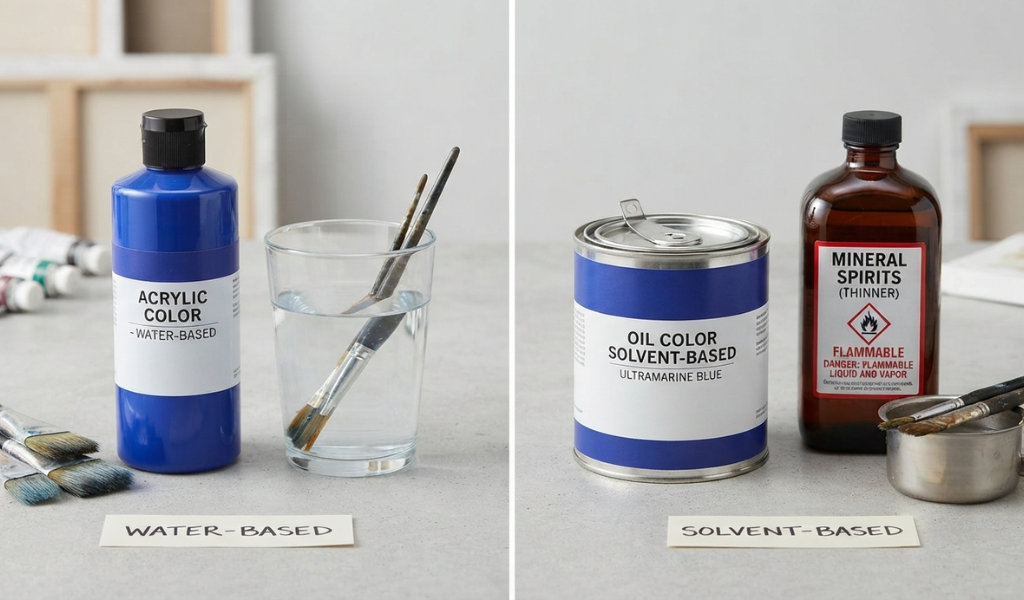
Comparing acrylic and oil-based paints side by side makes the fire risk difference clear. Oil-based paints contain petroleum-derived solvents like mineral spirits, which are combustible liquids with flash points around 104°F to 140°F (40°C to 60°C). These solvents can ignite from a spark, a nearby open flame, or even static electricity in dry conditions.
Acrylic paint, by contrast, poses far less fire risk. Its water base means the fire hazard during normal use is minimal. This is why latex and acrylic paints are the standard recommendation for indoor use, especially in homes with children or in spaces where ventilation is limited.
That said, oil-based paints aren’t without their advantages. They tend to provide harder, more durable finishes for high-traffic areas. The trade-off is that proper paint storage, safe disposal as hazardous waste, and extra fire precautions are essential whenever you work with them.
Proper paint storage extends the life of your acrylic paint and reduces any risk of accidents. Here’s what you should aim for:
Store acrylic paint in a cool, dry place away from direct sunlight and extreme heat. High temperatures can cause the paint to separate, dry out, or degrade in quality. A temperature range of 60°F to 75°F (15°C to 24°C) is generally ideal.
Keep lids tightly sealed after each use to prevent the paint from drying out and to minimize fume buildup. Store containers upright to avoid spills. If you have small children at home, store paint in a locked cabinet or on a high shelf out of reach.
Avoid storing acrylic paint near heat sources like radiators, water heaters, or electrical panels. Even though acrylic paint is not a flammable liquid in the traditional sense, keeping it away from ignition sources is good practice for any paint product.
One of the most common storage mistakes is leaving paint near a window where it gets prolonged sunlight. UV exposure and heat fluctuations can cause the acrylic polymer to break down over time. Another frequent error is storing paint in garages or sheds that experience extreme temperature changes between seasons. Freezing temperatures can permanently damage acrylic paint, causing it to become lumpy and unusable.
Mixing different types of paint in the same container is another mistake to avoid. Never combine water-based acrylic paint with solvent-based products in a sealed container. The reaction between the two can create pressure or release fumes in a confined space.
Even though acrylic paint is not highly flammable, practicing good fire safety whenever you paint is a smart habit to build.
Work in a Properly Ventilated Setting.  Good ventilation reduces fume buildup and keeps fresh air circulating in your workspace. Open windows and doors when painting indoors, and consider using a fan to push air outside rather than circulate it around the room.
Utilize Safety Gear. A respirator or mask is a wise choice when painting in enclosed spaces or working with spray paint. Safety gloves and eye protection help reduce skin and eye exposure to paint chemicals.
Keep Away From Acidic Materials. Some acidic compounds can react with acrylic paint and cause unexpected chemical reactions. Store your paint away from bleach, ammonia, and other harsh cleaning products.
Avoid Flammable Materials. Keep your workspace free of flammable liquids like acetone, alcohol, and paint thinner when working with acrylic. A spill from one of these near a heat source could cause a fire, even if the acrylic paint itself isn’t the fuel.
Never Smoke Near The Area. An open flame or lit cigarette near a painting workspace introduces an unnecessary ignition source. Even with water-based paints, there may be other combustible materials in the area.
Practice Proper Disposal. Dried acrylic paint can usually be disposed of in regular household trash once it has fully solidified. Liquid paint, however, should never be poured down the drain or into the ground. Check with your local municipality for guidelines on disposing of paint as hazardous waste if needed.
Acrylic paint is one of the safest types of paint you can use, largely because it’s water-based and doesn’t contain flammable solvents in its standard formulation. It’s not classified as a flammable liquid, and under normal conditions, both wet and dry acrylic paint present a very low fire risk.
That said, “low risk” is not the same as “no risk.” Specialty formulations, additives, and spray versions of acrylic paint can change that calculation. How you store, use, and dispose of paint also matters. By following the safety practices outlined in this guide, you can work confidently with acrylic paint knowing you’ve done everything right.
If you ever work with oil-based paints, solvent-based products, or industrial coatings, treat them with the full fire caution they require. Know your flash points, ventilate your space, and always read product labels before you open a can.
You can paint the outside of a candle with acrylic paint, but it’s not recommended to paint near the wick or the area where the flame will burn. When a candle burns, the heat can cause the acrylic paint to melt or release fumes. If you do paint a candle, keep the paint well below the wax line and never leave a painted candle unattended while lit.
No, dry acrylic paint is not considered flammable. Once it has fully cured, the paint forms a solid polymer film that does not ignite easily. However, at very high temperatures, it can melt or char and may release toxic fumes. Keep painted surfaces away from direct heat sources to be safe.
Yes, burning acrylic paint can release toxic fumes, including carbon monoxide and other chemical compounds from the acrylic polymer. This is why you should never intentionally burn acrylic paint and why working in a well-ventilated area matters, especially if you’re using heat tools near painted surfaces.
Water-based paints, including standard latex and acrylic paints, are generally not flammable. They do not contain flammable solvents and do not meet the flash point criteria for flammable or combustible liquids. By contrast, oil-based paints, certain enamel paints, and many spray paints contain flammable solvents and should be handled accordingly.
It depends on the type of paint. Fumes from oil-based paints and solvent-based coatings can be hazardous, especially in enclosed spaces without ventilation. These fumes can cause dizziness, headaches, and in high concentrations, more serious health effects. Acrylic paint fumes are milder but can still cause irritation if you inhale them over extended periods. Always paint in a well-ventilated area and use a respirator if needed.
No, water-based paints are not classified as flammable. Because water is the primary solvent, there is no significant vapor that can ignite at normal temperatures. This is one of the main reasons water-based paints like acrylics are recommended for indoor use over solvent-based alternatives.
Standard acrylic paint does not burn easily indoors under normal conditions. The water content makes it resistant to ignition. However, if acrylic paint is mixed with flammable additives or applied near a strong ignition source, the surrounding environment rather than the paint itself is more likely to be the actual fire hazard. Always follow safe painting practices indoors, including proper ventilation and keeping flammable materials away from your workspace.