Physical Address
304 North Cardinal St.
Dorchester Center, MA 02124
Physical Address
304 North Cardinal St.
Dorchester Center, MA 02124

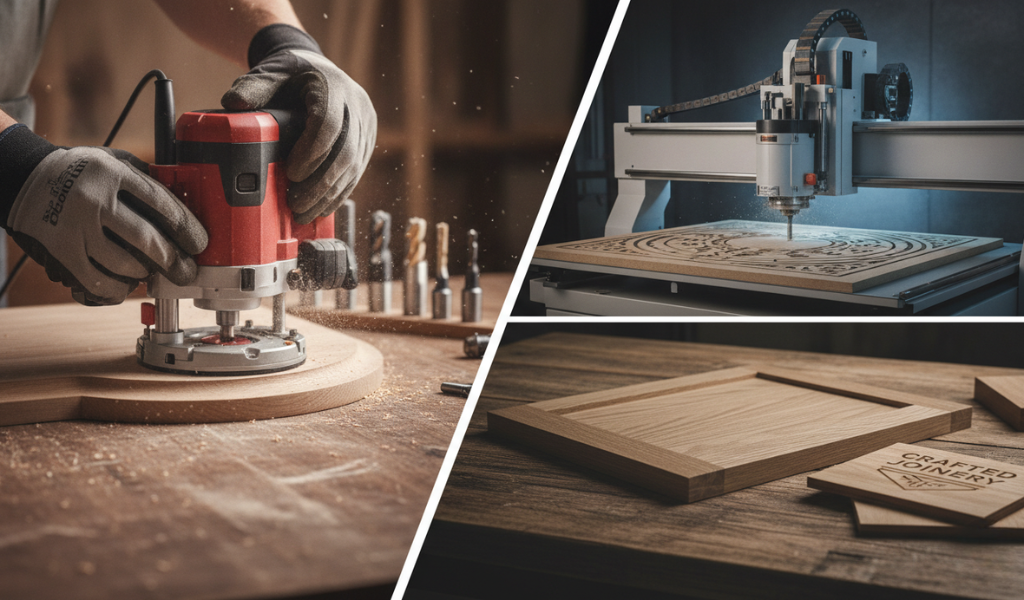
If you’ve ever admired the smooth curves on a tabletop or the clean grooves in a cabinet door, chances are a wood router did the heavy lifting. Knowing the different types of wood router machines can completely change the way you approach your projects. Whether you’re carving decorative edges, cutting joints, or producing furniture at scale, there’s a router built for the job.
This guide breaks down the most common router types, how they work, and where each one shines. By the end, you’ll know exactly which machine fits your skill level, budget, and woodworking goals. Let’s dig in.
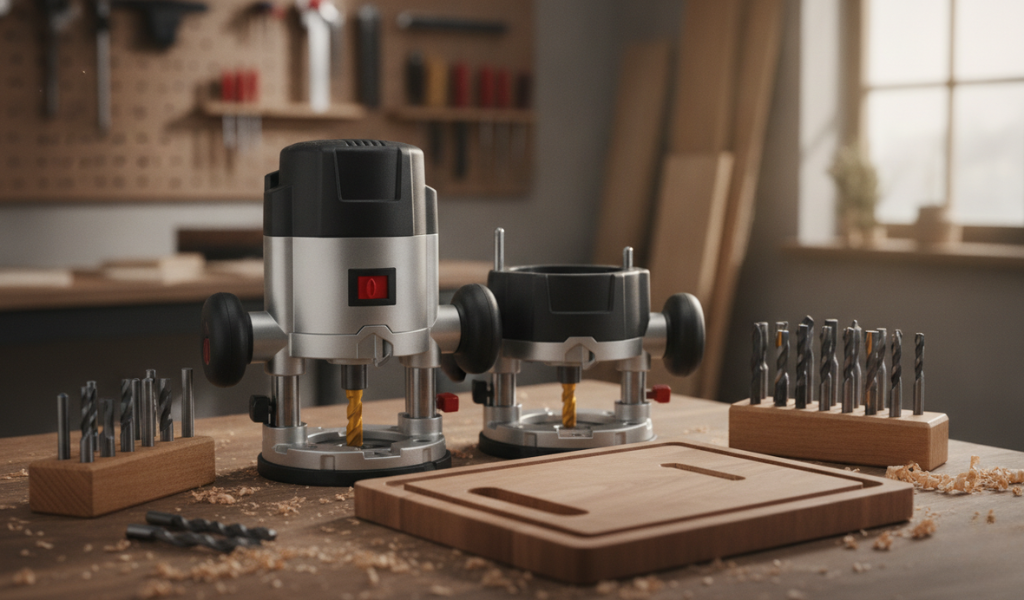
A wood router is a versatile power tool used to hollow out, shape, and cut wood (and sometimes plastics or composites). It works by spinning a sharp bit at high speed, allowing you to carve grooves, trim edges, cut joints, and add decorative detailing to your workpieces.
Think of it as the tool that turns a plain piece of timber into something polished and professional. Carpenters use it for everything from making picture frames to building custom cabinetry. Hobbyists love it because a single router, paired with different bits, can handle dozens of tasks.
Routers generally fall into two camps based on their base design: fixed-base and plunge. From there, things branch out into specialized machines like CNC routers, trim routers, and overhead models. Each one has its own strengths, which we’ll explore shortly.
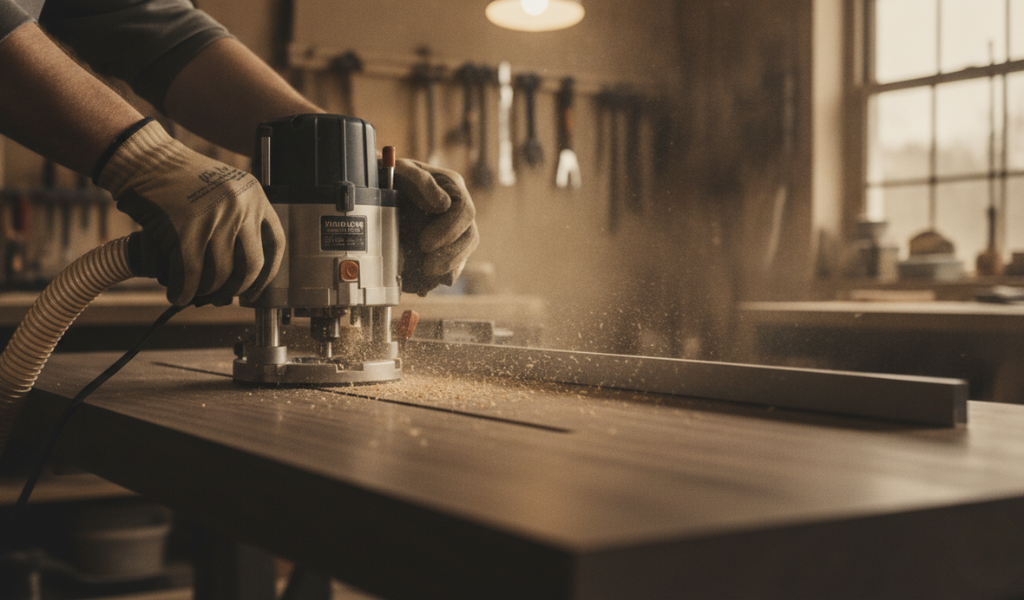
Learning how to use a wood router doesn’t take long, but a few good habits make all the difference. Here’s a simple breakdown of the basics.
Start with the right bit. Router bits come in many shapes, each designed for a specific cut. A straight bit handles grooves and dados, while a round-over bit softens edges. Insert the bit into the collet and tighten it securely before you do anything else.
Set your cutting depth. Too deep, and you risk splintering the wood or straining the motor. A good rule of thumb is to make several shallow passes rather than one aggressive cut. This gives you cleaner results and better control.
Move in the correct direction. Always feed the router against the rotation of the bit. For most edge work, that means moving left to right on the outside of your workpiece. Going the wrong way can cause the router to skip or kick back.
Keep both hands steady. Maintain a firm grip and a slow, even pace. Rushing leads to burn marks and rough finishes. Clamp your workpiece down so it doesn’t shift while you cut.
Once you’re comfortable with these steps, you can move on to more advanced techniques like template routing and freehand carving. Practice on scrap wood first—it’s the cheapest way to build confidence.
There are more router styles than most beginners expect. Each was designed to solve a particular problem in the workshop. Below, we’ll walk through the most popular options and where they perform best.
Fixed-base routers are all about precision and stability. Once you lock in the cutting depth, the bit stays put for the entire job. This makes them a favorite for edge work, straight cuts, and table-mounted setups.
They’re great for trimming edges, cutting grooves and dados, and creating clean joinery. Because they’re lightweight and easy to handle, they’re often the first router beginners reach for.
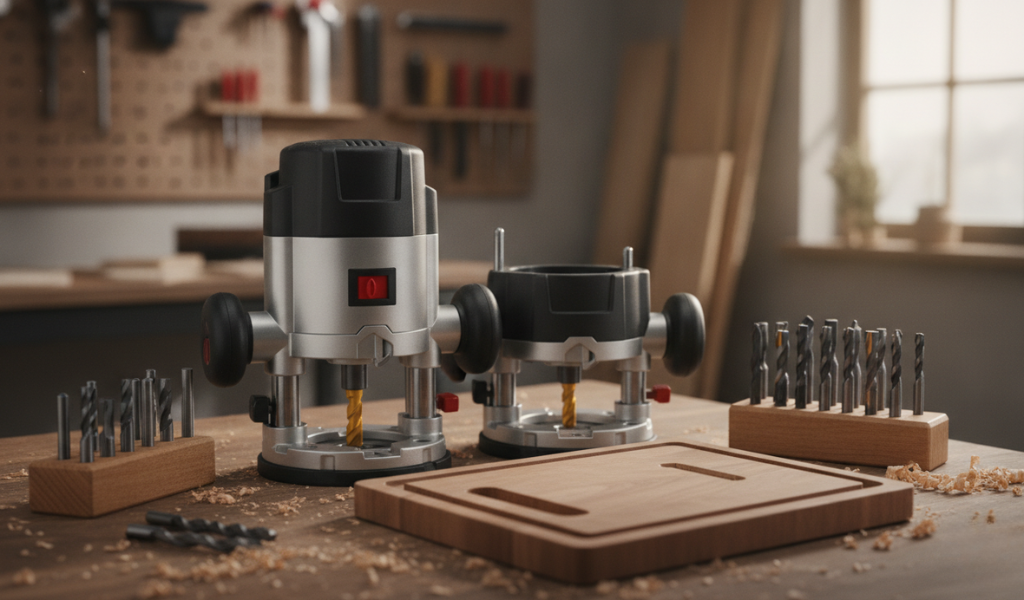
A plunge router lets the bit drop straight down into the wood from above. This opens up a world of possibilities for cutting patterns and grooves in the middle of a board, not just along the edges.
Woodworkers use plunge routers for mortises, inlays, engraving, and template work. They offer adjustable depth control during operation, which makes them more versatile than fixed-base models. The trade-off? They’re heavier and take a little more practice to master.
Can’t decide between fixed and plunge? A combo router gives you both. These machines let you swap between a fixed base and a plunge base, so you get the best of two worlds in one purchase.
They handle edge profiling, decorative inlays, joinery, and freehand routing with ease. For anyone who wants flexibility without buying two separate tools, a combo router is a smart, space-saving choice.
Compact routers, often called trim routers, are small, lightweight, and easy to maneuver. They’re built for detailed work and light-duty tasks rather than big, demanding cuts.
These are perfect for trimming laminate and veneer, adding small decorative edges, and crafting fine patterns. If you do a lot of close-up detail work on thin or soft materials, a trim router is a handy addition to your kit.
D-handle routers feature a grip shaped like the letter “D,” which gives you extra control and comfort. The design reduces hand fatigue, making it easier to work for long stretches without losing accuracy.
They excel at edge trimming, cutting grooves and slots, and creating detailed profiles. If you spend hours on intricate work, the added control of a D-handle router is well worth considering.
Laminate trimmers are small, high-speed routers made specifically for trimming laminate and veneer. They spin fast to deliver clean, smooth finishes on thin materials.
You’ll find them handy for trimming laminate countertops, cutting veneer edges, and finishing furniture and cabinetry. They aren’t built for deep cuts or heavy jobs, but for clean edge work they’re hard to beat.
Multi-base routers are similar to combo routers but usually come with extra customization options. You can switch between fixed and plunge bases and often add accessories to fine-tune your setup.
They’re great for versatile cutting and trimming, decorative edges, and complex joinery. The flexibility comes at a higher price, but for serious hobbyists and pros, the added options pay off.
Overhead routers are mounted to a workbench or frame and operate from above. This hands-free design gives you exceptional precision, especially for repetitive tasks.
They shine in production environments where you need to cut and shape the same design over and over. The downside is that they’re expensive and take up a lot of space, so they’re better suited to dedicated workshops than home garages.
CNC (Computer Numerical Control) routers represent the high-tech end of the router family. Instead of guiding the tool by hand, you program a design into a computer, and the machine cuts it automatically with incredible accuracy.
These machines are widely used for mass-producing furniture and cabinetry, engraving complex patterns, and creating detailed 3D designs. Because the cutting is automated, every piece comes out identical, which is a huge advantage for businesses that rely on consistency.
A real-world example: a small furniture studio might use a CNC router to cut hundreds of identical chair parts overnight, freeing up the team to focus on assembly and finishing the next morning. That kind of efficiency is tough to match with handheld tools.
The catch is cost and complexity. CNC routers carry a steep price tag, require regular maintenance, and demand some programming know-how. For large-scale production, though, they often pay for themselves over time.
Understanding the pros and cons of different wood router machines helps you match the tool to your needs. Here’s a quick comparison to guide your decision.
Fixed-Base Routers
Plunge Routers
Combo Routers
Compact (Trim) Routers
CNC Routers
D-Handle Routers
Laminate Trimmers
Multi-Base Routers
Overhead Routers
Picking the right router comes down to a few simple questions. What kind of projects do you tackle most? How much experience do you have? And what’s your budget?
If you’re just starting out, a fixed-base or combo router offers the best mix of value and ease of use. Hobbyists who enjoy detailed work will appreciate a trim router or D-handle model. Anyone running a woodworking business and producing items in bulk should seriously look at a CNC router.
Also think about power. Heavy hardwood projects need a more powerful motor, while light tasks on soft materials don’t. Don’t forget the bits, either—investing in a quality bit set expands what any router can do.
The bottom line: buy the tool that matches your real needs, not the one with the most features. A well-chosen router you actually use beats an expensive one gathering dust.
Wood routers come in many shapes and sizes, each built for a specific kind of work. From the beginner-friendly fixed-base router to the production-ready CNC machine, there’s a model for every workshop and skill level. Once you understand what each type does, choosing the right one becomes much easier.
The key is to start with your projects in mind. Match the router to the tasks you do most often, learn the basics of safe operation, and practice on scrap wood before tackling your prized timber. With the right machine in hand, your woodworking will become more precise, efficient, and genuinely enjoyable.
Ready to upgrade your workshop? Explore trusted brands like Bosch, DeWalt, and Black & Decker to find a wood router that fits your needs and budget. Your next project deserves the right tool.