Physical Address
304 North Cardinal St.
Dorchester Center, MA 02124
Physical Address
304 North Cardinal St.
Dorchester Center, MA 02124

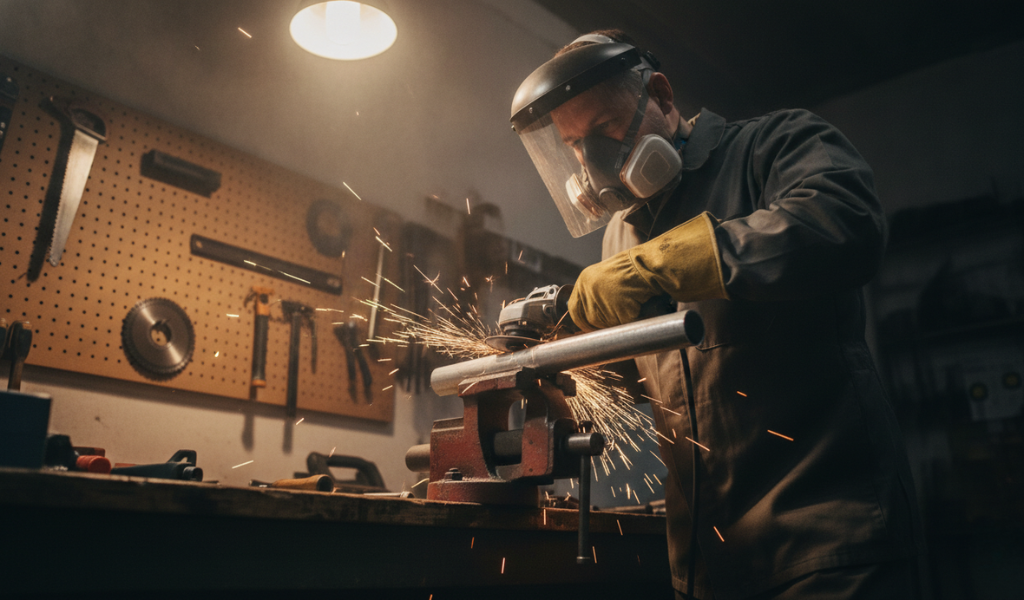
Cutting a galvanized pipe might seem tricky at first, but with the right tools and a few safety tips, it’s a job almost anyone can handle. Whether you’re updating your plumbing, building a fence, or tackling a weekend project, knowing how to cut galvanized pipe cleanly and safely will save you time, money, and a few headaches along the way.
In this guide, we’ll walk through the best tools for the job, step-by-step methods, and the safety precautions you should never skip. By the end, you’ll feel confident enough to grab your gear and make that first clean cut.
Before grabbing your saw, it helps to understand what you’re working with. Galvanized pipes are regular steel pipes that have been dipped in a bath of molten zinc. This coating gives them a tough, protective layer that fights off rust and corrosion for decades.
Because of that extra protection, galvanized steel pipes cost more than standard ones. But for certain jobs, they’re well worth the price. You’ll often find them in places where pipes face harsh conditions, such as chemical processing plants, fire sprinkler systems, sewage lines, and boats or marine equipment.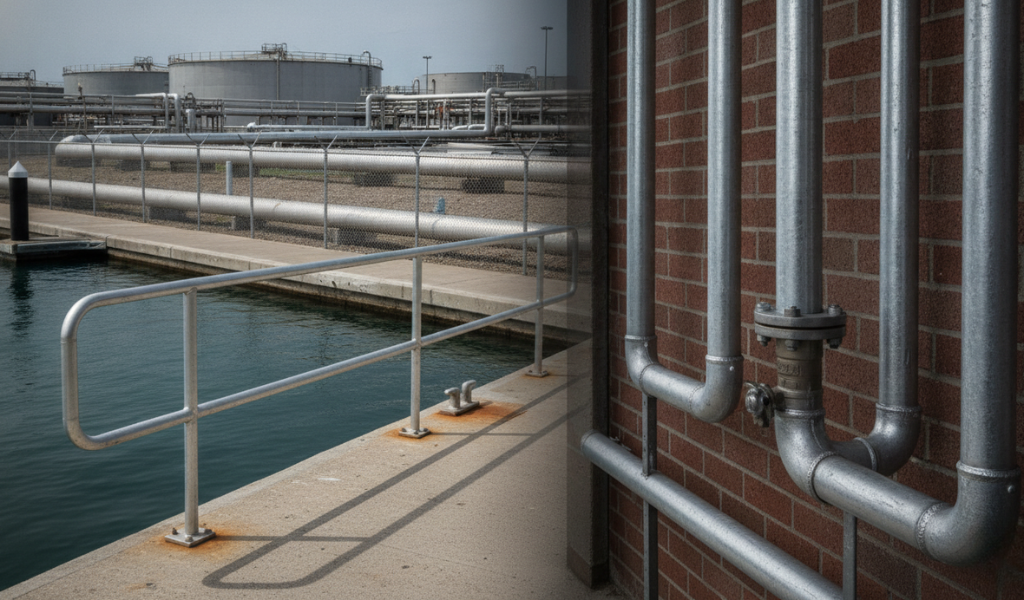 Around the home, they show up in older plumbing systems, outdoor railings, and chain-link fencing.
In short, galvanized pipes last longer and hold up better, which makes them a popular choice for both industrial and DIY use.
Cutting through that zinc coating isn’t quite the same as cutting plain steel. Here are a few things worth thinking about before you start.
Tool availability. You can cut galvanized pipe with the same tools you’d use on regular steel, but some work faster and cleaner than others. Power tools usually win here because they slice through quickly and leave less ragged edges.
Blade type. The blade you pick makes a big difference. A fine-toothed, steel-cutting blade gives the cleanest results. High-speed steel (HSS) blades work better than cheaper wood-cutting blades, especially on thicker pipes.
Threading requirements. If you plan to connect your pipe to fittings, you’ll need to thread the cut end. Use a die head that matches your pipe’s diameter, and apply plenty of cutting oil to make the job smoother.
Space. Tight spots can make cutting awkward. When you’re squeezed under a sink or close to a wall, a reciprocating saw or angle grinder gives you the reach and flexibility you need.
There’s no single “right” way to cut galvanized pipe. The best method depends on the tools you own, the pipe’s size, and where you’re working. Here are five reliable options.
A pipe cutting tool is one of the cleanest and easiest options, especially for smaller pipes.
What you’ll need:
How to use a pipe cutting tool: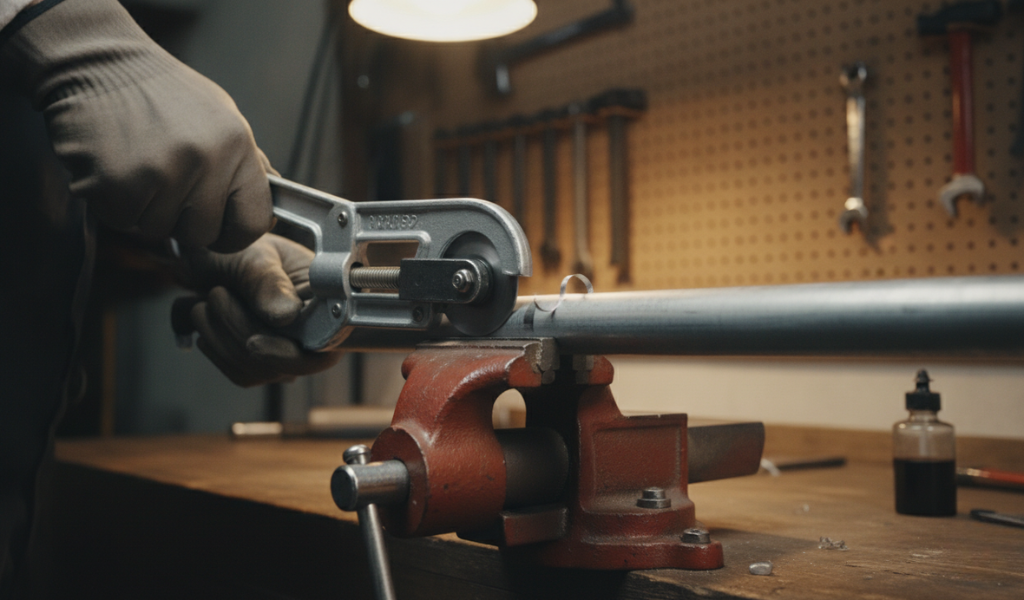
First, check the pipe size so you pick the right cutter, since they come in different styles. Place the pipe inside the cutter’s jaws and tighten until the pipe sits snugly between the roller and the cutting wheel. If you’re using an adjustable cutter, make a light test groove to confirm you’re cutting straight. Once you’re happy, rotate the cutter around the pipe. It works much like a pair of scissors, just keep squeezing and turning until it slices clean through.
A reciprocating saw, often called a Sawzall, is a great pick for awkward angles and tight spaces.
What you’ll need:
How to use it:
Mark your cut line and clamp the pipe securely. Fit a steel-cutting blade and set the orbital action and speed to match the pipe size. Line the blade up with your mark and start slowly. If the blade snags a little, bump up the speed and let the tool do the work.
A chop saw delivers fast, straight cuts, making it ideal for larger jobs.
What you’ll need:
How to use it:
Set up the saw with a proper metal-cutting blade. Place something flat and solid underneath for stability. Use your square to make sure the blade meets the pipe at a right angle. Mark the pipe, line it up under the disk, and lower the blade slowly until it cuts all the way through. Visibility can be tricky here, so take your time lining up the mark.
An angle grinder is the go-to choice for thick pipes and tight spaces, though it leaves a rougher edge.
What you’ll need:
How to use it:
Fit the grinder with a metal-cutting or diamond disk. Mark your cut and secure the pipe in a vise or clamp. Make a shallow groove first to guide your cut, then follow the line around the pipe. For pipes wider than 5 inches, expect to make several passes before you cut all the way through.
If you don’t own power tools, a hacksaw still gets the job done with a bit of elbow grease.
What you’ll need:
How to use it:
Choose a wavy, fine-toothed blade for the best finish. Mark your cut line and clamp the pipe firmly. Line up the blade and start with slow, steady strokes. Beginning with a light groove helps keep the blade on track. Keep a bucket or basin handy to catch the offcut, especially if you’re working above the ground.
Galvanized pipe makes excellent railing and fencing material. Thanks to that zinc layer, it stands up to the weather far better than plain steel, which means longer-lasting posts and rails.
When you need to cut a galvanized pipe or railing that’s already installed, it’s usually easier to cut it at ground level rather than digging out the concrete holding it in place.
Here’s how to do it:
Measure and mark your desired length on the post. Clamp it firmly to a workbench or steady surface, leaving about 4 to 6 inches between the mark and the clamp. A hacksaw works for smaller posts, but the sturdy build of galvanized pipe makes a power tool like an angle grinder the smarter choice. Once you’ve made the cut, file down any sharp or jagged edges. If you plan to attach fittings, you can thread the edges for a custom finish.
Cutting plumbing pipe under a sink comes with one extra challenge: most of these pipes curve, and you’re often stuck working in a cramped, hard-to-reach spot.
Here’s how to tackle it:
Start by shutting off the water and draining the lines. Measure and mark the section you need to remove. If you can, clamp the pipe in place, though many people cut it as-is when there’s no room to maneuver. Because of the curves and tight quarters, a pipe cutting tool or angle grinder usually works best. Make a clean, perpendicular cut, then deburr the edge and thread it if you’re fitting new connections.
Trying to cut a round hole into a pipe by hand is frustrating and often messy. The curved surface makes manual tools slip and wander.
The simpler solution is to use a drill. Fit it with a correctly sized metal drill bit, either HCS or HSS, and let the bit do the work. Drilling puts less stress on the pipe and gives you a much cleaner, more even hole than you’d get by hand.
Working in cramped areas takes a little extra care. Keep these pointers in mind:
Cutting galvanized pipe carries a few risks that plain steel doesn’t, mostly because of the zinc coating. Take these seriously.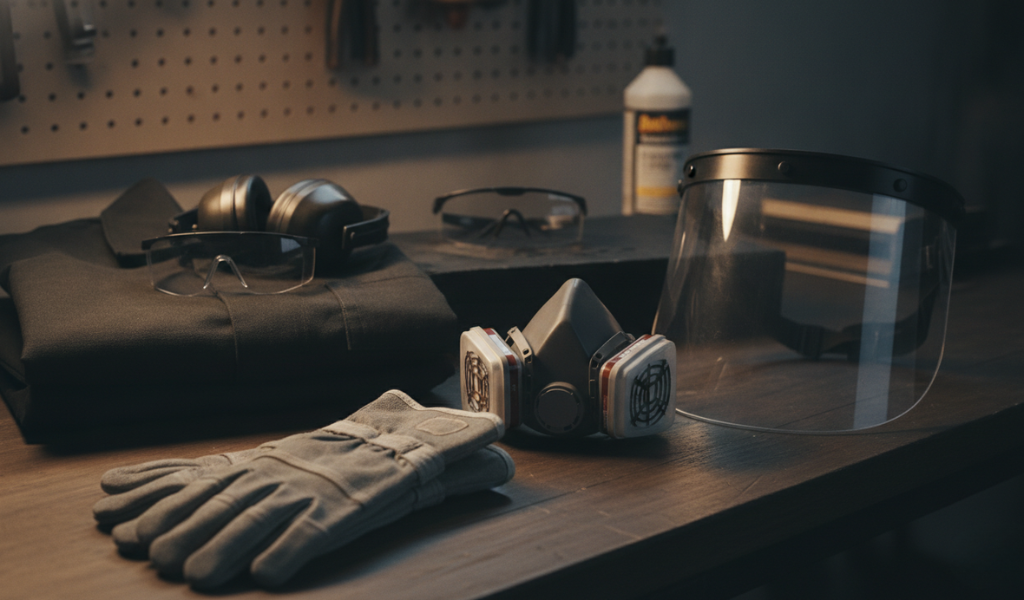
Wear a mask. When heated or cut, galvanized steel can release toxic zinc fumes. Breathing in too much of these fumes can cause a flu-like illness known as “metal fume fever.” A proper respirator or mask keeps your lungs safe.
Watch for sparks. Cutting can create sparks, and combined with the hydrogen gas zinc gives off, there’s a small risk of combustion. Clear flammable materials from your workspace first.
Protect your skin. Cutting galvanized steel scatters tiny metal shavings and zinc chloride dust, both of which can irritate your skin. Wear gloves that cover your forearms for full protection.
Galvanized pipes are tougher, longer-lasting versions of regular steel pipes, which is why they show up everywhere from sprinkler systems to backyard fences. Cutting them isn’t much harder than cutting ordinary metal, as long as you choose the right tool and follow basic safety steps.
Pick your method based on the pipe size and your workspace. Use sharp metal-cutting blades, protect your eyes, lungs, and skin, and take your time lining up each cut. One last tip worth remembering: once you cut through a galvanized pipe, that fresh edge loses its protective zinc layer. To stop it from rusting, give the cut a quick coat of cold galvanizing spray.
Now that you know the methods and the safety basics, grab your tools and put this guide to work on your next project. Got a tricky pipe-cutting question of your own? Drop it in the comments, we’d love to help.
Can I cut galvanized pipe with regular metal-cutting tools?
Yes. The same tools you’d use on regular steel, like hacksaws, angle grinders, reciprocating saws, and chop saws, all work on galvanized pipe. Just be sure to fit them with a proper metal-cutting blade for the cleanest results.
Is it dangerous to cut galvanized pipe?
It can be if you skip safety steps. Cutting releases zinc fumes that may cause “metal fume fever,” and the sparks can ignite flammable materials. Always wear a mask and gloves, work in a ventilated area, and keep flammable items away.
What’s the best tool for cutting galvanized pipe in a tight space?
A reciprocating saw or angle grinder is your best bet. Both reach into cramped spots, like under a sink, far better than bulky tools such as a chop saw.
Do I need to protect the cut edge after cutting?
Yes. The fresh cut no longer has the zinc coating that protects against rust. Spray the exposed edge with cold galvanizing spray to keep it from corroding over time.
How do I cut a clean hole in a galvanized pipe?
Use a drill fitted with a correctly sized metal drill bit (HCS or HSS) rather than trying to cut a hole by hand. Drilling gives you a neater, more even hole and puts less stress on the pipe.
Can I thread galvanized pipe after cutting it?
Absolutely. Use a die head that matches the pipe’s diameter and apply plenty of cutting oil. Threading lets you connect the pipe to galvanized fittings for a secure, custom fit.
Why is galvanized pipe more expensive than regular steel pipe?
The extra cost comes from the galvanizing process, where the steel is dipped in molten zinc. That coating adds strong corrosion resistance and a much longer lifespan, which makes the higher price worth it for many jobs.