Physical Address
304 North Cardinal St.
Dorchester Center, MA 02124
Physical Address
304 North Cardinal St.
Dorchester Center, MA 02124


Have you wondered, does stainless steel rust or tarnish? It’s a fair question. The word “stainless” practically promises a metal that never stains, corrodes, or shows a spot of orange. But the reality is a little more complicated. Stainless steel resists rust far better than ordinary steel, yet under the wrong conditions, it can still develop those frustrating brown spots.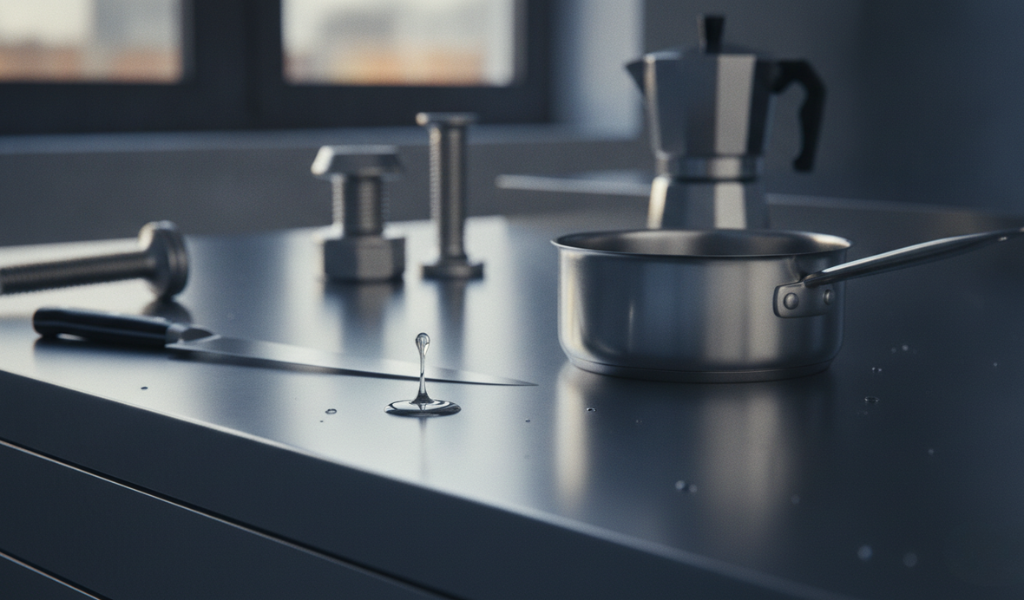
If you work with metal, build with it, or simply own a kitchen full of stainless cookware, this matters to you. Knowing when and why stainless steel rusts can save you money, headaches, and the disappointment of replacing fixtures that should have lasted for decades.
In this guide, we’ll break down why stainless steel resists rust so well, the different grades you’ll come across, the situations that cause it to corrode, and the simple ways to remove and prevent rust. We’ll also compare it to galvanized steel and other common metals, so you can pick the right material for the job every time.
Let’s clear this up right away. Stainless steel is a low-carbon steel that contains chromium, and that chromium is the secret behind its toughness. Adding chromium gives the metal an extra layer of protection and a serious boost in rust resistance.
Stainless steel is corrosion-resistant, heat-resistant, hygienic, strong, good-looking, and completely recyclable. Those qualities come at a higher price, but they also make it the go-to material for kitchen products, surgical instruments, and all sorts of construction hardware and fixings.
Here’s the short answer: stainless steel can rust, but it takes a lot more abuse to make it happen. Any project where ordinary steel would corrode under wind, rain, or salt is better off with stainless steel doing the job.
Stainless steel’s power to fight off rust comes down to chromium. By definition, stainless steel contains at least 10% chromium in its makeup. That chromium reacts with oxygen in the air to form a thin, see-through film on the surface called chromium oxide.
This film is the real hero. Chromium oxide is highly resistant to corrosion and weather, and it has a remarkable trick up its sleeve. When the surface gets scratched or chemically damaged, the film can repair itself, as long as oxygen is around. That self-healing ability is why a stainless steel knife keeps shrugging off rust even after years of nicks and scrapes.
Manufacturers often add other elements to the mix too. Nickel and molybdenum, for example, push the durability even higher and improve resistance in harsh environments. That’s why some grades hold up near saltwater while others don’t.
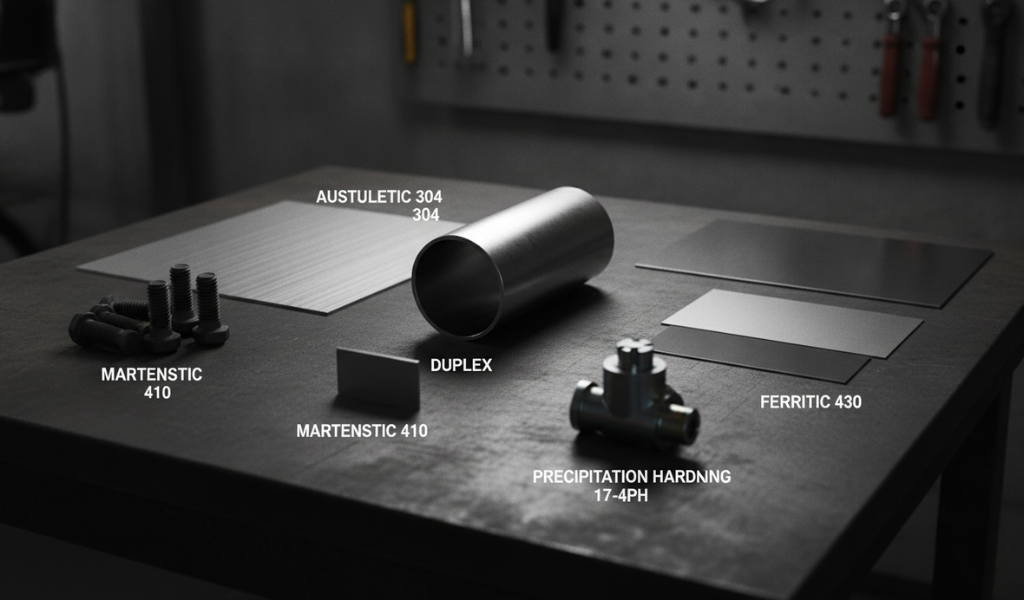
Not all stainless steel is created equal. The metal comes in many grades, but it’s usually sorted into five main families based on its internal structure. Each one suits a different job.
Known as the 200 or 300 series, austenitic stainless steel usually contains 17 to 30% chromium and roughly 8 to 25% nickel. It can’t be hardened by heat treatment, but it offers excellent weldability, flexibility, and heat resistance. You’ll find it in cooking equipment and chemical processing gear.
Falling under the 400 series, ferritic stainless steel holds around 10 to 30% chromium and is stronger than carbon steel. It’s magnetic and can’t be heat-treated. With low weldability, average flexibility, and high heat resistance, it works well for appliance trims and kitchen utensils.
Also part of the 400 series, martensitic stainless steel is high-strength and can be hardened through heat treatment. It contains 11 to 17% chromium and less than 1% carbon. Its weldability, flexibility, and heat resistance are all on the low side, so it’s mostly used for fasteners and pump shafts.
Grouped in the 2000 series, duplex alloys blend austenite and ferrite, with about 22% chromium and around 5% nickel. This mix delivers extra strength and better resistance to stress, cracking, and pitting. Thanks to its high weldability, it’s a favorite for pipes, tubes, and tanks.
Often labeled with a 17- grade and called semi-austenitic, this type contains 12 to 30% chromium with about 4 to 7% nickel. It responds well to various heat treatments, giving it strong strength-to-weight ratios. With average flexibility, it’s ideal for valves, gears, and other machine parts.
So, when does stainless steel rust? The answer comes back to that protective chromium oxide layer. As long as the film stays intact, the metal stays clean. Once the film gets damaged, rust can sneak in.
Rough cleaning, harsh abrasives, and extreme heat can all tear through the film or trigger reactions that let rust take hold. When stainless steel does rust, it suffers the same fate as any other metal. It loses strength, looks worse, and weakens structurally.
People often ask the same handful of questions, so let’s run through the common culprits:
Water. Plain water won’t bother stainless steel unless the chromium oxide film is already damaged or the water carries a chemical that reacts corrosively. So does stainless steel rust in the shower? Usually not, unless other factors are at play.
Saltwater. Given enough time and neglect, saltwater can cause stainless steel to rust. The dissolved salts speed up the process considerably.
Vinegar. Does vinegar make stainless steel rust? Left sitting on the surface for long stretches, vinegar can wear down the chromium oxide layer and open the door to rust. A quick wipe-down prevents trouble.
Alcohol. Alcohol behaves much like vinegar. On its own it’s mild, but left uncleaned over time it can do damage.
Bleach. Strong cleaners like chlorine bleach can stain and harm stainless steel. If you use it, rinse with water and wipe dry right away.
Pools and showers. Chlorine-treated water can form chloramine when it meets nitrogen-bearing compounds. That chemical is surprisingly aggressive toward metal, which is why pool hardware needs the right grade.
If rust has already shown up, don’t panic. Most strong cleaning chemicals do more harm than good because they attack the chromium oxide film. The better move is to reach for a few items already sitting in your kitchen.
Mix equal parts lemon juice and baking soda, or simply combine baking soda with a little water to form a paste. Spread the paste over the rusty spots, then gently scrub the mess away with a damp sponge. Repeat the process until every bit of rust is gone.
For deeper rust that won’t budge, you can sand the area back to bare metal and apply a primer. It takes a little elbow grease, but it brings the surface back to life without harsh chemicals.
Thanks to its looks and durability, stainless steel often shows up as bike racks, handrails, and even park benches. Sitting outdoors all year, these fixtures face constant exposure to rain, sun, and pollution, which makes rust more likely over time.
The fix is straightforward: stay on top of cleaning and maintenance. Regular wipe-downs with a homemade baking soda paste go a long way. For extra defense, you can apply a water-based coating such as Stainless Shield, which adds a protective layer over the exposed chromium oxide film. A little routine care keeps outdoor fixtures looking sharp for years.
If cost weren’t a factor, stainless steel could handle nearly any general-purpose job. It resists corrosion better than galvanized steel and even treated aluminum. It’s strong enough for construction yet light enough for everyday household items. Here are a few situations where it really shines:
As fasteners on tanalized timber. Pressure-treated timber is chemically treated to last longer in wet conditions. Those same chemicals are harsh on metal fixings, so stainless steel is the smart choice to stop the wood from eating away at your structural hardware.
On outdoor hinges and latches. Anything that swings or supports a load outside, like gate hinges or garage door latches, lasts far longer in stainless steel. It withstands the elements without constant maintenance or early replacement.
Near the sea. Pier rails, dock posts, and seaside flooring should always be stainless. Saltwater carries more dissolved ions, which lets electrons move freely and speeds up rust, so only the right grade survives.
On tools. Stainless steel tools last longer and are easier to keep clean, especially ones that meet chemicals regularly. A stainless steel wrench used for engine repair, for instance, holds up far better than a plain one.
It helps to know how stainless steel stacks up against its cousins. Galvanizing is the process of coating a steel piece in zinc. Unlike stainless steel, galvanized steel is not an alloy, just regular steel wearing a protective zinc jacket. In general, most metals rust when they get enough oxygen, which creates iron oxide that slowly eats the surface.
Steel rusts when:
Galvanized steel rusts when:
One interesting note: galvanized steel often doesn’t rust in the classic sense. Instead, it tends to develop a brown discoloration over time. For framing in standard, untreated timber, galvanized bolts hold up fine without grease. But once tanalized timber enters the picture, the trace copper in the wood reacts with the zinc and rust begins. That’s the moment to switch to stainless steel.
Not all corrosion ends in rust, and not all rust forms the same way. Understanding the patterns helps you spot trouble early. Here are six common types.
The most common type, this corrosion attacks the surface evenly. It’s considered the most manageable because the damage is easy to see and judge, so you can plan around it.
Also called bimetallic corrosion, this happens when two different metals sit near each other in an electrolyte, like saltwater. One metal stays mostly intact while the other corrodes badly. Picture a copper pipe and a steel pipe both sitting in saltwater, where one suffers far more than the other.
This local corrosion targets the grain boundaries inside the metal. It’s triggered by impurities at those boundaries, or by too much or too little of an alloying element gathering there.
This intense, localized corrosion forms in the tight gaps between two joined surfaces. The small pocket of trapped moisture between them can corrode even when both materials are otherwise rust-resistant.
Pitting is a fast-moving, highly localized corrosion marked by tiny holes. Left alone, it’s incredibly destructive, and it’s tricky to catch because those first holes can be microscopic.
This shows up as microscopic cracks caused by a combination of corrosion and tensile stress, such as the heavy load on a crane’s bolts. It’s common in steel near or under saltwater, and because the damage is often internal, it can go unnoticed until it’s serious.
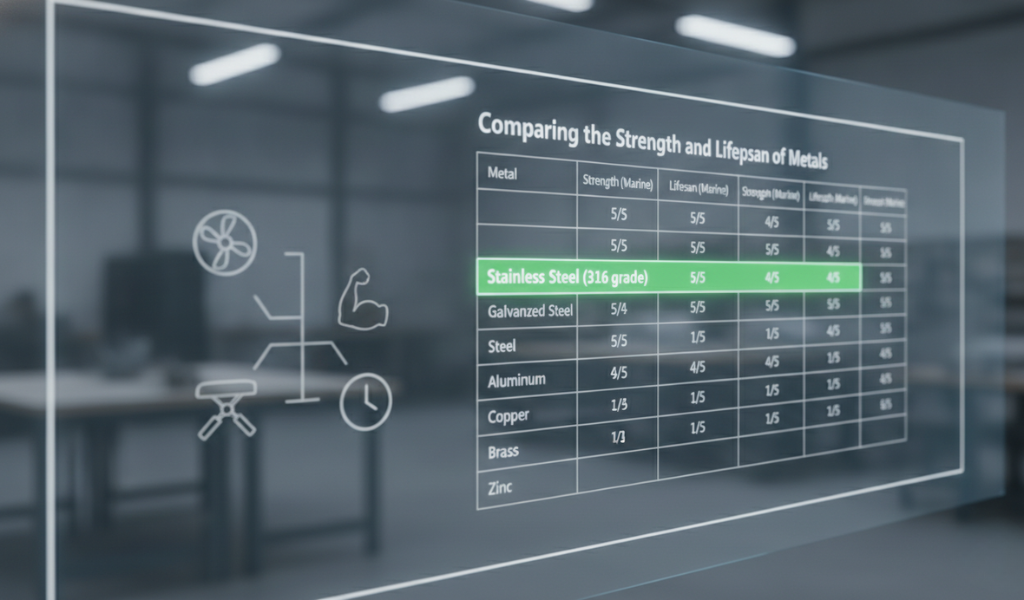
How do the common metals compare when you put them side by side? The table below rates strength and lifespan in both marine and non-marine settings, on a scale of 1 to 5.
| Metal | Strength (Marine) | Lifespan (Marine) | Strength (Non-marine) | Lifespan (Non-marine) |
| Stainless Steel (316 grade) | 5/5 | 5/5 | 4/5 | 5/5 |
| Galvanized Steel | 5/5 | 3/5 | 5/5 | 4/5 |
| Steel | 3/5 | 1/5 | 4/5 | 3/5 |
| Aluminum | 4/5 | 5/5 | 5/5 | 5/5 |
| Copper | 2/5 | 4/5 | 2/5 | 5/5 |
| Brass | 3/5 | 3/5 | 3/5 | 5/5 |
| Zinc | 4/5 | 3/5 | 5/5 | 4/5 |
The takeaway is clear. For marine environments, 316-grade stainless steel earns top marks for both strength and lifespan, which is exactly why it dominates near the ocean.
Nobody who works with metal enjoys dealing with rust. Stainless steel costs more upfront, but it saves you plenty over the years by skipping the small, repeated expenses that plague cheaper metals.
It doesn’t need an extra zinc layer or regular grease applications, and unlike galvanized steel, exposure to oxygen actually heals its protective chromium oxide film. On top of that, it looks great and fights corrosion better than nearly anything in its price range. And if something ever does go wrong, you can sand it back to bare metal and start fresh.
So the next time you’re picking fixings for a deck, a gate, or a seaside project, weigh the cost against the lifespan. For anything that faces water, salt, or treated timber, stainless steel is usually the choice you won’t regret. Choose your grade wisely, give it a little routine care, and it’ll reward you for decades.
Plain water won’t rust stainless steel as long as the chromium oxide film is intact. Rust only forms if that protective layer is already damaged or if the water carries a corrosive chemical.
In most cases, no. Standard shower use is fine. The exception is chlorine-treated water, which can form chloramine, an aggressive compound that may damage the metal over time. Wiping fixtures dry helps.
Vinegar can cause rust if it’s left sitting on the surface for long periods, since it slowly wears down the chromium oxide layer. Cleaning it off promptly keeps your stainless steel safe.
For marine environments, 316-grade stainless steel is the top choice. It contains molybdenum, which boosts resistance to salt and chlorides, giving it excellent strength and lifespan near the ocean.
Make a paste from baking soda and water, or mix lemon juice with baking soda. Apply it to the rust, scrub gently with a damp sponge, and repeat until clean. For deep rust, sand the spot and apply primer.
Stainless steel resists corrosion better, especially near saltwater and treated timber. Galvanized steel relies on a zinc coating that can wear away, while stainless steel’s chromium oxide film repairs itself when exposed to oxygen.
Galvanized steel resists rust well but isn’t immune. Once the zinc coating is breached, or when it contacts tanalized timber, pollution, or saltwater for long periods, it can develop brown discoloration and eventually rust.