Physical Address
304 North Cardinal St.
Dorchester Center, MA 02124
Physical Address
304 North Cardinal St.
Dorchester Center, MA 02124

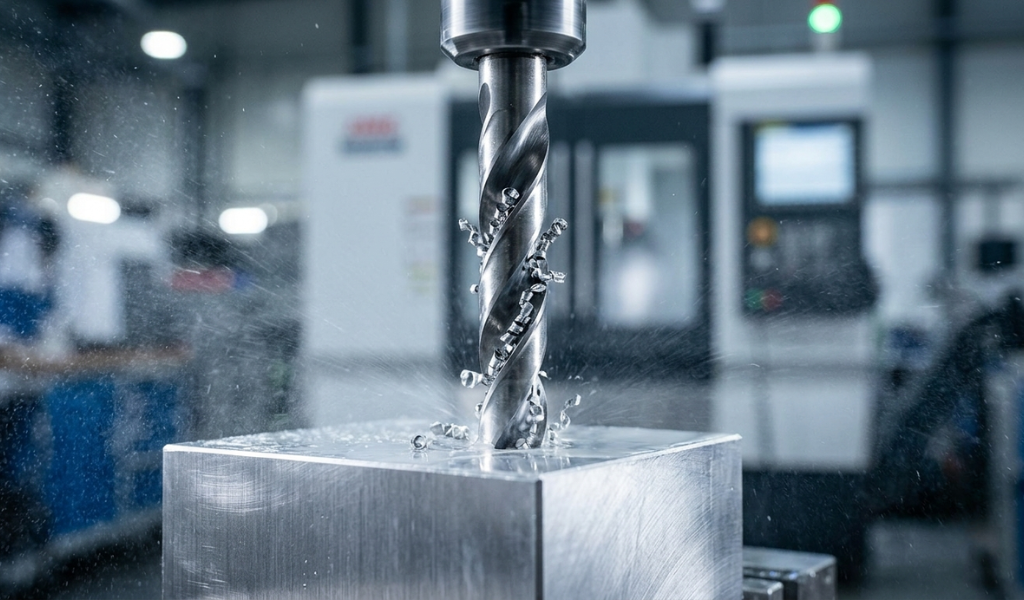
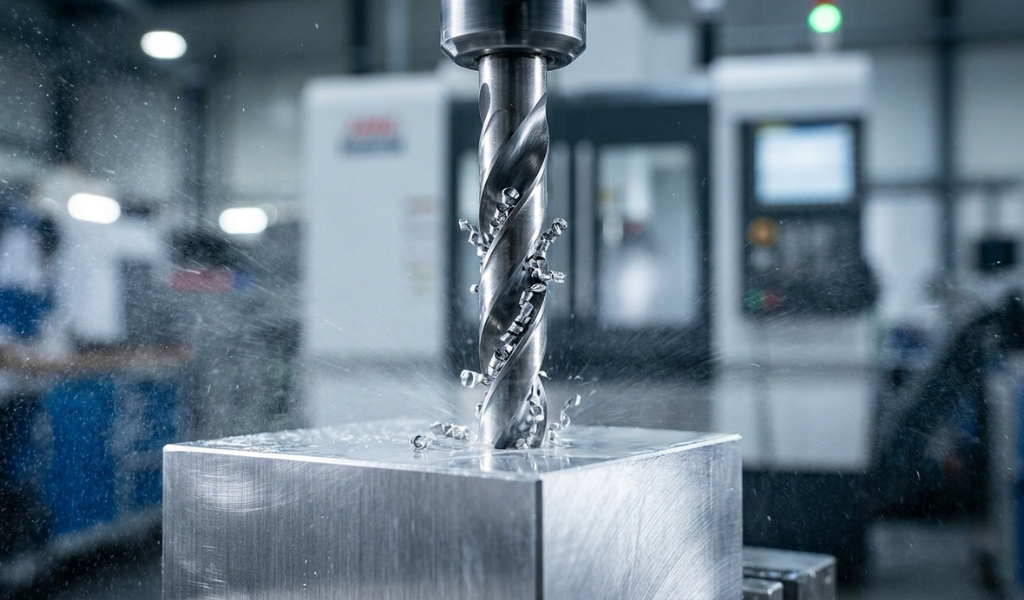
If you’ve ever watched a construction crew bore through concrete, or wondered how manufacturers create perfectly round holes in metal parts, you’ve witnessed the drilling process in action. Drilling is one of the most widely used machining operations in the world, and understanding how it works can give you a real appreciation for the engineering behind everyday products.
So, how does the drilling process work exactly? At its core, drilling involves a rotating cutting tool that removes material to create a hole of a specific size and depth. But there’s a lot more to it than just pressing a button and watching a bit spin. From choosing the right tool to managing heat and chips, every step of the process matters. Whether you’re a student, a curious hobbyist, or a professional looking to brush up on the basics, this guide breaks down everything you need to know.
We’ll walk you through what drilling is, how a drilling machine works, the step-by-step process, the real-world advantages of drilling, and what to watch out for when things don’t go as planned. By the end, you’ll have a solid, practical understanding of one of manufacturing’s most essential operations.
Drilling is a cutting process that uses a rotating drill bit to create cylindrical holes in solid materials. These materials range from metals and plastics to wood, concrete, and composites. The process is used across dozens of industries, including automotive manufacturing, aerospace engineering, electronics, and construction.
What makes drilling stand out from other machining methods is its ability to produce holes with consistent dimensions and clean finishes, often in high volumes. A single production line might drill thousands of holes per day, each one held to tight tolerances. That level of repeatability is what makes drilling such a foundational operation in modern manufacturing.
It’s also worth noting that drilling isn’t limited to factory floors. Geothermal energy projects, for example, rely on heavy-duty drilling to reach heat reservoirs thousands of meters underground. The same basic principles apply, just on a much larger scale.
A drilling machine, also called a drill press or drilling machine tool, is the equipment used to drive a drill bit into a workpiece at a controlled speed, depth, and angle. These machines come in many forms depending on the application.
Bench drill presses are compact and designed for light workshop tasks. They’re common in schools, small fabrication shops, and hobby garages.
Radial arm drill presses allow the drill head to swing across a larger area, making them ideal for drilling multiple holes in large workpieces without repositioning the material.
CNC drilling machines use computer-controlled automation to drill with extreme accuracy. They’re the workhorses of modern manufacturing, capable of handling complex patterns across CNC machined parts with minimal human input.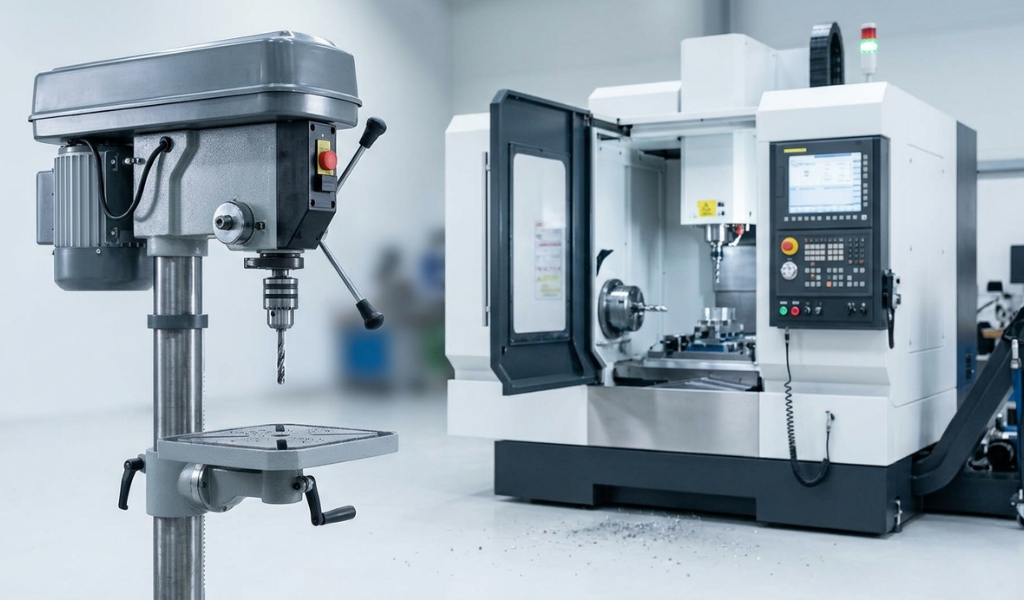
Deep-hole drilling machines are built specifically for drilling long, narrow holes, such as those found in gun barrels, hydraulic cylinders, and aerospace components.
No matter the type, all drilling machines share the same core function: rotating a drill bit at a controlled speed and feeding it into a material with consistent force.
The drill bit is the heart of any drilling operation. Choosing the right one depends on the material being drilled, the required hole size, and the desired finish.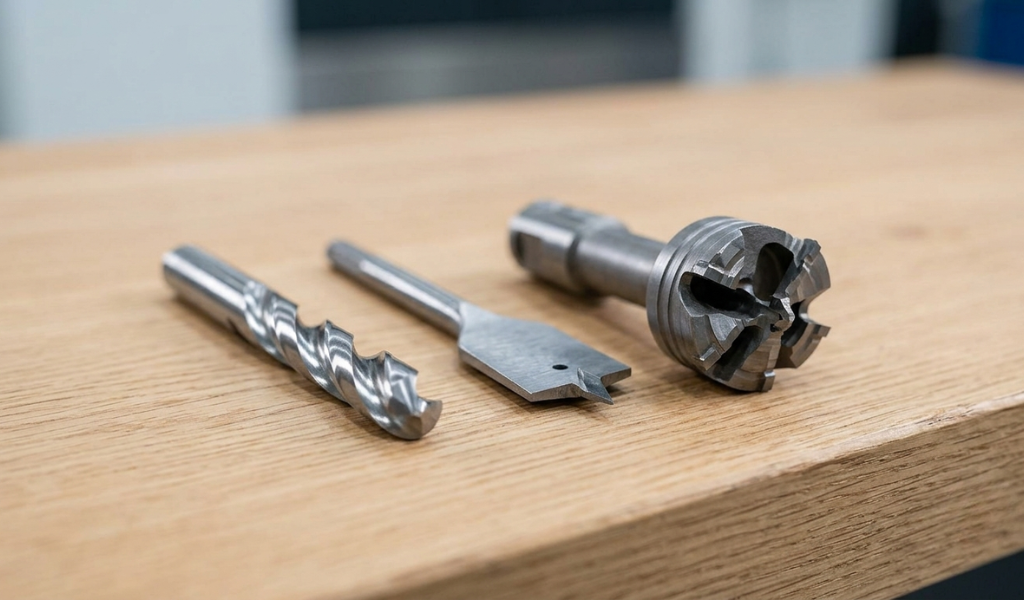
Twist drills are the most common type. They feature a helical flute design that helps clear chips out of the hole as drilling progresses. They work well on metals, plastics, and wood.
Spade drills have a flat, paddle-shaped cutting head. They’re used for drilling large-diameter holes, especially in softer materials where precision is less critical.
Core drills are used to enlarge existing holes rather than create new ones. They’re efficient and produce a clean finish.
Diamond drill bits are used in hard rock or geothermal drilling applications. Industrial diamond bits are extremely durable and can handle tough geological conditions without wearing down quickly.
Carbide-tipped drill bits are preferred for machining hard metals because carbide holds its cutting edge longer than standard high-speed steel.
Each type of bit is engineered for a specific purpose, and using the wrong one can lead to poor hole quality, excessive wear, or even damage to the workpiece.
Here’s where things get practical. The drilling process follows a clear sequence of steps, and each one plays a role in the quality of the final result.
Before any drilling begins, the right drill bit must be chosen. The operator considers the material type, required hole diameter, hole depth, and the surface finish needed. Using a bit that’s too hard or too soft for the material will affect the outcome. For example, drilling into stainless steel requires a cobalt or carbide bit, while softer aluminum can be handled with a standard high-speed steel twist drill.
The material being drilled must be held firmly in place. Any movement during drilling can cause the hole to shift, the bit to break, or the workpiece to be damaged. Clamps, vises, and fixtures are all commonly used depending on the shape and size of the part. On CNC machines, the workpiece is secured using precision fixtures that allow repeatable positioning.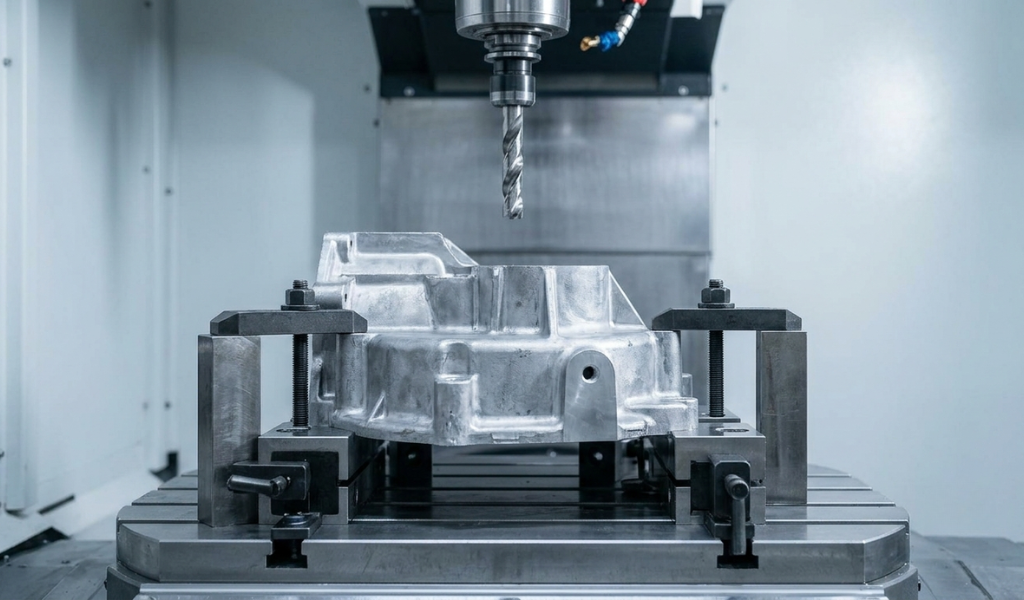
The drill must rotate at the correct speed, measured in revolutions per minute (RPM), and advance into the material at the right feed rate. Too fast, and the bit overheats and wears out prematurely. Too slow, and productivity drops or the material work-hardens. These parameters are usually calculated based on the material and bit type, then programmed into the machine.
The drill bit spins at high speed and is pressed into the workpiece along a precise axis. As it rotates, the cutting edges at the tip shear away material, forming a hole that matches the diameter of the bit. The geometry of the bit guides the chips up and out of the hole through the flutes, keeping the cutting zone clear.
As material is removed, small curls of metal or plastic called chips (also known as swarf) are produced. If chips build up inside the hole, they can cause the bit to jam, overheat, or break. Cutting fluids or coolant sprays are often used to flush chips out and reduce heat at the cutting edge. In some cases, compressed air is used instead, especially when working with materials that react poorly to liquids.
The operator or machine monitors the depth of the hole carefully. Once the bit reaches the correct depth, it’s retracted. Drill presses often have depth stops that automatically halt the feed at a preset measurement.
After the hole is drilled, it may need additional work to meet final specifications. Reaming smooths the inside walls of the hole to achieve tighter tolerances. Deburring removes sharp edges left by the drill bit at the entry and exit points. In precision manufacturing, these finishing steps are just as important as the drilling itself.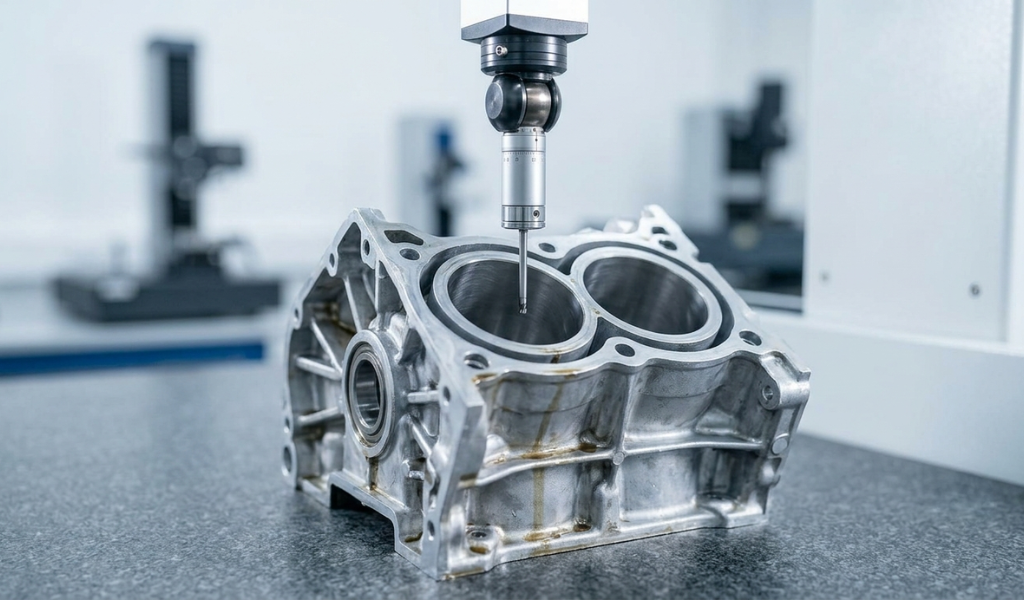
There are several strong reasons why drilling remains one of the most relied-upon processes in manufacturing and construction.
Precision: Drilling produces holes with tight dimensional tolerances and smooth inner surfaces, which is essential for parts that need to fit together or accept fasteners like bolts and screws. CNC drilling machines are especially accurate, holding tolerances within fractions of a millimeter.
Versatility: The drilling process works across an enormous range of materials, from soft plastics to hardened tool steels. With the right bit and settings, almost any material can be drilled. This versatility makes it useful across industries as different as aerospace and woodworking.
Speed and Efficiency: Modern drilling machines operate at high speeds and can be automated for continuous production. In CNC environments, a single machine can drill dozens of holes in sequence without stopping, making the process well-suited for both low and high-volume manufacturing.
Cost-Effectiveness: Compared to other machining processes, drilling is relatively affordable. Standard drill bits are inexpensive, machines are widely available, and the process requires minimal setup time for simple jobs.
Adaptability: Drilling fits easily into larger manufacturing workflows. CNC turning parts and CNC milling parts often require drilled holes as part of their design, and modern machining centers can combine drilling with other operations in a single setup.
No process is without its complications. Here are the most common issues in drilling and how experienced operators address them.
Tool Wear: Drill bits lose their sharp cutting edge over time, especially when drilling abrasive or hard materials. A dull bit produces rough hole walls, oversized holes, and increased heat. Regular inspection and timely replacement keep quality consistent.
Heat Buildup: Friction between the bit and material generates heat. If that heat isn’t managed, it can harden the material surface, degrade the drill bit coating, or even change the mechanical properties of the workpiece. Coolant and proper feed rates are the most effective ways to control temperature.
Chip Clogging: In deep-hole drilling, chips can pack into the flutes and cause the bit to bind or break. Peck drilling, which involves periodically retracting the bit to clear chips, is a common solution for deep holes.
Workpiece Movement: If the material shifts during drilling, the hole won’t be where it’s supposed to be. Proper clamping and fixturing prevent this.
Hole Wandering: The drill bit can drift slightly off course when it first contacts the surface, especially on curved or angled surfaces. A center punch mark or pilot hole gives the bit a starting point and keeps it on track.
Drilling shows up in more places than most people realize.
In automotive manufacturing, engine blocks require dozens of precisely drilled holes for oil passages, coolant channels, and bolt holes. Every one of those holes has to meet exact specifications or the engine won’t function correctly.
In aerospace, aircraft frames are assembled using thousands of rivets, and every rivet requires a drilled hole. The tolerances are extremely tight because a misaligned hole can affect structural integrity.
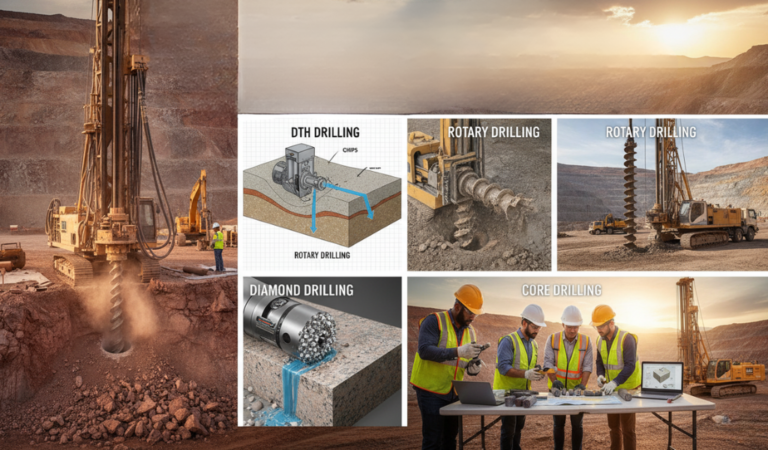
In geothermal energy, drilling goes to an entirely different level. Projects like the Geothermal Delft installation drill wells nearly 3,000 meters into the earth, often at an angle, to reach reservoirs of hot water that can be used for heating. Diamond drill bits are used in these applications because of their ability to handle the extreme hardness of deep rock formations without wearing out.
In electronics, PCB (printed circuit board) manufacturers use micro-drilling to create tiny through-holes for connecting circuit layers. These holes can be less than 0.1mm in diameter, requiring specialized micro-drill bits and high-precision CNC machines.
The drilling process is both simple in concept and sophisticated in practice. From the basic mechanics of a rotating drill bit cutting through metal, to the careful management of heat, chip removal, and tool wear, there’s real skill and engineering behind every hole that gets made.
Understanding how does the drilling process works helps engineers, machinists, and buyers make smarter decisions about materials, tooling, and manufacturing strategies. The advantages of drilling, including its precision, speed, and versatility, make it a go-to process for everything from CNC machined parts to large-scale geothermal wells.
If you’re planning a project that involves drilled components or need parts manufactured to tight tolerances, working with an experienced CNC machining partner makes all the difference. Explore CNC turning parts, CNC milling parts, and CNC machined parts to find the right solution for your application.
What is drilling in simple terms?
Drilling is the process of using a rotating cutting tool to create a round hole in a solid material. The drill bit spins at high speed and removes material as it moves deeper into the workpiece.
What is a drilling machine used for?
A drilling machine is used to drive a drill bit into a material at a controlled speed and depth. It holds the bit steady and allows the operator to set precise parameters like RPM and feed rate for consistent, accurate holes.
What are the main advantages of drilling?
The main advantages of drilling include high precision, versatility across many materials, fast production speeds, and cost-effectiveness. It’s also easy to integrate into larger machining workflows.
What causes a drill bit to wear out quickly?
Drill bit wear is usually caused by drilling at too high a speed, not using coolant, drilling hard or abrasive materials without the right bit type, or simply heavy use over time. Using the correct bit for the material and maintaining proper speeds significantly extends tool life.
How is heat managed during the drilling process?
Heat is managed through cutting fluids or coolant sprays that lubricate the bit and flush heat away from the cutting zone. Proper feed rates and chip evacuation also help prevent excessive heat buildup.
What is the difference between drilling and reaming?
Drilling creates the initial hole. Reaming is a finishing operation that smooths and resizes an existing hole to achieve tighter tolerances and a cleaner surface finish. Reaming always follows drilling; it does not create holes on its own.
How deep can a drilling machine drill?
It depends on the machine and application. Standard drill presses handle depths of a few centimeters to a few hundred millimeters. Specialized deep-hole drilling machines can go much further. Industrial geothermal drilling, which operates on a completely different scale, can reach depths of several thousand meters underground.