Physical Address
304 North Cardinal St.
Dorchester Center, MA 02124
Physical Address
304 North Cardinal St.
Dorchester Center, MA 02124


Every wood refinishing project starts with the same fork in the road: do you reach for the sander, or do you grab a chemical stripper? It sounds like a simple choice, but get it wrong and you could end up damaging the wood, wasting hours of labor, or worse compromising the structural integrity of a piece you’ve worked hard to restore.
Both methods have their place in a professional’s toolkit. Sanding removes old finish and paint through mechanical abrasion, using sandpaper and power tools to grind down the wood surface layer by layer. Chemical stripping, on the other hand, dissolves or lifts the existing finish using specially formulated paint remover or heat, leaving bare wood with minimal physical effort. Neither method is universally superior; the right choice depends on the condition of the wood, the type of finish, the project scale, and your skill level.
This guide cuts through the confusion with a direct, side-by-side breakdown of both approaches. For a broader look at abrasive techniques and grit selection, our ultimate guide to woodworking sanding techniques covers everything from orbital sanders to hand sanding fundamentals, a valuable companion to what you’re about to read.
Whether you’re refinishing a hardwood floor, restoring a dining table, or stripping paint from wooden furniture, what follows will help you choose the right method, use the right tools, and avoid the most common mistakes woodworkers make when preparing wood for a fresh stain or varnish.
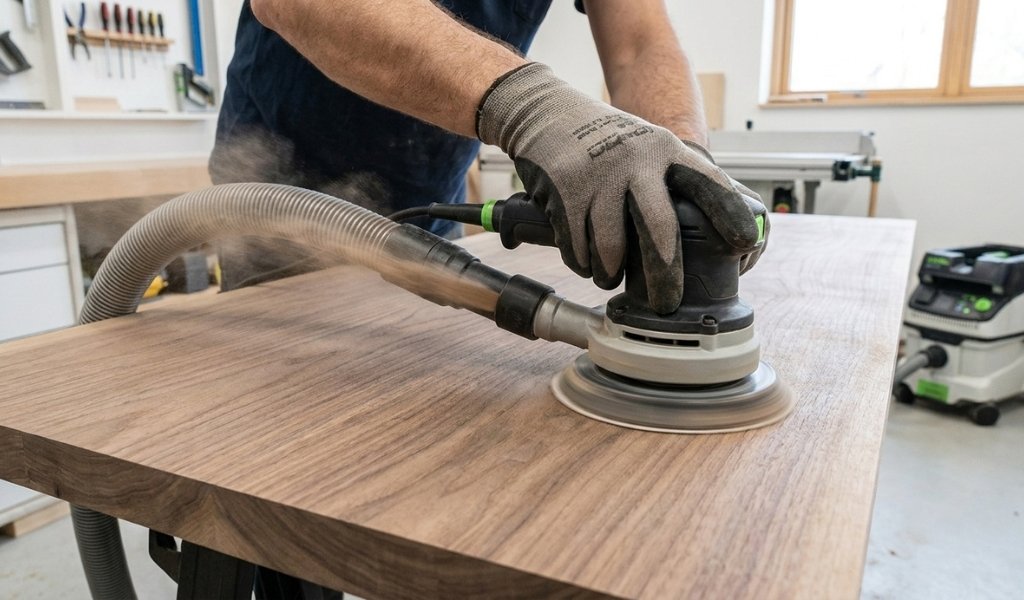
Wood sanding is the process of using abrasive materials, sandpaper, sanding discs, or sanding blocks to physically remove the old finish, paint, or surface imperfections from a wood surface. It’s the go-to method for flattening grain, smoothing roughness, and preparing bare wood for a new coat of stain or varnish.
Sanding offers unmatched control over the final surface texture. By working through progressively finer grits, you can take a rough, paint-clogged surface and transform it into something glass-smooth. Unlike stripping, sanding allows you to feather out uneven areas, address localized damage, and follow the grain of the wood precisely.
Sanding is also cost-effective. Sandpaper and a decent belt sander or orbital sander represent a one-time investment that pays dividends across dozens of projects. For large, flat surfaces like wood floors, sanding is generally faster and more consistent than applying and waiting on chemical products. It’s also the preferred method when you need to prepare the wood for a penetrating stain, since sanding opens the grain and allows the stain to absorb evenly.
The sanding process isn’t without its downsides. The most significant risk is removing too much material. On solid wood, this is usually manageable but on engineered boards or thin wood veneer, aggressive sanding could damage or completely destroy the surface layer. Once that veneer is gone, there’s no going back.
Dust is the other major concern. Sanding generates enormous volumes of fine particulate matter, and on older furniture or floors with multiple layers of paint, that dust may contain lead. Lead-based paint is common in pieces made before 1978, and sanding it without proper respiratory protection creates a serious health hazard. Beyond toxicity, paint clogging is a persistent frustration. Thick or layered old paint quickly loads up sandpaper, burning through supplies fast and slowing the sanding process considerably.
The difference between a frustrating sanding job and an efficient one often comes down to tool selection. A belt sander removes material aggressively and works well on large, flat surfaces, while an orbital sander is better suited for furniture where a finer finish is required. Hand sanding with a sanding block remains essential for tight corners, edges, and detailed profiles that power tools can’t reach.
For a complete breakdown of which sanding tool suits which application including recommendations on sanding discs, grit progressions, and sander types for furniture vs. flooring visit our dedicated resource on wood sanding tools. Choosing the right equipment before you start will save significant time and material waste.
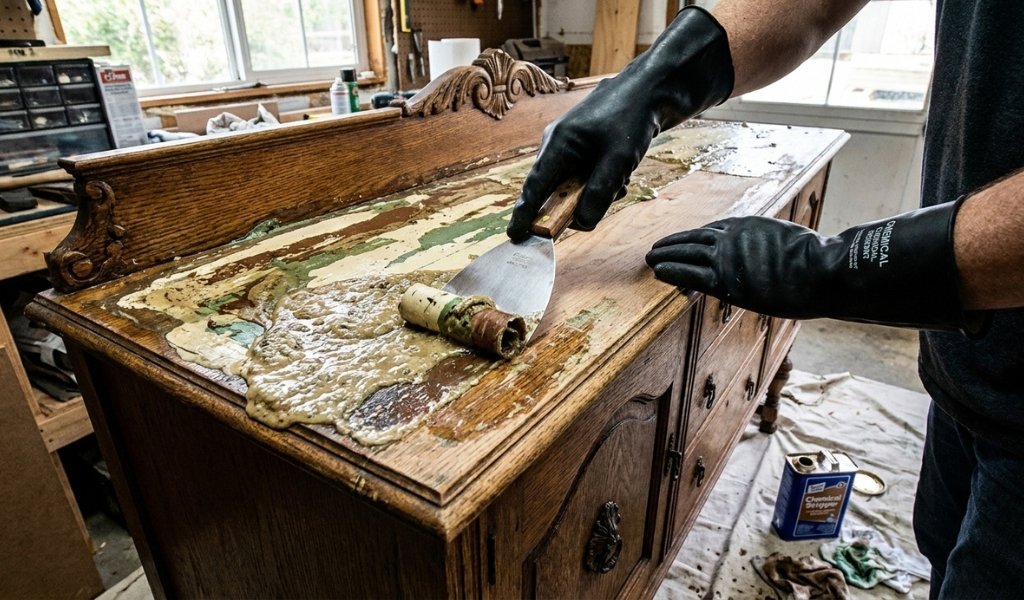
Wood stripping uses chemical paint strippers, stain strippers, or heat guns to soften and lift the old finish from a wood surface without mechanical abrasion. The stripping agent penetrates into the wood’s finish layers, breaking the bond between the coating and the substrate so it can be scraped off cleanly.
The primary advantage of stripping is preservation. Because chemical stripping doesn’t physically remove wood fibers, it’s far safer for delicate pieces like wood veneer furniture, carved detailing, or antiques where every millimeter of material matters. When you need to strip the finish without compromising depth or dimension, a chemical paint stripper would be the safer tool.
Stripping is also more effective when dealing with multiple layers of paint or finish. Rather than grinding through coat after coat of varnish with sandpaper which clogs fast and wears out quickly a paint remover dissolves all the layers simultaneously. This saves time sanding and reduces the total labor involved, especially on furniture with complex profiles.
Non-toxic paint strippers have also improved significantly in recent years, making the method more accessible to hobbyists and homeowners. Many modern strip products offer effective results without the harsh fumes associated with older solvent-based formulas.
Chemical stripping is messy, and that’s before you factor in disposal. Spent strippers loaded with dissolved paint or varnish can’t simply be tossed in a bin; it requires proper handling and disposal as hazardous waste in many areas. Application is also more involved than it sounds: the stripper must dwell on the surface long enough to work, which ties up your workspace and extends the project timeline.
Traditional stripping agents, particularly those containing methylene chloride, are highly toxic and require robust ventilation, chemical-resistant gloves, and eye protection as non-negotiable PPE. Even with safer alternatives, working in an enclosed workshop without adequate airflow increases exposure risks. The combination of product cost, cleanup materials, and protective gear can make stripping more expensive per project than a simple sanding approach.
The type of coating you’re trying to strip matters. Paint strippers formulated to remove paint may not work as efficiently on polyurethane varnish, and vice versa. Solvent-based removers tend to be effective across a wider range of coatings, including old paint, lacquer, and varnish, while water-based alternatives often need longer dwell times.
Heat guns offer a third option particularly effective for thick layers of paint or varnish on solid wood. By applying concentrated heat, the old finish bubbles and separates from the surface, making it easy to scrape off the paint with a wide-blade scraper. Heat guns require care around delicate or thin wood sections where sustained heat can cause warping or scorching.
The right method shifts depending on the type of project. Here’s how stripping and sanding compare across the factors that matter most.
On solid wood, both methods are viable though sanding offers more tactile control. On wood veneer, stripping is generally the safer option. A power sander on thin veneer can burn through the surface layer in seconds, leaving you with exposed substrate and a ruined piece. Chemical stripping removes the paint or varnish without touching the wood material itself, preserving the veneer’s integrity.
The condition of the wood also matters. Weathered or damaged pieces benefit from careful stripping, which lifts the coating without adding abrasive stress to an already fragile surface.
On heavily painted surfaces, sanding paint off is almost always slower than chemical stripping. Multiple layers of paint force constant sandpaper changes, and without a stripper to remove the bulk first, you’re fighting through every coat mechanically. A combination of both stripping and sanding strip first to remove the heavy buildup, then sand to smooth the wood surface typically delivers the best result with the least effort.
For bare wood or lightly finished surfaces, sanding is faster. There’s no dwell time, no chemical neutralization, and no waiting, just grind, check, and progress.
Both methods carry real risks that demand respect. Sanding requires a quality dust mask or respirator (particularly when old paint may contain lead), safety glasses, and hearing protection when using a power sander. Any piece of furniture or floor suspected of containing lead-based paint should be tested before sanding begins disturbing lead paint dust without containment is a serious health hazard.
Chemical stripping requires chemical-resistant gloves, eye protection, and strong ventilation. Solvent-based strippers off-gas rapidly and can cause dizziness, nausea, or respiratory irritation in poorly ventilated spaces. Always read the safety data sheet for your specific strip product before starting.
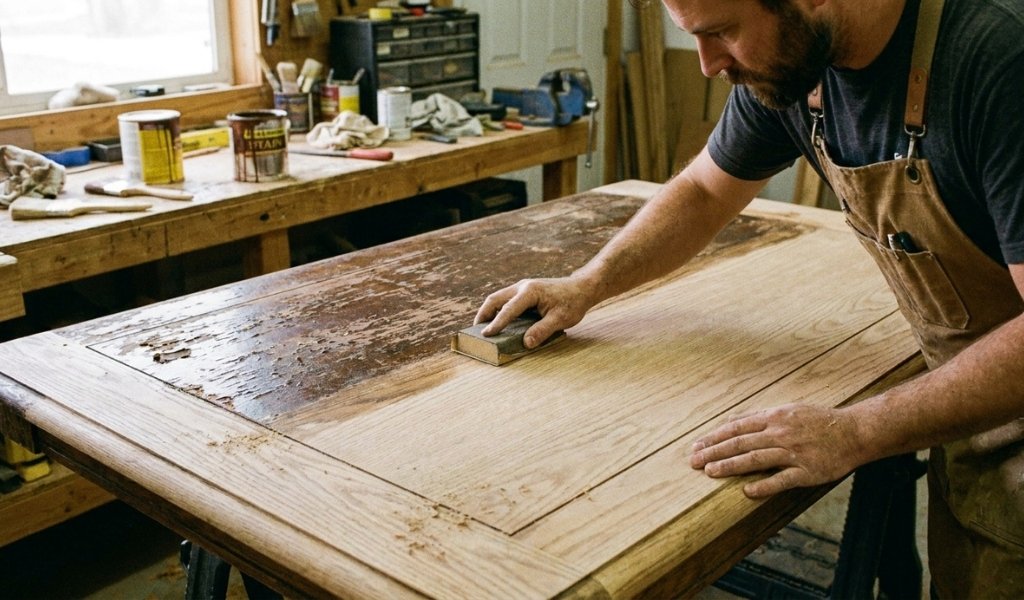
The most experienced woodworkers rarely choose one method exclusively. The most efficient and professional results usually come from using both in sequence.
The logic behind the two-stage approach is straightforward: use a chemical stripper to remove the bulk of the old finish quickly and cleanly, then follow with light sanding to smooth the wood surface, open the grain, and prepare it for stain or varnish. This minimizes the total time sanding, reduces sandpaper consumption, and results in a cleaner, more even surface than either method achieves alone.
When you strip first, the remaining surface is typically free of thick coating but may show raised grain or residual stripper residue. A pass with fine-grit sandpaper and a sanding block corrects both issues, leaving bare wood that’s ready to accept a coat of varnish or wood stain uniformly.
Strip furniture when:
Sand wood floors when:
Use a combination of both when:
Some situations call for neither sandpaper nor chemical stripper. Scraping with a card scraper or paint scraper can remove old finish efficiently on flat surfaces, offering a clean result with less dust and no chemical exposure. Wire brushing works well on rustic or distressed finishes where texture retention is desirable. For very fine surface preparation particularly between coats of finish steel wool or abrasive pads can replace sandpaper without leaving deep scratches.
These techniques shine in tight corners and detailed sections where both power sanders and chemical strippers are difficult to apply accurately. For a deeper look at how to achieve a smooth wood surface without conventional abrasives, our upcoming guide on how to sand wood without sandpaper covers each alternative method in practical detail; bookmark it if you’re working on a project that demands a more creative approach.
For antique furniture, stripping is generally the safer starting point. Antique pieces often feature thin wood veneer, carved surfaces, and old paint that may contain lead all of which make aggressive sanding risky. A chemical stripper removes the old finish without removing wood fibers, preserving the piece’s original dimensions and detail. Follow up with light sanding to smooth the wood surface before applying a new stain or varnish.
Yes but only in specific circumstances. If the existing finish is a single, intact coat of paint or varnish in good condition, sanding directly can work. However, if there are multiple layers of paint, sanding without stripping first leads to rapid paint clogging, excessive sandpaper use, and an uneven result. In most furniture refinishing scenarios, stripping first produces a cleaner surface with less total effort.
Always neutralize the surface before sanding. Most chemical strippers leave a residue that, if not properly removed, can interfere with the new finish or clog sandpaper prematurely. Wipe down the bare wood with mineral spirits or the neutralizer recommended by the strip product manufacturer, allow the surface to dry completely, then begin with a fine-grit sandpaper. Skipping this step is one of the most common mistakes in the sanding and stripping process.
For most beginners, sanding is the more intuitive starting point. It requires less product knowledge, produces immediate visible results, and carries fewer chemical hazards when handled with basic dust protection. That said, if the project involves multiple layers of paint or delicate woodwork, a beginner will often find that applying a paint stripper first dramatically reduces the difficulty of the subsequent sanding work. Starting with a small test area before committing to either method is always good practice.
For heavy paint buildup on solid wood, a combination of a gel-based chemical paint stripper and a heat gun is typically the fastest approach. Apply the stripper to remove paint and let it dwell for the full recommended time, then scrape off the paint with a wide-blade scraper. Follow with a heat gun to address any remaining stubborn layers, then complete the job with light sanding to prepare the wood surface. This method minimizes time sanding while handling even thick, multi-layer finishes efficiently.