Physical Address
304 North Cardinal St.
Dorchester Center, MA 02124
Physical Address
304 North Cardinal St.
Dorchester Center, MA 02124

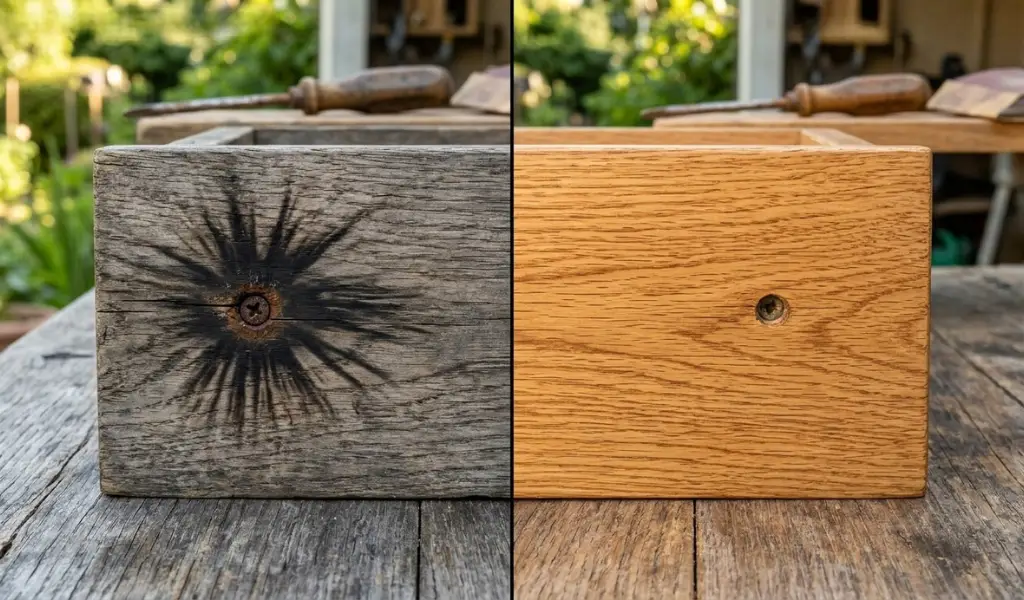
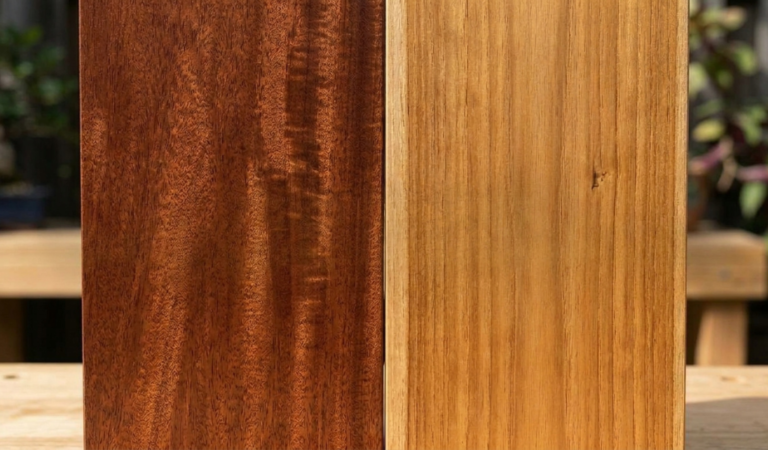
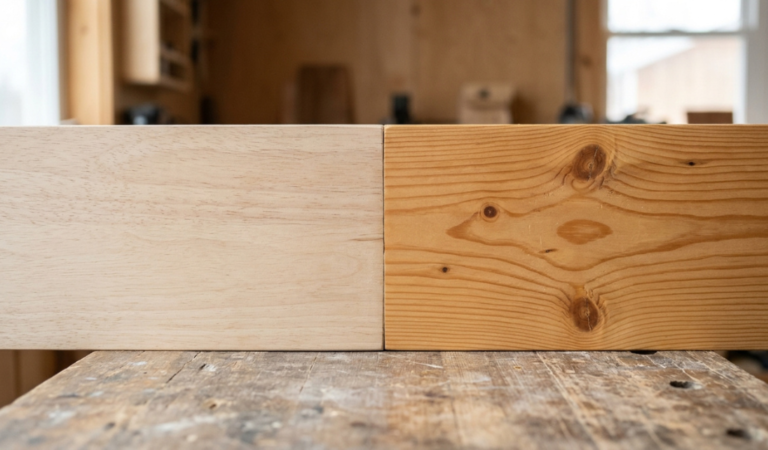
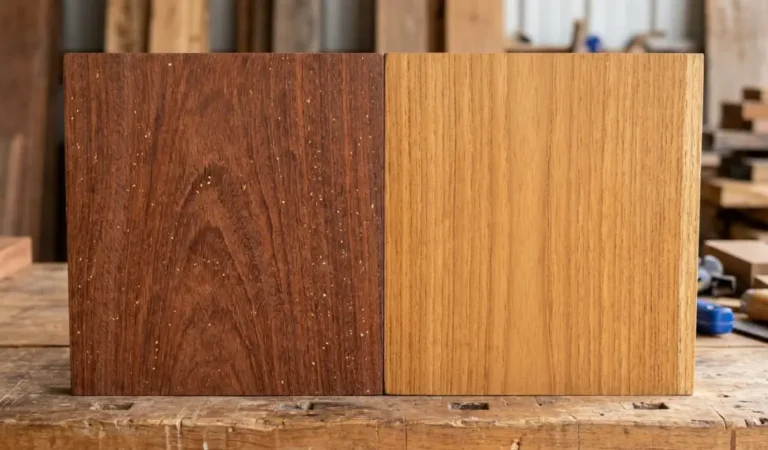
You finish a nice wooden bench, add a few steel screws, and a month later you spot ugly dark rings around every one of them. If you are trying to remove iron stains from wood, you are far from alone. This is one of the most common problems in woodworking, and it shows up on decks, cabinets, fences, and wood furniture alike. It even comes up when people compare Rubber wood vs Teak Wood, because the species you pick changes how fast a stain sets in.
So what is going on? Wood is full of natural chemicals called tannins. Oak, cedar, redwood, walnut, and cherry have a lot of them. When iron touches moisture, it starts to rust and releases tiny bits of iron oxide. Those bits react with the tannins in the wood and form a dark compound. The result is a black or blue gray mark that spreads outward from the metal. It looks a bit like ink bleeding through paper.
There are a few usual suspects. A steel screw or nail that gets wet is the top cause. Steel wool left on a damp board is another one. A wet metal can, a wrench, or even a plant pot with a rusty rim can leave a mark overnight. Even a tiny metal shaving trapped in the grain can create a spot after a spill or a rainy day.
There is good news. Most stains sit near the surface, and many can be lifted with simple household products. Teak’s natural oils help it resist moisture, while rubberwood and teak wood soaks up water more easily, so rust marks can set in faster on rubberwood. Either wood can pick up a stain from steel, and the steps below work on both. Below, we will start with the gentle methods and move to stronger ones only when you need them.
Before you begin, keep one rule in mind. Test every treatment in a small, inconspicuous spot first. Wood reacts differently from one type to another, and a quick test can save your favorite piece.
For light marks and fresh rust stains, start with something from the kitchen. White vinegar and lemon juice are mild acids. They break down iron oxide so it can be wiped away, and they are much safer than harsh chemicals. They work best on stains that are new or only a shade or two darker than the wood.
Here is a simple way to use them. Pour a small amount of white vinegar or fresh lemon juice into a bowl. Dip a soft cloth or an old toothbrush and dab the stain. Do not pour the liquid on the surface because too much moisture can make the wood swell or warp. Let it sit for about five to ten minutes. Then rub gently in a circular motion and blot with a damp cloth. Dry the area with a clean towel right away.
For a bit more lifting power, add baking soda. Mix a spoonful of baking soda with a few drops of lemon juice to form a loose paste. Spread it over the mark with a small brush and leave it for ten minutes.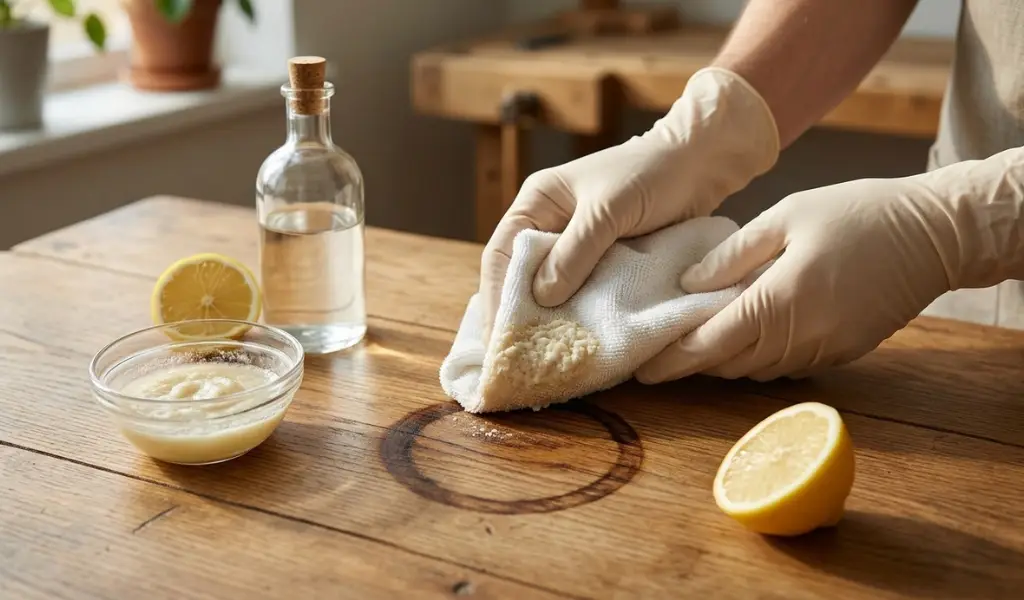 Wipe it clean with a damp rag, then dry. The baking soda adds a very light abrasive action without scratching, and it helps absorb the dark residue. Do not scrub hard on a finished surface. A rough rub can dull the shine.
You may have heard that mayonnaise can remove stains. It is better known for water rings, where the oil is said to push moisture out of the finish. It does not do much for iron stains, so skip it here. The same goes for rubbing alcohol, which works on ink and some other marks but not on rust.
Here is a quick real-life example. A reader once wrote that her oak side table had a dark ring where a metal watering can sat for a weekend. She dabbed on lemon juice, waited ten minutes, wiped it with a damp cloth, and dried it. The ring faded to a pale shadow. A second try made it nearly vanish. Then she added a little furniture wax to bring back the shine.
A few tips help these home fixes work better:
If the stain stays after two or three rounds, or if it looks deep and black, it is time to step up.
When the dark marks have soaked into the grain, vinegar will not be enough. This is where oxalic acid comes in. It is the go-to treatment for black iron stains, and many woodworkers call it the best way to deal with them. Oxalic acid is the main ingredient in many wood bleaches and also in some rust cleaners. It turns the iron compound into something that dissolves in water, so it can be rinsed out.
It works especially well on oak, maple, and other hardwoods that have been stained by tannin reactions. It will not harm the wood fibers when used correctly, though it can lighten the natural color a bit. That is why testing matters.
Oxalic acid is also a chemical, so treat it with respect. It can irritate the skin, eyes, and lungs. Follow the label on your product, and do not skip safety steps.
You can buy oxalic acid as crystals or powder at a hardware store or online. Some products sell it as wood bleach or deck brightener. Look at the label and use the mixing ratio it gives. As a general guide, many people dissolve about two tablespoons of crystals in one cup of warm water. Always follow the directions on your own package, because strengths vary.
Here is how to get ready:
Do not mix oxalic acid with bleach, ammonia, or other cleaners. Mixing chemicals can create harmful fumes. Use it alone.
Once your solution is ready, you can tackle the stain. Move slowly and take your time.
Step 1: Test first. Dab a little on a hidden spot, like the underside of a table or the back of a cabinet. Wait until it dries to see how the color looks.
Step 2: Clean the surface. Wipe away dust and grease so the solution can penetrate. If the piece has a thick finish like polyurethane, the acid may not reach the wood. You may need to strip the finish in that spot first.
Step 3: Apply the solution. Use a small brush or a rag to apply the liquid to the stained area only. Keep it off the clean wood around it as much as you can.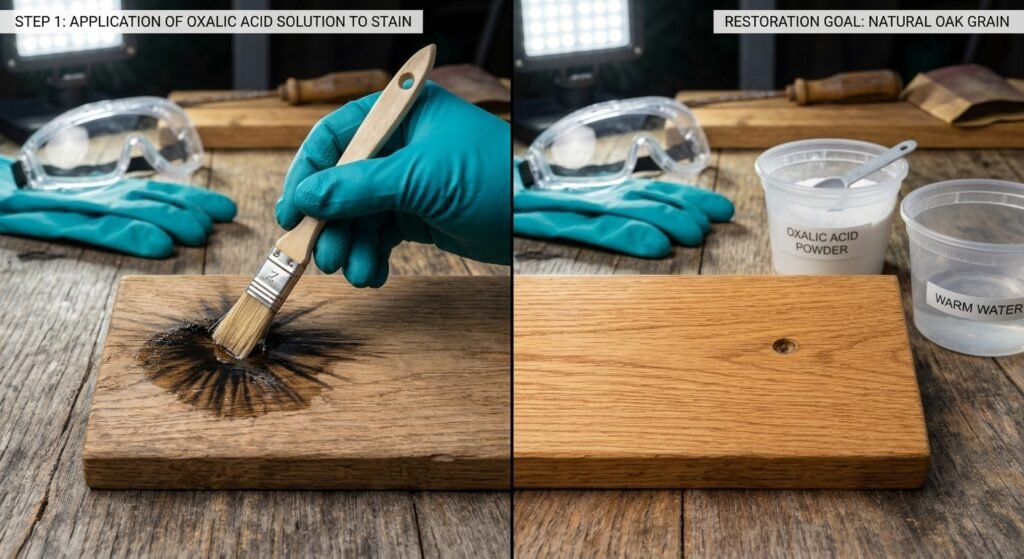 For vertical surfaces, a gel or paste works better because it stays put.
Step 4: Wait. Let it sit for about 15 to 30 minutes. You will often see the black fade as the acid works. Check every few minutes. If the stain is stubborn, you can apply another coat after the first one dries.
Step 5: Rinse. Wipe with a clean damp cloth. Use plenty of fresh water to remove all of the acid. Residue left behind can harm a new finish.
Step 6: Neutralize. Mix about one tablespoon of baking soda into a cup of water and wipe the area. This neutralizes any acid still in the wood. Then rinse again with clean water.
Step 7: Dry. Let the wood dry fully, ideally overnight. Pat it with a dry towel and keep it out of direct heat to avoid cracks or warping.
You may notice the area looks lighter than the wood around it. That is normal. A light sanding and a fresh coat of stain or finish will help the spot blend in. Dispose of leftover solution as your local rules require. Never pour large amounts down a storm drain.
Sometimes chemicals are not what you want to use, or they do not fully clear the mark. In those cases you can take a more physical approach. Sanding removes the top layer of wood where the stain sits. It works best on bare wood, decks, and raw lumber, and it is a smart choice when the stain is shallow.
Start with medium sandpaper, around 120 grit, and sand along the grain. Do not press hard or use a circular motion on bare wood, since it can leave swirl marks. 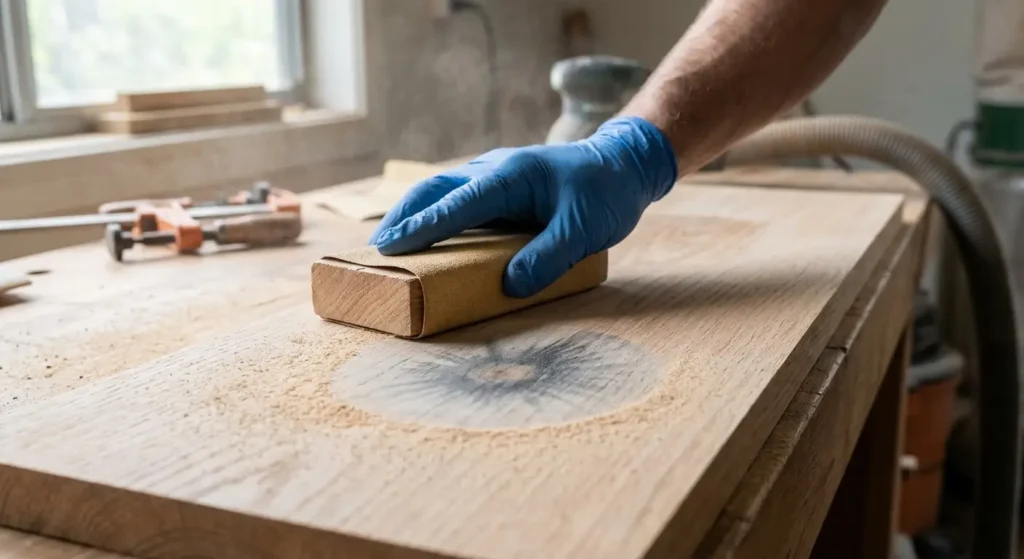 Check your progress often. When the black fades, move to a finer grit, like 180 or 220, to smooth the surface. Wipe off the dust with a microfiber cloth.
Here is the catch. Deep stains can run far below the surface. If you sand too much, you may create a dip or remove the grain pattern. For veneer, sanding is risky because the top layer is very thin, and one bad pass can go right through it. If you own an antique or a valuable piece, talk to a furniture restorer before you sand.
If the piece has a finish, you will likely need to strip it before you can sand or treat the stain. A chemical stripper or careful scraping can lift the old coat. Proceed one small patch at a time so you do not strip more wood than you need.
After the stain is gone, you will need to restore the look. Here is a simple plan:
A tip from experience. On a maple cabinet door, a gray ring around a hinge screw would not budge with vinegar. The owner removed the hinge, used oxalic acid, sanded the spot lightly, and refinished it with the matching stain. He also swapped the old screws for stainless ones. Two years later the ring has not come back.
Removing a stain is a lot of work. Preventing one takes far less effort. A few smart habits will keep your wood clean for years.
Pick the right fasteners. Use stainless steel, brass, bronze, or hot-dip galvanized screws and nails, especially outdoors. Plain steel rusts when it gets wet and will stain tannin-rich woods like oak, cedar, and redwood. Coated deck screws are also a good option. They cost a bit more but save a lot of cleanup.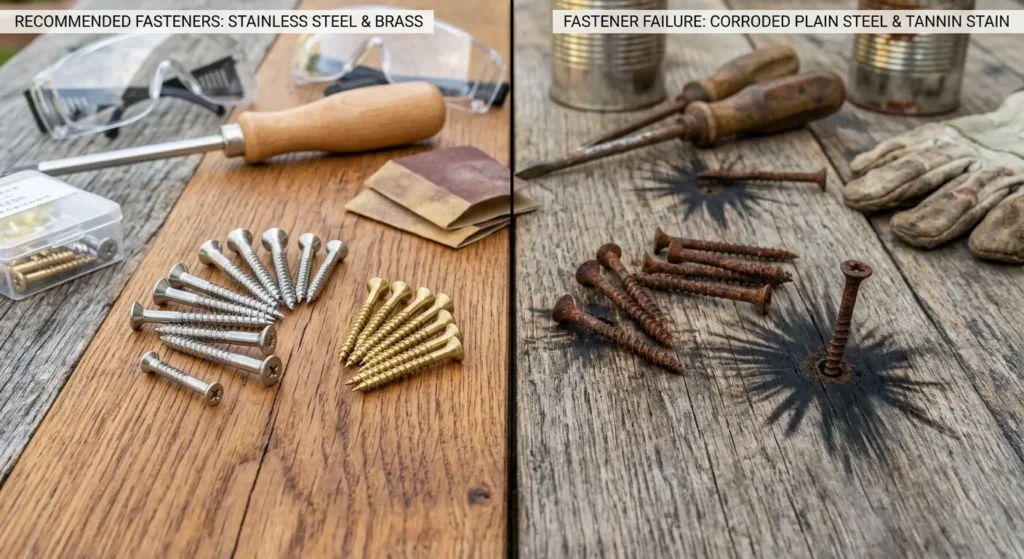
Seal the wood. A good finish keeps moisture out of the grain. Seal decks, outdoor tables, and wooden furniture with a quality sealant or varnish and reapply as needed. If you build something new, seal the ends and the holes before you add screws.
Keep metal off damp wood. Do not leave steel wool, tools, cans, or wet metal pots on a wood surface. Use a coaster, a tray, or a plastic liner. If you work with steel wool near a project, clean up the tiny fibers right away because they can rust and leave dark specks in the grain.
Fix rust early. If you see an orange mark around a screw, wipe it off and replace the fastener. Fresh rust stains lift much more easily than old ones.
Control moisture. Keep wood away from leaky pipes, damp basements, and wet floors. Wipe up spills fast and use a dehumidifier if the air is very damp. Good airflow prevents the conditions that start rust.
Check your piece now and then. Twice a year, look at hinges, screws, and brackets on cabinets and outdoor furniture. A quick wipe with a dry cloth and a dab of wax can protect the finish.
These small steps matter. A few minutes of care today can save you hours of scrubbing later, and they help your wood look good for many years.
Iron stains look scary, but most can be fixed at home. Start with a gentle fix like white vinegar or lemon juice. Move on to a baking soda paste if you need more help. For deep black stains, use oxalic acid and follow the safety and neutralizing steps. If the stain is still there, sanding and refinishing can bring the wood back to life.
The key is to go slow, test in a hidden spot first, and never rush with chemicals. Once your wood is clean, protect it with stainless fasteners, a good finish, and a little regular care.
Ready to try? Grab a cloth, test a small area, and give the first method a go. If you have a tricky stain, share what you tried in the comments. We would love to help you fix it.
Why does wood turn black around screws and nails? Iron from the metal reacts with tannins in the wood when moisture is present. The reaction forms a dark compound that spreads into the grain.
Can I remove iron stains from wood without chemicals? Yes. White vinegar, lemon juice, and baking soda can lift light rust stains. Sanding is another chemical-free option for bare wood. Deep stains may need oxalic acid.
Is oxalic acid safe to use on wood furniture? It is safe when used correctly, but you must wear gloves and eye protection and work in fresh air. Test it on a hidden spot because it can lighten some woods. Always rinse and neutralize after use.
Will vinegar damage my wood finish? A small amount for a short time is usually fine. But leaving vinegar on a finish can dull it or soften it. Wipe it off with a damp cloth and dry the area quickly.
Does mayonnaise remove iron stains? Not really. It is more often used for water rings, and even then the results vary. For iron marks, try lemon juice, vinegar, or oxalic acid instead.
Which woods stain the most from iron? Woods with lots of tannin, like oak, cedar, redwood, walnut, and cherry, react the most. Maple and pine can stain too, but usually less.
How do I stop the stains from coming back? Use stainless steel or coated fasteners, seal the wood, keep metal and moisture away, and replace rusty screws early. Regular checks will catch problems before they spread.