Physical Address
304 North Cardinal St.
Dorchester Center, MA 02124
Physical Address
304 North Cardinal St.
Dorchester Center, MA 02124

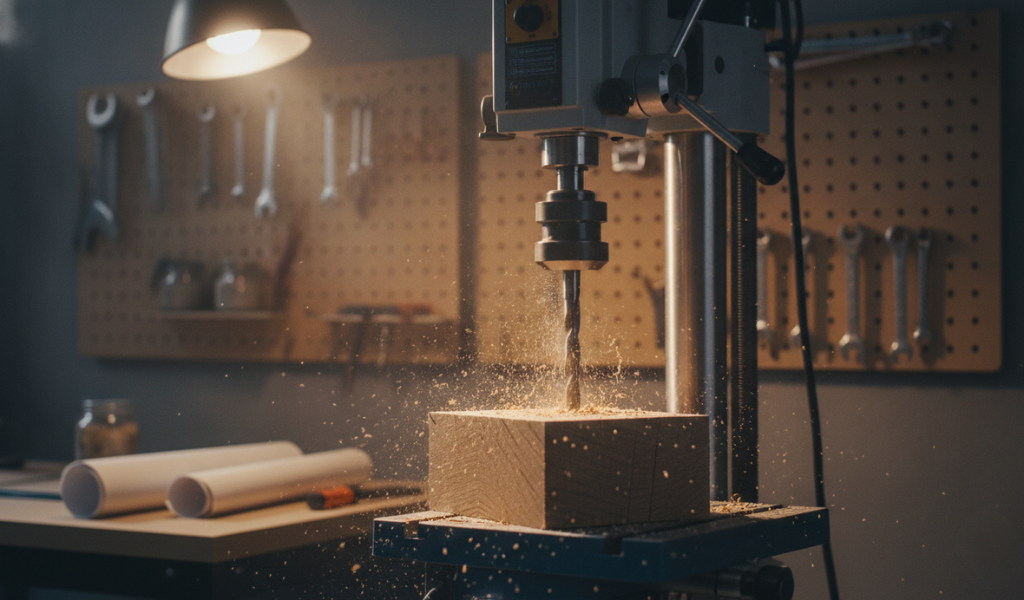
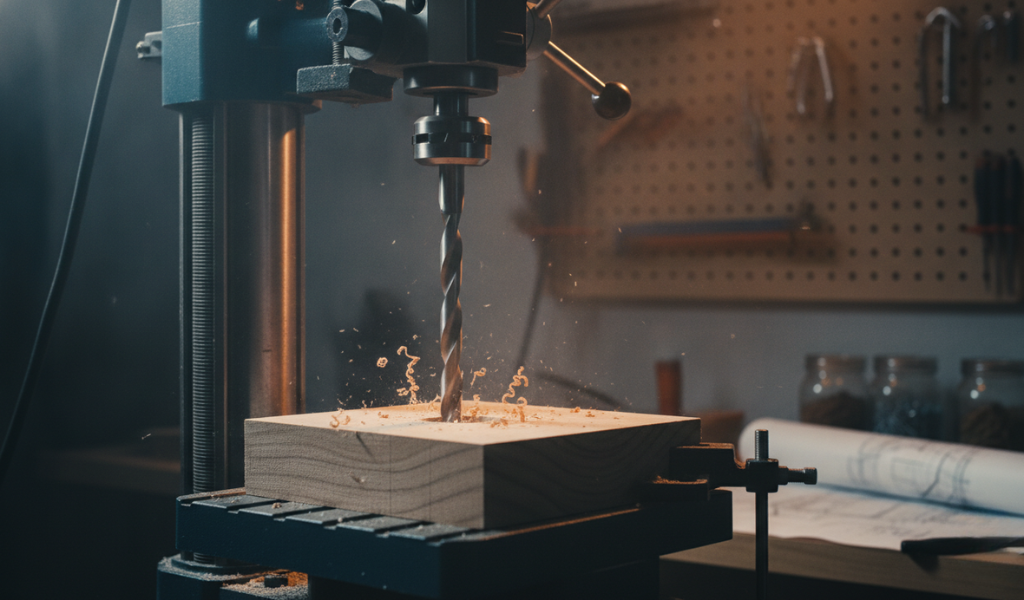
Few tools are as widely used (or as easy to take for granted) as the drilling machine. If you’ve ever hung a shelf, built furniture, or worked in a manufacturing shop, chances are a drilling machine made the job possible. But there’s a lot more to these tools than spinning a bit and punching a hole.
A drilling machine is one of the most versatile tools you’ll find in any workshop, used for everything from quick DIY fixes to high-precision industrial production. The trouble is, with so many types out there—from compact bench models to massive CNC drilling machines—it can be hard to know which one fits your needs.
In this guide, we’ll walk through exactly what a drilling machine is, the core components that make it work, the main types you’ll come across, and how to handle common tasks like sharpening and removing drill bits. We’ll also share tips on choosing the best drill machine for DIY home projects. Whether you’re a curious beginner or someone shopping for your first power tool, you’ll find clear, practical answers here.
A drilling machine is a tool used to create round holes in materials like metal, wood, plastic, and even concrete. It works by rotating a drill bit at high speed while applying steady downward pressure, driving the bit into the workpiece to form a clean, accurate hole.
Think of it as the workhorse of any workshop. While a handheld drill is great for quick jobs, a proper drilling machine offers far more control, power, and precision. That’s why you’ll find them everywhere—from small home garages to large factories producing thousands of parts a day.
The beauty of a drilling machine lies in its flexibility. With the right bit and settings, the same basic machine can drill a tiny pilot hole in a sheet of plywood or bore through a thick block of steel. Beyond simple drilling, many machines also handle related tasks like reaming (smoothing a hole), countersinking (creating a recess for a screw head), and tapping (cutting internal threads).
Drilling machines have come a long way over the years. Early versions were hand-cranked tools used by craftsmen, but the Industrial Revolution changed everything. In 1776, John Wilkinson built the first boring machine, originally designed to bore cannon barrels and engine cylinders. Decades later, in 1861, Scottish engineer James Nasmyth patented the radial arm drill press, bringing a new level of precision to the craft. Today’s machines, especially computer-controlled ones, can drill with accuracy measured in fractions of a millimeter.
To really understand how a drilling machine works, it helps to know its main parts. While designs vary between models, most drilling machines share the same basic building blocks. Each one plays a specific role in keeping the machine stable, accurate, and easy to control.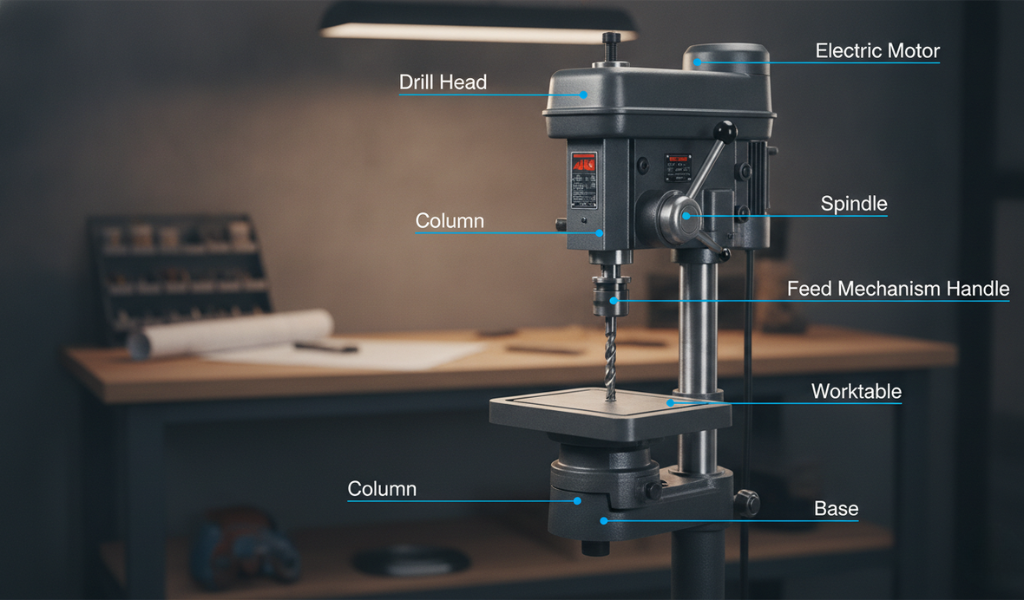
The base is the foundation. It sits at the bottom of the machine and provides the stability needed to keep everything steady. A solid base absorbs vibrations during drilling, which directly affects how clean and accurate your holes turn out.
The column is the vertical support that rises from the base. It holds the other parts in place and gives the machine its rigidity. On larger machines, the column also supports moving parts like the radial arm.
The spindle is the rotating shaft that holds and turns the drill bit. It’s the part that transfers power from the motor to the bit, and its speed can usually be adjusted to suit different materials. Slower speeds work better for hard metals, while faster speeds suit softer woods and plastics.
The chuck is the clamp that grips the drill bit and secures it to the spindle. Some chucks need a small tool called a chuck key to tighten them, while keyless chucks can be tightened by hand. Either way, the chuck is what lets you swap bits quickly.
The drill head houses the spindle and bit, controlling their rotation and downward movement. It’s where the actual drilling action happens.
The worktable is the flat surface where you place and secure your workpiece. Most worktables can be raised, lowered, or even tilted, giving you flexibility to drill at different heights and angles.
The feed mechanism controls how the drill bit advances into the material. It allows for smooth, steady pressure, which is key to avoiding broken bits and rough holes.
The electric motor is the powerhouse. It generates the rotational force that drives the spindle, and on many machines you can adjust its speed and torque to match the job.
Finally, larger and more advanced machines include extras like a radial arm (which lets the drill head move horizontally for large workpieces) and a control panel for managing speed, feed rate, and direction.
Not all drilling machines are built the same. Each type is designed for a specific kind of job, from delicate hobby work to heavy industrial production. Here’s a look at the most common types and what they’re best suited for.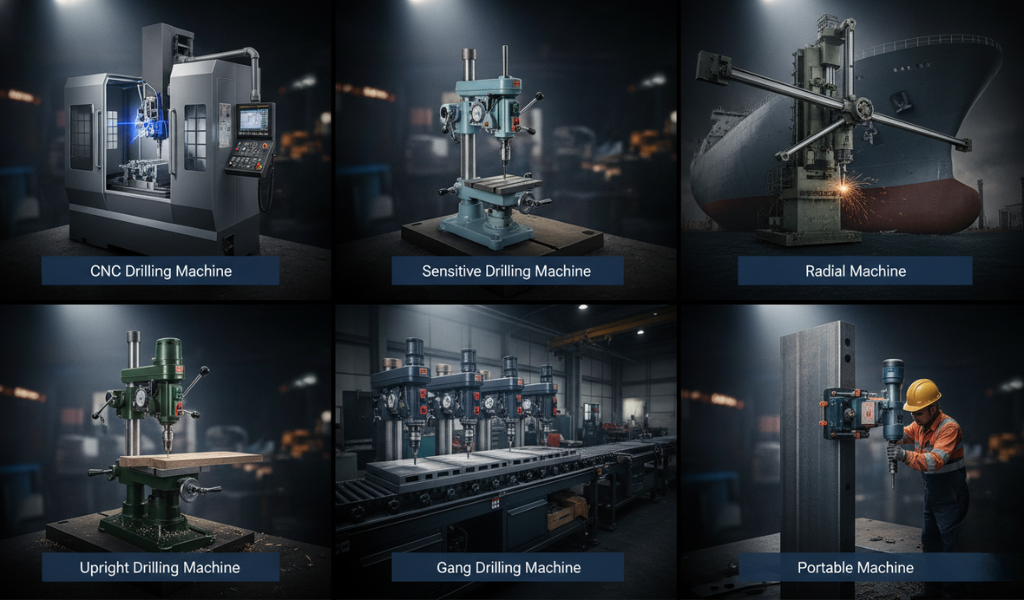
A CNC (Computer Numerical Control) drilling machine automates the entire drilling process using computer programming. Once you set the instructions, the machine controls the drill bit and workpiece with incredible precision, often with little human input.
These machines shine in mass production. Industries like automotive and aerospace rely on them to drill complex patterns with perfect repeatability. The downside? They’re expensive and require trained operators who know how to program them. For high-volume, high-accuracy work, though, nothing beats a CNC drilling machine.
The sensitive drilling machine is a simple, hand-operated tool built for light tasks. Its name comes from the fact that the operator can actually “feel” the cutting action and adjust the feed by hand.
This machine is perfect for drilling small holes in soft materials. It’s affordable, easy to use, and great for delicate work like jewelry making, model building, or small prototypes. The trade-off is that it’s not suited for heavy-duty or high-volume jobs.
The radial drilling machine is built for large, heavy workpieces. Its standout feature is the radial arm, which can move up and down and swing around the column. This lets you position the drill head exactly where you need it without moving the workpiece itself.
Because of this flexibility, radial drilling machines are common in industries like shipbuilding and heavy machinery manufacturing. They’re powerful and precise, but their large size means you’ll need plenty of space and a sturdy floor to support them.
Also known as the pillar drill, the upright drilling machine is a compact and versatile option. It has a fixed spindle and an adjustable worktable, making it ideal for small to medium jobs.
This is the kind of machine you’ll often see in woodworking shops, metal workshops, and home garages. It handles drilling, countersinking, and reaming with ease, and its worktable can tilt for angled holes. Affordable and reliable, it’s a favorite among hobbyists and small businesses alike.
A gang drilling machine features several drill heads lined up on one worktable. This setup lets you perform different operations one after another—or drill several holes at once—without changing tools.
It’s a real time-saver in assembly-line settings where parts need identical hole patterns. Automotive and electronics manufacturers use these machines to boost efficiency and keep results consistent. The catch is that setup takes care, and the machine works best when the hole pattern stays the same.
The multiple-spindle drilling machine takes efficiency even further. It uses several spindles at once, allowing it to drill many holes in a single pass.
This makes it ideal for high-volume production where uniformity matters. You’ll find these machines drilling circuit boards in the electronics industry or boring holes in wooden panels for furniture. They cost more upfront and need regular maintenance, but they pay off in speed and consistency.
As the name suggests, the deep-hole drilling machine is designed for holes with a high depth-to-diameter ratio. Drilling deep, straight holes is surprisingly tricky, so these machines use specialized tools to keep the bit accurate and clear away chips along the way.
They’re essential in industries like aerospace, oil and gas, and automotive, where parts such as hydraulic cylinders and engine components demand precise deep holes. These are specialist machines that require skilled operators and a serious budget.
When you can’t bring the workpiece to the machine, you bring the machine to the workpiece. Portable drilling machines are lightweight and easy to carry, making them perfect for on-site jobs.
They’re widely used in construction and maintenance work, where mobility matters more than raw power. While they may not offer the precision of a stationary machine, their convenience is hard to beat for drilling in tight or hard-to-reach spots.
Even the best drill bits get dull over time. A dull bit makes drilling harder, produces rough holes, and can even damage your material or machine. The good news is that sharpening drill bits is a skill anyone can learn, and it saves you money on replacements.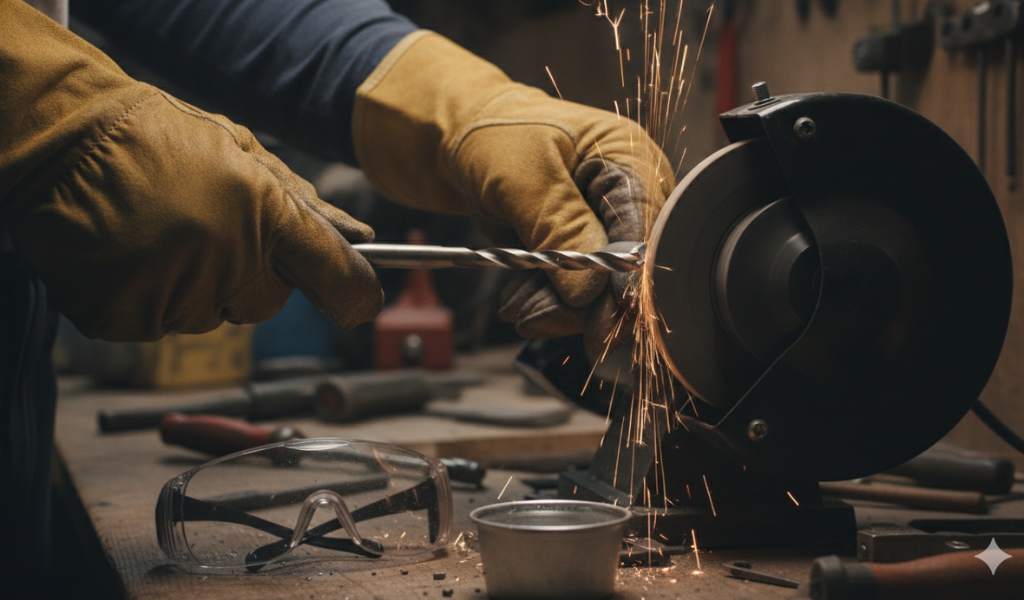
Here’s a simple step-by-step approach using a bench grinder:
With a little practice, you’ll be able to sharpen a bit in just a few minutes. It’s a handy skill that keeps your drilling smooth and your tools lasting longer.
Swapping out a drill bit is one of the most common tasks you’ll do, and it’s quick once you know the steps. Whether you’re changing a worn bit or switching to a different size, here’s how to do it safely.
Power off the machine. Always turn off and unplug the drilling machine before touching the bit. This simple step prevents accidental starts that could cause serious injury.
Loosen the chuck. The chuck is the part that grips the bit. For a keyed chuck, insert the chuck key and turn it counterclockwise. For a keyless chuck, simply grip it firmly and twist counterclockwise by hand.
Remove the old bit. Once the chuck is loose enough, gently pull the bit straight out. Be careful—the bit may still be sharp or warm from use, so keep your fingers clear of the cutting edges.
Clean the chuck. Before inserting a new bit, take a moment to wipe away any dust or metal chips inside the chuck. A clean chuck grips better and keeps your drilling accurate.
That’s it. To install a new bit, just reverse the process: insert the bit, center it, and tighten the chuck clockwise until it’s secure. Always give the new bit a quick test at low speed to make sure it’s running straight before you start drilling.
Drilling Machine Maintenance Tips
If you’re setting up a home workshop, choosing the right drill machine can feel overwhelming. You don’t need an industrial CNC machine for hanging pictures or building a bookshelf. The trick is matching the tool to the kind of projects you actually do. Here’s what to focus on.
Think about your projects. Start by asking what you’ll mostly be drilling. For light tasks around the house—wood, plastic, the occasional bit of metal—a compact upright drilling machine (pillar drill) or a quality handheld power drill is usually plenty. Heavy or specialized work calls for something more robust.
Check the power. Power matters more for harder materials. For wood and plastic, a lower-powered machine works fine. If you plan to drill into metal or masonry, look for a machine with higher torque so it won’t strain or stall.
Look at speed settings. A machine with adjustable speed is worth its weight in gold. Slower speeds suit hard materials like metal, while faster speeds work better for wood. Variable speed control gives you the flexibility to handle a range of jobs with one tool.
Consider size and storage. Home workshops often have limited space. A compact pillar drill fits neatly on a bench, while a portable drill can be tucked into a drawer. Be honest about how much room you have before buying.
Don’t forget chuck compatibility. Make sure the machine works with the drill bit sizes you’re likely to use. A standard chuck that accepts common bit sizes will cover most home projects.
Set a budget. For DIY home use, you don’t need to break the bank. A solid basic drill press typically costs between $200 and $1,000, which covers nearly every household and hobby task. Spend more only if your projects truly demand it.
A practical tip: if you’re just starting out, a versatile upright drilling machine with adjustable speeds is a smart first buy. It handles the widest range of common tasks without costing a fortune, and you can always add specialized tools later as your skills grow.
A drilling machine is one of the most useful tools you can own, whether you’re equipping a busy factory or a corner of your garage. From the precise automation of a CNC drilling machine to the simple reliability of an upright pillar drill, there’s a model built for nearly every job.
The key takeaways are simple. Understand the core components so you know how your machine works. Learn the different types so you can pick the right one for your needs. And master the basics—like sharpening and removing drill bits—to keep your tools in top shape for years to come.
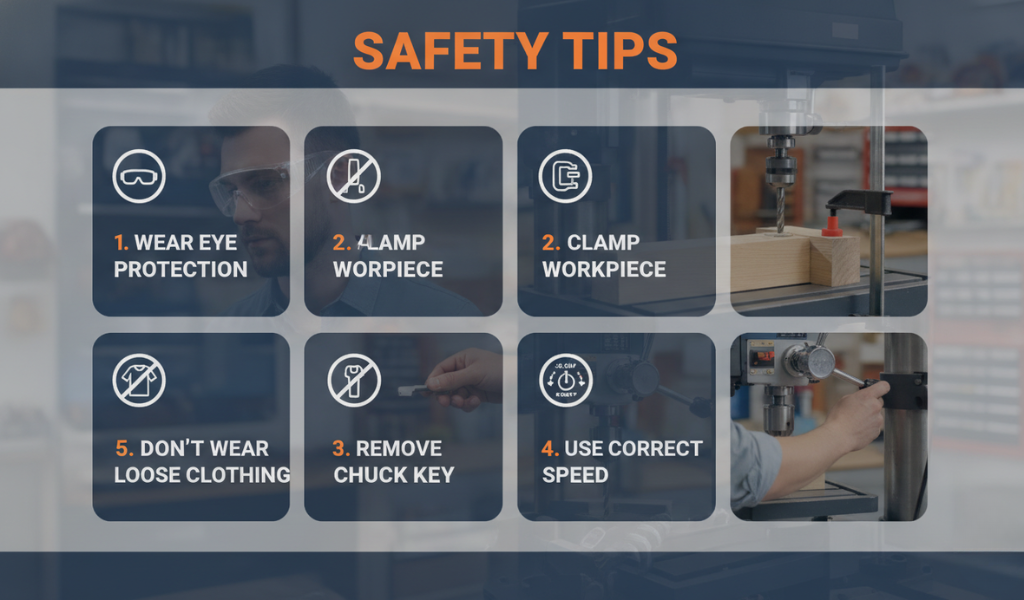
For DIY enthusiasts, the best advice is to start with a versatile, affordable machine that matches your most common projects. You can always upgrade as your skills and ambitions grow. Ready to take on your next project? Pick the right drilling machine, follow good safety habits, and you’ll be drilling clean, accurate holes in no time.
What is a drilling machine used for?
A drilling machine is used to create round holes in materials like wood, metal, plastic, and concrete. Beyond basic drilling, many machines can also perform related tasks such as reaming, countersinking, counterboring, and tapping (cutting internal threads).
What is the difference between a drill and a drilling machine?
A handheld drill is portable and great for quick, light jobs. A drilling machine (like a drill press) is usually larger, mounted in place, and offers far more power, control, and precision. For accurate, repeatable holes, a drilling machine is the better choice.
Which drilling machine is best for home use?
For most home and DIY projects, an upright drilling machine (pillar drill) with adjustable speed settings is the best all-around choice. It’s affordable, compact, and handles wood, plastic, and light metalwork with ease. A good basic model usually costs between $200 and $1,000.
How often should I sharpen my drill bits?
Sharpen your drill bits whenever you notice they’re cutting slowly, producing rough holes, or requiring extra pressure to work. With regular use, you might sharpen them every few projects. Keeping bits sharp protects both your material and your machine.
Can a drilling machine cut metal?
Yes. Drilling machines can drill through metals like steel and aluminum, as long as you use the right drill bit and the correct speed. Harder metals call for slower speeds and tougher bits, such as carbide-tipped or high-speed steel options.
Why does my drill bit keep breaking?
Drill bits usually break from too much pressure, the wrong speed, poor alignment, or using a bit not suited to the material. To prevent breakage, match the bit to your material, use a steady feed rate, and keep the bit properly aligned.