Physical Address
304 North Cardinal St.
Dorchester Center, MA 02124
Physical Address
304 North Cardinal St.
Dorchester Center, MA 02124

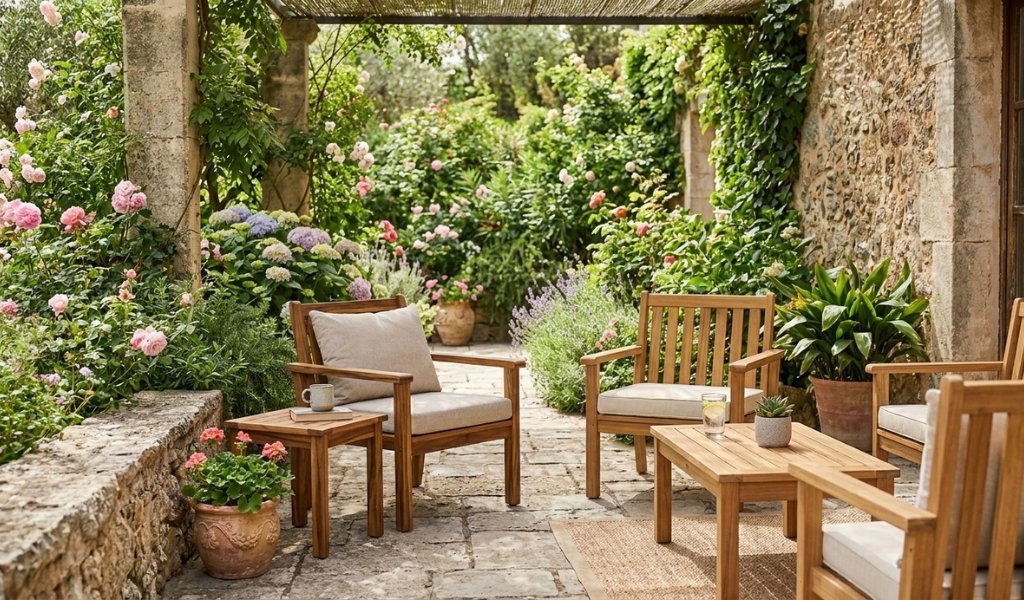
Choosing the right wood for your outdoor furniture is one of the most consequential decisions you’ll make when designing a patio or outdoor living space. Get it right, and you’re looking at decades of comfort, beauty, and structural integrity. Get it wrong, and you could be replacing warped, cracked dining sets every few years.
Two hardwoods dominate that conversation more than any other: teak and acacia. Both are dense, visually striking, and capable of handling outdoor conditions but they are not interchangeable. They differ fundamentally in their natural oil content, weather tolerance, maintenance demands, longevity, and price. If you’re deciding between acacia wood or teak wood for your next outdoor furniture purchase, the details in that comparison matter enormously.
This guide cuts through the noise. You’ll find a rigorous, side-by-side analysis of how teak and acacia perform in real outdoor environments covering everything from Janka hardness scores and moisture resistance to long-term cost-per-year value. By the end, you’ll know exactly which wood belongs on your patio.
Before diving into the technical comparisons, it helps to understand what each wood brings to the table as an outdoor furniture material literally and figuratively.
Teak (Tectona grandis) originates primarily from the tropical forests of Southeast Asia, particularly Myanmar, Thailand, and Indonesia. What separates teak wood from virtually every other timber used in outdoor settings is its remarkably high concentration of natural oils and silica. These compounds work together to form an internal barrier against moisture, rot, and insect damage without any chemical treatment whatsoever.
Freshly milled teak outdoor furniture has a warm, golden-brown color with a tight, relatively straight grain. The aesthetic is refined and consistent, which is why teak furniture appears on the decks of luxury yachts, in high-end resort settings, and in upscale outdoor dining spaces worldwide. Grade A teak harvested from the dense heartwood of mature trees aged 80 to 100 years is the gold standard, offering the highest oil density and the greatest weather resistance of any teak grade.
Structurally, teak wood furniture is exceptionally dimensionally stable. It resists swelling, shrinking, and warping even under dramatic humidity fluctuations, making it a reliable long-term investment for outdoor living spaces exposed to seasonal weather changes.
Acacia is a genus of over 1,300 tree and shrub species distributed across Australia, Asia, Africa, and parts of South America. The most commonly used types for outdoor furniture are sourced from fast-growing plantation varieties across Southeast Asia. Acacia trees grow quickly reaching harvestable maturity in as little as 10 to 15 years which makes acacia wood a far more renewable resource than teak.
As an outdoor furniture material, acacia wood delivers impressive hardness, striking grain variation, and a price point that’s substantially more accessible than teak. The grain of acacia ranges from swirling, figured patterns to more linear runs, with color variation spanning light amber to deep reddish-brown. Each piece of acacia wood furniture is visually distinctive, which appeals strongly to buyers who want character in their outdoor pieces.
Acacia performs well in outdoor environments when properly maintained, but it does not possess the same built-in weather resistance as teak. It is a strong, durable wood but one that requires more active care to maintain its structural and aesthetic integrity outdoors.
Understanding the differences between acacia and teak in controlled conditions is one thing. Seeing how each wood performs across years of outdoor exposure is another.
Teak is renowned for a reason. High-quality Grade A teak outdoor furniture can last 50 to 75 years and in some documented cases, well over a century when given basic periodic cleaning. Its natural oils provide built-in rot resistance and repel insects, including termites, without any need for chemical sealants. Teak furniture left completely untreated outdoors will still maintain its structural integrity for decades.
Acacia is strong and genuinely durable compared to many softwoods, but its lifespan in outdoor settings is significantly shorter without regular maintenance. Unsealed acacia wood furniture exposed consistently to moisture, UV rays, and temperature swings may begin showing surface cracking and structural degradation within three to five years. With proper sealing and oiling, well-maintained acacia outdoor furniture can last 10 to 20 years a solid result, but considerably shorter than teak’s potential lifespan.
For homeowners prioritizing longevity above all else, teak is the more durable wood for outdoor furniture by a wide margin.
The natural oils in teak wood are the defining factor in its outdoor performance. These oils make teak naturally hydrophobic water beads and runs off the surface rather than penetrating the wood grain. This characteristic prevents the swelling, warping, and rot that compromise most other timber species in prolonged wet conditions.
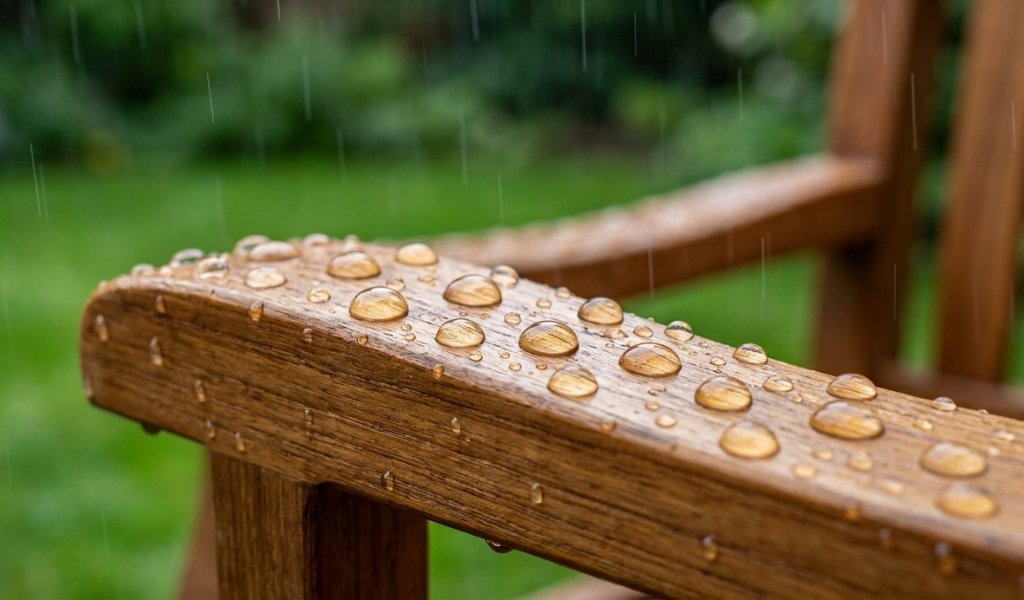
Teak outdoor furniture handles direct rain, coastal humidity, poolside splashing, and extended periods of high moisture with virtually no structural compromise.
Acacia wood has moderate natural moisture resistance, but it is not in the same category as teak when it comes to sustained outdoor exposure. Acacia needs regular sealing to create a barrier against water infiltration. Without that protective coating, moisture penetrates the grain, causing swelling during wet seasons and cracking during dry periods. In tropical or high-humidity climates, unsealed acacia outdoor furniture is especially vulnerable.
UV radiation is another challenge. Both woods fade under sustained sun exposure, but teak’s natural oil content provides a degree of internal UV resistance that slows surface degradation. Acacia wood requires UV-protective finishes to achieve comparable sun performance.
One of the most discussed aspects of teak furniture is its aging process. Left untreated outdoors, teak undergoes a gradual and visually distinctive transformation its golden-brown surface slowly oxidizes into a silver-gray patina over 6 to 12 months.
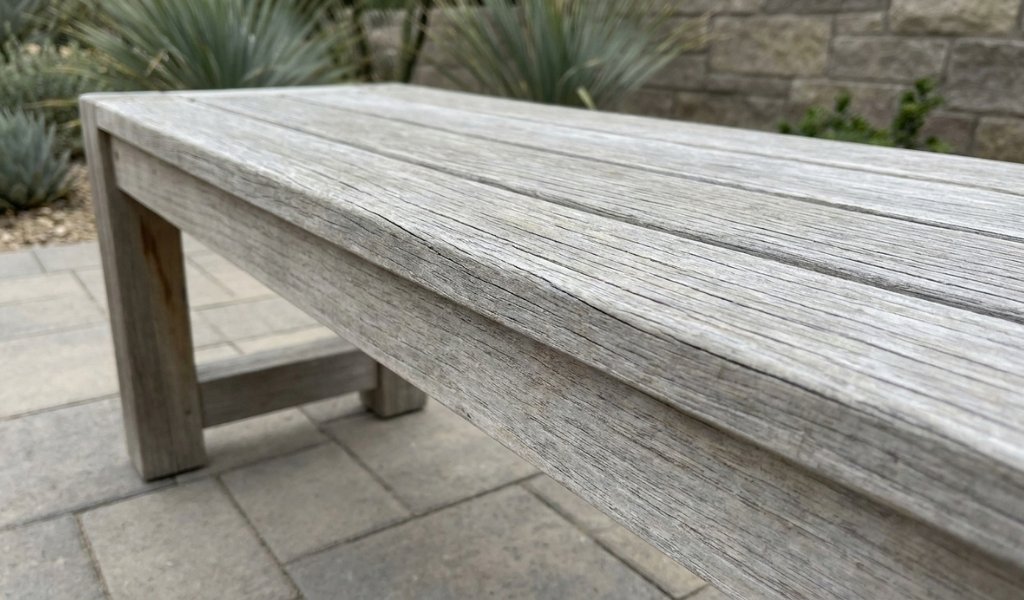
Many patio designers and outdoor living enthusiasts actively prefer this weathered aesthetic, as it lends a timeless, coastal sophistication to outdoor spaces. The patina does not signal structural damage; it is purely cosmetic. Applying teak oil periodically will preserve the original golden tone for those who prefer it.
Acacia weathers differently. Without protective treatment, acacia wood furniture will develop surface checking small, hairline cracks that appear as the wood dries unevenly. These cracks are primarily aesthetic in early stages, but they can deepen over time if the wood continues to dry out without oiling. Acacia also loses its rich color contrast more noticeably than teak, tending toward a dull, gray-brown rather than the distinguished silver transformation of aged teak.
On the Janka hardness scale the standard measure of a wood’s resistance to denting and surface wear is actually the harder species in many cases. Depending on the acacia species, hardness ratings range from approximately 1,100 lbf to over 4,000 lbf. Teak sits consistently around 2,330 lbf. This means acacia wood is generally more resistant to surface scratches and dents from physical impact.
However, Janka hardness alone does not determine outdoor suitability. Teak compensates with superior dimensional stability its dense cell structure and natural oil content prevent the expansion and contraction cycles that cause warping and joint failure in outdoor pieces. Acacia, despite its hardness, is more prone to movement in response to humidity changes. For outdoor furniture joints and structural components, this stability difference is significant.
In practical terms: acacia is harder but less stable. Teak is slightly less hard but far more dimensionally stable in outdoor conditions.
Maintenance commitment is often the deciding factor for homeowners choosing between teak and acacia for their outdoor living space.
Teak outdoor furniture is among the lowest-maintenance wood options available. Its natural oils mean it requires no sealing, no staining, and no annual treatment to remain structurally sound outdoors. Basic care involves periodic cleaning with mild soap and water to remove surface dirt, bird droppings, and algae that can develop on the silver-gray patina.
If preserving the original golden-brown color is a priority, applying a specialized teak oil or teak sealer once or twice per year is sufficient. It’s worth noting that applying teak oil too frequently can actually impede the wood’s ability to breathe and may encourage mildew growth in humid climates. Less is more with teak maintenance a single annual cleaning and an optional oil application covers most needs.
Grade A teak, with its dense oil-rich heartwood, requires even less intervention than lower-grade plantation teak, making it the preferred choice for homeowners who want beautiful outdoor furniture without ongoing upkeep commitments.
Acacia wood outdoor furniture demands a considerably more active maintenance regimen. To protect the wood from wear and tear, moisture infiltration, and UV degradation, acacia needs to be sealed with a quality outdoor wood sealant or oiled with teak oil or linseed oil every six to twelve months.
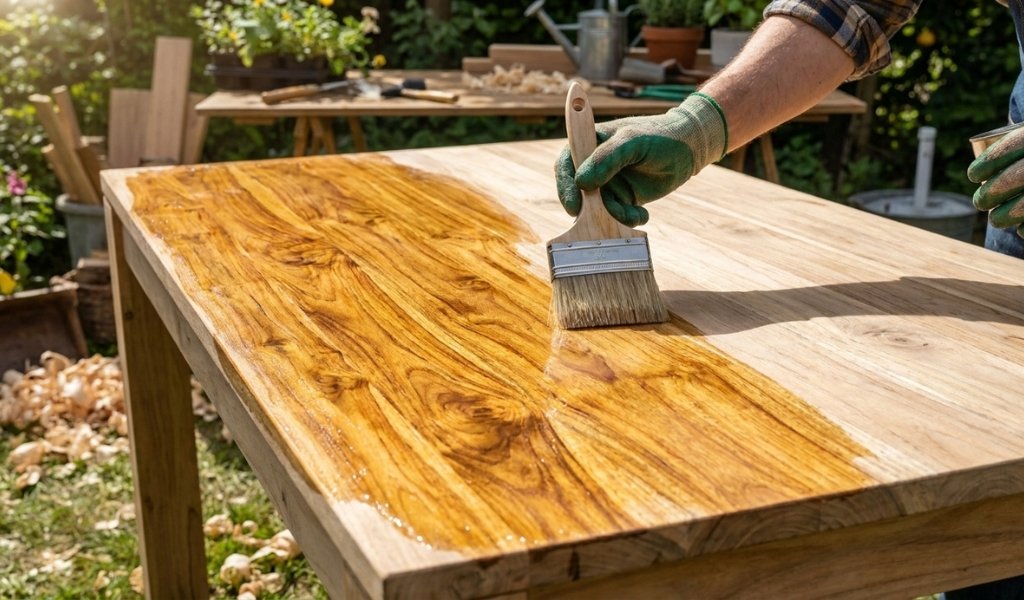
In climates with pronounced wet and dry seasons, twice-yearly treatment is strongly recommended.
Before resealing, the furniture surface should be lightly sanded and thoroughly cleaned to ensure proper adhesion. Any existing cracks should be addressed with wood filler before the new protective coat is applied. During winter or extended rainy periods, storing acacia outdoor furniture under cover or using weatherproof furniture covers dramatically extends its lifespan and reduces the maintenance burden.
Acacia is also more sensitive to direct pool chlorine and saltwater exposure than teak. Coastal homeowners or those with poolside dining sets should factor this into their maintenance schedule with more frequent rinsing and resealing.
The price of teak wood furniture reflects multiple compounding factors. First, teak trees require 80 to 100 years to reach full maturity, meaning the supply of genuinely high-quality Grade A teak is inherently limited. Second, global demand for premium teak outdoor furniture consistently exceeds sustainable supply, which drives prices upward. Third, responsible sourcing FSC-certified teak from managed plantations rather than illegally logged old-growth forests adds additional cost to the supply chain.
A quality teak outdoor dining set typically starts at $1,500 to $3,000 and can exceed $10,000 for premium collections. Individual teak lounge chairs from reputable manufacturers routinely cost $500 to $1,500 per piece. These figures are significantly higher than comparable acacia wood furniture.
The counterargument is cost-per-year. A teak outdoor furniture set that lasts 50 years at $3,000 costs roughly $60 per year. That calculation shifts the conversation from sticker shock to long-term value.
Acacia is generally three to five times cheaper than comparable teak outdoor furniture. A solid acacia wood outdoor dining set can be purchased for $400 to $1,200, making it accessible to a far wider range of homeowners and patio designers. The rapid growth cycle of acacia trees supports abundant supply, which keeps prices stable and competitive.
For buyers outfitting a seasonal vacation property, furnishing a rental space, or working within a tight budget without wanting to sacrifice the aesthetics of a genuine hardwood, acacia is the practical choice. The tradeoff is the additional maintenance cost sealing products, time investment, and potential refinishing that accumulates over the furniture’s lifespan.
Buyers should also consider that acacia furniture may need replacement more frequently than teak in outdoor settings, which affects the true long-term cost comparison.
Pros:
Cons:
Pros:
Cons:
Acacia can be used outdoors, but leaving it fully exposed to the elements without any protective treatment is not advisable. Without regular sealing or oiling, acacia wood furniture will develop surface cracking, absorb moisture, and begin degrading within a few seasons. Applying a quality outdoor wood sealant every six to twelve months and using weatherproof covers during harsh weather significantly extends its outdoor lifespan.
The primary disadvantage is its relatively high maintenance requirement compared to teak. Acacia needs regular oiling and sealing to remain weather-resistant outdoors, and it is more prone to warping, cracking, and surface degradation when that care is neglected. Its outdoor lifespan typically 10 to 20 years with proper maintenance is also considerably shorter than teak’s, which affects its long-term value for permanent outdoor installations.
Teak is widely regarded as the most durable wood for outdoor furniture. Its natural oil content provides built-in resistance to water, rot, UV rays, and insects without any chemical treatment. Grade A teak outdoor furniture can last 50 to 75 years or more in outdoor settings. Among other commonly available options, acacia is a strong second for buyers working with a tighter budget, provided they commit to a regular maintenance routine.
Teak outdoor furniture requires minimal maintenance periodic cleaning with mild soap and water, plus an optional annual application of teak oil if preserving the original color is desired. Acacia wood outdoor furniture requires significantly more active care: sealing or oiling every six to twelve months, light sanding between coats, and protective storage or covers during harsh weather. Over a 20-year period, the cumulative maintenance effort for acacia is substantially greater than for teak.
Teak is the stronger long-term investment for a permanent outdoor living space. Its exceptional durability, minimal maintenance needs, and potential 50-to-75-year lifespan translate to a lower cost per year of use over time, despite the higher upfront price. Acacia is a better short-to-medium-term investment for buyers with budget constraints or those furnishing spaces where premium longevity is less critical. For high-quality, permanent patio installations particularly outdoor dining sets and lounge furniture teak delivers superior value over the long run.
Teak and acacia are both exceptional hardwoods. The right wood for your outdoor furniture depends almost entirely on where the furniture will live, how much maintenance you’re willing to commit to, and what your budget allows.
Choose teak if your patio furniture will face year-round outdoor exposure, coastal conditions, or consistent rain and humidity. Invest in Grade A, FSC-certified teak for a permanent outdoor dining set or lounge collection that will last generations. The upfront cost is high, but the structural performance and minimal maintenance requirements justify that investment for serious outdoor living spaces.
Choose acacia if you’re furnishing a covered patio, a seasonal outdoor space, or working within a tighter budget while still wanting the warmth and character of a genuine hardwood. Commit to a twice-yearly sealing and oiling schedule, store or cover the furniture during harsh weather, and acacia will reward you with years of attractive, functional outdoor use.
Both woods can transform a patio into something genuinely beautiful. The difference lies in how much effort you want to put in and how long you want that investment to last.