Physical Address
304 North Cardinal St.
Dorchester Center, MA 02124
Physical Address
304 North Cardinal St.
Dorchester Center, MA 02124

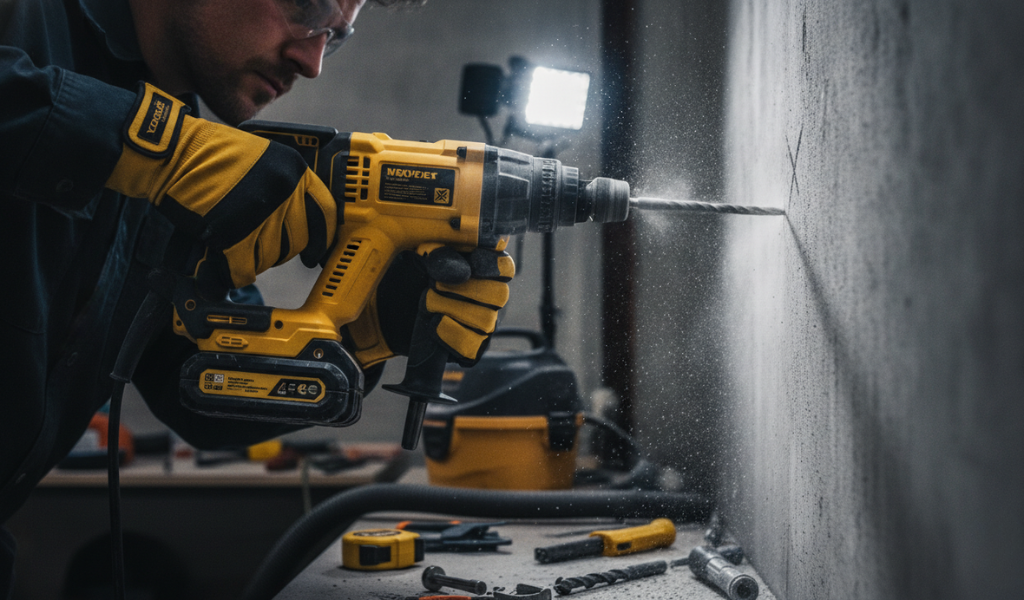
You’ve picked the perfect spot for that new shelf or heavy mirror. Then you tap the wall and hear it: solid concrete. If you’ve ever wondered how to drill into concrete without cracking the surface or ruining your drill bit, you’re in the right place. Drilling into concrete looks tough, but with the right tools and a little patience, it’s a skill almost anyone can learn.
In this guide, I’ll walk you through everything from picking the correct drill bit to handling walls, floors, and slabs safely. Whether you’re a weekend DIYer hanging picture frames or tackling a bigger home project, you’ll find practical tips you can put to use right away.
To drill into concrete, use a hammer drill or rotary hammer with a carbide-tipped masonry bit. Mark the drilling location, start with a pilot hole, drill slowly using steady pressure, clear dust regularly, and drill to the required depth before inserting anchors or fasteners.
So, what is concrete drilling, and why does it feel harder than drilling into wood or metal? The answer comes down to what concrete is made of. Concrete is a mix of cement, sand, and aggregate, which are small, hard stones. That blend of materials makes it tough and uneven to cut through.
When your drill bit hits one of those hard stones, a regular bit will simply spin, overheat, and wear out fast. That’s why concrete needs specialized tools and a slightly different approach. A standard drill might handle drywall or timber with ease, but concrete fights back.
Understanding this is the first step to getting clean, accurate holes. Use the right bit and technique, and you’ll protect both your tools and the surface from damage. Rush it with the wrong gear, and you risk cracks, broken bits, and a lot of frustration.
Getting the tools and equipment needed for drilling concrete sorted before you start saves a lot of headaches. Here’s what you’ll want on hand.
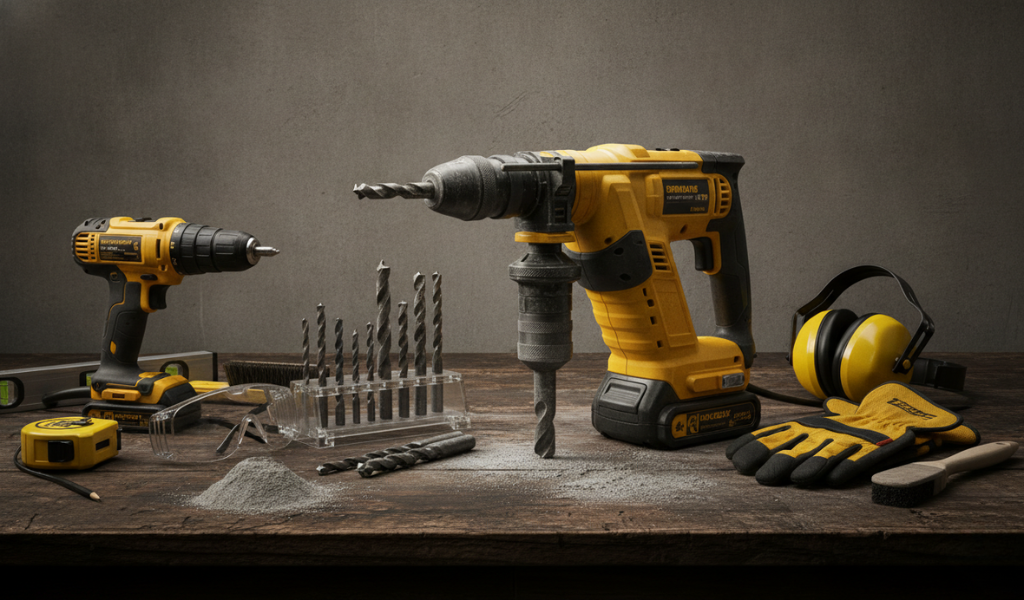
Getting the tools and equipment needed for drilling concrete sorted before you start saves a lot of headaches. Here’s what you’ll want on hand.
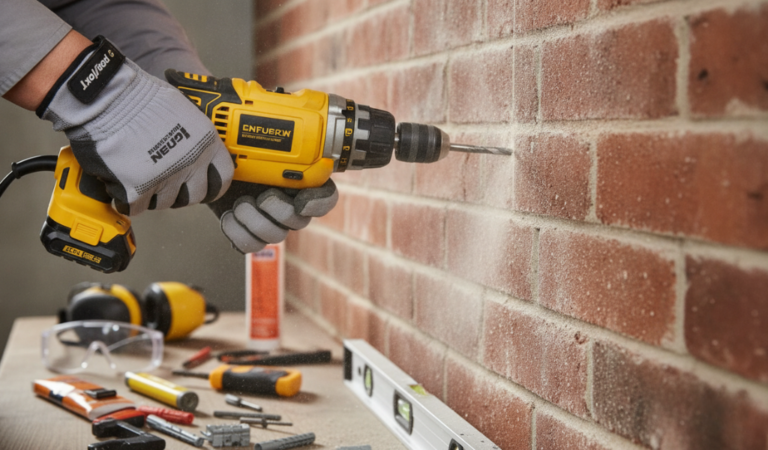
For light jobs like hanging frames or small shelves, a hammer drill works well. It combines a spinning motion with a rapid hammering action that breaks up the concrete as you go. This makes quick work of smaller holes around the home.
For bigger jobs, such as drilling wide holes or working through thick slabs, a rotary hammer is the better pick. It hits harder and keeps going longer, which makes it ideal for demanding tasks. You can technically use a regular drill for tiny holes with a masonry bit, but I wouldn’t recommend it. It tends to overheat and struggles to make real progress.
Beyond the drill itself, a few extras make the job safer and cleaner. Always grab safety glasses, work gloves, and a dust mask before you begin. Concrete drilling kicks up fine, sharp dust that you don’t want in your eyes or lungs.
You’ll also want a vacuum or brush to clear dust from the hole, plus anchors or wall plugs to hold your screws firmly in place. A clean, well-prepped hole is what keeps your fixture steady for years.
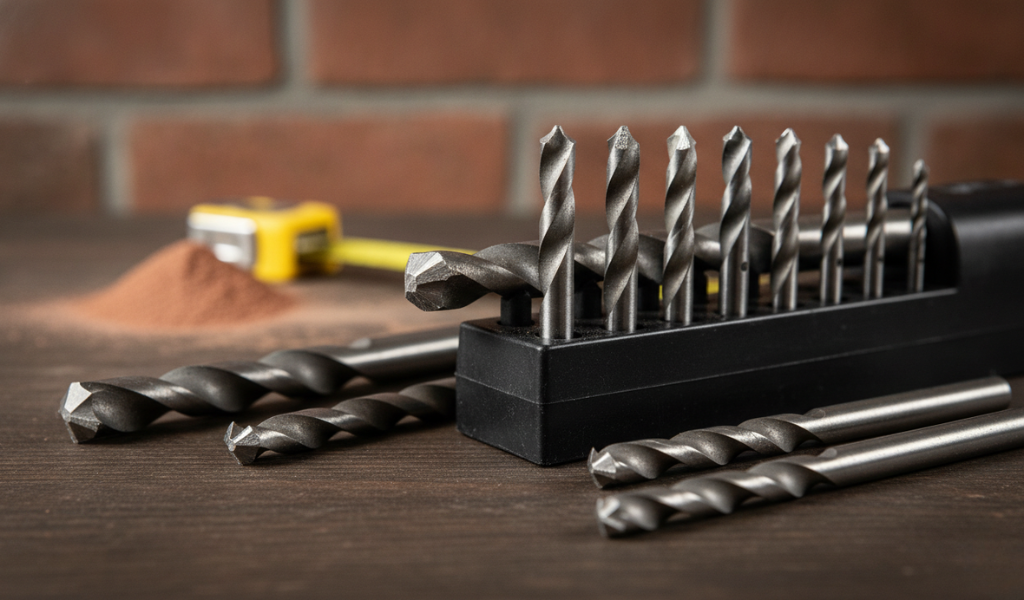
Picking the right bit matters just as much as picking the right drill. Choosing the right drill bit for concrete projects comes down to the hardness of the surface and the size of the hole you need. Here’s a quick rundown of the main types.
As a quick sizing guide, use 1/8″ to 1/4″ bits for small anchors like picture hooks, 1/4″ to 3/8″ for shelves and brackets, and 1/2″ or larger for heavy-duty jobs like railings or structural supports.
Now for the main event. Once you’ve got your tools ready, follow these steps for clean, accurate holes every time.
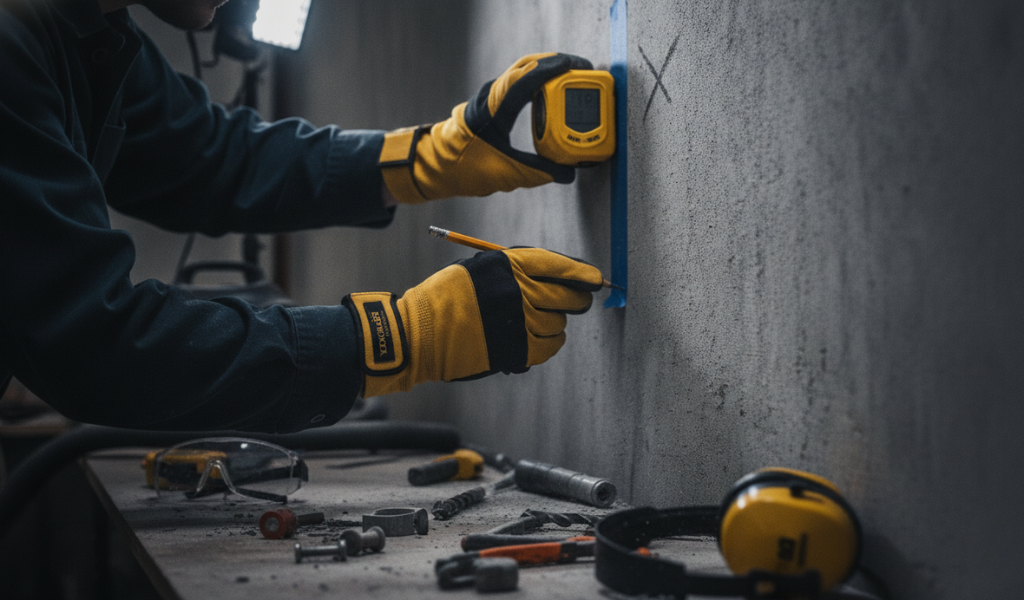
Start by marking your spot clearly with a pencil or chalk. Take your time here, because an accurate mark keeps everything else on track. If you’re drilling into a wall, run a stud finder or pipe detector over the area first to check for hidden pipes and electrical wires. The last thing you want is to drill straight into a live cable.
A handy trick is to stick a small piece of masking tape over your mark. It stops the bit from slipping on the smooth surface and helps it bite exactly where you want.
For anything bigger than a tiny hole, start with a pilot hole using a smaller masonry bit. This eases the stress on your drill and lowers the chance of cracking the concrete.
Switch your drill to the hammer setting and work in short bursts rather than one long push. Short bursts stop the bit from overheating and let you clear out dust as you go. It feels slower, but it’s actually the faster way to get a clean hole.
Depth control matters, especially for anchors that need to sit snugly. Use the depth stop on your drill, or wrap a piece of masking tape around the bit at your target depth as a visual marker. That way you won’t go too deep.
While you drill, pull the bit out every few seconds to clear away debris. This keeps it from getting stuck, cuts down on friction, and helps the hole stay even and accurate.
Once you’re done, clear out every bit of dust using a vacuum, compressed air, or a brush. A clean hole is essential for anchors and wall plugs to grip properly.
Before you insert any fasteners, double-check that the hole is deep enough and that its width matches your anchor size. A clean, well-measured hole is what makes your installation safe and long-lasting.
Not all concrete is the same, and drilling into different types of concrete surfaces calls for slightly different approaches. Here’s how to handle the most common ones.
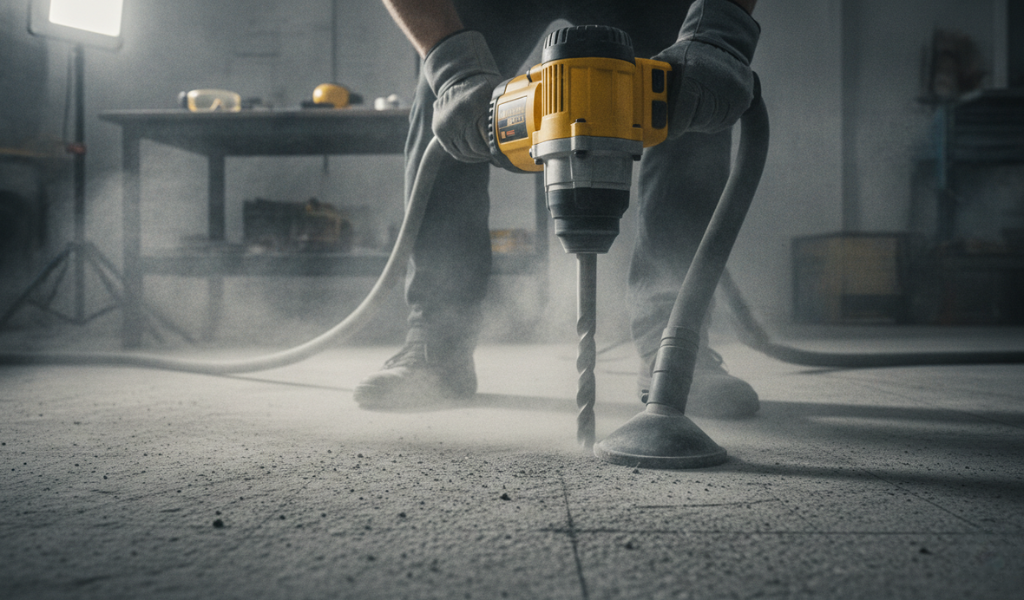
When drilling into slabs or floors, keep the surface clean and level for stability. A rotary hammer gives you the power you need for thicker slabs. Start with a pilot hole to stop the bit from wandering, and watch your depth carefully if there’s underfloor heating or buried utilities below. For wide holes, a core drill bit is your friend.
Walls need extra care because of hidden pipes and wires. Always scan the area with a stud finder or pipe detector first. Mark your spot, add masking tape, then start with a hammer drill using steady pressure. Keep an eye on the wall thickness so you don’t punch right through, and clear dust often to keep your view clear.
Going completely through concrete takes both power and patience. Use a rotary hammer with a long, quality masonry bit, and mark both sides of the surface so your hole lines up. After your pilot hole, build up the bit size gradually. Keep your pressure steady, clear debris often, and brace yourself for more vibration as you break through the other side.
Even with the right approach, concrete can throw a few curveballs. Here’s how to deal with the most common ones.
A dull bit makes concrete drilling far harder than it needs to be, so knowing how to sharpen drill bits is a handy skill. When a carbide-tipped masonry bit starts spinning without cutting, it’s often a sign the tip has worn down.
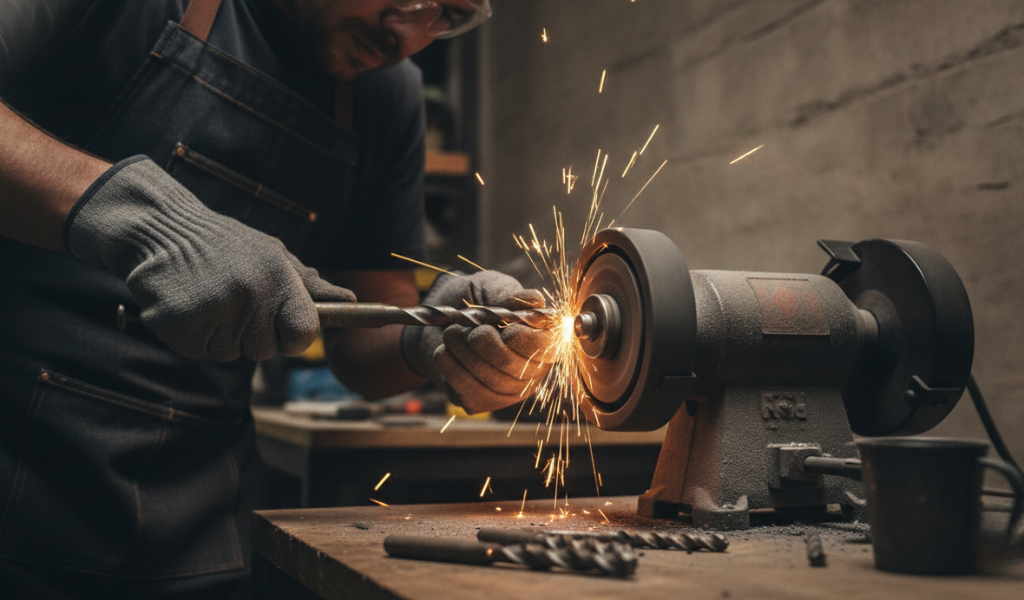
To sharpen one, you’ll need a bench grinder fitted with a wheel suited for carbide. Hold the bit at the same angle as its existing cutting edge and lightly touch it to the wheel for just a second or two. Keep the contact short and gentle, because too much heat can damage the carbide tip. Dip the bit in water now and then to keep it cool.
Work in small passes, checking the edge as you go, until the tip is sharp and even on both sides. A freshly sharpened bit cuts faster, runs cooler, and saves you money since you won’t need to replace bits as often. That said, badly damaged or chipped bits are usually better off replaced.
Safety should always come first on any drilling job. Keep these safety tips in mind every time you pick up the drill:
Drilling into concrete really isn’t as scary as it first seems. The secret is in the prep: choose the right drill, fit a quality carbide-tipped bit, mark your spot carefully, and work in short, patient bursts. Add proper safety gear and a clean hole at the end, and you’ll get solid, professional-looking results every time.
Now that you know how to drill into concrete the right way, it’s time to put it into practice. Gather your tools, take it slow on your first hole, and you’ll be hanging shelves and mounting fixtures with confidence in no time. Got a project lined up? Grab your gear and give it a go.
You can use a regular drill with a masonry bit for very small holes, but it isn’t recommended. Hammer drills and rotary hammers are built to break through concrete without overheating, so they make the job faster and protect your tools.
For most jobs, a carbide-tipped masonry bit is the best choice thanks to its durability. For very hard surfaces like granite or tile, go with a diamond-tipped bit. For large holes, use a core drill bit.
Start with a pilot hole, drill in short bursts, and use steady, moderate pressure. Don’t force the bit, and always match the bit to the type of concrete you’re working with.
It depends on the anchor and the load, but a common rule is to drill deep enough for the anchor to sit fully below the surface. Always check the depth requirement listed on your specific anchor’s packaging.
Stop drilling and let the bit cool down. Overheating dulls the bit and can damage your drill. Drilling in short bursts and clearing debris often helps keep the temperature down.
Sharpen a masonry bit whenever it starts spinning without cutting or takes noticeably longer to make a hole. Regular sharpening keeps it cutting cleanly and saves you from buying replacements too soon.