Physical Address
304 North Cardinal St.
Dorchester Center, MA 02124
Physical Address
304 North Cardinal St.
Dorchester Center, MA 02124

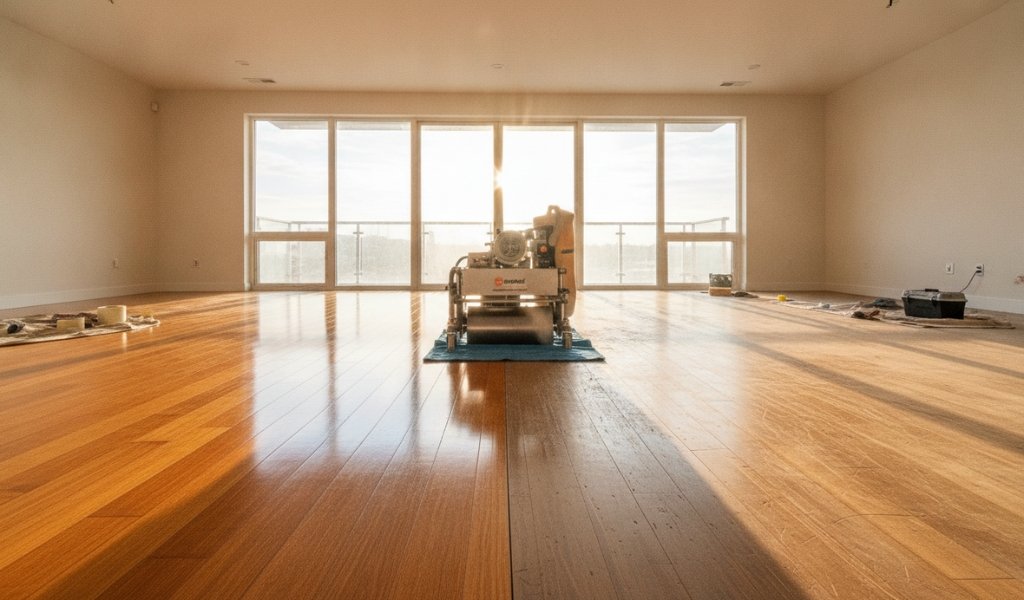
Bamboo floors look stunning when they’re new—clean grain lines, a smooth finish, and a warmth that works in almost any room. But after years of foot traffic, pets, and everyday wear and tear, even the most durable bamboo plank starts to show scratches, fade, or dull patches. At that point, homeowners naturally ask: can you sand bamboo flooring the same way you’d sand and refinish a traditional hardwood floor?
The short answer is yes—but with serious caveats. Bamboo is not wood. It’s a fibrous grass product with a high silica content, and that distinction changes everything about how you approach the sanding process. Before diving into the technical steps, you can check out our ultimate guide to woodworking sanding techniques to understand the core mechanics of surface prep. That foundation will make the bamboo-specific steps below much easier to follow.
This complete guide walks you through everything you need to know—from assessing whether your floors are even ready for refinishing, to choosing the right sandpaper grit, applying a protective coat, and keeping your newly refinished bamboo floors looking great for years to come.
Bamboo flooring occupies a strange middle ground in the flooring material world. It looks and installs like hardwood, but it behaves differently under a drum sander. The reason comes down to biology: bamboo is a grass, not a tree. Its cellular structure is dense and fibrous, and it contains significantly more silica than traditional hardwood floors. Silica is the same compound found in glass and quartz—it’s extremely abrasive, and it destroys sandpaper faster than oak or maple ever would.
This means your sandpaper grits will dull more quickly, your passes need to be more controlled, and the risk of uneven sanding or splintering is much higher than with a conventional hardwood floor refinishing project. With that technical reality in mind, the first thing to determine is what type of bamboo floor you’re actually working with.
There are three main bamboo floor constructions, and each has a different relationship with the sanding process:
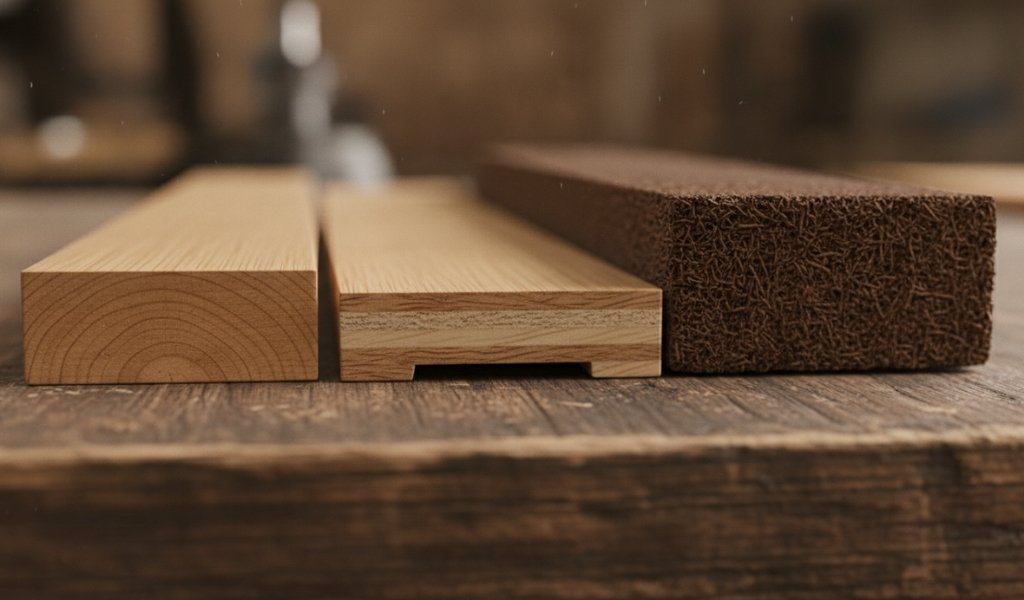
Before you sand and refinish bamboo floors, measure or verify the wear layer thickness. Most solid bamboo floors have a wear layer between 3mm and 6mm above the tongue-and-groove joint. Engineered bamboo can be as thin as 0.5mm. A drum sander removes roughly 0.5mm to 1mm of material per full sanding session. If your floor has already been refinished once, or if the planks are thin to begin with, you may not have enough material left to sand without compromising the structural integrity of the floor.
When in doubt, consult the manufacturer’s specs or pull a plank from a low-visibility area and measure the remaining wear layer yourself.
Refinishing bamboo is a significant home improvement project. The fact that it’s difficult to sand compared to traditional hardwood floors means it’s worth slowing down before you rent a drum sander and commit.
If your floors have a dull, scratched existing finish but the bamboo itself isn’t physically damaged, you may not need to sand down to bare wood at all. A screen and recoat—also called a buff and recoat—involves lightly abrading the existing finish with a fine-grit screen pad and applying a fresh coat of finish on top.
This approach works well when:
A screen and recoat is faster, cheaper, and far less risky than a full sand-and-refinish job. For many homeowners, it’s the right call. You’ll use a buffer with a maroon or gray abrasive pad, clean thoroughly, and apply one to two coats of compatible finish. Always test adhesion in a small area first—some finishes, particularly UV-cured factory coatings, won’t bond well to additional coats of polyurethane or oil-based sealer without proper prep.
Most experienced DIYers who have refinished oak or pine floors before assume bamboo refinishing follows the same logic. It doesn’t. The high silica content in bamboo dulls sandpaper rapidly, which tempts users to apply more pressure or move slower—both of which cause gouges, uneven sanding, and splintering across the grain. Strand-woven bamboo is especially unforgiving.
If your floor is engineered bamboo with a thin veneer, a professional hardwood floor refinishing contractor is almost always the right choice. The margin for error is too small. For thicker solid or strand-woven bamboo, an experienced DIYer can do the job—but it requires careful preparation, the right equipment, and patience. Renting a drum sander from a hardware store is possible; just know that bamboo will eat through your sandpaper inventory faster than any other flooring material.
Start by clearing the room entirely—furniture, rugs, and all floor-level fixtures. Check every plank for signs of moisture damage, subfloor separation, or hollow spots (tap with a rubber mallet). Any planks that are buckling or delaminating need to be repaired or replaced before sanding begins. Sanding over damaged bamboo will only make the problem worse.
Seal HVAC vents with plastic sheeting to prevent dust from circulating through your home. For dust-free sanding, consider renting a drum sander with a built-in dust collection system. Change the dust bag frequently—bamboo generates fine, dense dust that clogs collection bags faster than wood dust.
Ensure the room is at a stable temperature and humidity (ideally 60–70°F and 35–55% relative humidity). Bamboo is sensitive to moisture; sanding in a humid environment can cause the bare wood or bamboo fibers to swell unevenly.
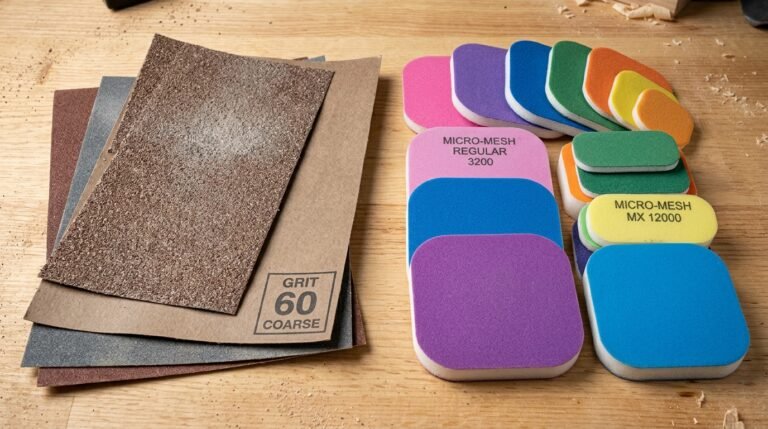
Grit selection is where bamboo diverges sharply from traditional hardwood floor prep. For most hardwood floors, a standard progression might start at 36 grit or 40 grit for heavy stock removal. For bamboo, avoid anything coarser than 60 grit on your first pass—the silica content means an aggressive 36 grit can tear through the fibrous surface unevenly, leaving deep scratches that are difficult to remove.
A recommended grit progression for bamboo flooring:
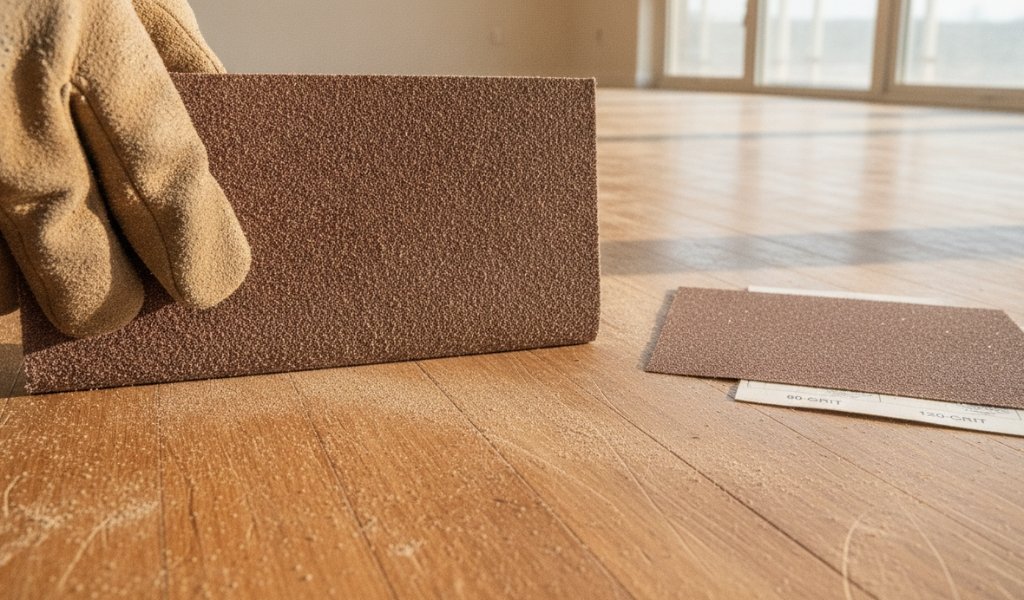
Keep extra sandpaper on hand. Due to the silica content, bamboo dulls abrasives roughly twice as fast as oak flooring. Trying to push a worn-out piece of sandpaper through its last pass will result in an uneven scratch pattern that shows through your final coat of finish.
With a drum sander, always sand in the direction of the plank—never across the grain. On horizontal and vertical bamboo, this is straightforward. On strand-woven bamboo, the compressed fibrous structure doesn’t have a clear grain direction, which makes it more prone to splintering regardless of direction. On strand-woven floors, keep the sander moving evenly at all times; stopping in place for even a fraction of a second will create a visible depression.
Maintain a consistent, steady pace. On bamboo, slower isn’t always better—a sander that lingers too long in one spot removes material unevenly and can create dips across the plank. Use an edger or a hand scraper for corners and edges, taking the same grit-progression approach you used with the drum sander.
Once sanding is complete, vacuum the entire floor thoroughly—twice. Then wipe the surface with a slightly damp microfiber pad to pick up residue the vacuum missed. After the floor dries, inspect the surface under raking light (a flashlight held at a low angle works well) to check for sanding marks, gouges, or uneven patches.
Any gouges at this stage need to be filled with a color-matched bamboo filler and allowed to fully cure before you move to finishing. Skipping this step means every gouge will telegraph through your coat of finish and become more visible once the floor is sealed.
Staining bamboo is significantly more unpredictable than staining traditional hardwood. The dense, fibrous cellular structure doesn’t absorb stain as evenly as wood, which can result in a blotchy or streaky appearance—particularly on natural and carbonized bamboo. Carbonized bamboo (which has been heat-treated to achieve its amber, caramel tone) is especially prone to uneven staining because the carbonization process alters the cellulose structure.
To stain bamboo effectively:
Once the stain (if used) has fully cured, you need to apply a protective finish. The two main options are polyurethane and oil-based sealers, each with trade-offs.
Oil-based polyurethane: Durable, hard-wearing, and provides excellent resistance against scratches and moisture. The downside is that it tends to amber over time—which may or may not be desirable depending on your bamboo’s color. Oil-based poly also has high VOCs, requires good ventilation during application, and takes longer to cure (typically 24 hours between coats). That said, for high-traffic areas, oil-based polyurethane remains the most durable option.
Water-based polyurethane: Lower VOCs, dries clear without the amber tint, and cures faster—typically 4–6 hours between coats. Brands like Bona offer water-based finishes specifically formulated for hardwood and bamboo floors. The trade-off is that water-based finishes are generally slightly less resistant to deep scratching and heavy impact than oil-based formulas.
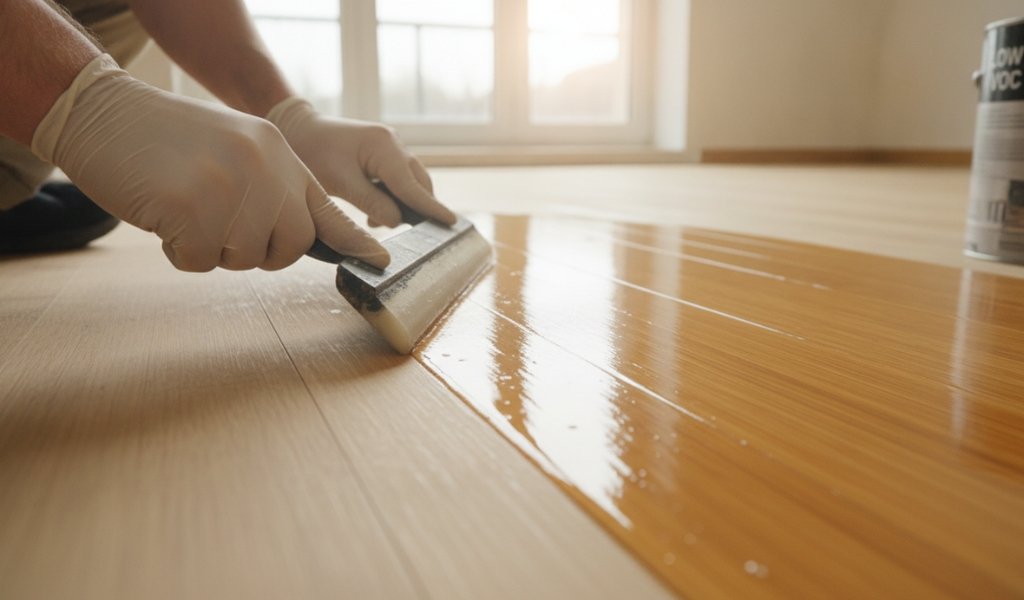
Oil sealers (penetrating oils): Products like Rubio Monocoat or Osmo Hardwax Oil penetrate the bamboo surface rather than forming a surface film. These eco-friendly finishes are easier to spot-repair than polyurethane—damaged areas can be re-oiled without refinishing the entire floor. However, they offer less protection against moisture and require periodic reapplication.
For most homeowners refinishing bamboo floors in a house with pets or children, a water-based polyurethane with two to three coats offers the best balance of durability, appearance, and low-odor application.
Once your floors are ready for refinishing and then sealed, protecting that investment comes down to daily habits. Bamboo is more moisture-sensitive than many homeowners expect, and the wrong cleaner can strip or cloud your finish over time.
Use these cleaners:
Avoid these:
Place felt pads under all furniture legs, use rugs in high-traffic transition areas, and trim pet nails regularly. Even the most durable strand-woven bamboo will scratch under the consistent drag of a chair without protection.
Need to recoat down the line? Bona’s Prep+ system or a light screen-and-buff is typically all that’s needed to enhance adhesion before applying a fresh coat of finish—no need to sand back to bare wood for routine maintenance.
Yes—and the difficulty comes down to two factors. First, bamboo’s high silica content dulls sandpaper rapidly, which increases costs and the risk of uneven abrasion. Second, bamboo is a fibrous grass product, not a wood, so it doesn’t respond to sanding and staining the way a traditional hardwood floor does. Oak has a consistent, open grain that accepts stain evenly and tolerates aggressive sanding without splintering. Bamboo—especially strand-woven bamboo—is dense, brittle at the fiber level, and far less forgiving of technique errors. A professional refinishing job that takes two days on an oak floor may take three to four days on bamboo to achieve comparable results.
Yes, in certain situations. If the damage is limited to the finish layer (surface scratches, dullness, or minor scuffs) and the bamboo plank itself is structurally intact, a screen and recoat is a viable option. This process lightly abrades the existing finish with a buffer pad—not a drum sander—to create adhesion for a fresh coat of finish. It doesn’t restore the bamboo grain or remove deep scratches, but it dramatically improves appearance without the risk of sanding through the wear layer. Engineered bamboo floors with thin veneers should almost always be screened and recoated rather than sanded.
Despite its popularity as a durable and eco-friendly flooring material, bamboo has several documented drawbacks. It’s highly sensitive to moisture and humidity fluctuations—more so than many hardwood floors—and can swell, warp, or separate in environments with inconsistent climate control. Low-quality bamboo products often use formaldehyde-heavy adhesives in manufacturing, which can off-gas VOCs over time. It’s also difficult to sand and refinish, limiting restoration options compared to solid hardwood. Carbonized bamboo, while visually appealing, is softer than natural bamboo because the heat treatment process reduces the tensile strength of the fibers—making it more prone to denting under heavy furniture or stiletto heels.
No. Pine-Sol and similar oil-soap or surfactant-based cleaners are not suitable for bamboo or hardwood floors with a polyurethane or oil-based finish. These products leave a waxy, soapy residue on the surface that builds up with repeated use. Over time, this residue creates a cloudy, dull appearance and—critically—prevents future coats of finish from bonding properly. If you ever need to recoat your floors, the residue layer will cause adhesion failure, resulting in peeling or flaking. Stick to pH-neutral, residue-free hardwood floor cleaners like Bona, or simply use a lightly dampened microfiber mop with clean water.
Far less frequently than most homeowners assume. A solid bamboo floor with a 4–6mm wear layer can typically be sanded one to two times over its lifespan before the wear layer becomes too thin. Strand-woven bamboo, despite being extremely durable, carries the same risk—its density doesn’t translate into a thicker wear layer. For engineered bamboo, the answer may be zero full sandings; screen and recoat is the appropriate maintenance strategy. Rather than sanding on a fixed schedule, assess your floors visually and physically. If the finish is worn through and the bare bamboo is exposed, it’s time to sand and refinish. If the finish is just dull or scratched, a recoat will restore it without the risk.