Physical Address
304 North Cardinal St.
Dorchester Center, MA 02124
Physical Address
304 North Cardinal St.
Dorchester Center, MA 02124

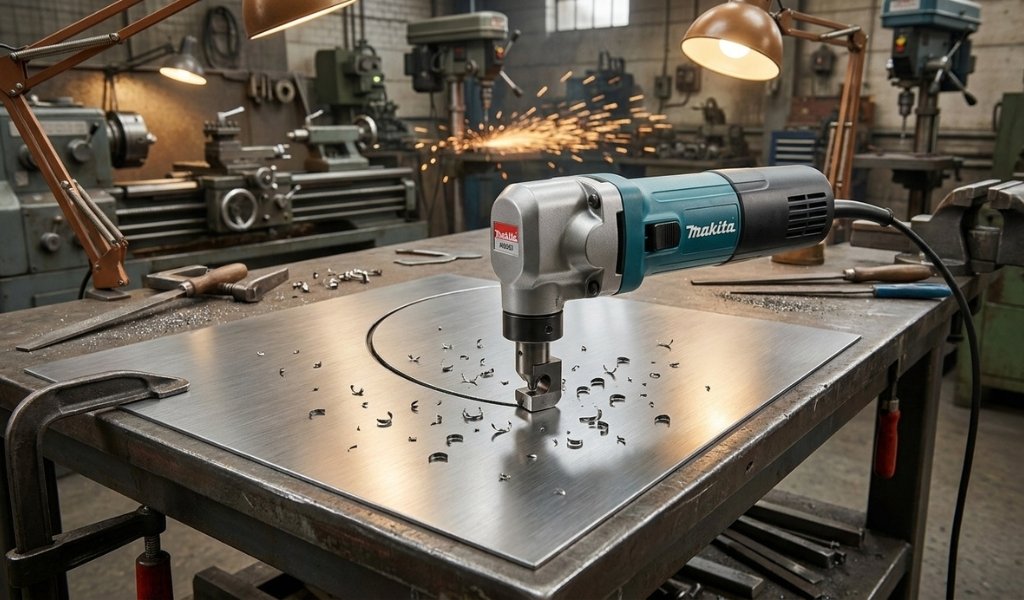
Few cutting tools generate as much confusion as the nibbler. Ask ten metalworkers which tool they reach for when cutting sheet metal, and you’ll get ten different answers each shaped by the specific demands of their trade. Roofers swear by them for corrugated panels. HVAC technicians lean on them for duct openings. Automotive restorers treat them as non-negotiable for curved bodywork repairs.
So what exactly is a nibbler, and why does it earn such devoted loyalty across so many trades?
At its core, a nibbler is a sheet metal cutting tool that removes material through a rapid punch-and-die mechanism, producing clean, burr-free edges without distorting the surrounding metal. That distinction cutting without distortion is what separates it from angle grinders, tin snips, and shears. And it’s what makes it the right tool for certain jobs where other cutting tools fall short.
Before diving into the mechanics, types, and applications in detail, it’s worth understanding how the nibbler stacks up against its closest rival. Our full breakdown on Nibbler vs Shears: Which Metal Cutting Tool Is Best for Your Project? covers that comparison in depth. For now, this guide focuses specifically on what a nibbler is, how it works, which version suits which job, and how to use and maintain one safely.
A nibbler is a metal cutting tool that cuts sheet metal by punching out a continuous series of small, overlapping crescent-shaped chips as the tool advances through the material. Unlike shears or snips that apply lateral pressure to slice metal, the nibbler punches vertically straight through the sheet removing a narrow channel of material rather than bending or displacing it.
This is the critical mechanical difference. When shears cut, they apply shearing stress along the plane of the material. That pressure can cause the sheet to bow, curl, or warp along the cut line, especially with thinner gauges. The nibbler avoids that problem entirely. Because the cutting action is perpendicular to the sheet rather than lateral, the metal on either side of the cut path remains flat and undisturbed. No distortion. No stress warping.
This punch-and-die architecture makes the nibbler tool an essential piece of equipment whenever the finished sheet needs to stay dimensionally accurate roofing panels that must lie flat against battens, HVAC duct sections that need tight seams, or automotive skins where any warp means a visible ripple in the paint.
The die is the fixed lower component. The punch is the moving upper element that drives downward into the die with each stroke. Together, they function like a tiny, high-speed hole punch except instead of making isolated holes, the nibbler advances continuously, creating a connected cutting path through the sheet.
Each stroke of the punch removes a small chunk of sheet metal typically crescent or C-shaped and ejects it as a chip. The punch then retracts, the tool advances a fraction of an inch, and the cycle repeats. In a powered metal nibbler, this happens hundreds or even thousands of times per minute, producing a cutting speed that feels fluid and continuous to the operator.
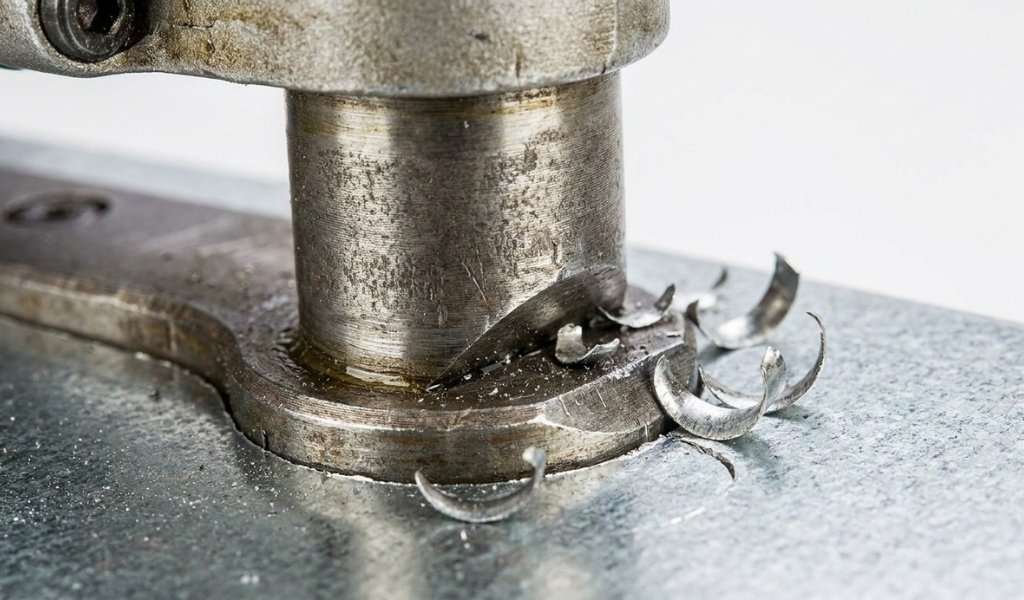
The width of the cutting path corresponds to the diameter of the punch. Most standard nibblers cut a channel roughly 6–8mm wide. That narrow channel is what allows the tool to navigate tight radius curves and complex shapesn the cutting head doesn’t need a wide turning arc the way shears do.
One additional feature distinguishes quality nibbler tools: the ability to rotate the cutting head. Because the punch-and-die assembly can typically swivel 360 degrees, the operator can redirect the cut at any angle without repositioning the workpiece. This makes it possible to cut patterns out of sheet metal with a freedom of movement that no other hand-held cutting tool can match.
The simplest form is the manual nibbler, also called a hand nibbler. It operates via a hand-squeeze mechanism each squeeze of the handle drives the punch through the sheet metal, advancing the tool incrementally. Manual nibblers are slow compared to powered versions, but they give the operator precise, tactile control. They’re best suited for light gauge sheet metal repairs, small cutouts, and situations where power tools aren’t accessible.
The drill attachment sheet metal nibbler is a step up from the fully manual version. This type mounts directly into the chuck of a standard power drill, using the drill’s rotational power to drive the punch-and-die mechanism. It converts a tool most metalworkers already own into a functional nibbler. Performance is limited by the drill’s torque output, making it most effective on lighter gauges typically 18 GA and thinner. For occasional sheet metal fabrication work, it’s a cost-effective entry point.
The electric nibbler is the workhorse of professional sheet metal cutting. Corded models deliver consistent power for extended cutting sessions, with stroke rates measured in strokes per minute (SPM). Higher SPM ratings mean smoother, faster cuts through sheet metal at high speed. Most professional-grade electric nibblers handle steel up to 14–16 GA and aluminum up to 12 GA, depending on the motor output.
Cordless nibblers operate on the same punch-and-die mechanism but draw power from a lithium-ion battery pack. For roofers cutting corrugated sheet metal panels on-site or HVAC technicians working in confined ceiling spaces, the absence of a power cord is a significant practical advantage. Battery technology has advanced to the point where modern cordless nibblers can sustain heavy duty sheet metal work through a full shift on a single charge.
The pneumatic metal nibbler uses compressed air rather than an electric motor to drive the punch. These tools are favored in industrial and fabrication shop environments where compressed air lines are already installed. Pneumatic nibblers tend to be lighter than their electric counterparts, which reduces operator fatigue during extended use. They also handle continuous operation better than electric motors in high-temperature environments.
A benchtop sheet metal cutter is a stationary version of the nibbler concept. Rather than moving the tool through the material, the operator feeds the sheet metal through the machine’s fixed cutting head. This configuration is particularly valuable for repetitive template work and fabrication runs where consistent, accurate cuts are needed across multiple pieces. Both hands remain free to guide the material, which improves precision on complex shapes.
Specialized profiled sheet nibblers are designed specifically for corrugated and trapezoidal roofing panels. Standard cutting tools struggle with profiled sheets because the ridges and valleys make it impossible to maintain consistent contact between the blade and the material. A profiled nibbler’s cutting head is shaped to follow the panel’s geometry, cutting through the peaks and valleys without flattening or deforming the profile. For metal roofing contractors, this type of nibbler is the best tool for the job often the only viable option.
Corrugated sheet metal presents a cutting challenge that most tools simply cannot solve cleanly. Angle grinders generate heat and sparks that can compromise protective coatings. Tin snips distort the ridges around the cut. Circular saw blades with metal-cutting teeth can crack pre-painted coatings and leave ragged edges.
The nibbler cuts through corrugated sheet metal precisely without damaging the profile or the surrounding coating. The punch-and-die mechanism moves over the ridges and through the valleys with equal ease, maintaining consistent cutting pressure regardless of the panel’s geometry. This makes it the standard tool of choice for roofers cutting panels to length, trimming around penetrations, and shaping hip and valley cuts on metal roofing installations.
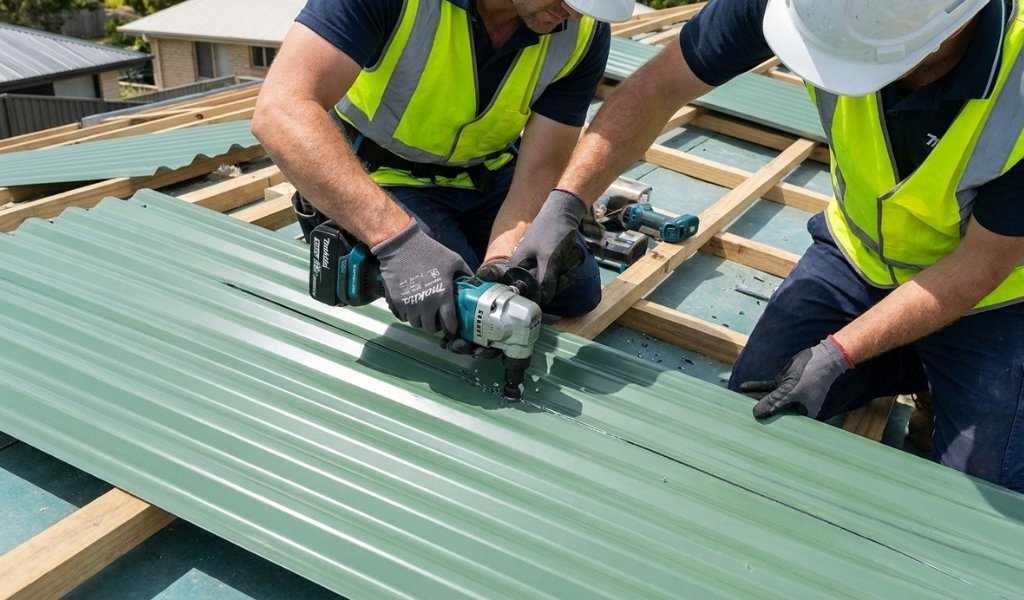
Metal siding applications follow the same logic. Cutting aluminum cladding, steel weatherboards, and composite metal panels around windows, doors, and service penetrations requires clean edges and zero distortion. A nibbler delivers both consistently.
The ability to cut patterns out of sheet metal without stopping or repositioning the workpiece is the nibbler’s defining capability. Because the cutting head removes material rather than bending it, and because the head can rotate to any angle, the operator can trace complex curves, circles, and irregular shapes in a single continuous pass.
To cut a tight radius, the operator slows the advance speed and rotates the cutting head progressively through the turn. The nibbler leaves behind a narrow kerf rather than a wide cut path, which means even small-radius curves remain clean and accurate. Compare this to shears shears can cut curves, but their wide cutting heads limit how tight those curves can be. Nibblers handle interior curves and exterior profiles that would be impossible with any other hand-held cutting tool.
For installations requiring cutouts in the middle of a panel vent openings in roofing, access hatches in cladding, or service holes in HVAC duct panels the nibbler is the only hand tool that can start a cut without access to the sheet’s edge. Drill a pilot hole large enough to accept the cutting head, insert the tool, and cut outward from the center. Shears and snips cannot do this.
Nibbler tools are rated by material type and gauge capacity. Aluminum is the easiest metal to work with most mid-range nibblers handle aluminum sheet up to 10 or 12 GA without difficulty. Mild steel typically falls in the 14–18 GA range for standard models, with heavy duty sheet metal nibblers reaching 14 GA or heavier.
Stainless steel demands more from the tool. The hardness of the alloy accelerates punch and die wear, so operators working with stainless steel regularly should invest in punch-and-die sets specifically rated for harder alloys. Using a standard die set on stainless steel leads to faster wear, rougher edges, and ultimately higher maintenance costs.
HVAC ductwork is one of the nibbler’s most consistent professional applications. Galvanized steel duct sections require frequent field trimming and hole-cutting for registers, dampers, and connections. A cordless or pneumatic nibbler handles these tasks cleanly, producing burr-free edges that mate properly with duct fittings without requiring additional finishing work.
Some modern nibbler models also cut non-metallic sheets fiberglass panels, certain plastics, and composite cladding materials. Check the tool’s rating before attempting non-metallic cuts, as punch geometry and stroke speed requirements differ from those for metal.
The most significant practical benefit of the nibbler is edge quality. Cutting sheet metal with an angle grinder leaves a rough, burr-heavy edge that requires grinding and deburring before it’s safe to handle. Tin snips distort the cut edge. Even quality shears can leave a slightly ragged finish on harder materials. A properly maintained nibbler produces a clean, smooth cut edge with minimal burring often usable without any secondary finishing.
The absence of distortion is equally important. Because the nibbler cuts without applying lateral pressure, the sheet stays flat throughout the operation. This matters enormously in sheet metal fabrication where dimensional accuracy is critical. Panels that will be visible in the finished installation roofing, cladding, architectural metalwork need to remain perfectly flat after cutting.
Nibblers also protect surface coatings. Pre-painted metal panels are common in both roofing and cladding applications, and any tool that drags a blade across the surface risks scratching or chipping the coating. The nibbler’s punch acts on a tiny area at the cut line, leaving the surrounding coating untouched.
The nibbler’s most significant drawback is the waste it generates. Every stroke of the punch ejects a small crescent chip of metal. Over the course of a long cut, these chips accumulate rapidly and they are razor-sharp. Nibbler chips stick to clothing, embed in boot soles, and scatter across the work surface. Managing this waste is not optional; it’s a safety obligation.
Straight-line accuracy is another limitation. Without a straightedge guide clamped to the workpiece, maintaining a perfectly straight cut line over a long distance is genuinely difficult. The nibbler tends to drift, particularly at higher cutting speeds. For long straight cuts across flat sheet, shears are a faster and more reliable tool.
Gauge capacity also limits the nibbler’s scope. Heavy-gauge steel above 14 GA exceeds the capability of most standard nibblers. Forcing a nibbler through material that exceeds its rated capacity accelerates punch and die wear, strains the motor, and produces a rougher cut. Knowing the tool’s gauge limit and working within it is essential for consistent results and tool longevity.
Understanding how a nibbler works versus how shears work clarifies which tool belongs on which job. Shears use two blades one stationary, one moving that pass each other in a scissor-like action. The metal between the blades is sheared rather than punched, which is why shears excel at long, fast, straight cuts on flat sheet. The blade geometry acts as a natural guide along a straight line, and the continuous slicing action is more efficient than punching individual chips for high-speed linear work.
Where shears struggle is with curves, profiles, and internal cutouts. A standard pair of shears must approach the cut from the sheet’s edge there’s no way to start mid-panel. And while shears can cut curves to some degree, their minimum turning radius is far larger than a nibbler’s. Tight internal curves, complex shapes, and corrugated profiles are effectively beyond what shears handle well.
Single-cut shears introduce another variable: edge distortion. The shearing action bends the waste side of the cut, and on thinner gauges, this distortion can extend slightly into the workpiece. Double-cut shears address this by removing a thin waste strip, keeping both sides of the cut flat but they produce their own strip of waste metal.
The practical decision rule is straightforward. Use shears when the cut is primarily straight and speed matters. Use a nibbler when the cut involves curves, profiles, interior shapes, or corrugated material where distortion cannot be tolerated. For a comprehensive side-by-side analysis, the Nibbler vs Shears: Which Metal Cutting Tool Is Best for Your Project? guide covers every performance variable in detail.
Safe nibbler operation begins before the tool is switched on. Eye protection is non-negotiable the crescent chips ejected by the punch travel at speed and can cause serious eye injury. Standard safety glasses are the minimum; goggles offer better protection when cutting overhead or in confined spaces.
Gloves protect against cut edges but require careful selection. Thick work gloves reduce dexterity and can make it harder to control the tool precisely. Cut-resistant gloves that remain relatively thin are the better option for sheet metal fabrication work.
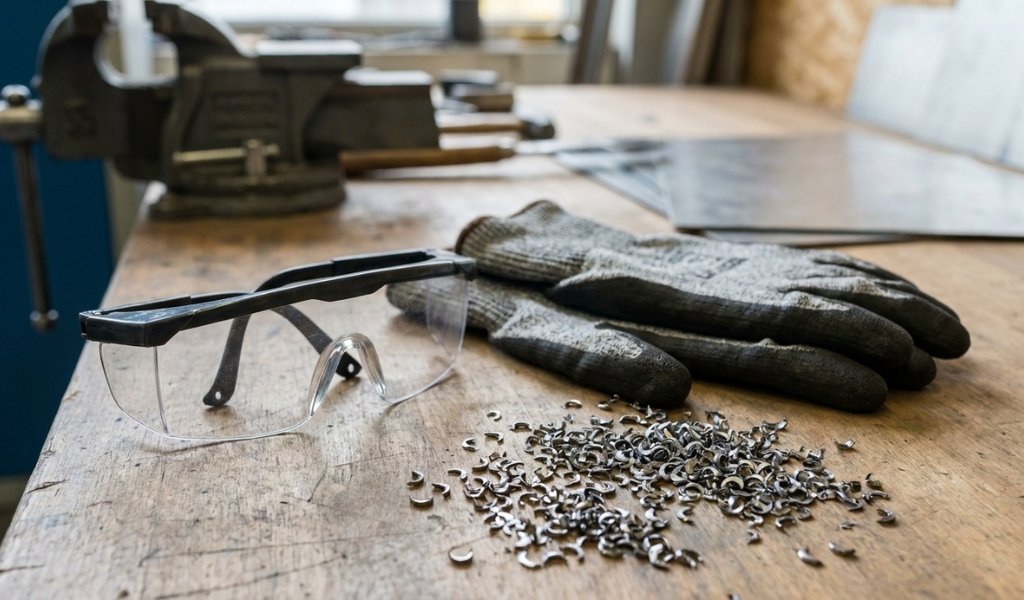
Manage chip ejection direction deliberately. Most nibblers allow the operator to rotate the cutting head independently of the tool body. Position the chip ejection port so that chips travel away from the operator and away from bystanders. Never allow chips to accumulate on the work surface without clearing them regularly they are slip hazards and will embed in anything soft they contact.
Secure the workpiece before cutting. Sheet metal panels are light and can shift during cutting, especially when the nibbler’s force is applied near an unsupported edge. Clamps, magnetic hold-downs, or a solid work surface with appropriate support prevent movement that would throw off the cut line.
The punch and die are wear components. With regular use especially on harder materials like stainless steel the punch tip dulls and the die opening widens slightly, which produces rougher cut edges, more pronounced burring, and increased chip irregularity. These are the signs that it’s time to inspect and replace the punch-and-die set.
Inspection is straightforward: examine the punch tip for rounding or chipping, and check the die opening for deformation. Most manufacturers publish replacement intervals based on linear feet cut and material gauge. Following these intervals preventively is more cost-effective than running worn tooling until it fails.
Lubrication reduces friction during the punch stroke and extends component life. Apply a small amount of cutting oil or machine oil to the punch and die periodically, particularly when cutting harder materials. Clean the punch-and-die assembly regularly to remove metal dust and chip debris that can increase wear.
For a full framework covering tool inspection, maintenance schedules, and selection criteria across the range of sheet metal cutting tools, the metal cutting tools selection and care guide is a practical reference worth keeping accessible in the shop.
A nibbler tool is used to cut sheet metal cleanly without distorting, bending, or warping the material around the cut. It’s particularly valued for cutting corrugated roofing panels, HVAC duct openings, automotive body panels, aluminum cladding, and any application requiring tight curves, complex shapes, or interior cutouts that cannot be reached from the sheet’s edge.
A nibbler works through a punch-and-die mechanism. A moving punch strikes downward into a fixed die, punching out a small crescent-shaped chip of metal with each stroke. As the tool advances through the sheet, this action repeats continuously hundreds or thousands of times per minute in powered models removing a narrow channel of material and producing a clean, burr-free cut path.
The primary types are manual hand nibblers, drill attachment nibblers, corded electric nibblers, cordless battery-powered nibblers, pneumatic air-powered nibblers, benchtop sheet metal cutters, and specialized profiled sheet nibblers designed for corrugated and trapezoidal roofing panels. Each type suits different power availability, material gauges, and application demands.
Nibblers produce large quantities of razor-sharp metal chips that require careful management as a safety hazard. They are less effective than shears for long, straight cuts, as the tool tends to drift without a straightedge guide. Most standard nibblers are also limited to lighter gauges typically 14–18 GA steel making them unsuitable for heavy plate work. Punch and die components are wear items that require periodic inspection and replacement.
The core difference is the cutting mechanism and its effect on the material. A nibbler removes material by punching out chips, leaving both sides of the cut flat and undistorted. Metal shears cut by shearing the material between two blades similar to scissors which is faster for straight lines but can cause distortion on the waste side and limits maneuverability on curves. Nibblers excel at complex shapes and corrugated profiles; shears excel at fast, straight cuts on flat sheet.