Physical Address
304 North Cardinal St.
Dorchester Center, MA 02124
Physical Address
304 North Cardinal St.
Dorchester Center, MA 02124

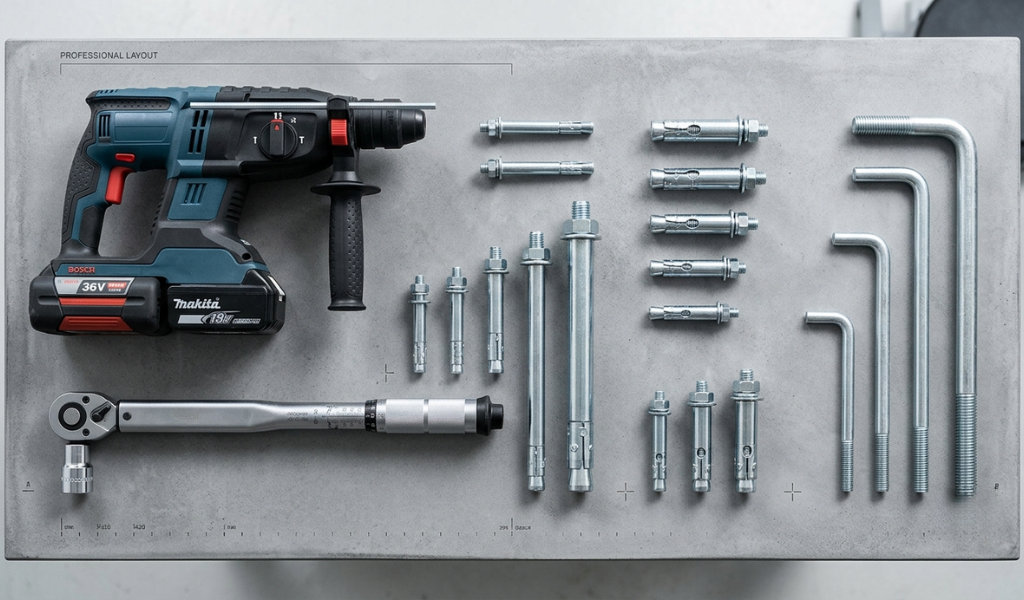
If you’ve ever tried to mount a shelf, secure a metal beam, or fasten a timber frame to a concrete surface, you already know it’s nothing like drilling into wood. Concrete is dense, unforgiving, and needs the right hardware to hold anything properly. That’s where concrete anchors come in.
Knowing the different types of concrete anchors and when to use each one can be the difference between a secure, long-lasting fix and a fixture that fails at the worst moment. Whether you’re a seasoned contractor or tackling a weekend project at home, this guide covers everything you need: how concrete fixings work, which anchor type suits which job, what tools are needed, and tips for getting the installation right the first time.
Before we get into anchor types, it helps to understand why concrete needs special fasteners at all. Concrete has strong compressive strength and handles weight well but poor tensile strength, meaning it resists being pulled apart or penetrated without proper support. Try to drive a standard screw directly into it and you’ll either crack the surface or pull it right back out.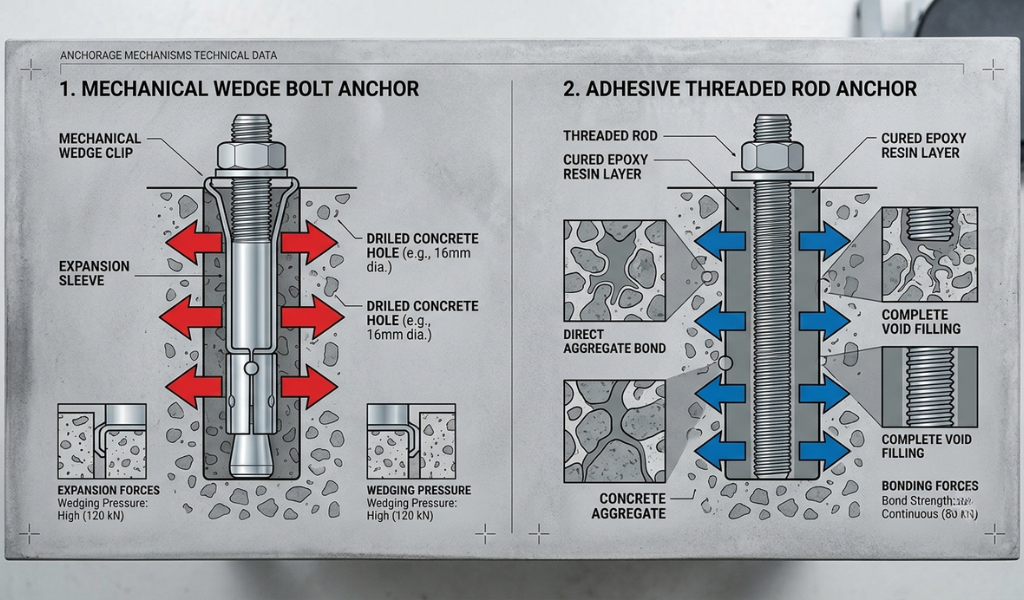
Concrete anchors solve this by spreading the load, gripping the material from the inside, or bonding chemically to the concrete itself. There are three main working mechanisms:
Adhesive anchors use a chemical resin or epoxy that bonds the steel rod to the surrounding concrete. When the adhesive cures, it hardens stronger than the concrete itself, creating a highly reliable hold.
Wedging anchors (like wedge bolts, Trubolts, and Dyna bolts) expand inside a pre-drilled hole as they are tightened. The expansion creates outward pressure against the hole walls, locking the anchor firmly in place.
Friction anchors rely on a roughened hole surface combined with mechanical expansion from a plastic plug or a powder-actuated fastener to hold position through friction.
Each mechanism has its place, and choosing correctly depends on your load requirements and whether the concrete is freshly poured or already set.
Picking the right anchor type is only part of the equation. Several other variables determine how well a concrete anchor performs in the long run:
Base material condition: Even the strongest anchor will underperform in low-quality or damaged concrete. Make sure the concrete is properly mixed to specification and free of cracks before installation.
Anchor material: Most concrete anchors are made from either carbon steel or stainless steel. Carbon steel is harder and stronger but corrodes over time without protective coating. Stainless steel resists corrosion well, making it the better choice for outdoor, marine, or wet environments.
Load requirements: Heavier loads demand larger anchors with longer embedment depths. Post-installed anchor bolts, for example, can handle shear loads ranging from 540 to 10,125 lbs depending on size and type.
Embedment depth: The deeper the anchor sits in the concrete, the greater the tensile forces it can handle. A common rule of thumb is to leave at least ½ inch of extra hole depth beyond the anchor length.
Edge distance: Set anchors at least 3 inches from any unsupported edge to prevent the concrete from cracking under load.
Cast-in-place anchors are installed before the concrete is poured. Because they are embedded while the concrete is still wet, they bond directly with the material as it cures. This makes them the strongest and most cost-effective anchor option available — ideal for structural applications like securing timber framing to a concrete foundation.
The trade-off is timing. You can only use cast-in anchors on new builds or fresh pours. If the concrete is already set, you’ll need a post-installed anchor instead.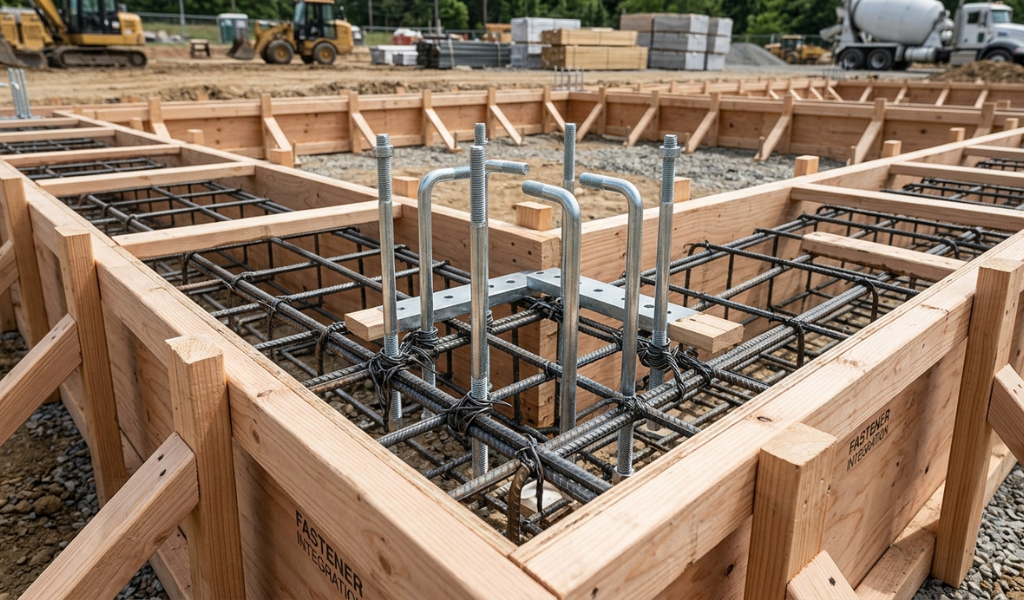
The plate bolt is the most straightforward cast-in-place option. It features a smooth shank threaded on one end, with a welded steel plate on the other. The plate sits inside the poured concrete and provides bearing resistance that prevents pull-out. To install, secure it to a guide using a nut and washer, position it in the form, and cast the concrete around it.
A threaded rod anchor runs threads along its entire length, which gives a nut and washer more surface area to grip against. Adding a square washer or bending the lower end of the rod increases uplift resistance. Threaded rods can also be used as post-installed anchors by drilling a hole in cured concrete, cleaning it thoroughly, injecting adhesive, and inserting the rod.
The J-bolt uses a 180-degree bend at the bottom rather than a plate. This bend hooks around rebar inside the concrete for added structural support, making it well-suited for anchoring walls to foundations. During installation, steel wire and plywood are often used to hold the bolt in position until the concrete fully cures.
Similar in concept to a J-bolt but with a 90-degree bend instead of 180 degrees, the L-bolt is lighter-duty and commonly used to attach metal plates to concrete or masonry foundations. It is positioned in the concrete form before pouring and held in place while the concrete sets.
The pigtail rod looks irregular, with multiple bends along the steel rod. Those bends are actually its strength — they distribute the load across the full length of the anchor and prevent slipping. Pigtail anchors are used in lighter structural applications such as anchoring plate members where non-slip performance is critical.
Post-installed anchors are used when the concrete is already hard and cured. A hole is drilled to the required depth, the anchor is inserted, and it is secured either through mechanical expansion or chemical adhesion.
Wedge bolts are one-piece, heavy-duty anchors with a self-tapping thread and a hex head. When tightened, the lower end expands against the hole walls. They are vibration-resistant and fully removable, making them a popular choice for shelving, fence posts, wall frames, and ceiling fixtures. To install, drill a hole about ½ inch deeper than the required embedment, insert the anchor, and tighten clockwise.
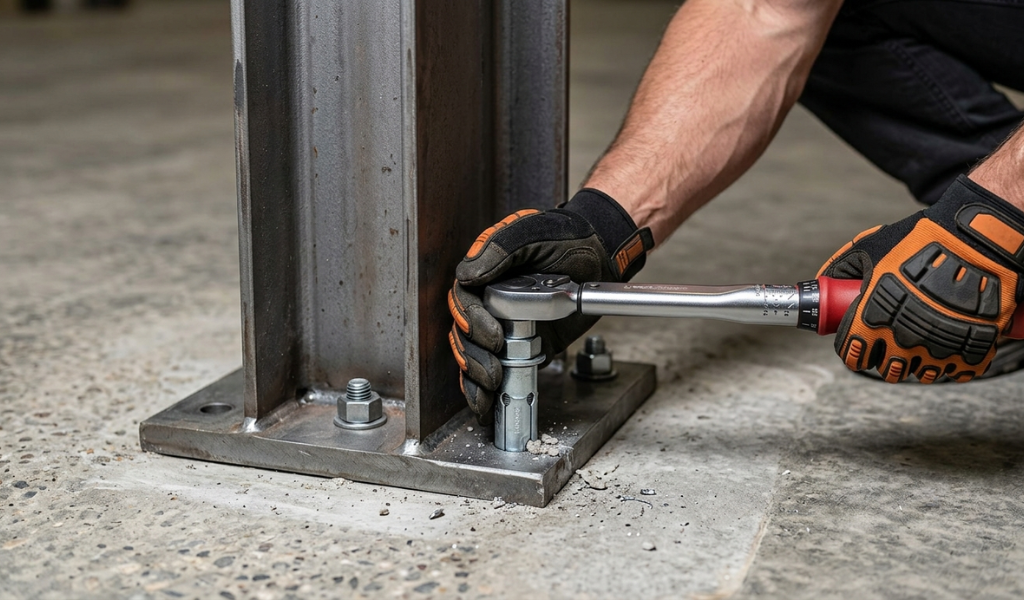
Trubolts are torque-controlled expansion anchors designed for permanent, heavy-duty use. Anti-rotation expansion sleeves grip the hole walls during installation, preventing the anchor from spinning. Trubolts are the go-to choice for structural applications such as balustrades, handrails, column bases, and outdoor timber framing exposed to moisture. They are available in galvanized form, which adds corrosion protection.
Dyna bolts are expansion anchors with an integrated pull-down sleeve that grips the hole walls and locks the fixture tightly against the concrete surface. They handle medium-duty loads well and are commonly used for attaching bottom plates in wall frames and securing hardware to walls. Unlike Trubolts, Dyna bolts can be removed later using a hole punch.
Strike anchors are lightweight, non-structural fasteners made of a body and drive pin. They are hammer-driven, not torque-sensitive, making installation quick and straightforward. However, they are only suitable for light loads up to 50 lbs and are not compatible with other masonry types.
Lag shields work alongside lag bolts and come in long and short varieties. Short lag shields make drilling into harder materials faster, while long shields are better suited for softer masonry. They are frequently used in mortar joints of block and brick walls and installed by drilling, cleaning the hole, inserting the shield flush, and tightening the lag bolt.
Similar in purpose to strike anchors, leadwood screws are used for light-duty applications like bike racks and wall or ceiling mounts that carry no more than 50 lbs. They work across brick, block, and concrete.
Double expansion anchors expand along the entire length of the fastener rather than just at the base, which makes them ideal for uncertain or softer masonry materials like brick. When the full body expands, it distributes load more broadly, making it capable of handling heavier structural applications in material that wouldn’t support a standard anchor.
Hurricane shutter anchors are structural fasteners built specifically for attaching hurricane panels to masonry walls. They are a two-part system and are driven into place using a stepping tool and hammer. These are built for uplift resistance in storm protection applications.
Split-drive anchors are one-piece expansion anchors used for attaching plywood sheets to concrete subfloors. Once driven into the drilled hole, the two pre-expanded halves spring outward and grip the concrete by friction. They are permanent and tamper-proof once set.
Ramset pins are powder-actuated fasteners that work like an overpowered nail gun, using a firing pin and small explosive cartridge to drive the fastener through dense concrete or steel in a single shot. They are best for framing and attaching wood panels or sheets to concrete walls and floors. Always hold the tool at exactly 90 degrees and maintain a minimum edge spacing of 3 inches.
When attaching timber to concrete, Powder Actuated Tools (PATs) from brands like Ramset and Hilti offer a fast way to hold wood in position before structural anchors are installed. While concrete nails driven by PATs don’t provide the shear or uplift strength of real concrete anchors, they are effective for temporarily holding framing in place so you can work with both hands free.
Getting the anchor type right matters, but so does having the right tools. Here is what you’ll need:
Impact wrench: Essential for torque-controlled anchors like Trubolts and Dyna bolts. Be careful not to over-tighten; doing the final turns by hand gives you better control.
Adjustable wrench or crescent tool: Useful for manual tightening when an impact tool isn’t available or appropriate.
Impact sockets: Hardened to withstand the vibration of impact tools, these protect both the tool and the anchor during installation.
Rotary hammer drill (Dyna drill): Larger and more powerful than standard drills, rotary hammer drills are built for drilling into concrete cleanly and efficiently.
Brushes and blowers: Cleaning drilled holes is non-negotiable, especially for adhesive anchors. Use a brush to scrub the hole walls, then blow out the dust from the bottom up with a long-nozzle blower.
Epoxy glue gun: Required for mixing and dispensing two-part epoxy into holes for adhesive anchors. Epoxy bonds stronger than concrete when fully cured and also adds corrosion resistance in wet environments.
A well-chosen anchor can still fail if it isn’t installed correctly. Keep these points in mind:
Concrete anchors come in a wide variety of forms, each designed for a specific range of applications and load requirements. Using the wrong anchor type doesn’t just mean a loose fixture — in structural applications, it can mean serious risk of failure. Take the time to match the anchor to your actual requirements, and your installations will hold up for years.
If you’re not sure which anchor suits your specific project, start by identifying whether your concrete is freshly poured or already cured, then consider the load and environment before making your selection. The right anchor is out there — it’s just a matter of knowing where to look.
What are the main types of concrete anchors?
Concrete anchors fall into two broad categories: cast-in-place anchors, which are embedded before the concrete cures, and post-installed anchors, which are inserted into pre-drilled holes after the concrete is set. Common types include plate bolts, threaded rods, J-bolts, wedge bolts, Trubolts, Dyna bolts, and adhesive anchors.
How do concrete fixings work?
Concrete fixings grip the material through one of three mechanisms: chemical adhesion (epoxy bonds), mechanical expansion (wedging against hole walls), or friction (roughened surfaces and plastic plugs). The chosen method depends on the anchor type and the application’s load requirements.
What tools are needed to install concrete anchors?
The most commonly needed tools include a rotary hammer drill, a matching drill bit, an impact wrench or adjustable wrench, impact sockets, hole-cleaning brushes and blowers, and an epoxy glue gun for adhesive anchor types.
What is the difference between cast-in-place and post-installed anchors?
Cast-in-place anchors are set while the concrete is still wet, making them the strongest and most cost-effective option. Post-installed anchors are drilled into cured concrete and rely on expansion or adhesive to hold. If you are working on existing concrete, you will need post-installed anchors.
How much weight can concrete anchors hold?
Weight capacity varies widely by anchor type and size. Cast-in-place anchors are strong enough for heavy structural loads like timber framing. Post-installed bolts can handle shear loads ranging from 540 to 10,125 lbs depending on the size and type selected.
Can I use any anchor type in brick or block walls?
Not every anchor is compatible with softer masonry like brick or cinder block. Double expansion anchors, lag shields, and leadwood screws are better suited for these materials because they spread the load more broadly. Always confirm anchor compatibility with your base material before installation.
What happens if I over-tighten a concrete anchor?
Over-tightening can crack the surrounding concrete, strip the anchor threads, or break the mechanical hold of expansion anchors. For torque-sensitive anchors like Trubolts, use a torque wrench set to the manufacturer’s specification and finish the last turns by hand if needed.