Physical Address
304 North Cardinal St.
Dorchester Center, MA 02124
Physical Address
304 North Cardinal St.
Dorchester Center, MA 02124

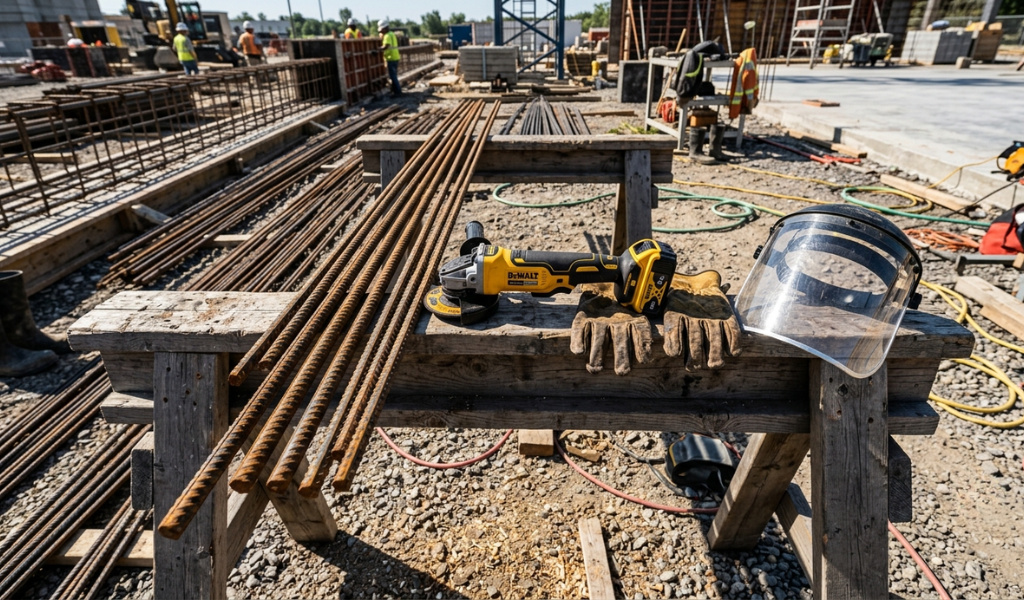
Steel reinforcement bar, or rebar, is the backbone of almost every concrete structure built today. Whether you’re pouring a backyard slab, building a retaining wall, or working on a larger construction project, knowing how to cut rebar correctly can save you serious time, money, and frustration.
The challenge? Rebar is tough. It’s designed to be. And that toughness makes it harder to cut than most other materials you’ll encounter on a job site. Use the wrong tool, and you’ll burn through blades fast. Cut at the wrong angle, and you’ll compromise the structural integrity of your work.
This guide walks you through every practical method for cutting rebar, from a portable rebar cutter to a full rebar cutting machine, along with the factors you need to consider before picking up any tool. By the end, you’ll know exactly which method suits your project, your budget, and the rebar size you’re working with.
Rebar, short for reinforcing bar, is a steel rod used inside concrete structures to add tensile strength. Concrete on its own handles compressive stress well but cracks under tension. Rebar solves that problem. It’s why bridges, foundations, columns, and concrete slabs hold up under heavy loads year after year.
If you’re planning any concrete work, you’ll almost certainly need to cut rebar to size. Getting that cut right matters more than most people realize.
Before getting into the cutting methods, it helps to understand why rebar is worth the extra effort.
Strengthens concrete. Rebar allows concrete to handle tensile stress, something plain concrete simply cannot do on its own.
Enables thinner slabs. With the right rebar placement, concrete structures can be made thinner without losing strength. That reduces both weight and material costs.
Prevents cracking. Concrete naturally expands and contracts with temperature changes. Rebar restrains that movement and reduces the risk of cracks forming over time.
Extends structure lifespan. A reinforced structure is far more likely to survive extreme weather events, earthquakes, and general wear and tear over decades.
Saves money long-term. Fewer cracks mean lower maintenance costs. Stronger construction means fewer repairs down the road.
Not all rebar is created equal. Standard rebar works well for most residential and DIY projects. High-tensile rebar is used when a structure needs to handle greater loads than standard rebar can support.
High-tensile rebar is harder to cut because of its increased strength. You can identify it by looking at the transverse ribs along the bar. Standard rebar has ribs running along its entire length. High-tensile rebar has two flat sides with no ribs at regular intervals.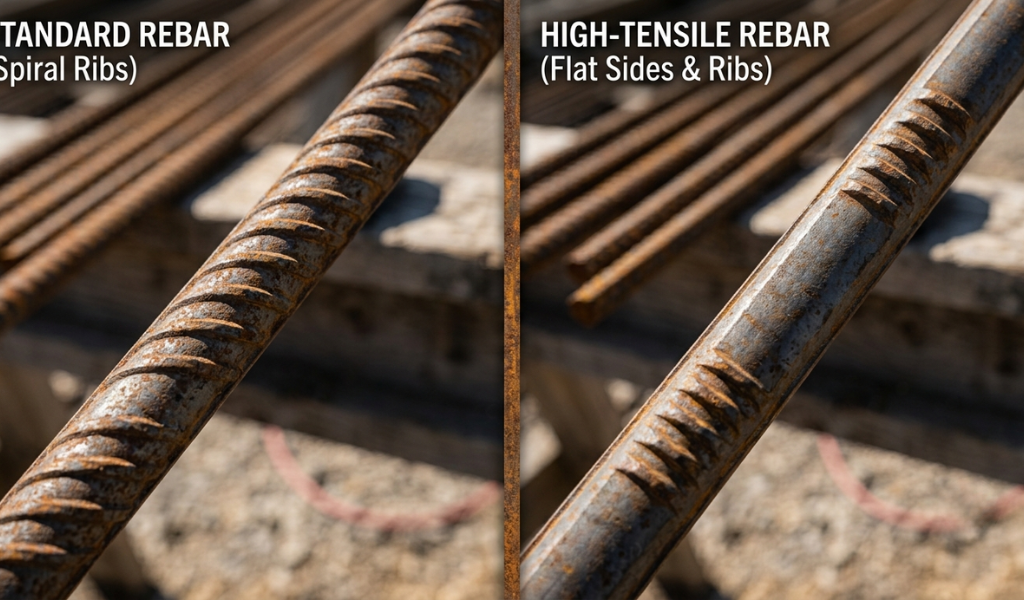
Knowing which type you’re working with matters because it directly affects which tools and methods will work effectively for your cut.
Rebar is made from extremely hard steel. That’s great for construction, but it creates real challenges when you need to cut it.
The most common issue is blade wear. Tools like angle grinders go through blades quickly when cutting rebar, especially if you’re cutting large quantities. That adds up in both cost and time. A rebar cutting machine or portable rebar cutter solves this problem, but not everyone has access to one.
There’s also the challenge of cutting accurately. Rebar that’s cut too short or at the wrong angle can’t be reused, and an imprecise cut can affect how the rebar sits within the concrete. That’s not something you want to discover after the pour.
Several variables should guide your tool choice before you make the first cut.
Time and speed. Some methods are significantly faster than others. If you’re cutting large volumes of rebar on a deadline, a dedicated rebar cutter or rebar cutting machine will outperform manual methods every time.
Rebar size. For home construction and DIY work, #3 rebar is the most common size and can be cut with a wide range of tools. Thicker commercial-grade rebar requires more specialized equipment.
Quantity. Cutting a few bars is manageable with almost any method. Cutting dozens of bars calls for a more efficient setup. Cutting in batches helps maintain consistency and pace.
Cut quality. Power tools produce cleaner, more precise cuts than hand tools. For structural work, precision matters.
Available tools. Work with what you have. A chop saw, angle grinder, or manual bender can all get the job done when a dedicated rebar cutter isn’t available.
Manpower. Some tools require two people to operate safely and efficiently. Factor that into your planning.
A portable rebar cutter is one of the most efficient tools for cutting rebar on-site. It’s compact, easy to carry, and doesn’t require an electrical outlet. This is the go-to choice for contractors who move between sites frequently.
How to use it:
Always work in a clear area free from debris and bystanders. Eye protection is non-negotiable.
A rebar cutting machine works on the same principle as a portable cutter but is typically larger and better suited to high-volume cutting. Set it up in a clear, stable workspace and connect it to a reliable power source before you begin.
How to use it:
A rebar cutting machine handles large batches efficiently and produces consistent, clean cuts.
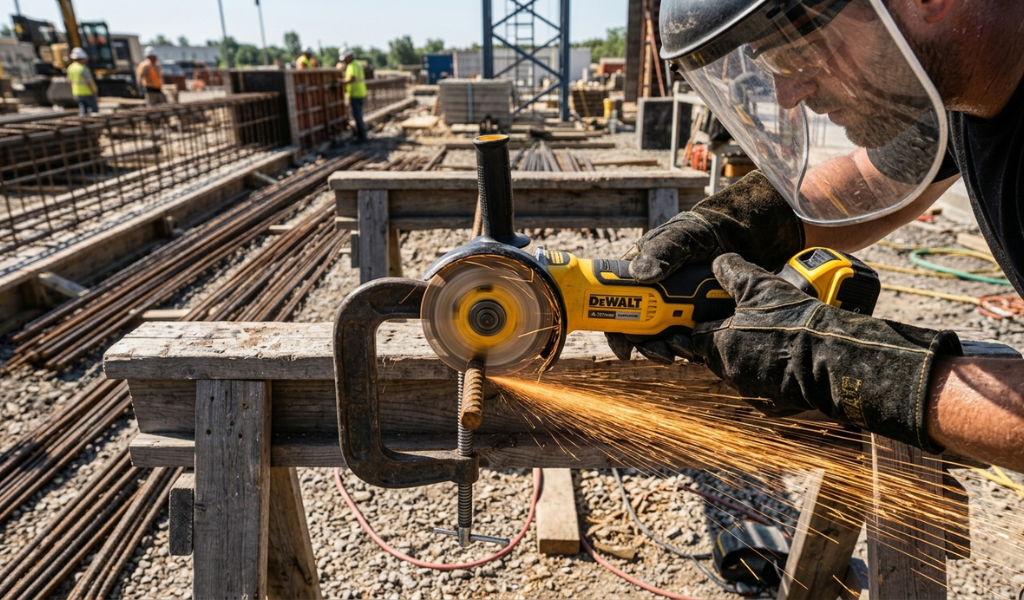
An angle grinder is one of the most widely available tools on any job site. A 4 or 4.5-inch grinder works well for most rebar-cutting tasks. Use a blade specifically rated for metal cutting. A diamond blade is worth the investment because it lasts longer and cuts cleaner.
You’ll need a stable surface to work on and a clamp or vise to hold the rebar securely in place. Sparks will fly, so wear a full face shield, gloves, and appropriate clothing.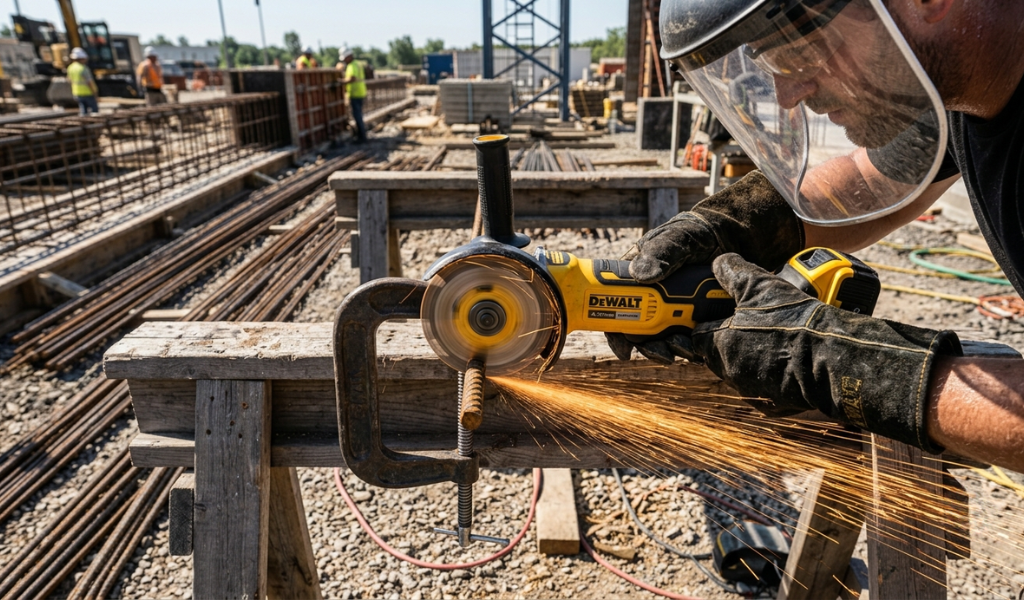
How to use it:
A chop saw is faster and more precise than an angle grinder for repeat cuts. It also holds the rebar in place with a locking jig, which means you don’t need a separate clamp. If you have multiple pieces to cut at the same length, a chop saw lets you line up several bars at once.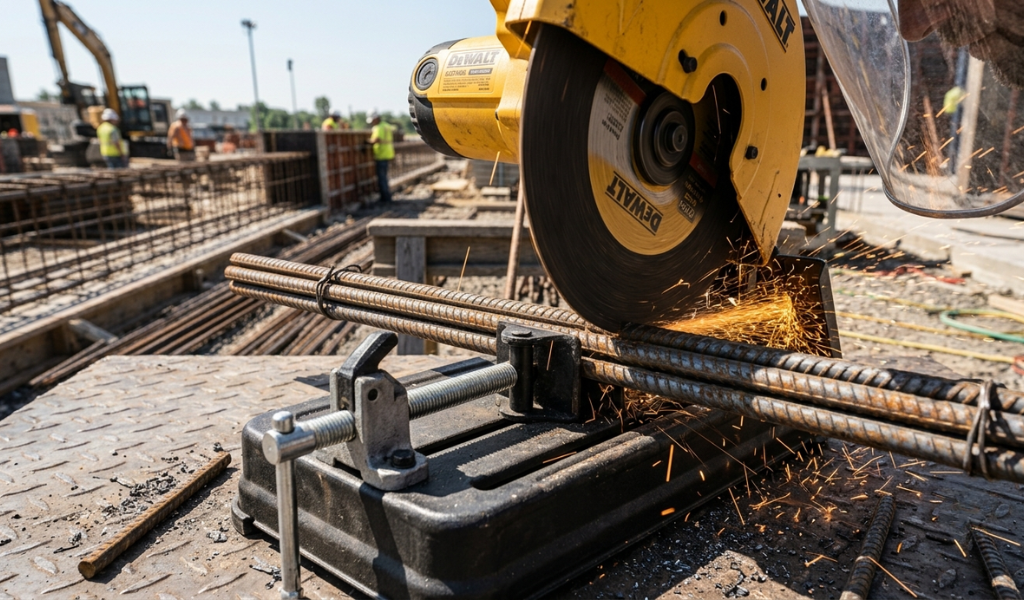
How to use it:
Use the correct metal-cutting blade and always wear protective gear.
A cutting torch, whether oxyacetylene or plasma, works by heating the rebar until it can be broken apart. This method is better suited to smaller, non-industrial jobs. It’s slower and less precise than other methods, and the cuts often require cleanup work before the rebar can be used.
How to use it:
This method works in a pinch but isn’t ideal for jobs requiring precision or volume.
A manual rebar bender with a built-in cutter is a versatile option for smaller jobs. Mount it on a sturdy surface, like a heavy wooden plank or a concrete floor, before use. Work in a clear space since cut pieces can sometimes fly off when the bar snaps.
How to use it:
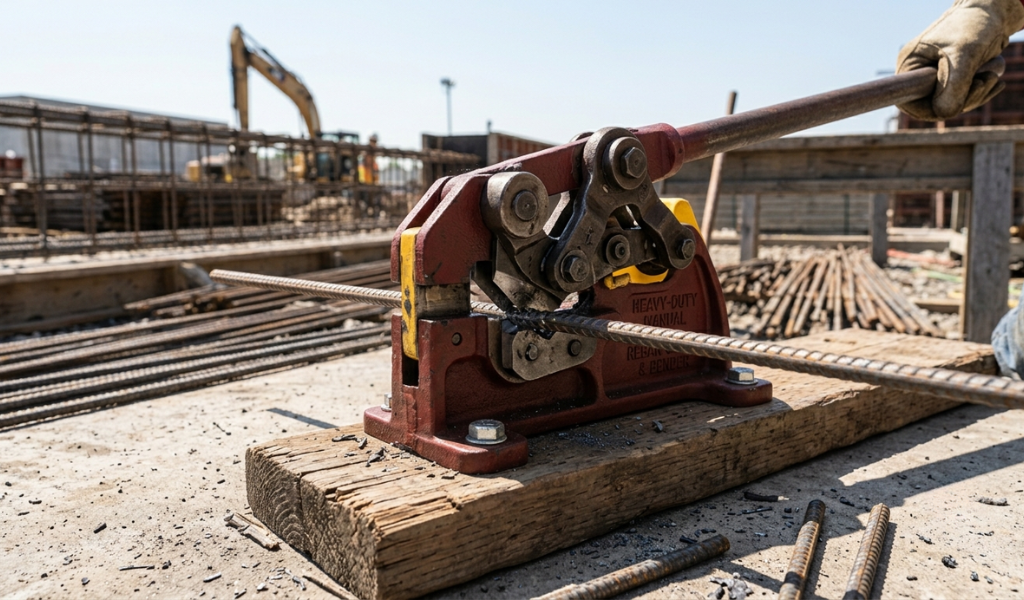
This tool handles sizes from #3 up to #5 and can bend rebar up to 180 degrees. No power source required.
Bolt cutters are a quick, accessible option but come with limitations. They only work reliably on smaller steel bars and mesh, specifically thinner gauges. For D12, D16, or D20-plus rebar, bolt cutters won’t have the jaw strength to do the job.
How to use it:
For thin steel mesh or lightweight rebar, bolt cutters are fast and practical.
Hacksaws can technically cut rebar, but the blades wear out quickly and cost far more per cut than purpose-built tools. Even blades designed for cutting steel struggle against the density of rebar. A reciprocating saw, or Sawzall, faces the same problem. It’s possible to use one in an emergency but expect a slow, frustrating process and rapid blade wear. These tools are better saved for other jobs.
For most people, the manual rebar bender with an integrated cutter offers the best overall balance of portability, ease of use, and cost. It requires no power source, handles common rebar sizes from #3 to #5, produces no sparks, and one person can operate it without help.
For higher-volume work or professional applications, a portable rebar cutter is the better long-term investment. It reduces physical strain, speeds up the process, and delivers consistent, clean cuts across large batches.
Do:
Don’t:
Cutting rebar is not complicated once you understand your options. The right method depends on what you’re building, how much rebar you need to cut, and what tools you have available. For quick DIY jobs, a manual bender or bolt cutters may be all you need. For larger projects, a portable rebar cutter or rebar cutting machine will save significant time and effort.
Take the time to mark your cuts accurately, secure your workspace, and wear the right protective gear. Get those three things right, and the cutting itself becomes straightforward.
Ready to get started? Review the method that best fits your project above and make sure you have the right tool before you begin. The right setup makes all the difference.
What is the easiest way to cut rebar for a DIY project?
For most DIY projects using #3 rebar, a manual rebar bender with a built-in cutter is the easiest option. It requires no power, no blade replacements, and one person can operate it comfortably. A bolt cutter also works for thin bars and steel mesh.
Can I cut rebar with an angle grinder?
Yes. A 4 or 4.5-inch angle grinder fitted with a metal-cutting or diamond blade can cut rebar effectively. Secure the rebar with a clamp before cutting and always wear a face shield, gloves, and protective clothing since sparks will fly during the cut.
What are the biggest challenges of cutting rebar?
The main challenges of cutting rebar are blade wear and maintaining cut accuracy. Rebar steel is very hard, which wears down standard blades quickly. Cutting at an incorrect angle also wastes material and can affect how the rebar sits within concrete.
What is the difference between a portable rebar cutter and a rebar cutting machine?
A portable rebar cutter is lightweight and battery-operated, making it ideal for on-site use where mobility matters. A rebar cutting machine is larger, typically stationary, and connects to a fixed power source. It’s better suited to high-volume cutting in a fixed workshop or job site setup.
Can bolt cutters cut through all types of rebar?
No. Bolt cutters only work on thin steel bars and mesh. They cannot cut through D12, D16, D20, or larger rebar sizes. For those, you’ll need a rebar cutter, angle grinder, chop saw, or rebar cutting machine.
How do I know if my rebar is high-tensile?
Look at the transverse ribs along the bar. Standard rebar has ribs running along its full length. High-tensile rebar has two flat sections without ribs at regular intervals. High-tensile bars are harder to cut and may require more powerful tools.
Is it safe to cut rebar with a cutting torch?
A cutting torch can be used safely for small-scale, non-industrial jobs when proper precautions are taken. You need a clear workspace, a secure vise to hold the rebar, and appropriate heat-resistant safety gear. Keep in mind that torch cuts are often uneven and may need finishing work before use.