Physical Address
304 North Cardinal St.
Dorchester Center, MA 02124
Physical Address
304 North Cardinal St.
Dorchester Center, MA 02124

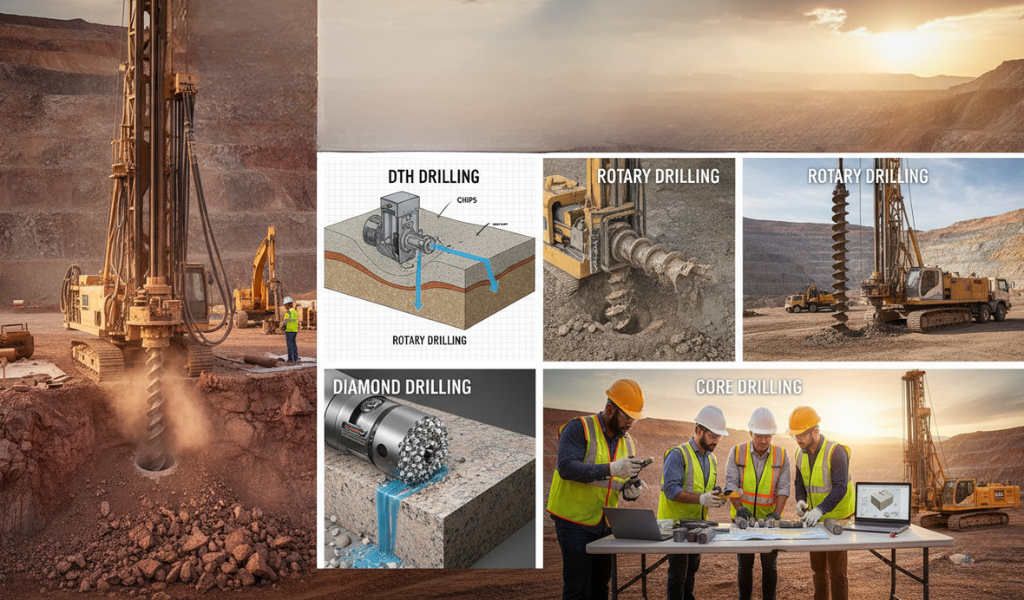
Drilling shapes the world around us in ways most people never notice. The foundations under skyscrapers, the wells that bring water to remote villages, the oil rigs at sea, and even the tiny holes in jet engine parts all start with one process. Understanding the different types of drilling and the drilling methods behind them helps you pick the right approach for any job, whether you work in mining, construction, or manufacturing.
If you’ve ever felt unsure about which technique fits your project, you’re not alone. There are many methods out there, and each one suits a specific material, depth, and budget. The wrong choice can slow you down, drain your wallet, and damage your equipment. The right one keeps your project on track and on budget.
In this guide, we’ll walk through what drilling actually is, cover the most common types of drilling methods, share real-world examples, and explain how to choose the most suitable drilling method for your needs. By the end, you’ll have a clear picture of how each technique works and where it shines.
Drilling is the process of making a round hole in a solid material using a rotating cutting tool called a drill bit. As the bit spins and presses into the surface, its sharp edges scrape away material in small pieces known as chips. These chips are then cleared out of the hole so the bit can keep going deeper.
The idea sounds simple, but the practice covers a huge range of uses. You might drill a small hole to fix a shelf to a wall, or you might bore thousands of feet into the earth to reach oil. Different jobs call for different tools, different power sources, and different techniques. That’s exactly why so many drilling methods exist, each one built to handle a certain material or situation.
Let’s look at the most widely used drilling methods, how each one works, and where you’ll find them in action. Some rely on raw mechanical force, while others use heat, vibration, or even electricity to get the job done.
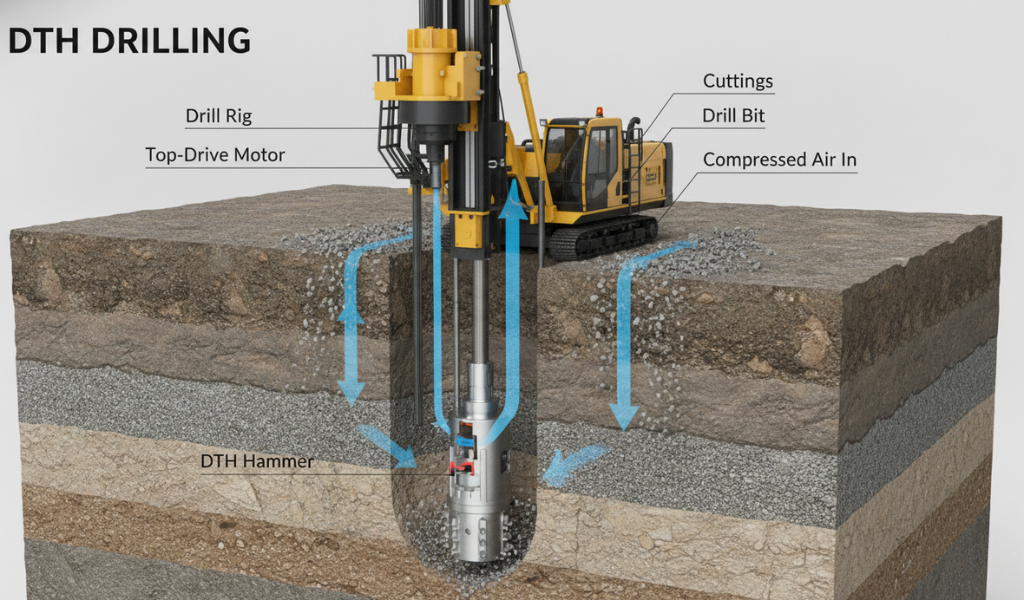
Down-the-Hole drilling, often shortened to DTH, places a powerful hammer right behind the drill bit. Compressed air drives the hammer, which strikes and rotates at the same time. This combination breaks apart hard rock while the air pushes the loose pieces up and out of the hole.
DTH drilling really stands out in tough rock and big boulders. Because the hammer sits so close to the bit, energy transfers efficiently, which means fast progress even in hard ground. It also tends to produce straighter holes than some other techniques. You’ll see it most in mining for blast holes, in quarrying, and in construction work that needs deep holes through solid rock.
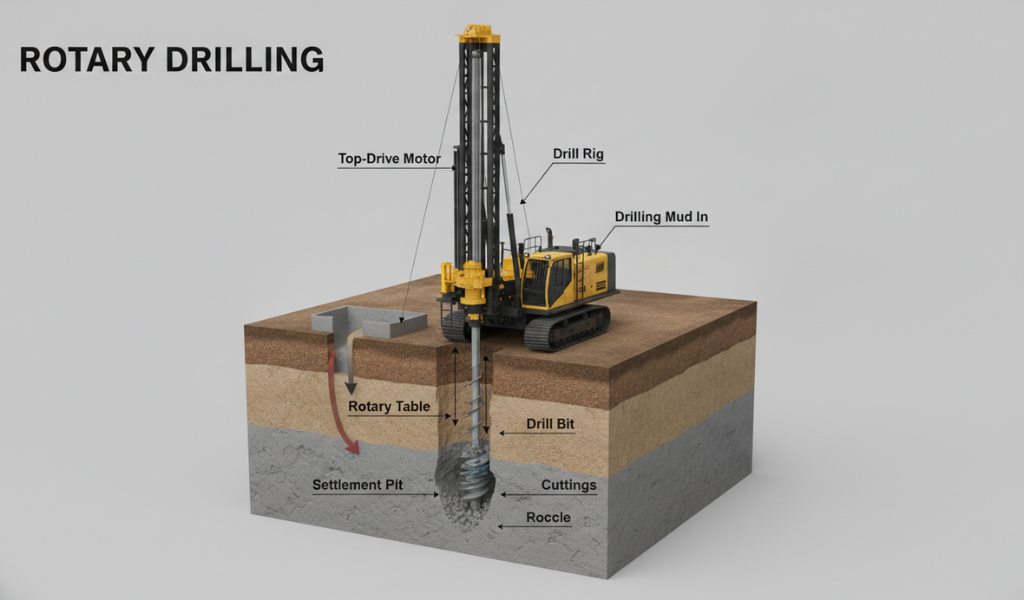
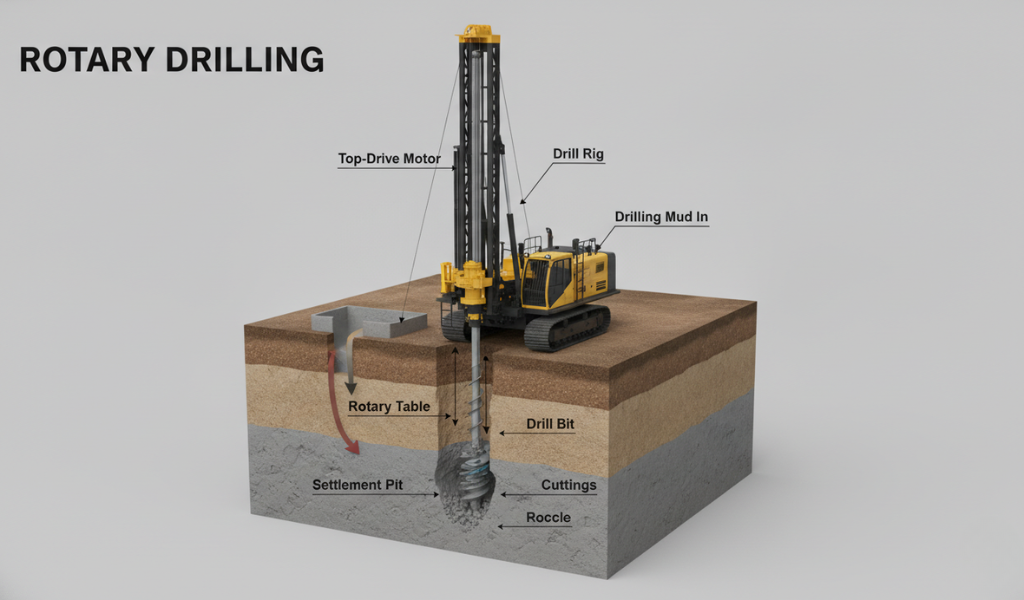
Rotary drilling is one of the most familiar approaches. A spinning drill bit attached to a long rod presses down into the material and shears it away. To clear the cuttings and keep the hole stable, operators often pump in compressed air or a special drilling mud.
What makes rotary drilling so popular is its flexibility. With the right bit, it works in soft soil, hard rock, and many materials in between. It drills fairly quickly and gives good control over the size and depth of the hole. You’ll find it in oil and gas exploration, water well drilling, foundation work, and site investigations where engineers collect soil and rock samples.
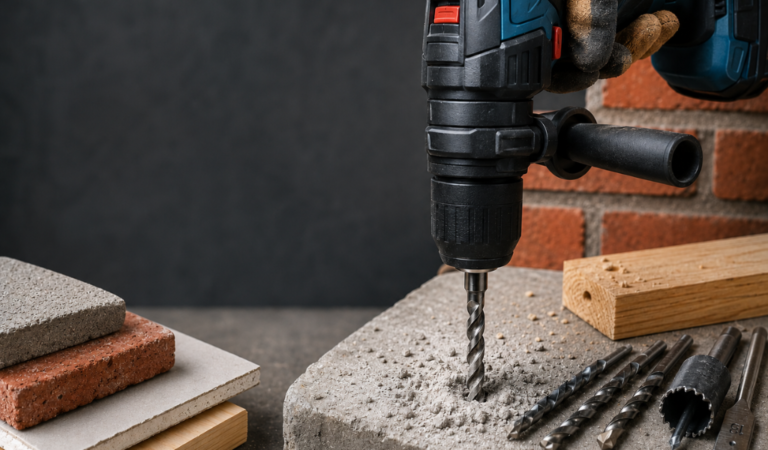
Percussion drilling mixes spinning motion with a steady hammering action. The bit hits the surface again and again while it turns, smashing hard material into smaller bits. This pounding force makes short work of stubborn rock and concrete that resist plain cutting.
This method is a favorite in construction for drilling holes meant for anchors, dowels, and blasting. Mining and quarrying crews also rely on it to create boreholes for exploration and extraction. When the ground is hard and brittle, percussion drilling often beats rotary drilling on speed.
Diamond drilling uses a bit studded with tiny industrial diamonds, one of the hardest materials known. As the bit turns, those diamonds grind through the toughest surfaces. A liquid coolant usually runs through the bit to keep it from overheating and to wash away debris.
The big advantage here is precision. Diamond drilling cuts clean, smooth holes with very tight measurements, even in extremely hard or abrasive material. Geologists depend on it to pull core samples during exploration. The construction industry uses it to cut through reinforced concrete and tile, and the semiconductor industry relies on it for exact holes in silicon wafers.
Core drilling does something clever. Instead of grinding away all the material in a hole, it cuts around the edges and leaves a solid cylinder, or core, in the middle. The bit is hollow, with the cutting edges along its rim. As it advances, it removes a neat sample of whatever it passes through.
That intact sample is the whole point. Geologists, engineers, and researchers study these cores to learn what lies beneath the surface. Core drilling also works well for creating large openings, like the holes needed for pipes and ducts, while leaving the surrounding material untouched.
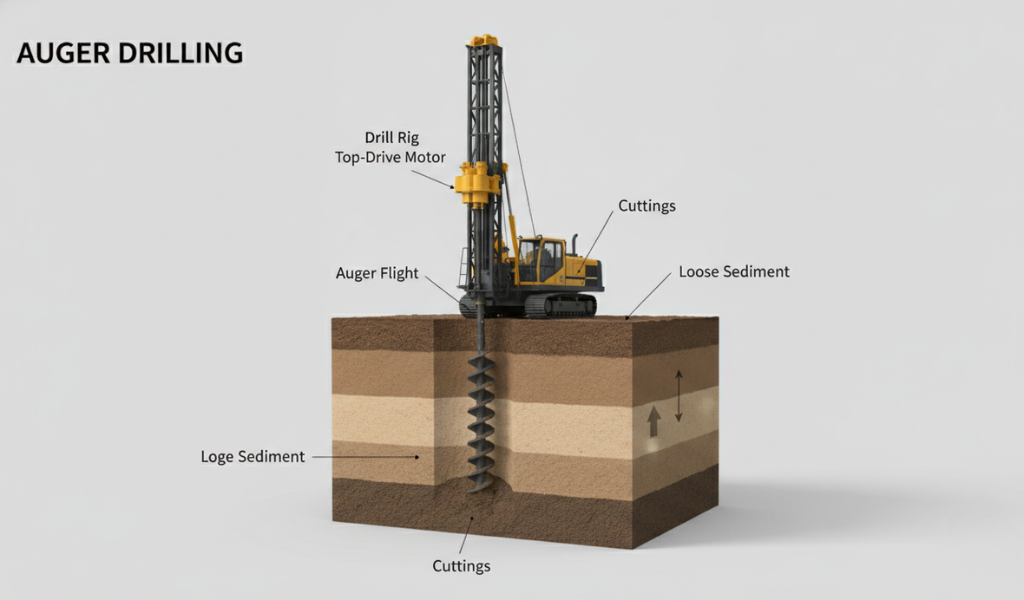
Auger drilling uses a helical screw blade, much like a giant corkscrew, to bore into soft ground. As the auger spins, its spiral flights lift soil and loose sediment up and out of the hole. It’s a simple, fast method for shallow to medium-depth work in the right conditions.
Because the equipment is fairly basic and the process is quick, auger drilling is cost-effective. People use it to collect soil samples, plant fence posts and signposts, dig shallow wells, and prepare foundations. It’s a go-to choice for many environmental and construction tasks in soft soil.
Sonic drilling relies on high-frequency vibrations to push the drill bit or core barrel into the ground. These vibrations cut down on friction between the tool and the surrounding material, so the bit moves forward with less downward pressure.
This technique handles a wide variety of soils and often causes very little disturbance to the surrounding ground. It also delivers clean, continuous core samples. For these reasons, sonic drilling fits well with environmental sampling, geotechnical studies, and the installation of wells and monitoring gear, especially in sensitive areas.
Thermal drilling takes a completely different path. Rather than cutting or pounding, it uses intense heat to melt or vaporize material. Lasers and plasma torches supply the energy for this approach, which suits special materials that resist normal mechanical drilling.
Since there’s no physical bit pressing into the surface, tool wear drops sharply. Laser drilling creates small, precise holes in metals and composites, while plasma arc drilling cuts and pierces thick metal. Manufacturers turn to thermal drilling when they need fine detail in demanding materials.
Two more advanced methods round out the list. Electron beam drilling fires a focused stream of high-speed electrons that melt and vaporize material, usually inside a vacuum. It produces tiny, extremely precise holes and works on metals, ceramics, and plastics. You’ll find it in aerospace for turbine blades and in electronics for delicate components.
Electrochemical drilling, on the other hand, removes metal through a chemical reaction in an electrolytic cell rather than by cutting. The workpiece and a shaped tool sit in an electrolyte solution, and an electric current dissolves the metal into the shape of the tool. Because nothing physically touches the part, there’s no tool wear and no mechanical stress. This makes it ideal for shaping hard, brittle metals into complex forms for the aerospace and automotive industries.
Out of all these techniques, two stand above the rest in everyday use: rotary drilling and percussion drilling. Both have earned their place because they adapt to so many materials and project types, and because the equipment and skilled operators are widely available.
Rotary drilling works by spinning a bit under steady pressure to shear or grind through material. It handles soil, rock, wood, and even plastic, simply by swapping out bits and adjusting settings. That flexibility makes it a default choice across countless industries.
Percussion drilling pairs that spinning motion with hard, repeated impacts. The hammering breaks up hard, brittle material that would slow a plain rotary bit. When you’re facing solid rock or thick concrete, percussion drilling usually gets you through faster.
Together, these two methods cover the vast majority of drilling jobs around the world, which is why so many crews learn them first.
Picking the right method comes down to matching the technique to your project and your material. Rush this decision and you risk wasted time, higher costs, and broken tools. Take it seriously and you set yourself up for smooth, efficient work. Here are the main things to weigh.
Start with what you’re drilling into. How hard is it? How abrasive? Very hard rock often calls for DTH or diamond drilling, while soft soil drills easily with rotary or auger methods. Keep in mind that ground conditions can change across a single site, so plan for variation.
Think about the diameter, depth, and accuracy your project demands. Large or deep holes tend to suit rotary or DTH drilling. When you need extreme precision and a fine finish, diamond drilling or electron beam drilling may be the better fit. The smoothness of the hole walls matters too, so factor that in.
Finally, weigh the practical constraints. Is the site easy to reach? Are there noise or environmental rules to follow? What’s your budget? Some methods are more portable or quieter than others, which can be a deciding factor in built-up or sensitive areas. A simple cost-benefit check on equipment and running costs will often point you toward the smartest option.
A few practical pointers can save you headaches on the job:
For example, a water well crew working in soft, sandy soil might choose auger drilling for speed and low cost. But once they hit a layer of solid rock, switching to DTH drilling lets them keep going without stalling. Knowing your methods and being ready to adapt is often the mark of an experienced driller.
Choosing the right drilling method is one of the most important decisions in any drilling project. Each technique, from rotary and percussion to diamond, sonic, and beyond, brings its own strengths to a specific kind of material and task. When you understand how these methods work, you can match the tool to the job and avoid costly mistakes.
The key is to study your material, define the hole you need, and respect your project’s limits before you begin. Pair that planning with reliable, high-quality drilling tools, and you’ll get faster results, lower costs, and longer-lasting equipment.
Ready to put this knowledge to work? Take a close look at your next project, weigh the factors we’ve covered, and choose the method that fits best. With the right approach and the right tools, your drilling operations will run smoother from start to finish.
Drilling is the process of making a round hole in a solid material using a spinning tool called a drill bit. The bit cuts away material as it turns and presses into the surface, and the loose pieces are cleared out so the hole can go deeper.
The two most common types of drilling are rotary drilling and percussion drilling. Rotary drilling spins a bit to cut through material, while percussion drilling adds a hammering action to break up hard rock and concrete. Both work across many materials, which is why they’re so widely used.
Rotary drilling relies on a spinning bit that shears or grinds away material under steady pressure. Percussion drilling combines that spinning motion with repeated hammer blows. Rotary drilling suits a wide range of materials, while percussion drilling is faster in hard, brittle surfaces like rock and concrete.
DTH drilling and diamond drilling are top choices for hard rock. DTH drilling uses a hammer right behind the bit for high penetration rates, while diamond drilling grinds through extremely hard and abrasive material with great precision.
Start by checking the hardness and abrasiveness of the material. Then define the diameter, depth, and precision your hole needs. Finally, weigh your project limits, such as site access, noise rules, and budget. Matching these factors to the strengths of each method points you to the best choice.
Auger drilling is a popular choice for soft soil and loose sediment. Its screw-shaped blade bores in quickly and lifts the material out of the hole. It’s fast, affordable, and well suited to shallow work like soil sampling and foundation prep.
The right method keeps your project on time and on budget while protecting your equipment. The wrong method can slow progress, raise costs, and wear out tools too soon. Matching the technique to your material and goals leads to safer, more efficient results.