Physical Address
304 North Cardinal St.
Dorchester Center, MA 02124
Physical Address
304 North Cardinal St.
Dorchester Center, MA 02124

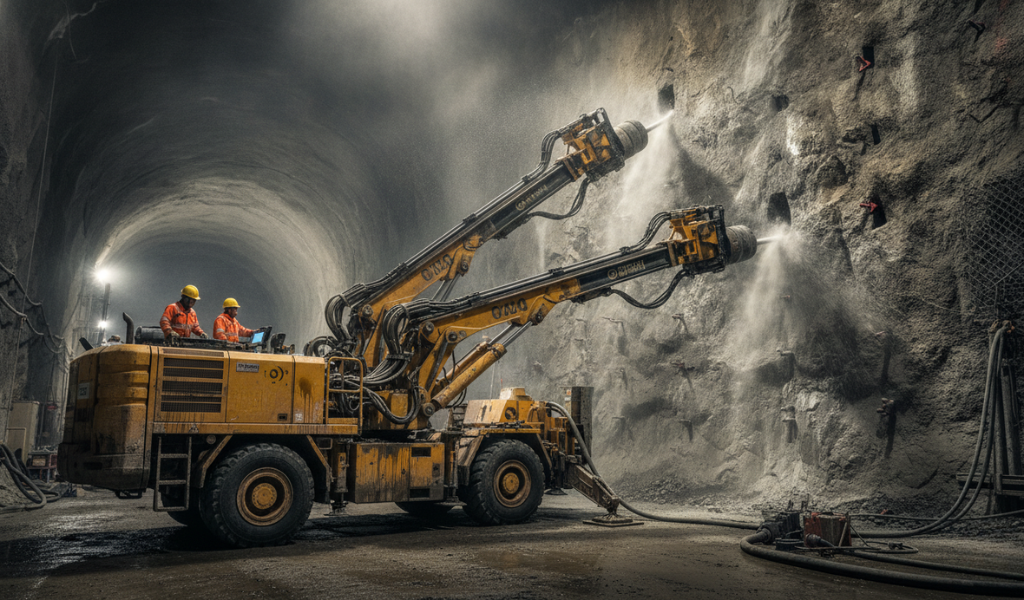
Drilling into solid rock might look simple from a distance. A machine, a bit, and a hole in the ground. But behind that hole sits a whole world of engineering choices that decide whether a project runs smoothly or stalls for weeks. So, what is rock drilling, and why does it matter so much across mining, construction, and exploration?
In short, rock drilling is the process of cutting holes into hard rock to reach minerals, install supports, prepare blast zones, or collect samples for study. It sounds basic, yet the way it’s done can make or break a multi-million-dollar operation. Get it right, and you save time, money, and lives. Get it wrong, and you face crooked holes, broken tools, and unreliable data.
This guide breaks down everything you need to know in plain language. We’ll cover the main rock drilling methods, what rock drilling is used for, the types of rock drilling rigs available, and what matters most when choosing the right one. Whether you’re new to the field or brushing up on the basics, you’ll walk away with a clear picture.
Rock drilling is the act of boring holes into hard rock formations. People do this for many reasons: to install anchors, pull out minerals, set up blast holes, or grab core samples for geological study. Think of it as the bridge between a plan on paper and what actually happens in the ground.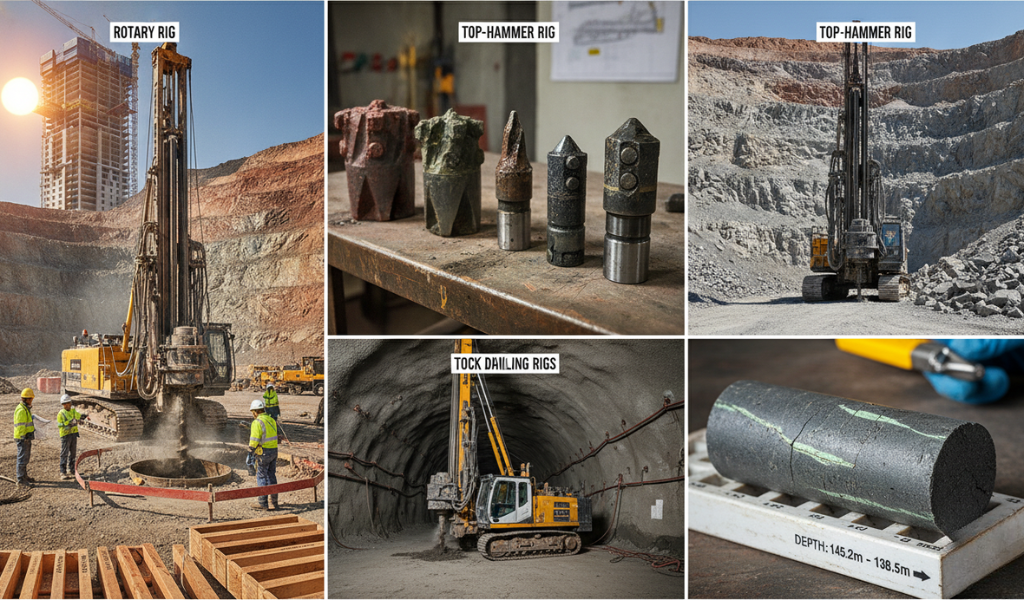
Rock drilling is the process of creating holes in rock formations using specialized drilling equipment. It is commonly used in mining, construction, geological exploration, tunneling, and foundation work. Different rock drilling methods and rigs are selected based on rock hardness, project depth, hole size, and operational requirements.
When engineers design a tunnel or plan a mine, those drawings mean little until someone proves the rock can support them. Rock drilling does exactly that. It shows what lies beneath the surface, where the valuable material sits, and how stable the ground really is before anyone spends big money.
The quality of the work matters far more than people expect. Sloppy drilling leads to holes that drift off target, tools that snap under pressure, and core samples that come up incomplete. Each of these problems can throw an entire project off schedule. That’s why the industry keeps moving toward modern hydraulic rigs that offer better control and deeper reach.
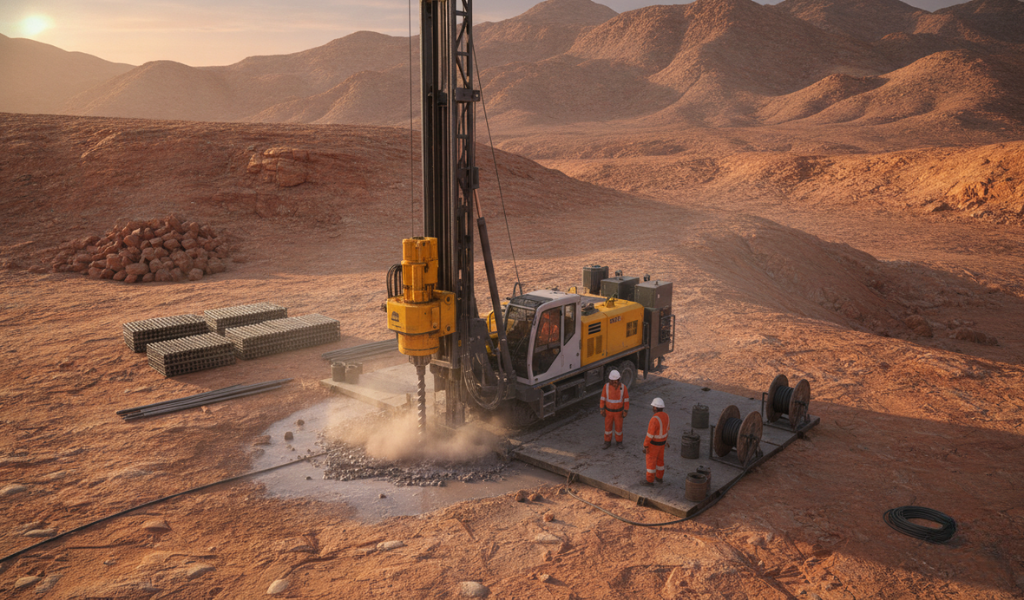
Rock drilling shows up almost everywhere heavy work meets hard ground. Here are the main areas where it plays a starring role:
Mining. This is the obvious one. Miners drill blast holes to break rock apart, sink exploration boreholes to find ore, and create wells to drain water from dig sites. Without drilling, there’s no way to reach the minerals buried below.
Construction and infrastructure. Builders rely on rock drilling for drilled shafts, rock anchors, tiebacks, and tunnel work. When a retaining wall needs to grip the slope behind it, anchors drilled deep into rock hold everything together.
Geological exploration. Before a company invests in a new mine, it needs proof. Diamond core drilling pulls up solid samples that confirm whether an ore body is worth chasing and reveal the structure of the rock around it.
Energy and water. Geothermal projects, water wells, and preparation holes for oil and gas all depend on drilling through rock to reach what lies below.
In every one of these jobs, success comes down to a few measures: how fast the bit cuts, how straight the hole stays, how long the tools last, and how steadily the rig performs week after week.
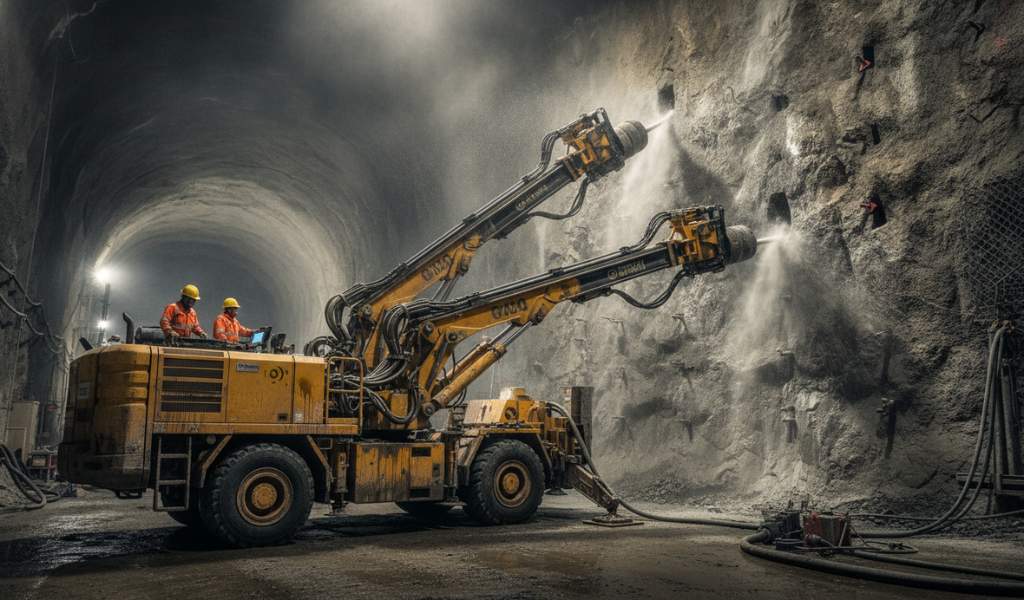
Not all rock is the same, and not all jobs call for the same approach. Over the years, the industry has settled on a handful of proven rock drilling methods. Each one suits a particular mix of rock hardness, hole depth, and project goals.
Top-hammer drilling. Here, the hammer sits outside the hole and sends its impact energy down through the drill string. It works well for bench drilling, tunneling, and shorter holes. The trade-off is that longer holes tend to drift, so it’s best kept to medium depths.
Down-the-hole (DTH) drilling. With this method, the hammer travels to the bottom of the hole. Because the impact happens right at the rock face, energy transfer improves and holes stay straighter. DTH shines in medium to very hard rock and in deeper production holes.
Rotary and rotary-percussive drilling. These methods use steady rotation, often with weight pressing down on the bit, to grind through rock. They handle larger-diameter holes well, which makes them a good fit for drilled shafts and some water wells. The catch is lower precision and less geological detail.
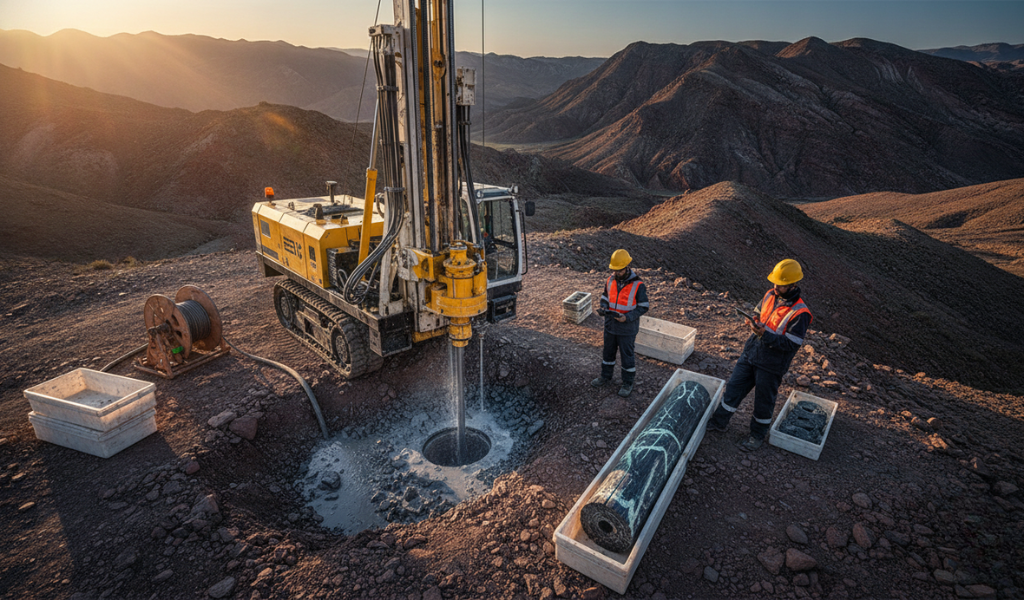
Diamond core drilling. A rotating bit studded with industrial diamonds cuts a ring around the rock, leaving a solid cylinder behind. That cylinder, or core, becomes a window into the geology below. For any job where sample quality and exact depth control beat raw speed, this is the method of choice.
Of all the methods above, diamond core drilling deserves special attention. It’s the gold standard for exploration, and for good reason.
The process uses a circular bit packed with synthetic industrial diamonds. As the drill string rotates the bit under controlled weight, drilling fluid flows down to cool the bit, flush out cuttings, and keep the hole stable. The result is a clean, intact core that tells geologists exactly what they need to know.
Why is that core so valuable? Because it preserves the real story of the rock. A good sample shows the rock type, signs of mineralization, and structural features like fractures and veins. It also reveals mechanical properties that engineers use to design supports and plan blasting. In other words, the core turns guesswork into solid data.
Modern operations often use full hydraulic wireline core drilling rigs to collect these samples. The clever part of a wireline system is that crews don’t pull out the whole drill string every time they want the core. Instead, they lower a wireline with an overshot, latch onto the inner core barrel, and winch just that piece to the surface. Then they send the barrel back down and keep drilling.
This setup cuts a lot of wasted time, especially on deep holes. It also reduces the heavy manual handling of drill rods, which makes the whole operation safer.
Choosing a rig is one of the biggest decisions in any drilling program. The table below compares the most common types of rock drilling rigs so you can see how they stack up.
| Rig Type | Best For | How It Works | Strengths | Drawbacks |
| Top-hammer rig | Bench drilling, tunneling, blasting | External hammer drives energy through rods | Fast in medium holes, flexible setup | Limited depth, more drift in long holes |
| DTH rig | Production holes, foundations, quarrying | Hammer at hole bottom, percussive plus rotary | Straight holes, strong in hard rock | Uses lots of air, slower in soft ground |
| Rotary rig | Large shafts, water wells, some oil and gas | Continuous rotary cutting with weight on bit | Handles big diameters, suits mixed ground | Less precise, little core detail |
| Diamond core rig | Mineral exploration, geotechnical coring | Diamond bit cuts a ring and lifts a solid core | Excellent core, deep reach, rich geology | Smaller holes, needs skilled operators |
Each rig has its place. A quarry blasting crew and a mineral exploration team have very different needs, so the right machine depends entirely on the job in front of you.
It’s also worth noting where surface core drilling rigs tend to work hardest. They’re common in greenfield exploration, resource expansion, and geotechnical studies for large open pits and dams. Many programs push these rigs to reach depths between 1,000 and 1,800 meters while still bringing up strong core. On the construction side, rigs support tiebacks, drilled shafts, tunnel work, and slope stabilization.
Brochure specs only tell part of the story. Experienced drilling managers look deeper before they commit. Here are the factors that come up again and again in real project reviews.
Performance and productivity. Can the rig reach the depth you need with the core size you want? How does it perform not just in clean rock but through broken zones and tricky transitions? And how steady is its core recovery? Consistent recovery cuts down on geological guesswork and keeps projects moving.
Stability, safety, and ease of use. A solid mast and base reduce vibration, which in turn keeps holes straight. The operator’s environment counts too. Clear controls, good visibility, and safe access make a real difference over long shifts. And don’t forget maintenance: service points should be easy to reach without tearing the machine apart.
Support and lifecycle cost. The cheapest rig on paper can become the most expensive one on site if parts are hard to find or support is slow. Smart buyers weigh the availability of spares, the response time for technical help, and the quality of training and commissioning. A rig backed by a strong manufacturer keeps running, and uptime is where the real value lives.
Good drilling isn’t luck. It follows a routine, whether the job is mining, tunneling, or geotechnical work. Here’s a simple checklist drawn from solid industry practice.
Before you drill:
While you drill:
After you drill:
These habits seem small, but they add up. A crew that follows them gets cleaner holes, better samples, and fewer nasty surprises.
Rock drilling sits at the heart of mining, construction, and exploration. It’s how we reach buried minerals, support massive structures, and prove what the ground can do before we trust it with our money and safety. From top-hammer and DTH methods to the precision of diamond core drilling, each approach has its moment to shine.
The real takeaway is this: the method, the rig, and the way you run the operation all work together. Pick the right combination and the job runs clean. Cut corners and the problems pile up fast.
If you’re planning a drilling program and want a rig matched to your geology and depth targets, talk to an experienced engineering team. The right advice early on saves a lot of headaches later. Reach out, share your project details, and find the setup that fits your ground.
Rock drilling creates holes in rock for mining, tunneling, foundations, anchors, blasting, and geological exploration. It opens access to resources, helps stabilize structures, and provides the data engineers need for safe, sound design.
Diamond core drilling uses a diamond-tipped bit to cut a ring and lift out a solid core, which keeps the rock’s structure and mineral content intact. Top-hammer, DTH, and rotary methods usually focus on making open holes for blasting, foundations, or wells rather than recovering core.
These rigs offer precise control, smooth torque, and long feed strokes. The wireline system recovers core without pulling all the rods each time, which saves hours on deep holes. Together, this boosts productivity, safety, and core quality.
They’re most common in mineral exploration, resource definition, and geotechnical studies for open pits and dams. Some infrastructure projects use them too. These rigs are built to stay stable and mobile on rough, uneven terrain.
Match the rig to your target depth, hole diameter, and rock conditions, and decide whether you need core samples or just open holes. Then weigh rig stability, safety features, service support, and total lifecycle cost before you commit.
Down-the-hole (DTH) drilling generally produces straighter holes because the hammer sits at the bottom of the hole, right at the rock face. This improves energy transfer and reduces the drift you often see with top-hammer drilling in longer holes.
It depends on the rig. Many full hydraulic wireline core rigs are built to reach depths of 1,000 to 1,800 meters while still recovering strong core. Your target depth should always guide which rig you pick.