Physical Address
304 North Cardinal St.
Dorchester Center, MA 02124
Physical Address
304 North Cardinal St.
Dorchester Center, MA 02124

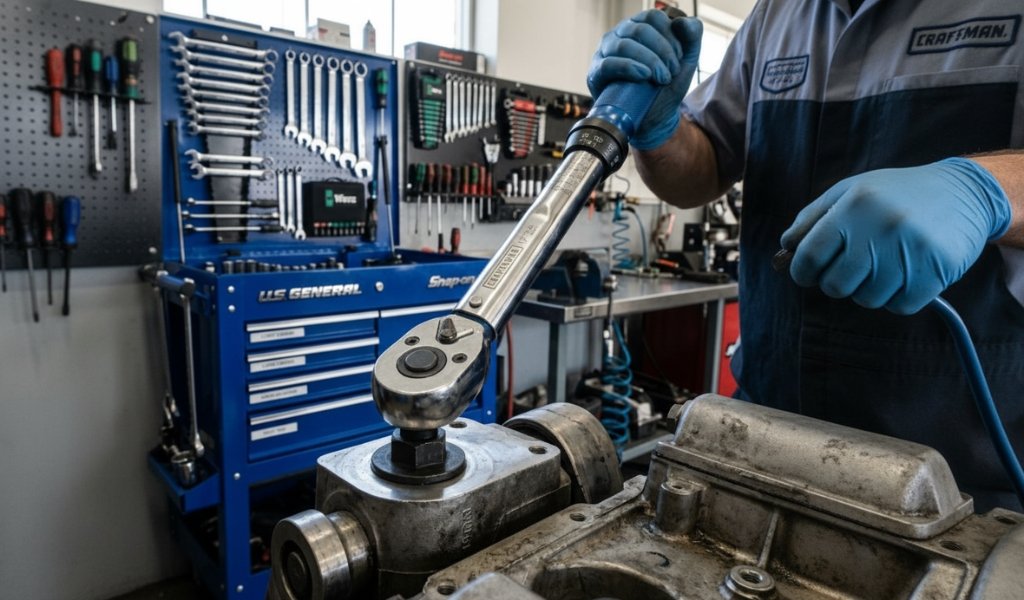
Every mechanic has been there. You are standing in the garage, elbow-deep in an engine bay, staring down a stubborn fastener that simply refuses to budge. You need a tool with a longer handle to apply more force. You look at your toolbox, and sitting right on top is your prized measuring instrument, gleaming and ready. The temptation to grab it and use that extra leverage to break a bolt free is overwhelming. We strongly advise you to resist that urge.
Using precision instruments for brute-force teardowns is one of the most common and destructive mistakes made by DIY enthusiasts and even seasoned professionals. The internal mechanisms of these specialized tools are designed for one highly specific task: applying an exact, measured amount of rotational force to a fastener. They are not designed to endure the unpredictable, violent stress of breaking seized hardware loose.
This comprehensive guide will explain the mechanical realities of these sensitive instruments. We will explore exactly why you should never use a torque wrench to loosen bolts, what happens to the internal components when you do, and which rugged tools you should be reaching for instead to get the job done right.
Before we dive into the damage caused by improper use, you must understand exactly what this tool is. A torque wrench is a precision measuring device and calibration instrument. It is not a standard wrench, and it is certainly not a breaker bar. For a broader look at the various hand tools you should have in your shop, you can review our comprehensive guide to automotive wrenches, but for now, we will focus strictly on precision fastening.
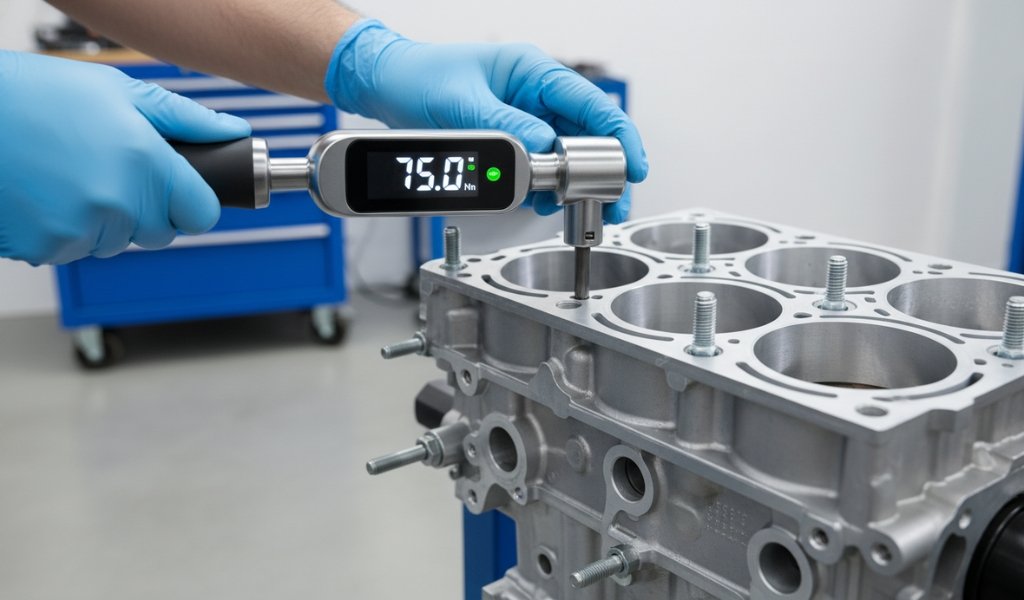
Mechanics use a torque wrench to ensure a bolt or nut is tightened to a specific factory torque value. This is absolutely vital when dealing with critical fasteners on engine components. For example, when you install a head gasket or bolt down a cylinder head, the clamping force must be perfectly even across all the head bolts. If the force required is uneven, the metal can warp, or the gasket can blow under pressure.
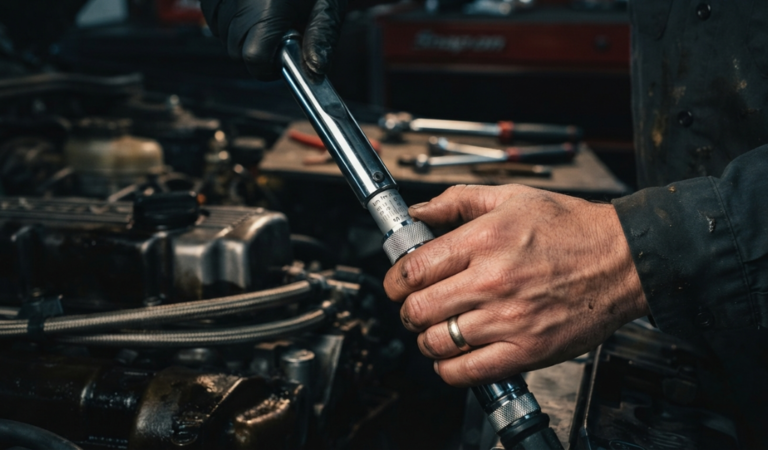
When you set the tool to a specific spec—say, 80 ft-lbs—the internal mechanism is calibrated to alert you the exact millisecond you reach that tension. Whether you are using a traditional click-type tool with a heavy internal spring, a classic beam type with a visual pointer, or an expensive digital model with electronic strain gauges, the core function remains identical. You use it to measure torque accurately during the final stages of fastening, usually dealing with clean, dry threads. It is an instrument of exact science, not an implement of raw, unmeasured power.
The short answer is no. You should never use a torque wrench to loosen a bolt.
The myth that these tools can work in either direction for both tightening and loosening usually stems from a misunderstanding of the ratcheting head. Because the head on many click torque wrenches features a directional switch—allowing the drive to spin clockwise or counter clockwise—people assume it is perfectly safe to use it to loosen fasteners.
That directional switch exists primarily for left-hand threaded fasteners, not for teardown procedures. Just because the ratchet head can spin in reverse does not mean the sensitive internal calibration spring is designed to handle the unpredictable shock loads of loosening a tight bolt.
To understand the danger, you have to look at the physics of breaking fasteners loose. When you try to loosen bolts that have been subjected to heat cycles, corrosion, or rust, the breakaway torque required to get the threads moving is often massively higher than the original installation torque setting.
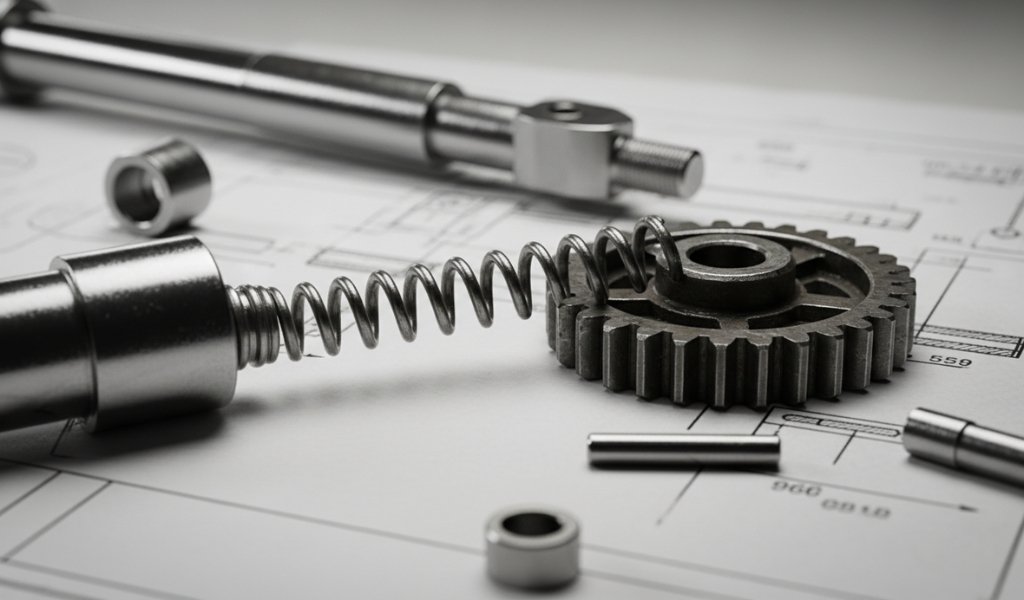
If a lug nut was torqued to 100 ft-lbs three years ago and has since rusted, the force needed to crack those lug nuts loose could easily exceed 200 ft-lbs. If you use a torque wrench to loosen that hardware, you are subjecting the delicate internal mechanisms to excessive force. Applying this much force in reverse strains the ratcheting gear, compresses the clicky spring mechanism beyond its intended design limits, and can bend the indicator rod on a beam type tool.
Furthermore, loosening bolts with a torque wrench exposes the tool to sudden, violent shock. When a stuck nut or bolt finally lets go, the sudden release of energy sends a mechanical shockwave right up the shaft of the tool. This shock is a death sentence for the sensitive electronic sensors inside digital torque wrenches, and it rapidly destroys the mechanical alignment of manual versions.
Even if you do not physically snap the drive head off by applying too much force, using your precision tool for teardown work guarantees a rapid loss of calibration. Every click-type torque wrench has a finite lifespan of accurate tightening cycles before it needs professional re-calibration.
Subjecting the tool to the stress of removing seized hardware accelerates this degradation exponentially. If your tool falls out of calibration, it becomes worse than useless—it becomes dangerous. An uncalibrated wrench might click at 60 ft-lb when you actually have the tool set to 90 ft-lbs, leaving your wheel studs dangerously loose. Conversely, it might not click until you exceed the spec entirely, causing you to strip the threads or snap a stud in the engine block.
To protect your investment, you must treat the tool with respect. When you are finished tightening bolts, always dial the micrometer scale back down to its lowest setting to relieve tension on the internal spring. Finally, wipe it clean and place it safely back in its hard plastic storage box. Treat it like a micrometer, not a hammer.
Good garage protocol dictates that torque wrenches are used exclusively during the assembly phase of a project. You should never use them during teardown, and you should never use them to remove bolts.
When you are putting an engine or suspension component back together, you should run the fastener down snugly using a standard ratchet or your fingers first. Only when you are ready to apply the final torque should you pull your precision measuring device out of your toolbox.
When you are ready to tighten a critical fastener, look up the exact spec in your service manual. Adjust the handle of your wrench to match that specific torque setting. Ensure you are pulling the wrench in a smooth, steady, and controlled motion. Do not jerk or bounce the handle.
As soon as the torque wrench clicks, stop pulling immediately. That click is the mechanical signal that you have reached the exact tension required. Continuing to pull after the click defeats the entire purpose of the tool and over-tightens the fastener. Whether you are working on delicate aluminum components requiring 15 ft-lbs or heavy suspension bolts requiring up to 250 ft-lbs, the rule remains the same: one smooth pull, wait for the click, and stop.
If you cannot use your expensive torque wrench to remove hardware, what should you use? The key to successful mechanics is using the right tool for the job.
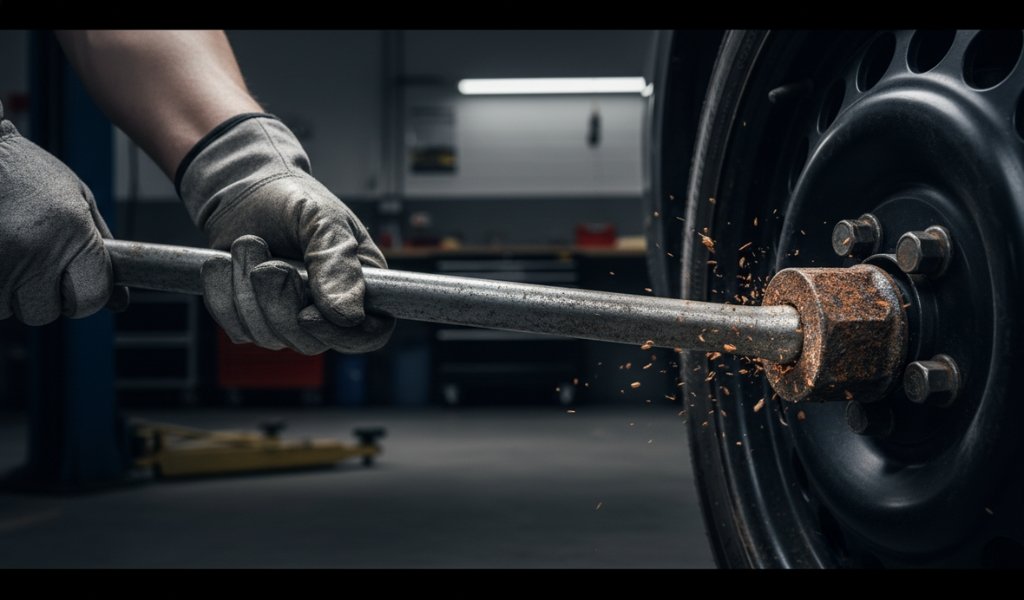
When you need to loosen an extremely tight, rusted, or corroded fastener, your first and best option is a dedicated 1/2-inch breaker bar. A breaker bar is a solid steel bar with a non-ratcheting drive head. It contains no fragile springs, no calibration mechanisms, and no sensitive electronics. It is built entirely for raw leverage and brute force. You can safely slip a cheater pipe over the handle of a heavy-duty breaker bar to generate massive breakaway torque without worrying about ruining the tool.
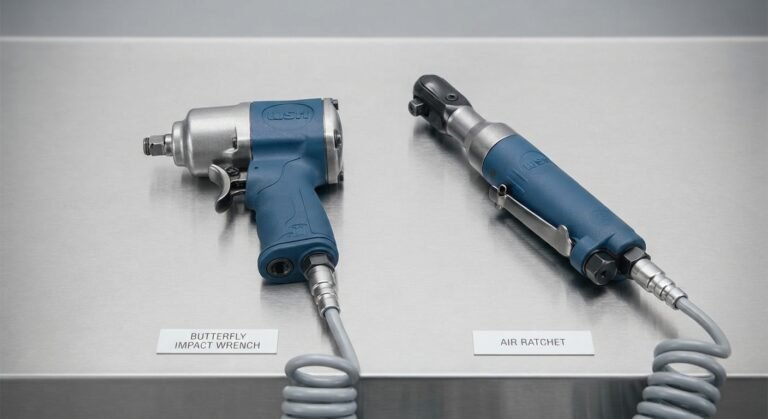
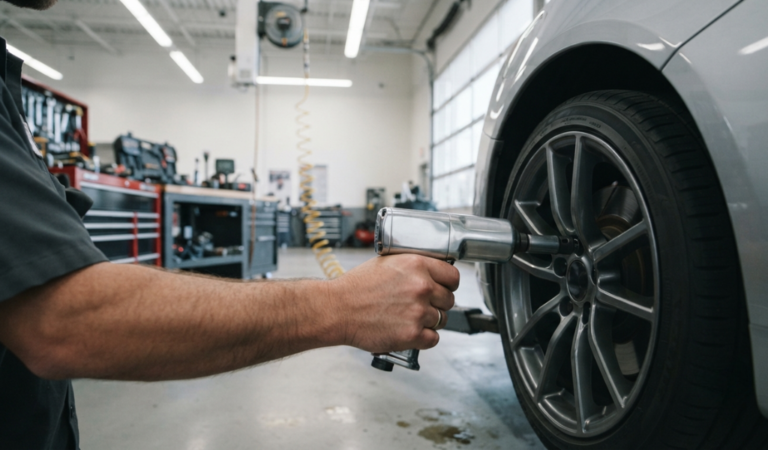
If you are dealing with a large volume of fasteners, such as rotating tires or pulling a cylinder head, mechanical assistance is the way to go. Use a pneumatic or battery-powered impact wrench (often called an impact gun) to rattle the bolts loose. An impact wrench uses rotational strikes to shock the threads free, making incredibly short work of rusted lug nuts.
If a fastener is severely seized, always soak the threads in a high-quality penetrating oil for at least fifteen minutes before you attempt to apply force. Let the chemistry dissolve the rust before you rely on physical leverage. You can always use a standard heavy-duty ratchet to back the fastener the rest of the way out once you break the initial bind.
Always loosen the bolt first with a breaker bar or impact tool. Once the hardware is removed, cleaned, and ready for reassembly, then—and only then—do you reach for your torque wrench to retighten everything perfectly to spec.
No, you should never use a torque wrench as a regular wrench. It is a highly sensitive calibration instrument designed specifically to measure torque during the final fastening stage. Using it as a standard ratchet to quickly run bolts down or to loosen hardware will damage the internal mechanism, ruin its accuracy, and eventually destroy the tool.
To safely loosen a seized bolt, first soak the dry threads heavily with a quality penetrating oil and let it sit. Next, use a long-handled 1/2-inch breaker bar to apply smooth, heavy leverage to break the fastener free. If you have access to air or battery power, a high-torque impact wrench is highly effective at shocking rusted bolts loose without damaging the surrounding components.
In very rare, highly specialized engineering or forensic scenarios, a technician might want to measure the torque required to remove a fastener to investigate a mechanical failure or determine how much clamping force remained after a heat cycle. However, this requires a specialized dial-type testing wrench specifically rated for teardown analysis, not a standard garage torque wrench. For everyday automotive repairs, you never need to measure torque to remove bolts.
While most standard click-type torque wrenches are designed to measure torque in one direction (clockwise), many quality models feature a ratcheting head that works in either direction. If you need to tighten a left-hand threaded fastener to spec, you must purchase a torque wrench that is specifically rated and calibrated to measure torque in reverse (counter clockwise). Do not assume your standard wrench measures accurately in reverse just because the head is reversible; check the manufacturer’s documentation.
Digital torque wrenches are generally better for high-precision work, such as engine building or aerospace applications, because they offer pinpoint electronic accuracy, often within 1% to 2% of the target value. They also frequently provide visual and auditory alerts and can measure rotational angles. However, they are expensive and highly sensitive to drops and shocks. Manual click-type wrenches (from premium brands down to budget options like Harbor Freight/HF) are perfectly adequate for most standard automotive tasks, provided they are properly maintained and regularly calibrated.