Physical Address
304 North Cardinal St.
Dorchester Center, MA 02124
Physical Address
304 North Cardinal St.
Dorchester Center, MA 02124

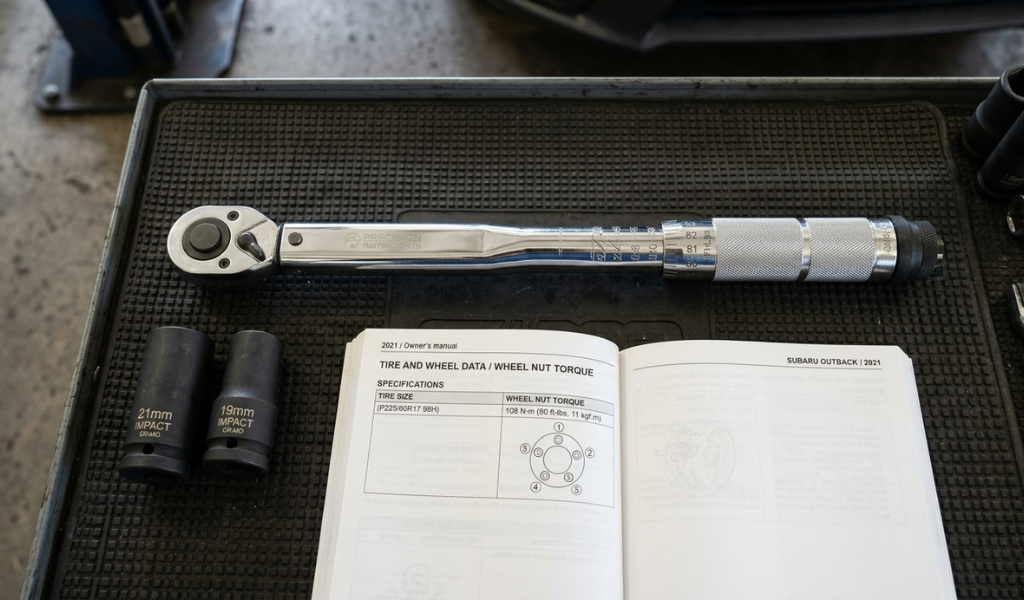
Getting the torque right on a bolt can make the difference between a safe, solid repair and a costly (or dangerous) mistake. Whether you’re tightening the lug nuts on your car after a tire rotation or assembling heavy machinery, knowing how to read a torque wrench correctly is one of the most practical skills you can have in your toolkit.
The problem is that torque wrenches can look a little intimidating at first glance. Between the scales, the numbers, the clicks, and the different styles of wrench available, it’s easy to feel lost before you’ve even turned a bolt. This guide breaks it all down in plain language so you can feel confident using your torque wrench from day one.
We’ll cover what a torque wrench actually is, the different types you’ll come across, and step-by-step instructions for reading each one. By the end, you’ll also know the answer to a common question: can you use a torque wrench to loosen bolts?
A torque wrench is a precision hand tool used to apply a specific amount of rotational force—called torque—to a fastener like a nut or bolt. Unlike a standard socket wrench, which just lets you tighten things as hard as you can, a torque wrench tells you exactly how much force you’re applying. This makes it an essential tool for any job where bolts need to be tightened to an exact specification.
You’ll find torque wrenches used across a wide range of industries automotive repair, construction, engineering, bicycle maintenance, and more. They’re part of the broader family of power tools and hand tools used in precision work, sitting alongside the common socket wrench in most professional toolkits.
Torque is measured in foot-pounds (ft-lbs) or Newton meters (Nm), depending on where you are in the world and what standards the tool or vehicle manufacturer follows. Most torque wrenches display both units.
Too little torque and a bolt won’t hold properly. This can cause parts to loosen over time, which is a serious safety risk—especially in vehicles. Too much torque and you risk stripping the bolt’s threads, cracking the component, or snapping the fastener entirely.
For example, when fitting a car’s wheels, the lug nuts need to be torqued to the manufacturer’s exact specification. Undertightened lug nuts can cause a wheel to come loose while driving. Overtightened ones can warp brake rotors or make it nearly impossible to remove the wheel later. The torque wrench removes the guesswork.
Before learning how to read a torque wrench, it helps to know which type you’re dealing with. The four most common types are:
Micrometer (click-type) torque wrench: The most popular option for home mechanics and professionals alike. You set the desired torque in advance, and the wrench makes a clicking sound when you hit that value.
Beam torque wrench: A simple, old-school design with a metal arm and a scale. The arm bends as you apply force, and a pointer indicates how much torque you’re using in real time.
Dial torque wrench : Similar to the beam type but with a round dial gauge. Easier to read precisely and often used in professional settings.
Digital torque wrench : The most modern option. Features an electronic display that shows exactly how much torque is being applied, often with alerts and programmable settings.
Each one works a little differently, so let’s go through how to read each type.
The micrometer torque wrench is what most people picture when they think of a torque wrench. Here’s how to set and read it correctly.
Before adjusting anything, rotate the knob at the bottom of the handle counterclockwise to loosen it. This allows the handle to move freely so you can change the torque setting. Never try to adjust the handle while the knob is still locked.
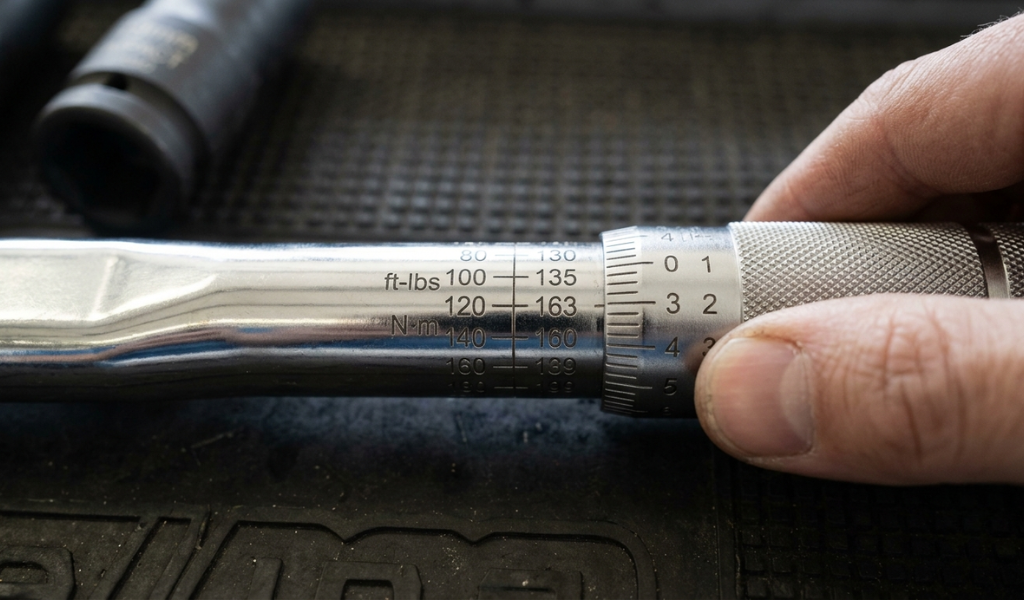
Look at the barrel of the wrench. You’ll see two rows of numbers running vertically along the handle. One side shows foot-pounds (ft-lbs) and the other shows Newton meters (Nm). These numbers make up what’s called the main scale, and they indicate your torque setting to the nearest ten units.
The numbers that wrap around the handle itself form the micrometer scale. This is where you fine-tune your setting. These numbers let you dial in a more precise torque value between the larger increments shown on the main scale.
Turn the handle clockwise to increase the torque setting, or counterclockwise to decrease it. As you turn, you’ll see the handle move up and down along the barrel while the micrometer numbers rotate around it. Both scales adjust simultaneously.
To confirm your setting, line up the vertical reference line on the handle with the appropriate number on both the main scale and the micrometer scale. For example, if the main scale reads just above 90 ft-lbs and the micrometer lines up at 3, your wrench is set to 93 ft-lbs (126 Nm).
Once you’ve set the correct torque, turn the knob at the bottom clockwise to lock the setting in place. This prevents the handle from moving while you work.
Use the wrench as normal. When you’ve reached the torque level you set, the wrench will produce a distinct click. Stop turning as soon as you hear it continuing past the click means you’re applying more force than intended.
One important storage tip: always wind the torque wrench back down to its lowest setting before putting it away. Leaving it under tension can weaken the internal spring over time and throw off its accuracy.
Beam and dial torque wrenches work differently from click-type models. Rather than setting a target torque in advance, you watch a live reading as you apply force.
A beam wrench has a long, flexible arm with a scale printed on it and a fixed pointer. As you apply force to a nut or bolt, the arm bends slightly. The pointer stays still, pointing to a value on the scale that tells you how much torque you’re applying at that moment.
When the wrench is resting, the pointer should read zero. If it doesn’t, the wrench needs calibration before you use it.
One practical tip: always read the scale from directly above the pointer, not from an angle. Looking at it from the side can give you a false reading due to parallax.
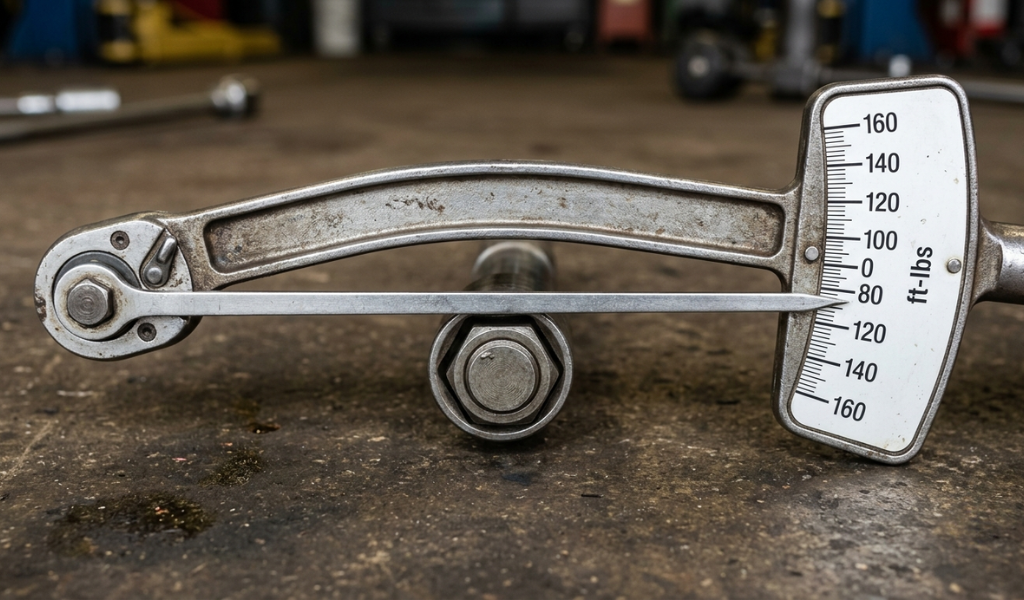
The dial version works the same way, but replaces the beam scale with a round gauge—similar to a pressure gauge or speedometer. The needle moves as you apply force and points to the current torque value.
Some dial torque wrenches include a second “memory” needle that stays at the highest torque value reached during use. This is handy if you want to confirm you hit the required torque even after releasing the wrench.
If your wrench doesn’t have a memory needle, a simple trick is to place a small piece of tape next to your target value on the scale. It makes the reading much easier to spot while you’re working, especially in low-light conditions.
Digital torque wrenches are the easiest to read since all the information appears on an electronic screen. That said, there are a few steps to follow to use one correctly.
Every digital torque wrench brand is slightly different, so start by reading the instruction manual. It will explain how to switch between ft-lbs and Nm, how to adjust settings, and how alerts are configured. Before getting started, clean the threads of the bolt you’re working on ,no lubricant or tape on the threads, as this can affect your torque reading.
Use the arrow keys on the wrench to scroll up or down to your desired torque value. The display will show you the number in real time as you adjust it.
Many digital torque wrenches have a tolerance feature, which triggers a warning when you’re getting close to your target. For example, setting a 10% tolerance means the wrench will light up or vibrate when you’re within 10% of the set torque. This gives you a heads-up to slow down and apply force more carefully so you don’t overshoot.
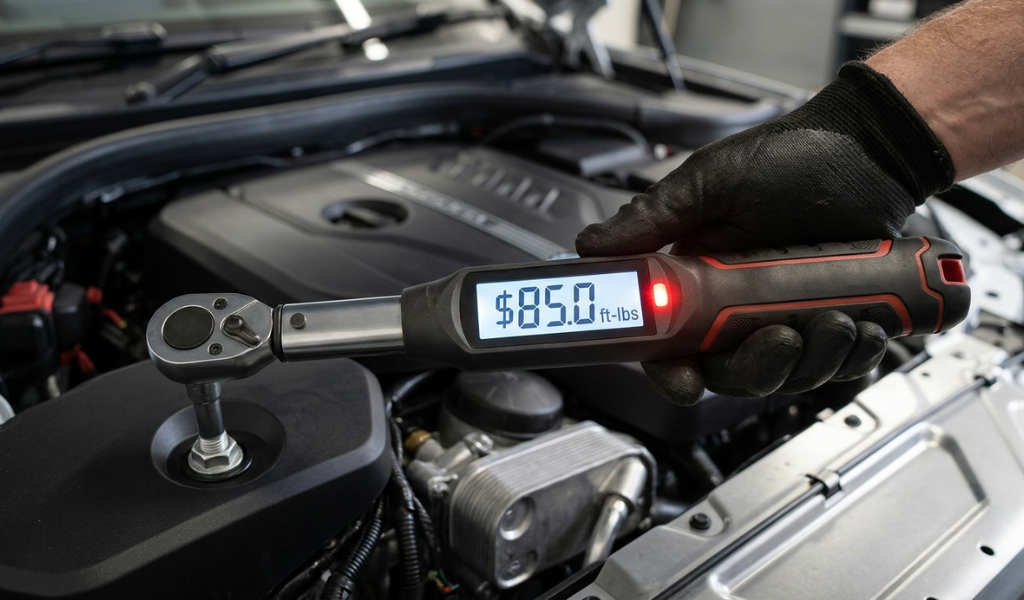
When you reach your target torque, the wrench will alert you through a combination of sound, light, or vibration, depending on the model. Stop turning immediately when this happens.
This question comes up a lot, especially among those new to working with hand tools. Technically, some torque wrenches can apply force in both directions, but using a torque wrench to loosen bolts is generally not recommended.
Here’s why. Torque wrenches are precision instruments calibrated for tightening. Using them to break loose a stubborn bolt puts stress on the internal mechanism that the tool wasn’t designed to handle. Over time, this can damage the wrench and knock it out of calibration meaning it will no longer give you accurate readings when tightening.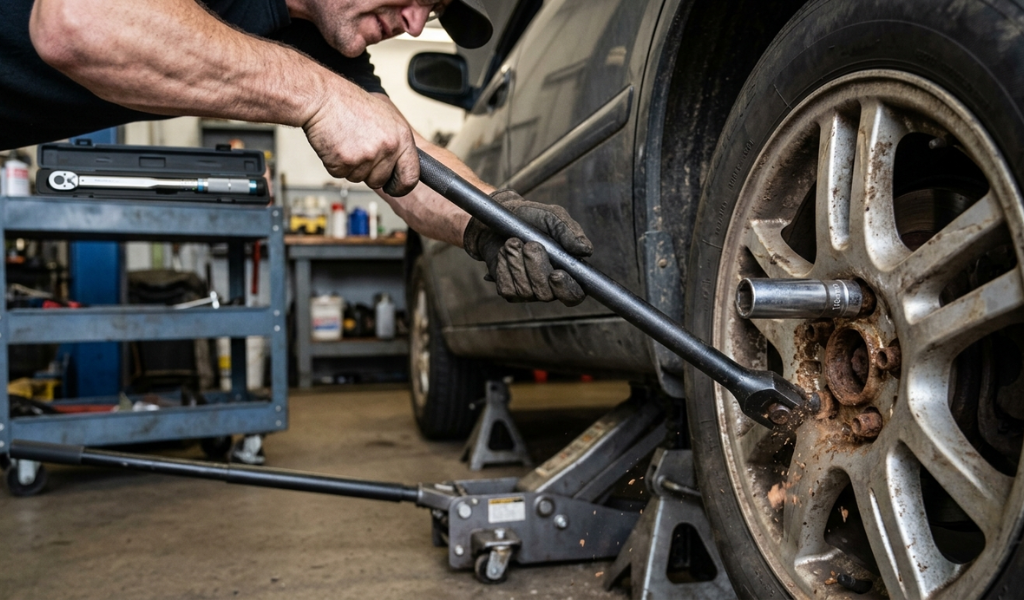
For loosening bolts, use a breaker bar or a standard socket wrench instead. Save your torque wrench for the final tightening stage.
Getting a torque wrench is only half the job. Here are a few extra tips that will help you use it well and keep it accurate for years:
Know your required torque before you start. Check the vehicle owner’s manual, product documentation, or manufacturer spec sheet to confirm the correct torque value. Never guess.
Account for extensions and adapters. If you’re using a socket wrench extension or adapter with your torque wrench, you’ll need to adjust your setting to compensate for the added length. A general rule of thumb is to add 1 ft-lb (1.36 Nm) for every 1 inch (2.5 cm) of extension.
Store it properly. As mentioned earlier, always wind down a click-type torque wrench to its lowest setting after use. Store it in its case in a clean, dry location.
Get it calibrated regularly. Like any precision tool, torque wrenches drift over time. Many manufacturers recommend recalibration every 5,000 uses or every 12 months, whichever comes first.
Apply force steadily. Whether you’re using a beam, dial, or click-type model, avoid jerky or sudden movements. Slow, steady pressure gives you the most accurate result.
Learning how to read a torque wrench doesn’t take long, but it’s one of those skills that pays you back every time you pick up a wrench. Whether you’re swapping car tires, building furniture, or working on machinery, the right amount of torque means things stay together safely and correctly.
Start with the basics know which type of torque wrench you have, understand the scale you’re reading, and always double-check the manufacturer’s recommended torque value before you begin. From there, it’s just a matter of practice.
If you’re building out your toolkit and looking for reliable power tools, hand tools, and socket wrench options, take some time to explore quality brands and read user reviews. The right tools make every job easier.
What is a torque wrench used for?
A torque wrench is used to tighten bolts and nuts to a specific level of rotational force, called torque. This ensures fasteners are tight enough to be secure but not so tight that they strip or damage the surrounding material.
How do I know what torque setting to use?
Check the manufacturer’s specifications for the item you’re working on. For cars, the owner’s manual usually lists the recommended torque values for common fasteners like lug nuts. For other equipment, check the product manual or spec sheet.
What’s the difference between ft-lbs and Nm?
Both are units used to measure torque. Foot-pounds (ft-lbs) are common in the United States, while Newton meters (Nm) are used in most other countries and in scientific contexts. Most torque wrenches display both units. To convert, 1 ft-lb equals approximately 1.356 Nm.
Can you use a torque wrench to loosen bolts?
You can, but it’s not recommended. Using a torque wrench to break loose tight bolts can damage the internal mechanism and affect its calibration. Use a breaker bar or standard socket wrench for loosening, and save the torque wrench for tightening.
How often should a torque wrench be calibrated?
Most manufacturers recommend recalibration every 5,000 uses or once a year, whichever comes first. If you drop the wrench or notice inconsistent results, get it checked sooner.
Why does my torque wrench click?
The click is a signal built into click-type (micrometer) torque wrenches that tells you the desired torque level has been reached. When you hear the click, stop applying force immediately to avoid overtightening.
What’s the difference between a torque wrench and a socket wrench?
A socket wrench (also called a ratchet wrench) is a general-purpose tool that lets you tighten or loosen fasteners without measuring the force applied. A torque wrench is a precision tool that measures and controls the exact amount of force you’re applying, making it the right choice for jobs with specific torque requirements.