Physical Address
304 North Cardinal St.
Dorchester Center, MA 02124
Physical Address
304 North Cardinal St.
Dorchester Center, MA 02124

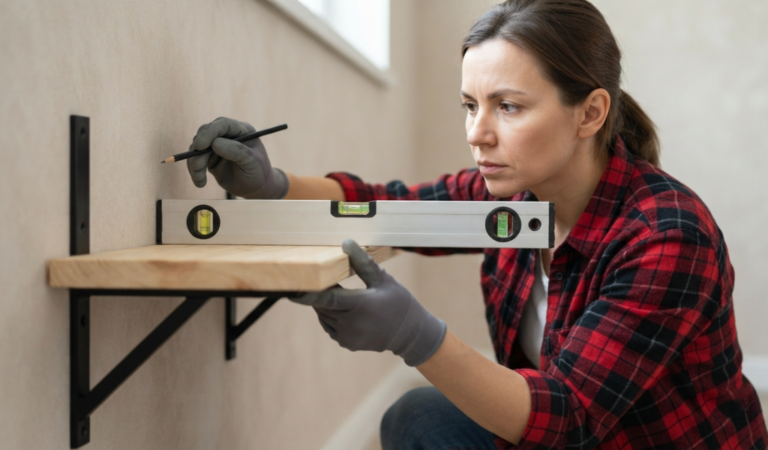
Whether you’re hanging a shelf, laying tiles or building a deck, getting things perfectly level matters more than most people realize. A slightly off reading can throw an entire project out of alignment. That’s why knowing how to use and check a spirit level before you start is just as important as using one correctly.
The good news? Checking a spirit level is quick, easy and something you can do at home with no special equipment. This guide walks you through everything you need to know from understanding what a spirit level is, to identifying the different types, to testing and fixing one that’s giving you inaccurate readings.
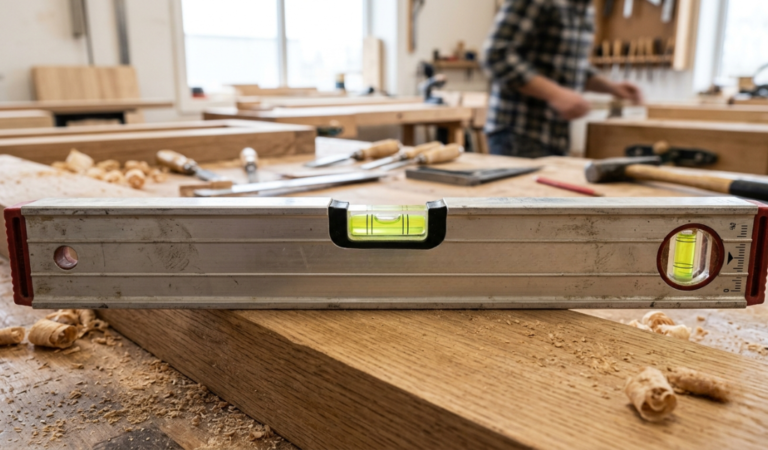
A spirit level is a measuring tool used to determine whether a surface is perfectly horizontal (level) or vertical (plumb). Inside the tool, there is a small glass vial filled with liquid usually a mix of alcohol and water with a small air bubble floating inside it. When the bubble sits exactly between the two marked lines on the vial, the surface you’re measuring is level.
The name spirit level comes from the alcohol-based liquid inside those vials. You might also hear it called a bubble level which refers to the same tool.
Spirit levels are used by builders, carpenters, tilers, plumbers and everyday DIYers. They come in various sizes from compact pocket versions to long box-beam levels used in large construction projects. Regardless of size, they all work on the same basic principle: the bubble tells you whether you’re level.
Before you learn how to check a spirit level, it helps to know which type you’re working with. Each has a slightly different design and use case.
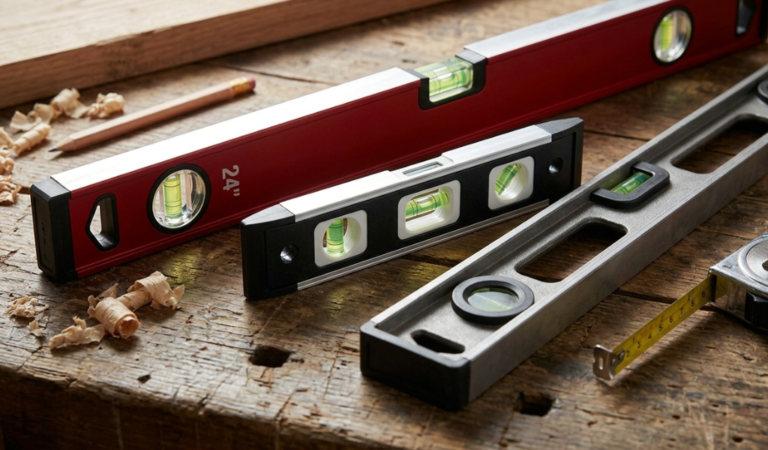
These are the most common spirit levels you’ll find at any hardware store. They typically come in lengths ranging from 60cm to 1.8 meters and feature two or three vials one for horizontal leveling, one for vertical, and sometimes a 45-degree vial. The frame is usually made from aluminum or wood. These are ideal for larger projects like checking walls, floors, and door frames.
Torpedo levels are the shorter, narrower cousins of the traditional level. They usually measure around 20–30 centimeters long and are designed to fit into tight spaces. Plumbers and electricians love them for checking pipes and conduits. Because of their size, they’re great for smaller tasks like aligning picture frames or cabinet shelves.
Digital spirit levels replace the glass vial with an electronic sensor that displays the angle on an LCD screen. They offer precise numerical readings down to a fraction of a degree making them popular for precision work like setting up machinery or laying flooring. Some models beep when a true level is reached, which is handy when you’re working alone.
Laser levels project a straight beam of light across a surface, making it easy to mark long, level lines. These are used for larger jobs like hanging wallpaper, tiling a backsplash, or installing drop ceilings. While they’re technically a separate category, many pros consider them part of the spirit level family because they serve the same core purpose.
Here’s something a lot of people don’t know: spirit levels can lose their accuracy over time. A dropped level, a knock against a hard surface, or general wear can cause the vials to shift slightly meaning your tool may appear to show “level” when the surface is actually off by a degree or two.
Before trusting any level for an important job, it’s worth taking two minutes to verify it’s giving you accurate readings.
The simplest way to start is to place your spirit level on a surface you believe is flat and smooth, a sturdy table or countertop works well. Look at the bubble in the main horizontal vial. If the bubble sits perfectly between the two lines, the tool appears to be reading correctly for that surface.
The problem with this test alone is that you’re relying on the surface being truly flat. If the table itself is slightly off, you won’t know whether the level or the table is causing the reading.
That’s where the reverse method comes in.
The reverse method is the most reliable way to check if your spirit level is accurate. It requires no extra tools and takes about two minutes.
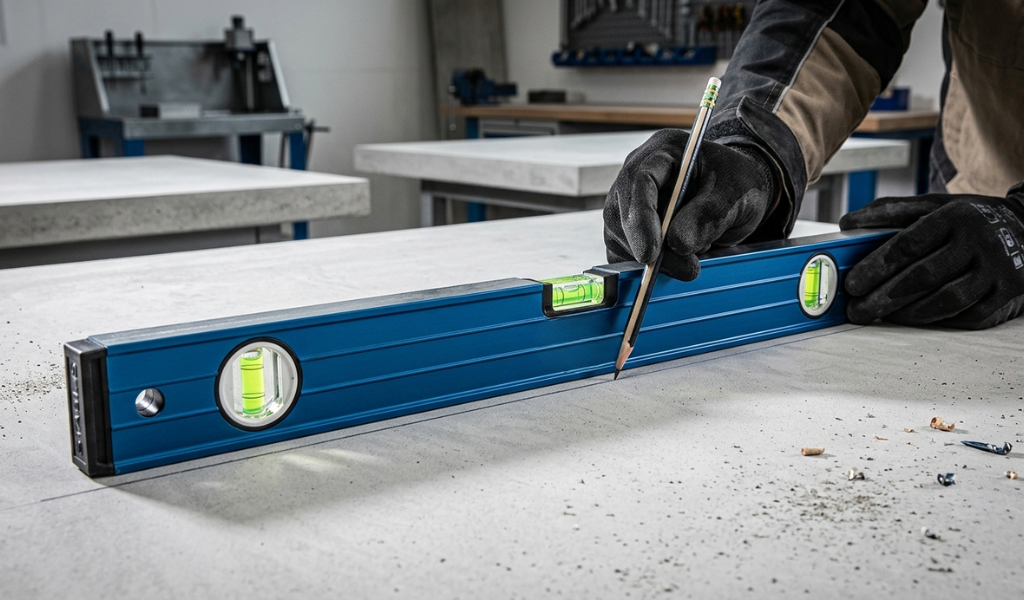
Step 1: Place your spirit level on a flat, stable surface. Mark the position of the level on the surface with a pencil this ensures you can place it back in the exact same spot.
Step 2: Note where the bubble sits. If it’s not already centered, note which side it’s drifting toward.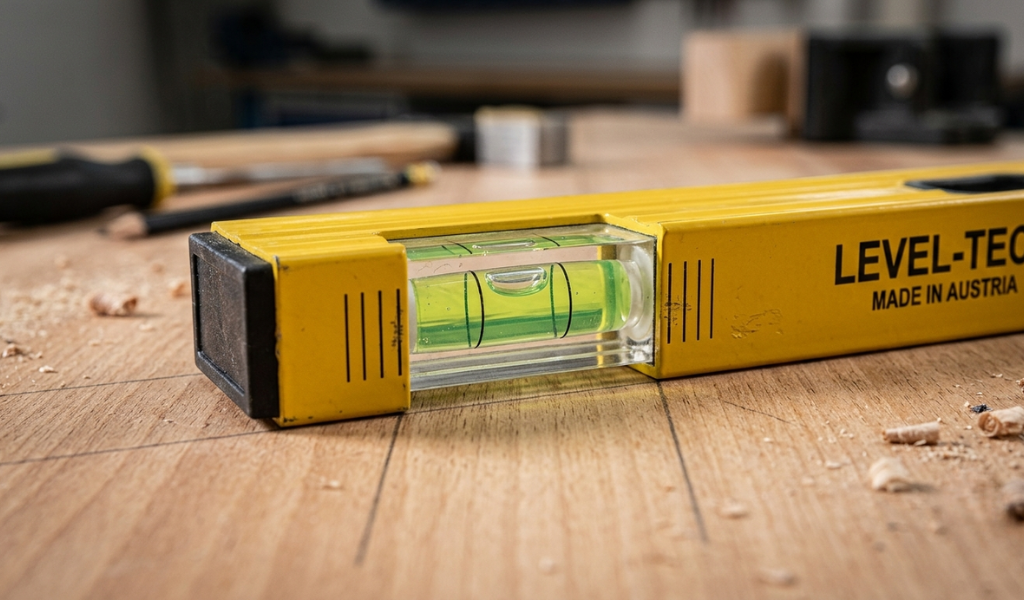
Step 3: Flip the spirit level 180 degrees so that the end that was on the left is now on the right. Place it back on the same surface in the same position.
Step 4: Check the bubble again. If the bubble moves to the opposite side by the same amount, your level is off. If the bubble stays in exactly the same position, your level is accurate.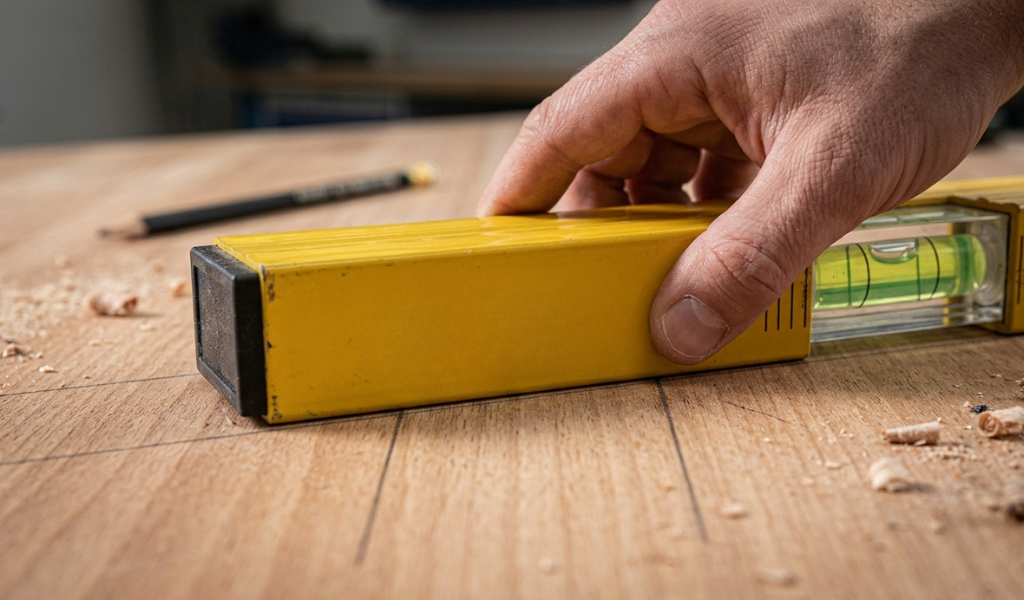
For example, if the bubble drifts slightly to the right in the first reading, and then slightly to the left (by the same amount) after flipping, the vial is off by a consistent margin. The actual difference in reading equals half of the observed drift.
This test works for vertical readings too. Stand the level upright against a wall, mark its position, note the bubble, then flip the level so the top is now the bottom. If the bubble moves, your level needs adjusting.
Beyond the reverse method, there are a few other handy ways to double-check your spirit level.
Most modern smartphones come with a built-in level function through the Compass or Measure app. While not a replacement for a proper spirit level, smartphone apps can give you a quick second opinion. Place your phone on the same surface you’re testing and compare the reading to your spirit level. If there’s a meaningful difference, one of them is off.
If you have access to a surface that’s been professionally set like a granite countertop or a precision-machined surface plate you can use that as your benchmark. Place your level on it and check the bubble. These surfaces are manufactured to be extremely flat, so any deviation in the bubble reading points to the tool.
A spirit level with multiple vials should have all of them checked, not just the main horizontal one. Test the vertical vial separately using the flip test against a wall. Some levels also include a 45-degree test by placing the level diagonally on a surface you know is at 45 degrees, like the edge of a mitered frame.
If your reverse method test shows that your spirit level isn’t accurate, don’t throw it out just yet. Many levels are adjustable.
Some spirit levels come with adjustable vials. Look for small screws or set-points near the vial housing. By loosening these and carefully shifting the vial, you can recalibrate the tool.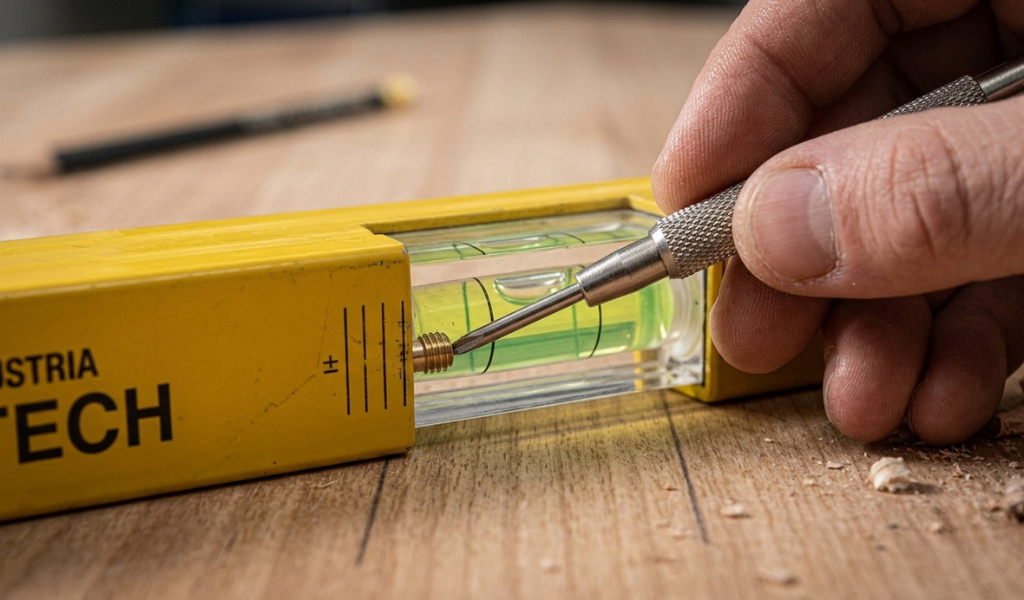 Make small adjustments, then retest using the reverse method. Repeat until the bubble stays consistent when flipped.
Cheaper spirit levels often have fixed vials that can’t be moved. If one of these is off, your best option is to replace it. Continuing to use an inaccurate level can compound small errors across a whole project, so the cost of a new tool is almost always worth it.
Before attempting any adjustment, inspect the level closely. A cracked vial, a bent frame, or a loose end cap can all cause inaccurate readings. If the frame is visibly warped, the level cannot be trusted regardless of how the vials are set.
A well-maintained level can last for years. Here are a few simple habits that go a long way.
Store it properly. Hang your spirit level on a wall hook or lay it flat in a toolbox. Avoid leaning it upright against a wall for long periods over time, this can put pressure on the frame and cause it to bow.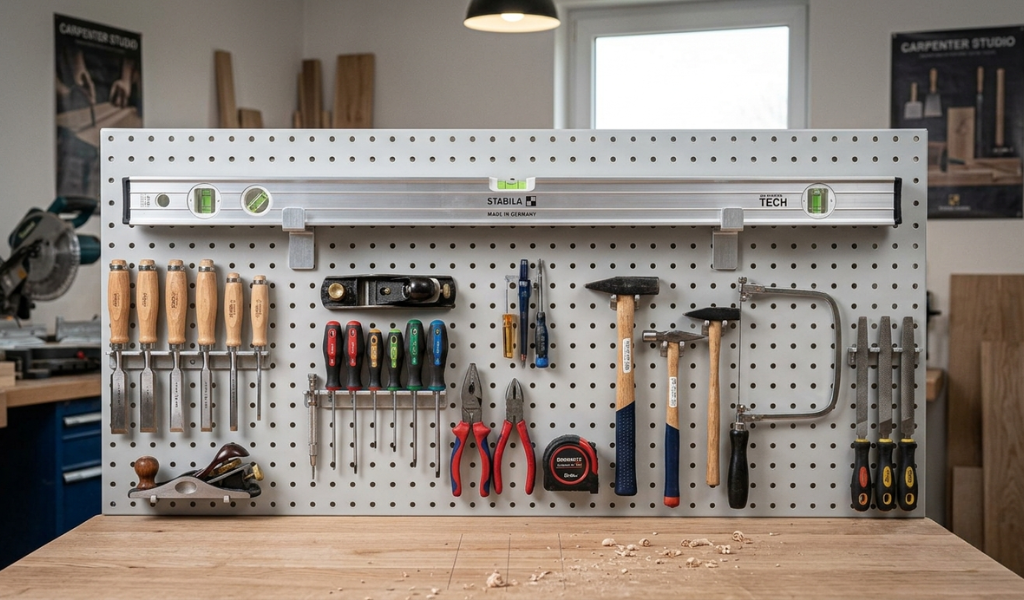
Handle it carefully. Dropping a spirit level on a hard floor is the most common cause of inaccurate readings. The impact can shift the vials inside their housing. If you drop yours, always retest before using it again.
Keep it clean. Dust and debris can get into the vial area and affect the bubble’s movement. Wipe your level down regularly with a dry cloth. For stubborn grime around the vials, use a soft brush.
Retest periodically. Even if you haven’t dropped your level, it’s good practice to run the reverse method test every few months especially if you’re working on precision projects.
Knowing how to check a spirit level is a small skill that saves you a lot of headaches. An inaccurate level doesn’t just make one thing crooked; it can throw off an entire room. Taking two minutes to verify your tool before starting a project is one of the simplest ways to protect the quality of your work.
If you’re in the market for a new level, look for one with adjustable vials and a solid aluminum frame. These tend to hold their calibration longer and are easier to correct when they do drift. And whatever type you choose, traditional, torpedo, or digital, make sure you understand what is a spirit level and how it works before relying on it for critical measurements.
Got a leveling project coming up? Test your spirit level today using the reverse method and start your job with confidence.
What is a spirit level used for?
A spirit level is a tool used to check whether a surface is perfectly horizontal (level) or vertical (plumb). It is commonly used in construction, carpentry, tiling, and home improvement projects to ensure accuracy and alignment.
How do I know if my spirit level is accurate?
The most reliable way is the reverse method test. Place the level on a flat surface, note the bubble’s position, then flip the tool 180 degrees and place it back in the same spot. If the bubble moves, your level is off. If it stays in the same position, your level is accurate.
Can a spirit level be fixed if it’s inaccurate?
Yes, many spirit levels have adjustable vials that can be recalibrated using small screws or set-points near the vial housing. However, if the vials are fixed or the frame is physically damaged, replacing the level is the better option.
What are the main types of spirit levels?
The main types of spirit levels include traditional box or I-beam levels, torpedo levels, and digital or electronic spirit levels. Laser levels are also related tools used for longer-distance leveling tasks.
How often should I check if my spirit level is working correctly?
It’s good practice to test your level every few months, and always after dropping it. For high-stakes or precision work, run a quick reverse method test at the start of every job.
Can I use a smartphone instead of a spirit level?
A smartphone level app can work for casual tasks, but it’s not a substitute for a proper spirit level on serious projects. Apps are useful for quick checks or as a second opinion, but a quality spirit level will always be more reliable.
Why does the bubble in a spirit level move?
The bubble moves because it always floats to the highest point in the liquid-filled vial. When the surface is tilted, the liquid shifts, and the bubble follows. When the surface is perfectly level, the bubble settles in the center between the two marked lines.