Physical Address
304 North Cardinal St.
Dorchester Center, MA 02124
Physical Address
304 North Cardinal St.
Dorchester Center, MA 02124

A spirit level is one of those tools that looks simple but does something incredibly important it tells you whether a surface is perfectly flat or straight. If you’ve ever wondered what is a spirit level, how it works, or which type is right for your project, this guide covers everything you need to know.
From hanging a picture frame to laying a brick wall, spirit levels play a role in more jobs than most people realize. They’re used by carpenters, builders, surveyors, electricians, and even photographers. Yet despite how common they are, many people don’t fully understand how they work, how to choose one, or how to check if one is still giving accurate readings.
By the end of this post, you’ll have a solid understanding of spirit levels, what they are, how to use them, the different types available, and how to make sure yours is working correctly.
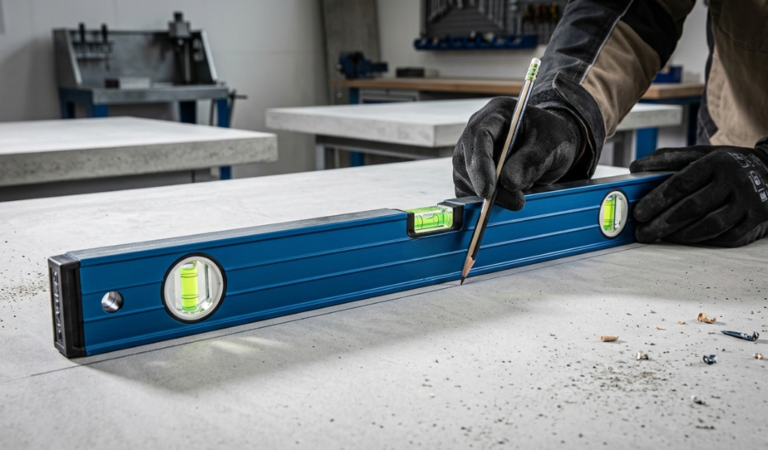
A spirit level, also called a bubble level, is a measuring tool used to determine whether a surface is horizontal (level) or vertical (plumb). The name comes from the mineral spirit solution sealed inside the small glass or acrylic vials built into the tool.
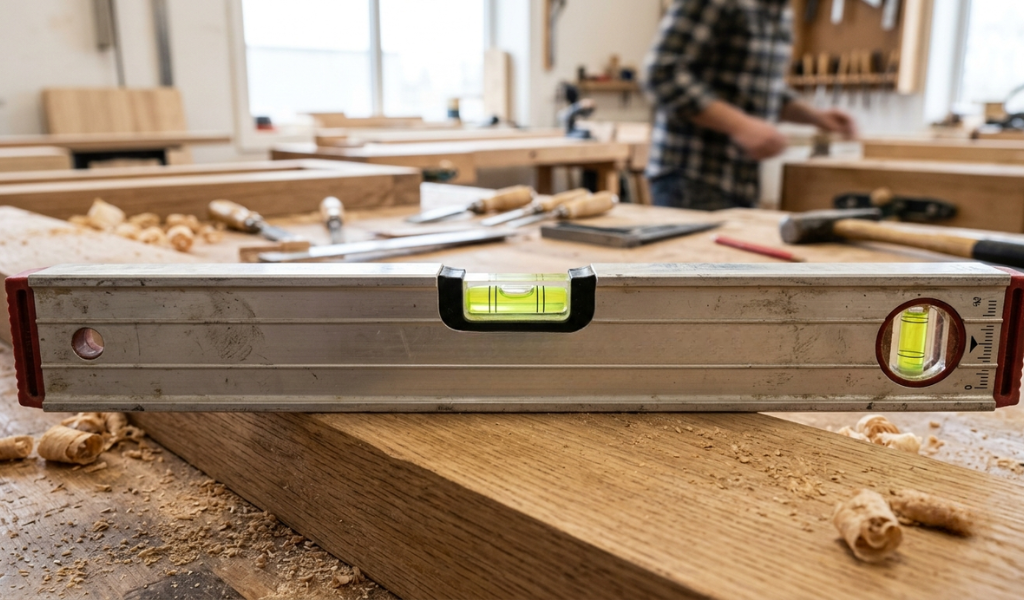
Inside each vial, there’s a small air bubble floating in a liquid, usually alcohol or a similar low-freezing-point fluid. The bubble always rises to the highest point in the vial. When the bubble sits perfectly between two marked lines, the surface beneath the level is either completely flat or completely straight, depending on the orientation of the vial.
The best professional spirit levels are accurate to within plus or minus 0.5 millimeters per meter. That level of precision matters a lot in construction, engineering, and any work where even a slight slope can cause problems down the line.
The science behind a spirit level is straightforward. Gravity pulls everything downward, and the air bubble inside the vial always moves toward the highest point of the tube. When the surface beneath the level is perfectly horizontal or vertical, the bubble floats right to the center between the two etched lines on the vial.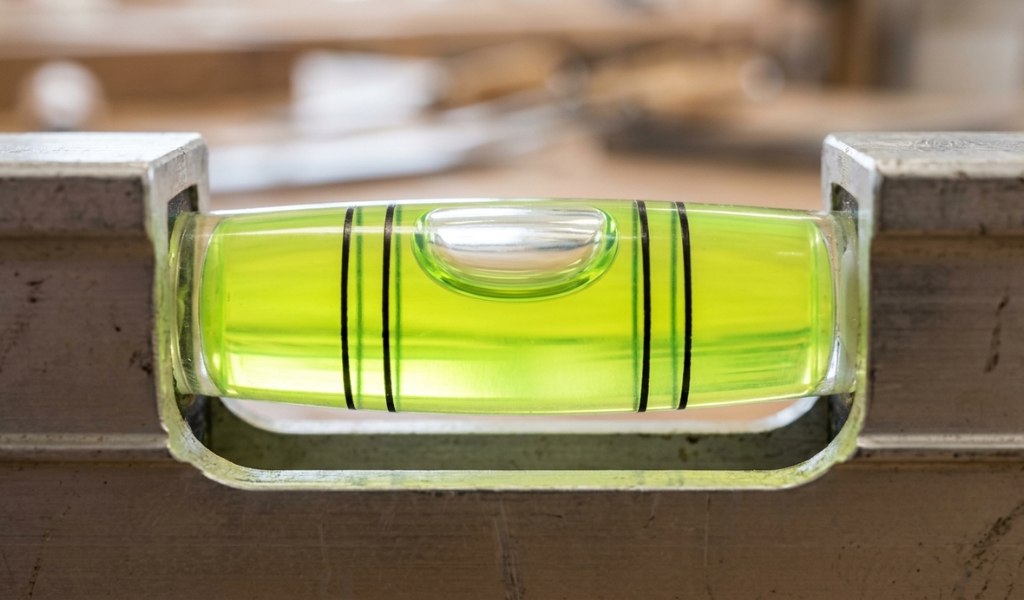
The vials themselves are slightly curved. This curve keeps the bubble from resting flat at the bottom of the tube and helps it settle in the center when the surface is level. Early spirit levels used glass vials, but most modern ones use acrylic, which is more durable and performs well in temperatures ranging from -20°F to 130°F.
The liquid inside is typically a yellowish-green color, which makes it easier to see. Fluorescein or similar dyes are sometimes added to boost visibility, especially in low-light conditions on a job site.
Knowing the types of spirit levels helps you pick the right tool for the job. Each type is designed for a specific kind of work.
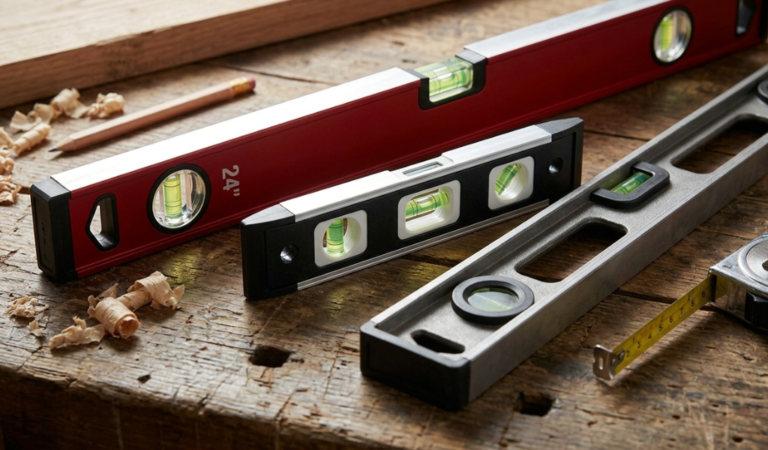
The most familiar type, a carpenter’s level looks like a long, flat plank. It usually has multiple vials — one in the center for horizontal readings and one or two on the ends for vertical readings. They come in wood, aluminum, or composite materials, and range in length from 24 inches to 72 inches or more.
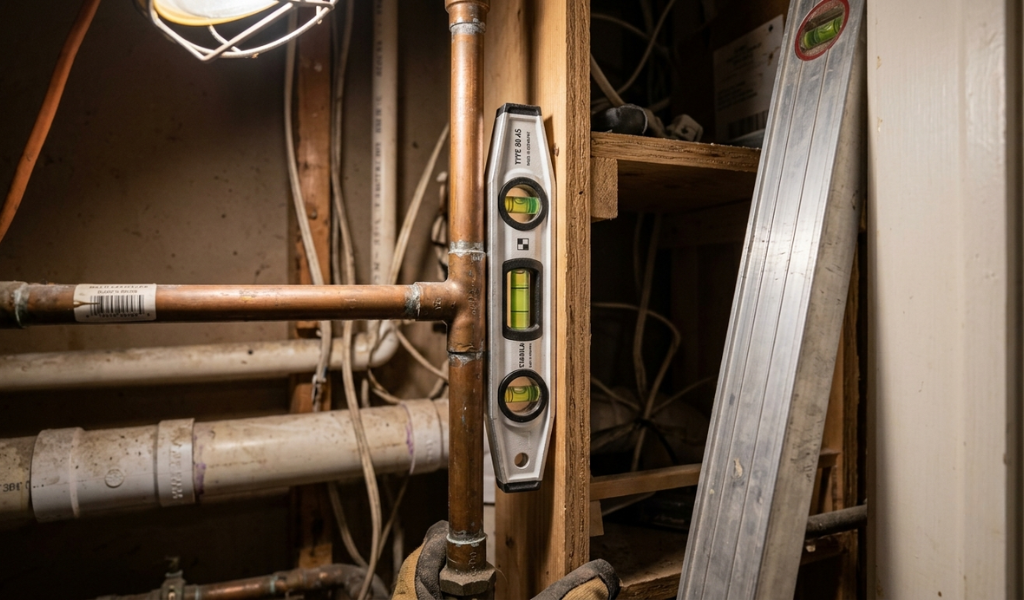
Smaller and more compact than a carpenter’s level, a torpedo level is shaped like a narrow cylinder, slightly wider in the middle. It’s ideal for tight spaces inside cabinets, behind pipes, or when checking small sections of wall or shelf. Many torpedo levels also include a 45-degree vial, which is useful for checking diagonal surfaces.
A line level is designed to hang on a builder’s string line. It’s extremely lightweight so it doesn’t pull the string out of position. The body includes small hooks that attach directly to the string. When hung at the midpoint of a long string, it helps builders check level across a wide span useful in landscaping, foundation work, and fencing.
Built for heavy-duty construction work, a mason’s level is typically longer than a standard carpenter’s level sometimes up to 6 feet. It’s designed to withstand rough job site conditions and is often used for checking long runs of brickwork or blockwork.
A post level wraps around a post or column and allows you to check two sides at once. It’s useful when setting fence posts, deck posts, or support columns, since you need to verify that the post is plumb in both directions simultaneously.
Used in manufacturing and industrial settings, an engineer’s precision level offers much greater accuracy than a standard builder’s level. These tools are used to level the beds of heavy machinery, ensuring that equipment operates within tight tolerances.
An electronic level, or digital level, displays angle readings on a digital screen. This makes it easier to read exact angles and slopes, especially useful for tasks like setting roof pitches, grading drainage, or installing solar panels.
A bull’s eye level is circular and flat-bottomed, with a convex glass face and a circle marked at the center. Unlike a tubular level which checks level in one direction at a time a bull’s eye level checks level across an entire plane simultaneously.
This is a professional-grade tool used in land surveying. It mounts a spirit level on a telescope attached to a tripod. Surveyors use it to measure height differences between two points over long distances sometimes across hundreds of meters. Precise leveling with these instruments can achieve accuracy within a few millimeters per kilometer.
The use of spirit levels spans a wide range of trades and tasks:
Even rifle scopes can be leveled using a bubble level, which helps shooters ensure their crosshairs are perfectly aligned.
Using a spirit level properly takes only a few steps, but technique matters.
Clean the level first. Remove any dirt or debris from the edges, since buildup can throw off your reading.
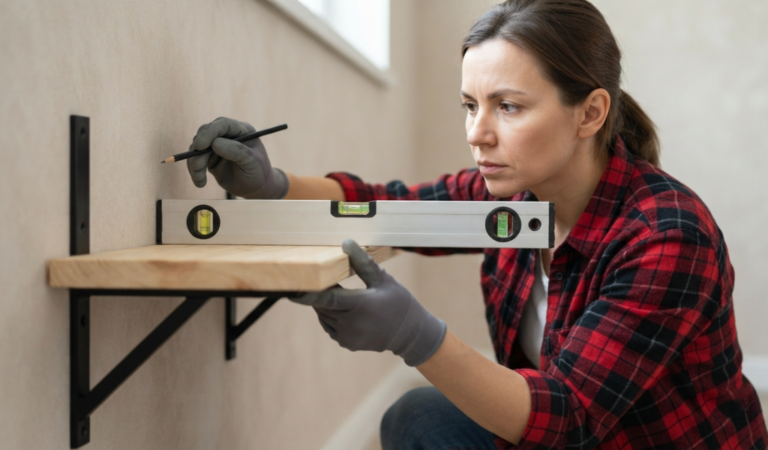
Place the level on the surface you want to check. Make sure the level is resting flat against the surface.
Look at the bubble. Get your eyes level with the vial , don’t look at it from above or at an angle, as this can cause a parallax error and give a false reading.
Read the bubble position. If the bubble sits between the two lines, the surface is level. If the bubble drifts to one side, that side is higher.
Adjust your surface and recheck until the bubble stays centered.
For checking vertical (plumb), rotate the level 90 degrees and hold it against the vertical surface. The same principle applies a centered bubble means the surface is plumb.
Spirit levels can lose accuracy over time, especially if they’ve been dropped or mishandled. Here’s a quick way to verify yours is still giving correct readings:
Place the level on a flat surface. Mark a line at the end of the level and another along its side beneath the center vial and note where the bubble sits. Rotate the level 180 degrees end-to-end, aligning it with your original marks.
Check the bubble again. If the level is accurate, the bubble will sit in the same position as before. A different position means your level has drifted and needs adjustment or replacement.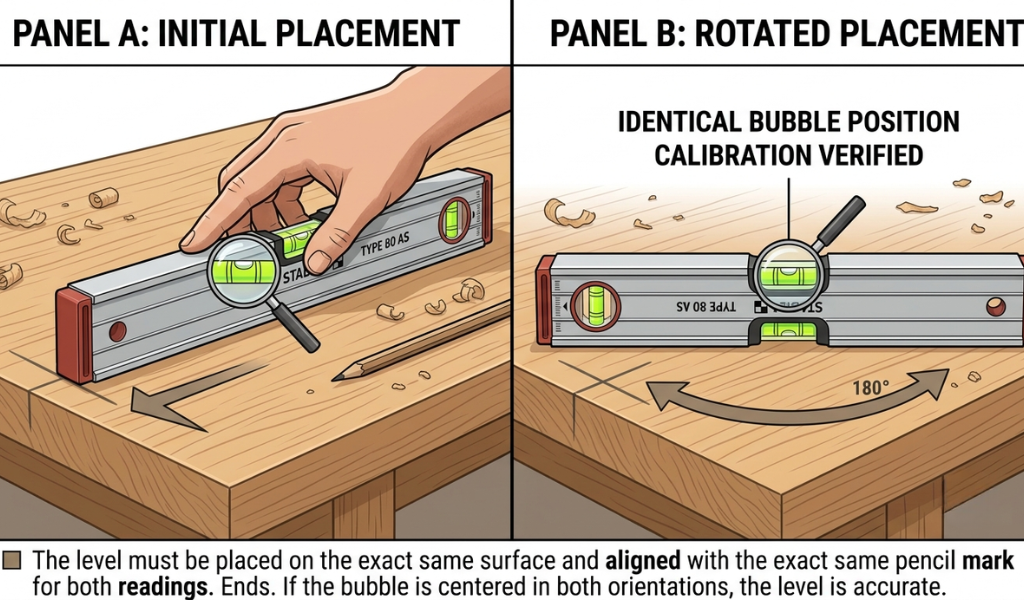
To test the vertical vial, repeat the same process against a flat wall. It’s a simple check, but doing it before a big job can save you from building on a crooked foundation.
Spirit levels and inclinometers are related tools, but they serve different purposes.
A spirit level tells you whether a surface is perfectly horizontal or vertical. It gives you a pass/fail answer whether the surface is level or it isn’t.
An inclinometer sometimes called a clinometer or tilt sensor measures the exact angle of a slope in degrees. It’s used when you need to know precisely how far from level something is, not just whether it’s level or not. Inclinometers are common in engineering, geology, construction of ramps, and the installation of angled systems like solar panels.
Some modern electronic spirit levels combine both functions, displaying both a bubble reading and an exact degree measurement on the same screen.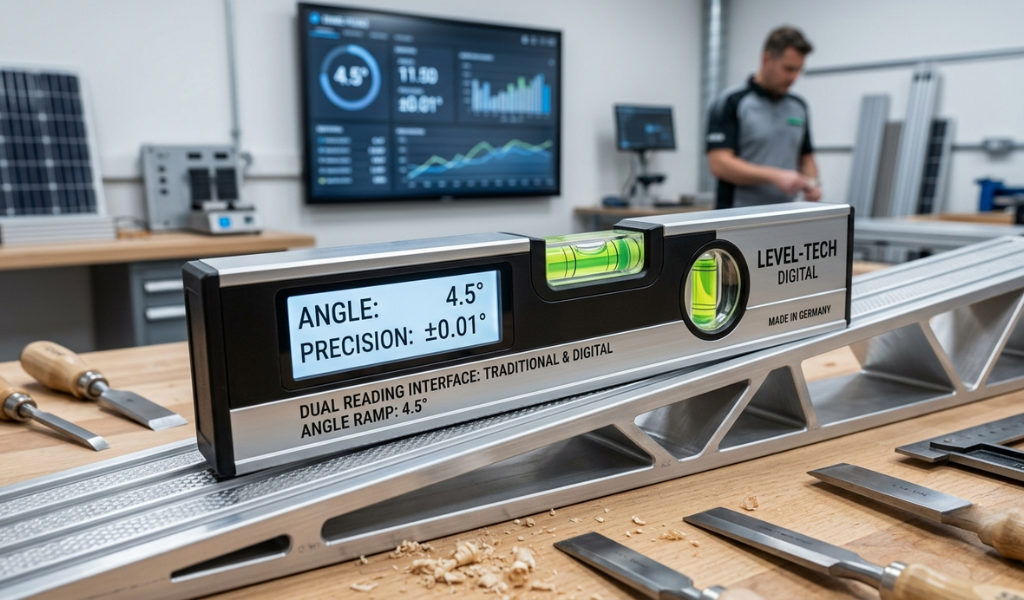
Choosing the right spirit level comes down to the kind of work you’re doing.
Accuracy matters when choosing a spirit level. Look for models rated at 0.5mm/m or better for professional use. Budget levels often range between 1.0mm/m and 2.0mm/m, which may be fine for casual home projects but less suitable for precision work.
A spirit level is one of the most relied-upon tools in construction and trade work, and for good reason. It takes the guesswork out of alignment, ensures structural integrity, and helps professionals and DIYers alike get clean, accurate results.
Whether you’re setting fence posts, tiling a bathroom floor, or leveling industrial machinery, having the right type of spirit level and knowing how to use it correctly makes every job go more smoothly.
Take a moment to check your current level for accuracy before your next project. A small miscalibration can compound into a big problem over a long surface. And if you’re starting out or upgrading your toolkit, invest in a quality level rated for the type of work you do most.
What is a spirit level used for?
A spirit level is used to check whether a surface is perfectly horizontal (level) or vertical (plumb). It’s widely used in construction, carpentry, masonry, plumbing, surveying, and DIY home projects.
Why is it called a spirit level?
The tool gets its name from the mineral spirit typically an alcohol-based liquid sealed inside its vials. The liquid allows an air bubble to move freely and indicates whether a surface is level based on where the bubble rests.
How accurate is a spirit level?
The best professional spirit levels are accurate to within ±0.5mm per meter. Budget or entry-level models typically fall in the ±1.0–2.0mm per meter range, which is less precise but acceptable for basic home use.
What is the difference between a spirit level and a water level?
A spirit level uses an alcohol-based liquid in a sealed vial to give quick, on-the-spot readings. A water level uses a longer tube filled with water to compare elevations across a distance. Spirit levels are more portable and precise for short distances; water levels work better over longer spans.
What is more accurate than a spirit level?
A rotary laser level is significantly more accurate than a standard spirit level. A high-quality rotary laser typically achieves ±1.5mm at 30 meters, compared to a top spirit level’s equivalent of around ±15mm at 30 meters over the same distance.
How do I know if my spirit level is broken or inaccurate?
Place it on a flat surface and note the bubble position. Rotate the level 180 degrees and check again. If the bubble reads differently in both positions, the level is no longer accurate and needs to be recalibrated or replaced.
Can I use a spirit level on a phone?
Yes. Most smartphones have a built-in accelerometer that powers a digital level app. These are convenient for quick checks but not precise enough for professional or structural work, where a physical spirit level or digital inclinometer is a better choice.