Physical Address
304 North Cardinal St.
Dorchester Center, MA 02124
Physical Address
304 North Cardinal St.
Dorchester Center, MA 02124

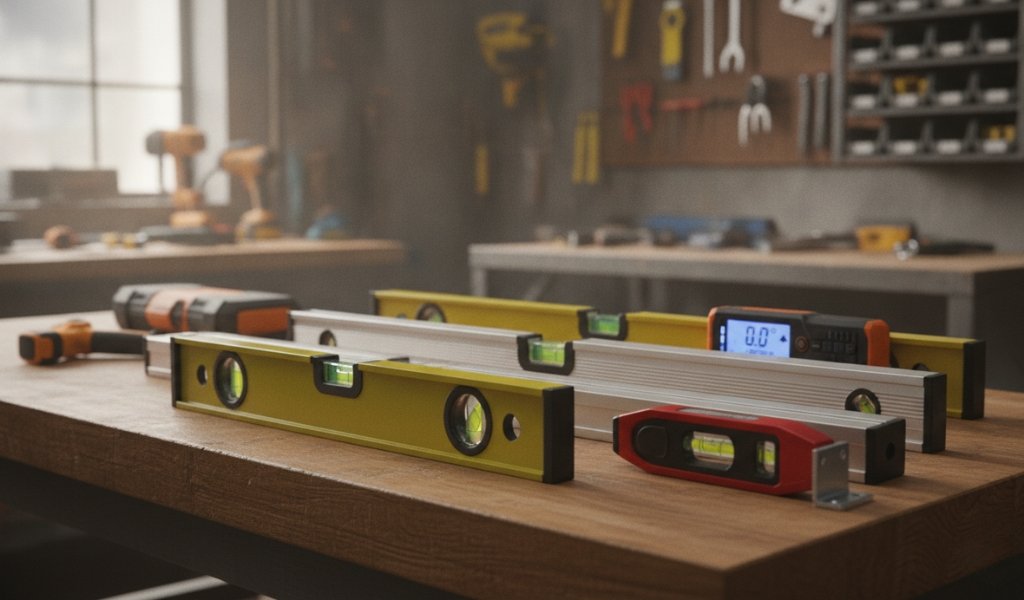
If you’ve ever hung a picture frame, installed kitchen cabinets, or laid a tile floor, you already know how much a small tilt can ruin the whole result. That’s exactly where spirit levels come in. These simple but essential tools tell you whether a surface, structure, or object is perfectly horizontal or vertical saving you from costly mistakes and frustrating rework.
But here’s the thing: not all spirit levels are the same. Walk into any hardware store and you’ll find a whole wall of them different sizes, shapes, materials, and technologies. Knowing which one to grab for a specific job can make a real difference in accuracy, speed, and ease of use.
This guide covers all the main types of spirit levels, how each one works, and when to use them. Whether you’re a seasoned trades-person or a weekend DIY enthusiast, by the end of this post you’ll know exactly which level belongs in your toolbox.
A spirit level is a measuring tool used to check whether a surface is level (horizontal) or plumb (vertical). The name comes from the liquid inside the small sealed vials — traditionally a mixture of alcohol and a colored dye, which is why it’s sometimes called a “spirit” level.
Each vial contains a small air bubble. When the bubble sits perfectly between the two marked lines on the vial, the surface you’re measuring is level. If the bubble drifts to one side, the surface is tilted. Simple, effective, and reliable.
Modern spirit levels come in many different forms from old-school bubble vials to high-tech laser projectors — but the core principle remains the same: find true level and plumb with the greatest possible accuracy.
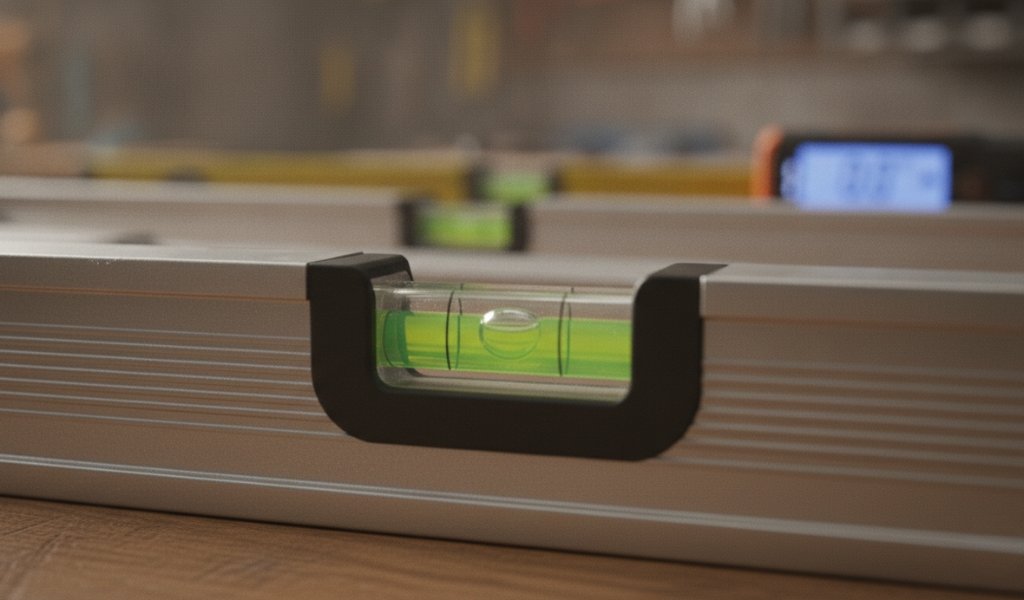
The standard spirit level is the one most people picture when they hear the term. It’s a flat, straight bar usually made from aluminum or heavy-duty plastic — with one or more vials built into the body. Most standard levels include at least two vials: one for checking horizontal level and one for checking vertical plumb.
These levels come in a wide range of lengths, typically from 40 cm (about 16 inches) up to 180 cm (around 6 feet) or longer. A longer level gives you a more accurate reading across a wider surface, while a shorter one is easier to carry and maneuver.
Best for: Hanging shelves, installing doors and windows, laying flooring, checking countertops, general construction work.
Pros:
Cons:
If you only own one spirit level, this is the one to start with. It handles the vast majority of everyday tasks with ease.
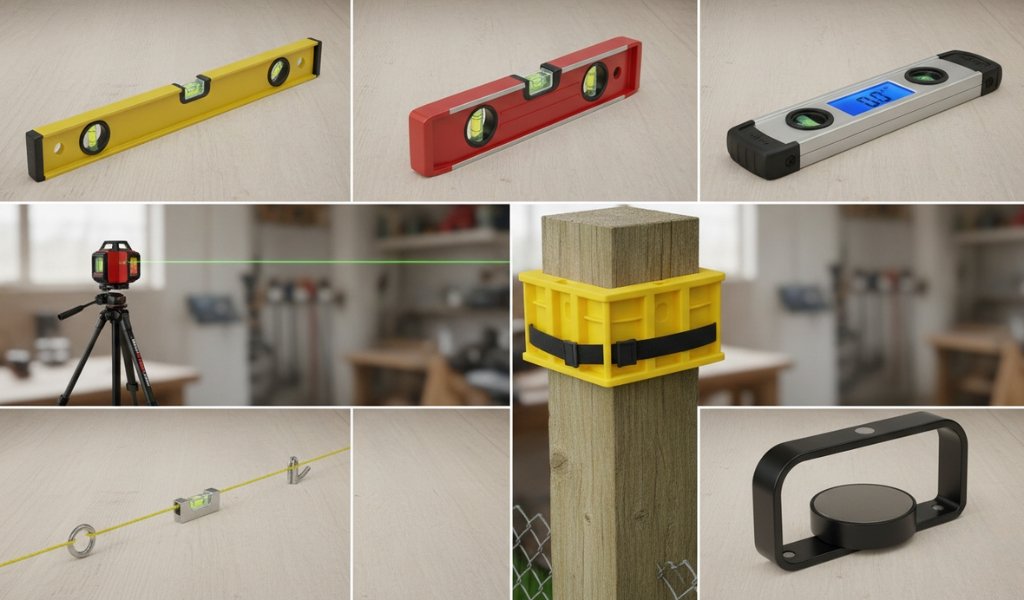
The torpedo level gets its name from its shape — it’s short, compact, and slightly tapered at both ends, resembling a torpedo. Typically between 20 cm and 30 cm long, torpedo levels are designed for tight or awkward spaces where a full-length level simply won’t fit.
What sets the torpedo level apart is that most models include three vials: one for horizontal, one for vertical, and one set at 45 degrees. That third vial makes it particularly handy for plumbing work, electrical conduit installation, and any task that involves angled surfaces.
Best for: Plumbing, electrical work, under sinks, inside cabinets, pipe fitting, working in confined spaces.
Pros:
Cons:
For tradespeople who work in tight spots regularly, a torpedo level is practically indispensable.
Magnetic spirit levels function just like standard bubble levels, but with one key difference: they have strong magnets built into the base. These magnets allow the level to attach directly to metal surfaces — steel pipes, iron beams, metal door frames — freeing up both hands for other tasks.
This type of spirit level is especially popular among electricians, plumbers, and metalworkers. Instead of holding the level in place while trying to adjust something simultaneously, you simply stick it to the surface and let the magnets do the holding.
Best for: Metal pipes, steel beams, conduit installation, HVAC work, any job involving iron or steel surfaces.
Pros:
Cons:
If you frequently work with metal structures, upgrading to a magnetic spirit level is well worth the small additional cost.
Digital spirit levels replace the traditional bubble vial with an electronic sensor and a digital display. Instead of reading a bubble, you get a precise numerical angle reading — often accurate to within 0.1 degrees — shown on a clear LCD screen.
Many digital levels also include audio alerts (a beep when you reach true level), memory functions to store reference angles, and backlit displays for working in low-light conditions. Some higher-end models can measure angles across a full 360-degree range.
Best for: Precision carpentry, staircase installation, roof framing, tile work, any project requiring exact angle measurements.
Pros:
Cons:
For professional carpenters and builders who need exact readings rather than approximate ones, a digital spirit level is a solid investment.
Laser levels take the concept of leveling to a whole new scale — literally. Rather than reading a bubble on a short tool, a laser level projects a visible beam of light (or multiple beams) across a room. That projected line acts as a reference, allowing you to align objects across a large area without constantly repositioning your tool.
There are several varieties of laser levels:
These project one or more straight lines — horizontally, vertically, or both across a wall or floor. They’re ideal for tiling, installing drop ceilings, hanging a row of pictures, or laying out large floor areas.
Rotary lasers spin the beam at high speed to project a 360-degree line around an entire room. These are common on construction sites for grading, foundation work, and large-scale leveling tasks.
These project individual reference dots rather than lines, allowing you to transfer a point from one surface to another — useful in plumbing and electrical rough-in work.
Best for: Large rooms, construction sites, tiling, drop ceilings, landscaping, professional contractors.
Pros:
Cons:
A post level is a specialized tool designed specifically for checking fence posts, deck posts, and similar vertical structures. It wraps around a square or round post and uses two vials positioned at 90 degrees to each other, so you can check plumb on both faces of the post at the same time.
Most post levels have a simple clip or strap system that holds them firmly in place while you drive the post into the ground, again leaving your hands free to work.
Best for: Fence installation, deck building, mailbox posts, sign posts.
Pros:
Cons:
A line level is a small, lightweight level designed to clip onto a string line stretched between two points. It’s a low-tech but effective tool commonly used in masonry, landscaping, and foundation work to ensure a long horizontal reference line stays level across a distance.
Best for: Bricklaying, block work, landscaping, garden edging, foundation layout.
Pros:
Cons:
With so many different types of spirit levels available, the best choice comes down to what you’re building, where you’re working, and how much precision you need.
There’s no single “best” spirit level. Most experienced tradespeople carry two or three types because different jobs genuinely call for different tools.
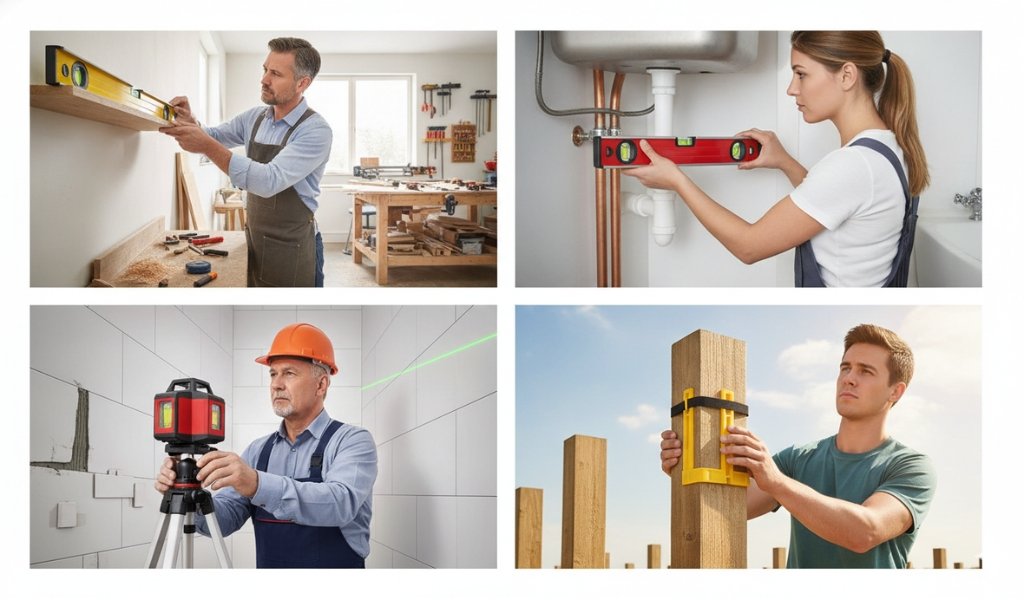
Spirit levels are one of those tools that seem simple on the surface but matter enormously in practice. A surface that’s even slightly off can cause problems — crooked tiles, uneven shelves, doors that won’t close properly, or structural issues that only become obvious months later.
Understanding the different types of spirit levels and when to use each one means you’ll work more accurately, waste less time, and get cleaner results. Start with a good standard level, add a torpedo level if you work in tight spaces, and consider a digital or laser level as your projects grow in scale and complexity.
Got a big project coming up? Take a few minutes to think about which spirit level — or combination of levels — will serve you best. The right tool really does make all the difference.
The standard bubble spirit level is the most widely used type. It’s affordable, easy to read, and handles most everyday tasks from hanging pictures to installing shelving and checking floor tiles.
A spirit level uses a liquid-filled vial with an air bubble to check level and plumb over short distances. A laser level projects a beam of light to create a visible reference line, making it better suited to large areas or long-distance alignment tasks.
Digital spirit levels are generally more accurate, with many models reading to within 0.1 degrees. Standard bubble levels typically have an accuracy of around 0.5 mm per meter, which is sufficient for most general construction and DIY work.
No — magnetic spirit levels are designed specifically for ferromagnetic surfaces like steel and iron. On wood, plastic, or masonry, the magnets won’t grip, so a standard or torpedo level would be a better choice.
For most home DIY tasks, a 60 cm (24-inch) standard spirit level is a practical starting point. It’s long enough to give accurate readings on shelves, cabinets, and tiles, while still being easy to store and carry.
Place your level on a flat surface and note the bubble position. Flip the level 180 degrees on the same surface and check again. If the bubble reads in the same position both ways, the level is accurate. If not, it may need recalibration or replacement.
For floor and wall tiling, a standard spirit level works well for individual tiles and small sections. For larger areas, a laser line level is more efficient it projects a reference line across the whole wall or floor so you can keep every row consistently level.