Physical Address
304 North Cardinal St.
Dorchester Center, MA 02124
Physical Address
304 North Cardinal St.
Dorchester Center, MA 02124

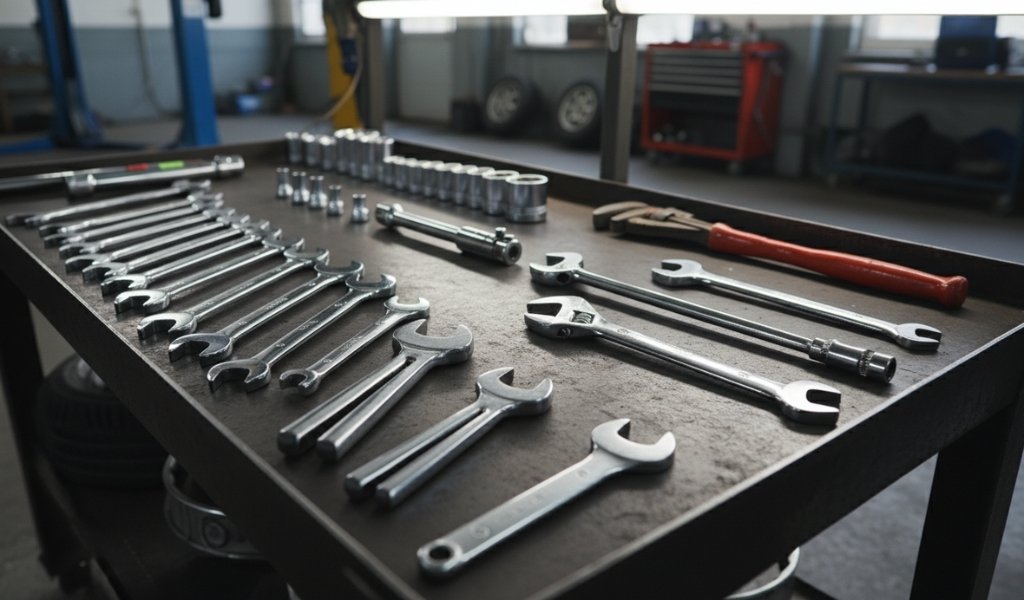
Quick Summary : A wrench is a versatile hand tool used to provide grip and mechanical advantage for turning objects—usually rotary fasteners like nuts and bolts; indeed, a wrench is a versatile tool in any mechanic’s arsenal. Selecting the proper tool involves matching the tool’s opening to the fastener profile. The most common types of wrenches include the variable crescent model, combination wrench, socket wrench, and torque wrench, each designed for specific mechanical or plumbing applications.
Step into any professional automotive shop or industrial work site, and you will immediately notice the sheer volume of tools lining the toolboxes. Among the air compressors and diagnostic scanners, one foundational hand tool remains absolutely vital: the wrench. Mastering these tools requires understanding the different types available and matching them precisely to the job at hand.
Over decades of turning fasteners, breaking loose rusted suspension components, and performing delicate engine rebuilds, I have learned that a wrench is a hand tool that represents far more than a simple piece of forged steel. It is an extension of the mechanic’s hand. Using the wrong tool damages fasteners, ruins components, and causes severe knuckle injuries. Understanding wrenches and their uses separates the weekend amateur from the seasoned professional.
This comprehensive guide will explore the various mechanical hand tools available to mechanics and DIYers alike. We break down exactly how picking the appropriate tool impacts your efficiency, examine specialized equipment for tight spaces, and outline safety protocols that will keep your tools—and your hands—in top condition.
At its core, this mechanical wrench is used to apply torque to turn a fastener, such as nuts and bolts. Understanding various types of wrenches shows how they operate through simple leverage. The longer the handle, the more rotational force you can apply to the fastener. A standard wrench is typically forged from chrome vanadium alloy steel, offering immense strength and resistance to corrosion.
Understanding the different types of tools available begins with the anatomy of the tool itself. The tool’s gripping end dictates how it secures the fastener. Some grip the flats of a hex head, while others wrap completely around the hardware to prevent slipping. Because fasteners come in different sizes, wrenches come in various types and metric or standard (SAE) measurements. Wrenches are made to strict tolerances. Matching the correct tool profile to specific wrench uses guarantees you won’t end up with a rounded-off bolt.
There are many different types of wrenches every mechanic should have in their workshop. Knowing which standard configuration or specialty tool to grab saves time and frustration. Picking the correct option from your drawer cuts down on project delays. Let us break down the top styles.
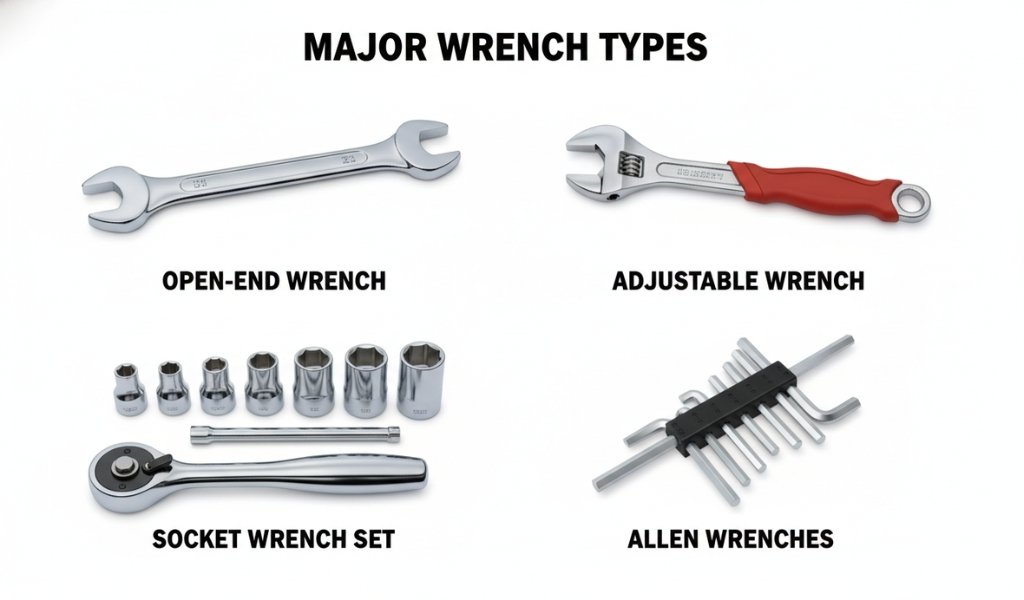
A combination wrench combines two fundamental profiles into a single tool. One side features an open-end wrench, which slides onto a fastener from the side. This is highly useful in restricted areas where you cannot drop a tool directly over the top of the bolt. However, an open-ended wrench only contacts two sides of the fastener, making it prone to slipping under heavy torque.
The opposite side is the box-end wrench (or simply box wrench). This enclosed wrench head slides over the fastener, gripping all six points (or twelve, depending on the broaching). A box wrench offers superior grip and allows you to break loose stubborn bolts without rounding them. When assembling your toolbox, buying a complete set of combination wrenches is the most critical first step.
When you do not know the exact wrench size required, an adjustable wrench is your best friend. Often referred to commonly as a crescent wrench, this tool features a fixed jaw and a movable jaw adjusted via a worm gear. An adjustable wrench allows you to tackle different sizes of hardware with a single tool. However, it requires careful adjustment to prevent slipping.
A monkey wrench operates on a similar principle but features smooth, parallel jaws situated at a right angle to the handle. Unlike a modern crescent-style tool, the heavy-duty monkey wrench is primarily used for larger, flat-sided hardware or historical plumbing applications.
A socket wrench utilizes a ratcheting mechanism and interchangeable sockets to fit nuts and bolts. This tool allows for rapid tightening or loosening without removing the wrench head from the fastener after every turn. The standard socket wrench is arguably the most frequently used item in a mechanic’s arsenal.
Similarly, a ratcheting wrench looks like a standard combination wrench but integrates a geared ratcheting mechanism inside the enclosed box end. A ratchet wrench allows you to operate in tight spaces where a bulky socket head cannot fit, providing both speed and convenience.
For heavy-duty plumbing, a pipe wrench is mandatory. This tool features hardened, serrated teeth designed to dig into soft iron or steel pipes. The harder you pull, the tighter the jaws grip. Because these teeth destroy the finish of whatever they grab, never use a pipe wrench on standard hex hardware or decorative fittings.
To grip delicate or irregularly shaped items without scratching them, you need a strap wrench. A strap wrench utilizes a sturdy rubber or woven belt that grips via friction. It is perfect for PVC piping or polished plumbing fixtures. Plumbers might also carry a chain wrench for larger industrial pipes, and a basin wrench for reaching up behind sinks to secure faucet nuts.
An allen wrench (or hex key) is an L-shaped piece of hexagonal steel used for driving bolts with internal hex sockets. These are ubiquitous in furniture assembly and bicycle maintenance. A lug wrench (often cross-shaped) is a specialized tool specifically designed to remove wheel lug nuts from automotive vehicles, providing massive leverage to free over-tightened hardware.
Beyond the common wrenches, mechanics rely on specialized variations to complete complex tasks efficiently.
Automotive work demands specific tools. An oil filter wrench or standard filter wrench grips the smooth cylindrical body of a spin-on oil filter, allowing easy removal during routine service.
When working on brake lines or fuel systems, a flare nut wrench is non-negotiable. This tool looks like a box wrench with a small section cut out. The gap allows the wrench to slip over the fluid line, while the enclosed head grips multiple sides of the soft brass or steel fittings, preventing them from rounding off.
A crowfoot wrench is a specialized attachment that snaps onto a standard socket extension. It acts like an open-end wrench but operates at a 90-degree angle, allowing you to reach fasteners buried deep within an engine bay. Other specialty automotive tools include the pedal wrench for bicycle mechanics, flat clutch wrenches and clutch wrenches for adjusting specific fan clutches, cone wrench tools for bearing adjustments, the spanner wrench for adjustable coilover suspensions, the striking wrench for breaking loose industrial bolts with a sledgehammer, and the alligator wrench for gripping odd-shaped hardware.
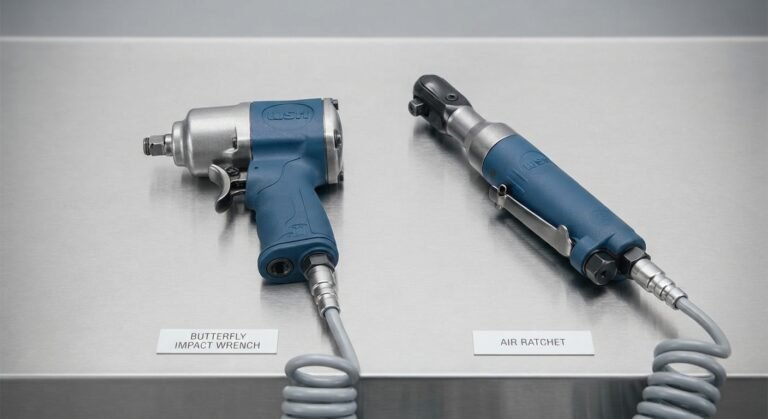
In extremely restricted areas, such as working near automotive transmissions or HVAC assemblies, standard tools simply cannot articulate. You need to know what is a butterfly wrench and what it is used for. This compact air tool utilizes a butterfly-style throttle paddle, allowing for one-handed operation to quickly zip small fasteners in or out where a full-sized pneumatic gun would never fit.
Modern machinery requires precise assembly. Over-tightening stretches bolts and warps components, while under-tightening leads to catastrophic failures.
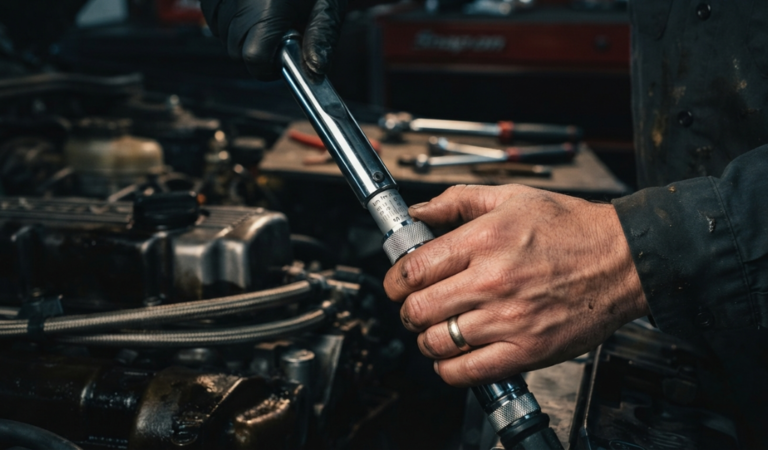
This specialty tool is a precision measuring instrument used to apply a specific, pre-determined amount of rotational force to a fastener.
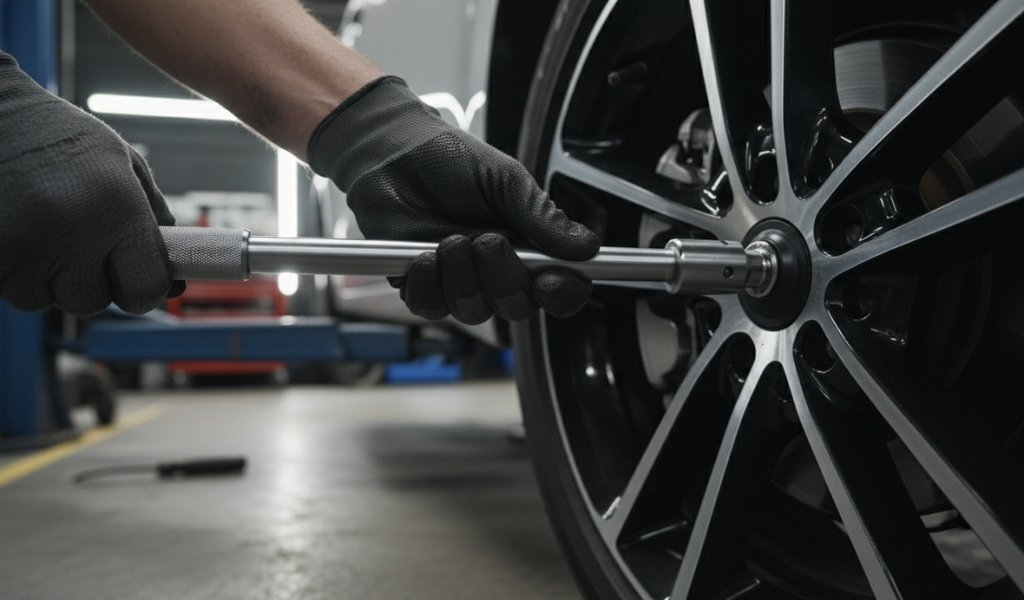
Using this precision gear is essential for critical engine components like cylinder heads, wheel lugs, and suspension parts.
Achieving factory specifications requires exact methodology. Understanding how to set and read a torque wrench correctly: step-by-step ensures your assemblies hold together safely. First, unlock the handle base. Rotate the grip until the micrometer scale aligns with your target value in foot-pounds or Newton-meters. Lock the base, apply smooth, steady pressure to the fastener, and stop immediately when you hear and feel the mechanical “click.”
When bolts break or threads strip, you must cut new ones. Knowing how to use a t-handle tap wrench for thread repair saves expensive components. Secure the thread-cutting tap securely into the jaws of the tap wrench. Apply cutting fluid, insert the tap perfectly straight into the pre-drilled hole, and turn it slowly, backing it off every half-turn to clear the metal chips. You might also encounter a plug wrench in this context to seat specific threaded inserts.
Understanding the types of wrenches is essential for protecting your investment, and knowing how these types of wrenches include specific torque or pressure safety limits helps prevent severe injuries.
Always pull a wrench toward your body rather than pushing it. If a bolt suddenly breaks loose while you are pushing, your knuckles will smash directly into the surrounding metal. Choose the right wrench for the job; never use standard sizes on metric hardware, as the loose fit will strip the fastener. Wipe down your tools with light machine oil to prevent rust, and keep the jaws of any wrench type clean of grease to prevent slipping.
A common question among beginners is can you use a torque wrench to loosen bolts? The definitive answer is no. This type of manual equipment is a sensitive calibration instrument. Using it as a breaker bar to unseize rusted nuts will damage the internal spring mechanism, permanently ruining its calibration. Always use a standard ratchet or dedicated breaker bar for disassembly.
Wrench designs feature so many variations that building a tool collection can feel overwhelming. Start with a high-quality set of combination wrenches in both metric and SAE sizes. Next, invest in a reliable 3/8-inch drive socket set and an adjustable wrench for general utility.
As your skills grow, add specialized tools based on your specific projects. A dedicated mechanic will eventually purchase an impact wrench for heavy teardowns, a pipe wrench for shop plumbing, and a precision torque wrench for engine assembly. Always look for tools forged from durable alloys with comfortable, ergonomic wrench features.
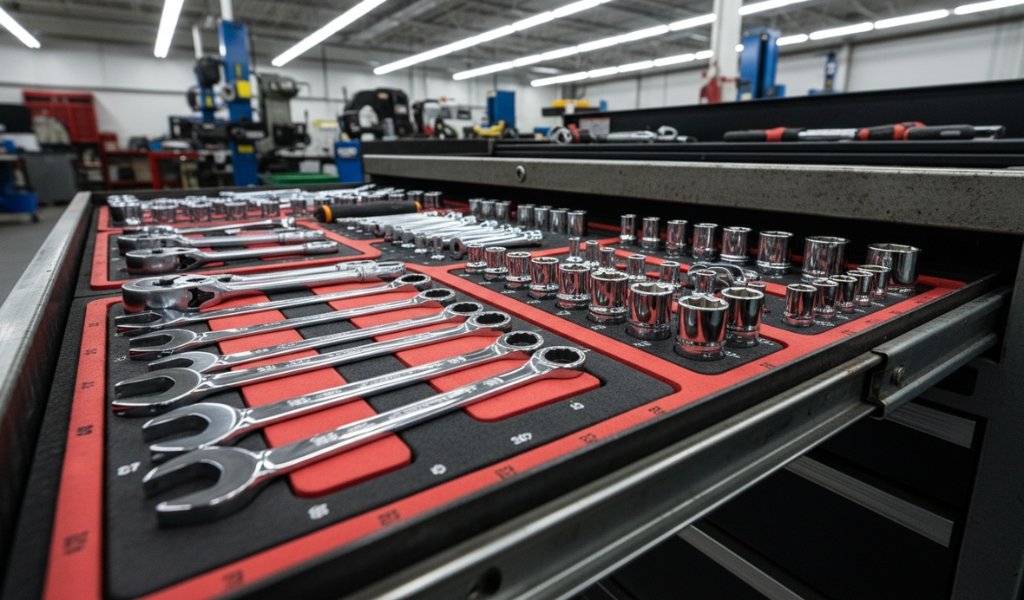
Many types of wrenches exist, but investing in quality up front prevents purchasing the same tool twice.
While it is difficult to give an exact number due to proprietary industrial designs, there are over 40 distinct types of wrenches. The different types of wrenches available cover everything from common household assembly to aerospace. Each unique wrench is designed for a specific load, making it critical to explore the different types before purchasing.
A monkey wrench has smooth jaws that sit at a 90-degree right angle to the handle, designed primarily for heavy, flat-sided objects. A crescent-style adjustable wrench has jaws that are angled (usually 15 degrees) relative to the handle, allowing for better access to standard hex nuts and bolts in tighter spaces.
For hanging pictures or assembling basic furniture, a quality adjustable wrench may suffice. However, if you plan on doing automotive maintenance, plumbing repairs, or bicycle work, a full wrench set is mandatory. An adjustable tool is prone to slipping under high torque, whereas an end wrench specifically sized for the hardware provides safe, reliable grip.
A socket wrench uses a ratcheting handle combined with detachable, cylindrical sockets to fit over bolts. A ratchet wrench is a single-piece tool (looking like a standard combination wrench) that has a geared ratcheting mechanism built directly into its enclosed box-end head.
The three most common styles are the click-type (which emits an audible and tactile click when torque is reached), the beam-type (which uses a bending steel beam and a visual scale), and the digital/electronic type (which uses strain gauges and beeps to indicate precise torque values).
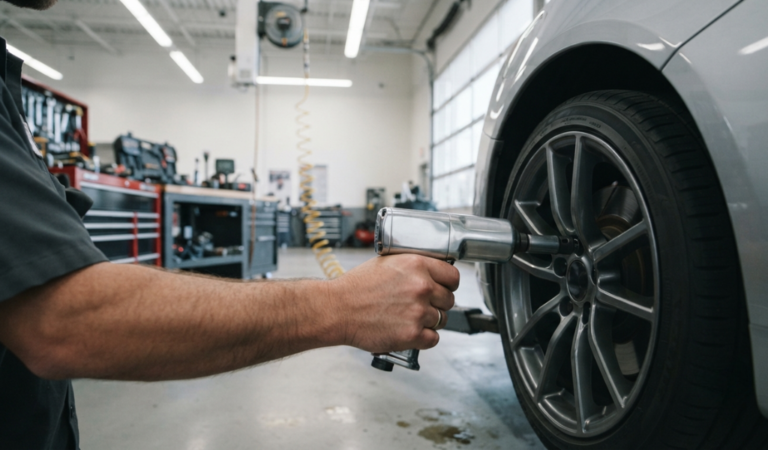
An impact wrench utilizes a heavy internal anvil mechanism driven by air or electricity to deliver massive rotational torque for loosening large, stuck nuts and bolts (like wheel lugs). An impact driver is a smaller, lighter power tool designed to drive long screws into wood or metal without stripping the screw heads. Choose the impact wrench for heavy automotive mechanics and the driver for carpentry.