Physical Address
304 North Cardinal St.
Dorchester Center, MA 02124
Physical Address
304 North Cardinal St.
Dorchester Center, MA 02124

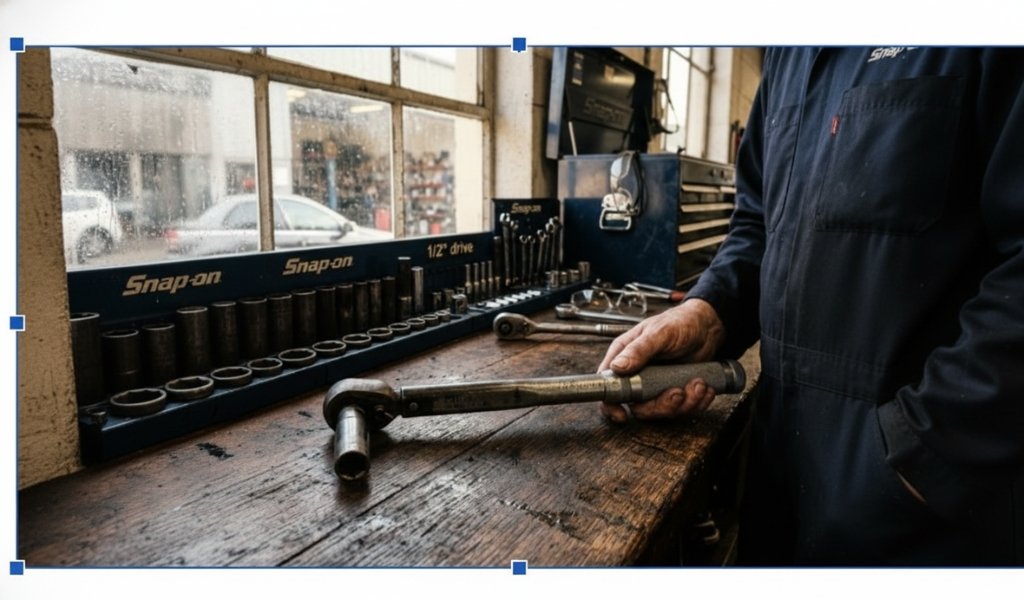
Every mechanic knows that precision is the difference between a job well done and a catastrophic mechanical failure. When you tighten a bolt, you are essentially stretching it to create clamping force. If you apply too little force, the bolt vibrates loose. If you apply too much, you risk stripping the threads or snapping the fastener entirely. This is exactly why knowing how to set a torque wrench properly is a fundamental skill for anyone working on vehicles or heavy machinery.
Whether you are rebuilding an engine block or simply tightening lug nuts, the correct torque ensures that every component performs safely under pressure. While there is more than one type of torque wrench on the market, understanding the mechanics of how they measure and apply force is universal to your success in the garage.
If you are currently setting up your toolbox and want to understand where these tools fit into your wider arsenal, be sure to check out our comprehensive guide to automotive wrenches. It will give you the foundational knowledge you need before diving deep into the specifics of precision tensioning.
In this guide, we are going to walk you through exactly how to adjust the torque wrench, how to read the micrometer scales correctly, and the best practices for maintenance. By the time you finish reading, you will understand how to reach the desired torque every single time, keeping your projects safe, secure, and professionally assembled.
Applying the proper torque is not just a recommendation; it is an engineering requirement. When automotive manufacturers build a vehicle, they specify a torque specification for almost every fastener. This recommended torque ensures that the clamping force is evenly distributed across parts like cylinder heads, wheels, and suspension components.
Failing to set the torque accurately can lead to severe consequences. If you exceed the maximum torque, you risk stretching the bolt beyond its yield point. This permanently damages the fastener and the internal threads. On the flip side, failing to reach the specific torque means the parts could loosen under the heavy vibrations of driving.
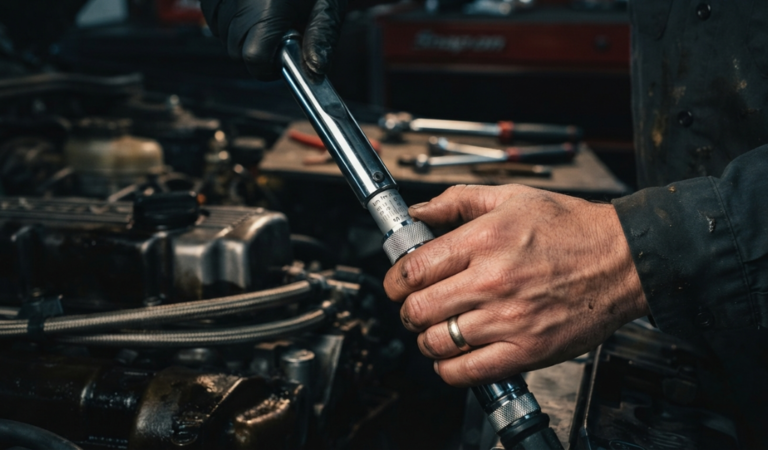
Using your torque wrench correctly eliminates the guesswork. Whether you use a traditional mechanical tool or an advanced electronic torque wrench, the goal is the same: applying the exact amount of torque required by the service manual.
To understand how to set your torque wrench, it helps to know what is happening inside the tool. A click-type torque wrench—often referred to as a clicker-style torque wrench—operates using an internal spring and a calibrated pawl mechanism.
When you turn the handle of the torque wrench, you compress this internal spring. The tighter you compress it, the more force is required to overcome the tension. Once the torque applied through the body of the wrench matches the tension of the spring, the mechanism slips. This slip creates the signature “click” you feel and hear. When the wrench emits an audible click, it means the torque has been reached, and you must immediately stop pulling.
While different types of torque wrenches exist—such as the beam torque wrench which uses a flexing metal shaft, or the digital torque wrench which uses a strain gauge and a digital scale to display torque—the click torque wrench remains the industry standard for most mechanics due to its reliability and ease of use.
Before you can set the desired torque, you must know how to read the scales stamped onto the tool. Most torque wrenches come with dual scales: Foot-Pounds (Ft-Lbs) on one side and Newton-Meters (Nm) on the other.
The reading mechanism consists of two main parts:
To measure the torque, you add the number on the thimble scale to the highest visible number on the primary scale. For example, if the edge of the handle is at the 50 ft-lb line on the body, and the 0 on the thimble lines up with the center vertical line, your torque setting is exactly 50 ft-lbs. If you rotate the handle so the 3 aligns with the center line, your desired torque setting is now 53 ft-lbs.
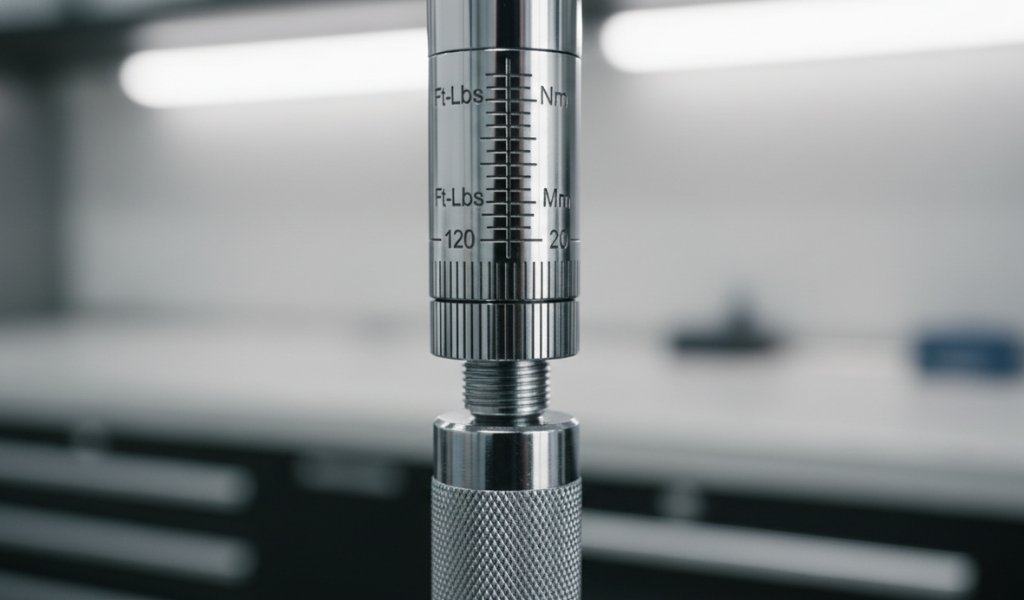
When you need a torque wrench for a job, precision is your top priority. Here is how you configure the tool to ensure the correct torque setting is applied to your fastener.
Before adjusting a torque wrench, you must unlock it. At the base of the handle of the torque wrench, there is usually a lock nut or a locking collar.
Now you are ready to set the torque wrench to your desired torque value.
For example, if the recommended torque is 105 ft-lbs, rotate the handle until it passes the 100 mark, then align the 5 on the thimble with the centerline.
Once the specific torque is dialed in:
A torque wrench set is an investment. To ensure your torque tools maintain their accuracy, proper maintenance is strictly required.
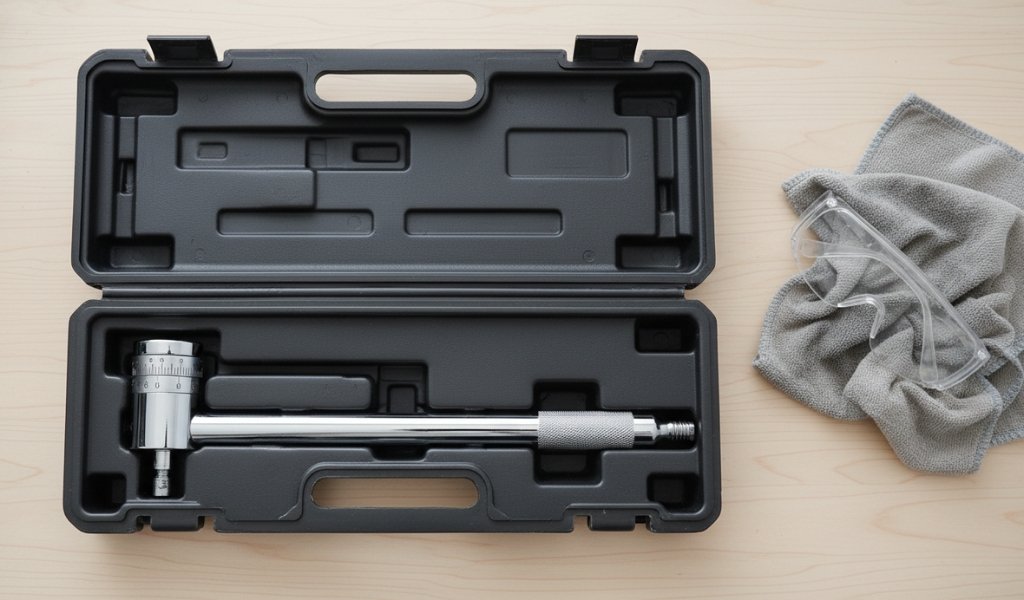
To set a torque wrench, unlock the handle via the locking collar or base nut. Turn the handle until the top edge aligns with the major number you need on the main scale, then rotate the handle to line up the exact minor increment on the thimble scale with the vertical centerline. Lock the handle in place to secure your torque setting. For a digital torque, simply turn it on and use the adjustment buttons to program the desired torque on the scale.
To set it to 22 ft-lbs, turn the handle until the edge meets the 20 ft-lb mark on the primary scale, then rotate the handle so the 2 on the thimble aligns with the vertical line. For 110 ft-lbs, bring the handle up to the 100 ft-lb line on the primary scale, then turn the thimble until the 10 aligns with the center line.
Setting an inch-pound wrench is mechanically identical to setting a foot-pound wrench. The only difference is the unit of measurement on the scale. Identify the target inch-pound specification, unlock the handle, rotate the primary scale to the nearest ten or hundred marker, and use the thimble to add the remaining single digits. Ensure you are reading the correct side of the scale, as many wrenches feature inch-pounds on one side and Newton-Meters on the reverse.
The 20 rule (often known as the 20% to 100% rule) states that a torque wrench is only truly accurate within the top 80% of its operating range. For example, if your maximum torque limit is 100 ft-lbs, the tool is highly accurate between 20 ft-lbs and 100 ft-lbs. If you need to tighten a bolt to 10 ft-lbs, you should use a smaller type of torque wrench designed for lower torque applications rather than dialing a large torque wrench to its lowest absolute setting.
You should only click a torque wrench once per fastener. When you reach the specific torque, the wrench provides a clear tactile and auditory click. Stopping immediately is critical. If you double-click or continue pulling, you apply additional force, compromising the proper torque and potentially damaging the bolt.
Professionals recommend that you calibrate your torque wrench at least once a year, or every 5,000 cycles (whichever comes first). If the tool is dropped, used incorrectly to loosen a seized bolt, or left stored at a high tension setting, it should be calibrated immediately before its next use. Proper calibration ensures the internal spring tension accurately matches the numbers stamped on the exterior scale.
No. You should never use a torque wrench to loosen bolts. The internal ratcheting and measuring mechanisms are designed strictly to measure the torque applied during tightening. Using the tool as a breaker bar to break free tight, rusted, or over-torqued bolts places extreme stress on the calibrated components near the head of the wrench, destroying its accuracy. Always use a standard ratchet or a dedicated breaker bar for removal, and only pick up your torque wrench when it is time to tighten the fastener to the preset torque.
Learning to use your torque wrench accurately is a fundamental rite of passage for any mechanic. By understanding how to read the micrometer scale, properly locking in your settings, and maintaining the tool by zeroing it out after use, you guarantee the longevity of your torque tools and the safety of your projects.
Remember, an engine is only as strong as its weakest bolt. Keep your wrench calibrated, never use it to break stubborn bolts loose, and always double-check your service manual for the exact specifications. Master these simple steps, and you will achieve professional, factory-grade precision every time you step into the garage.