Physical Address
304 North Cardinal St.
Dorchester Center, MA 02124
Physical Address
304 North Cardinal St.
Dorchester Center, MA 02124

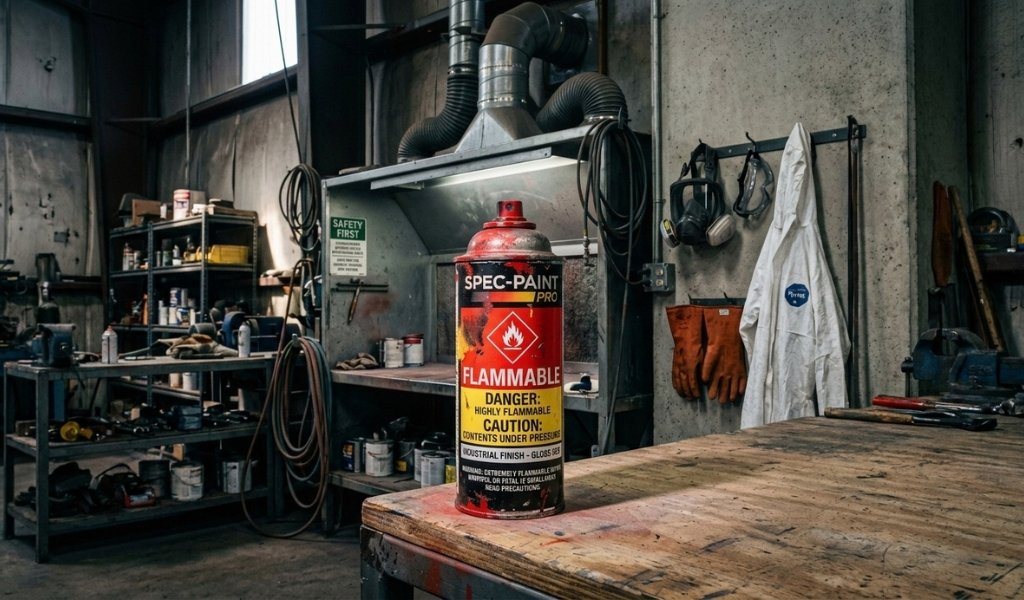
Spray paint is one of the most versatile tools in any painter’s kit but it’s also one of the most misunderstood when it comes to fire risk. Every year, improper handling of aerosol cans and flammable vapors contributes to workshop fires, injuries, and property damage that could have been prevented with the right knowledge.
Whether you’re a DIY enthusiast refreshing your furniture, a professional painter working in a spray booth, or a safety officer reviewing workplace protocols, understanding the flammability of spray paint is non-negotiable. The risks aren’t just about the paint itself; they extend to propellants, solvents, overspray, and even the rags you use to clean up.
This guide covers everything you need to know: why spray paint is classified as a flammable liquid, how risk varies between oil-based and water-based formulas, what fire safety precautions to take during application, and how to store and dispose of aerosol cans without incident. For a broader look at application techniques, check out our ultimate guide to spray painting techniques.
Yes spray paint is flammable, and the hazard is most acute when the paint is wet and airborne. Most aerosol spray paints contain a combination of pigments, binders, solvents, and a pressurized propellant. The solvents often toluene, xylene, acetone, or other volatile organic compounds (VOCs) are classified as flammable liquids with low flash points. That means they can ignite at room temperature.
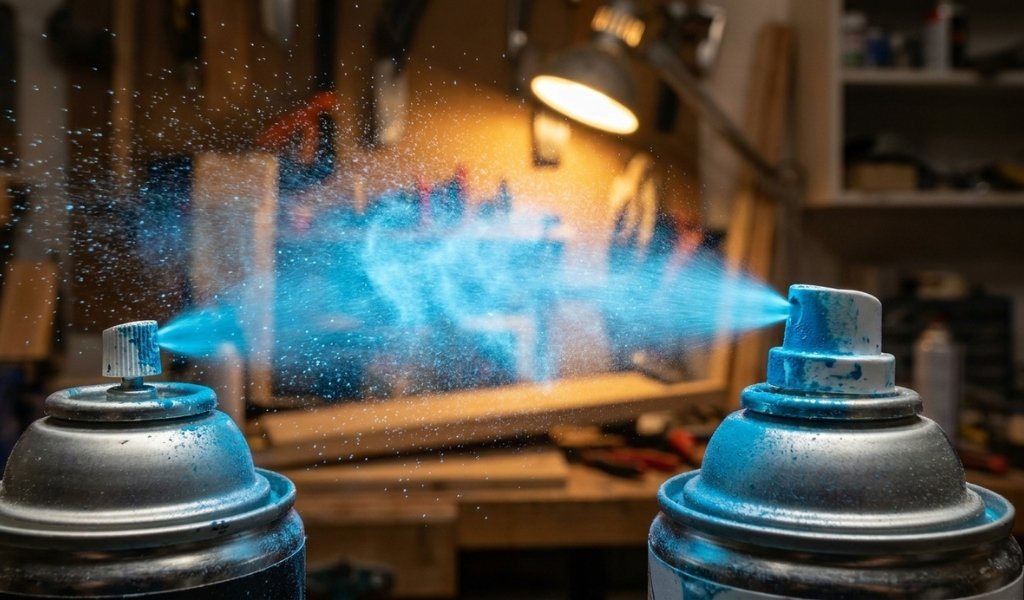
When you press the nozzle on a spray paint can, the propellant forces a fine mist of solvent-laden coating into the air. This spray mist doesn’t just land on your target surface it also fills the surrounding air with flammable vapors. In a poorly ventilated space, these vapors can accumulate rapidly and reach concentrations capable of igniting with a single spark, an open flame, or even static electricity.
The propellant itself adds another layer of risk. Many aerosol cans use hydrocarbon-based propellants such as propane or butane, both of which are highly combustible gases. Even after the paint leaves the can, residual propellant vapor lingers in the spraying area and can serve as an ignition source in its own right.
The short answer: it depends on the paint type and formulation. Once spray paint has fully cured, much of the solvent has evaporated, which significantly reduces the fire risk. However, “dry to the touch” doesn’t always mean fully cured. During the drying phase, solvents continue to off-gas, meaning flammable vapors are still present in the environment long after the surface feels dry.
Fully cured oil-based coatings can still be combustible under high heat but the primary danger window is always during and immediately after application. Water-based spray paints present lower flammability risk once dried, as their solvent content is substantially lower to begin with. That said, no aerosol coating should be considered completely non-flammable until fully cured and properly ventilated.
The flammability of spray paint comes down to its chemical composition. Conventional aerosol spray paints contain several hazardous materials that individually warrant careful handling and together, they create a potent fire risk:
Beyond fire risk, these chemicals carry serious health hazards. Prolonged exposure to toluene and xylene fumes can damage the kidney and liver, affect the central nervous system, and cause respiratory issues reinforcing why proper protective equipment isn’t optional.
Spray paint cans are pressurized containers. When exposed to heat sources a nearby heater, direct sunlight through a car window, or an open flame the internal pressure builds rapidly. If the can’s pressure-relief mechanisms can’t compensate fast enough, the result can be a violent rupture or explosion.
This is classified as a BLEVE event (Boiling Liquid Expanding Vapor Explosion) in fire safety literature. The can itself becomes shrapnel, and any remaining flammable content ignites on contact with air. Even cans that are nearly empty carry enough residual propellant to cause fires and explosions when exposed to high heat.
Key ignition sources to eliminate from any spraying area include:
Oil-based spray paints, lacquers, and solvent-borne coatings represent the highest category of fire risk among aerosol products. Their solvent carriers, typically petroleum distillates, toluene, xylene, or mineral spirits are classified as flammable liquids under both NFPA and OSHA standards.
These formulas have low flash points, high vapor pressure, and release substantial volumes of flammable vapors during application. In an enclosed spraying area without proper ventilation, these vapors accumulate quickly. The combustible overspray that settles on surfaces can also reignite later if exposed to heat.
From a regulatory standpoint, oil-based aerosol spray paints are typically labeled with a “Flammable” warning and must be handled according to the safety data sheet (SDS) provided by the manufacturer. The SDS will specify flash point, explosive limits, and required control measures information that every user should review before starting any painting project.
Water-based spray paints often labeled as acrylic or latex are considerably less hazardous than their oil-based counterparts, but they aren’t automatically safe to treat as non-flammable. The paint formula itself uses water as the primary carrier, which dramatically reduces the concentration of flammable solvents. However, the propellant in the aerosol can is still typically a hydrocarbon gas, meaning the can itself remains a pressurized flammable substance.
In practical terms: the fumes from water-based spray paints are far less likely to accumulate to ignitable concentrations during normal use in a well-ventilated area. Still, you should maintain safe handling practices keep away from open flames, avoid heat sources, and follow the SDS regardless of paint type. “Less hazardous” is not the same as “safe to use carelessly.”
Ventilation is the single most important fire safety control when working with aerosol spray paint. Without adequate airflow, flammable vapors build up to dangerous concentrations. A proper ventilation system should supply fresh air at the intake and exhaust contaminated air continuously via an exhaust fan that meets the volume requirements of your spraying area.
In professional settings, a dedicated spray paint booth with filtered exhaust systems is the standard. For DIY projects, working outdoors or in a large garage with the door open provides natural ventilation but you should still position yourself so that fumes move away from your breathing zone and any ignition sources.
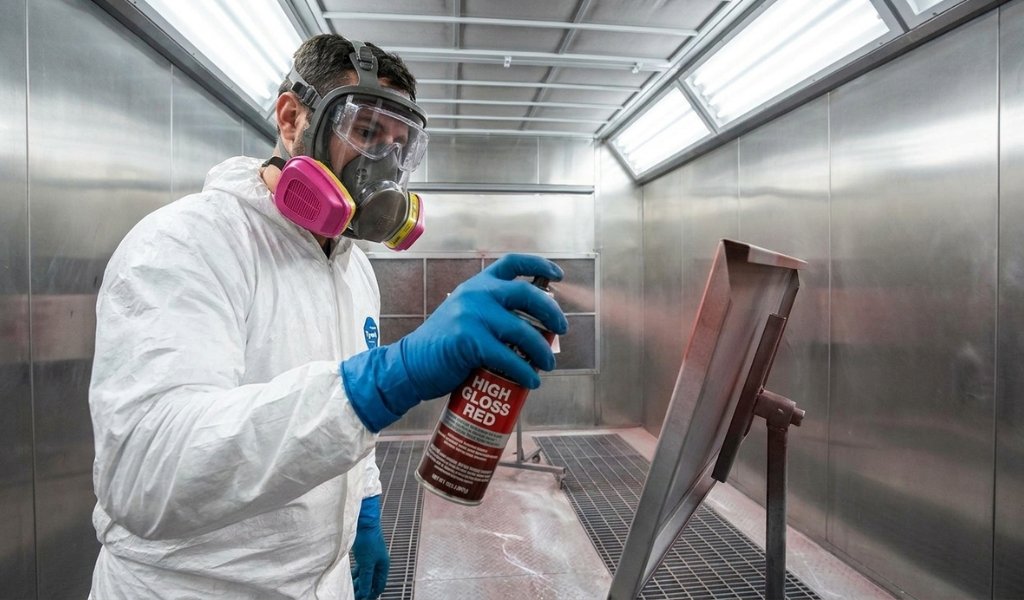
Selecting the right spray painting safety equipment is equally critical. At minimum, use:
Never spray near open flame sources pilot lights, gas-powered heaters, or lit cigarettes. Turn off any nearby electrical equipment that could spark.
Fire protection in spray painting environments extends beyond basic precautions. For commercial and industrial operations, NFPA 33 (Standard for Spray Application Using Flammable or Combustible Materials) and OSHA 29 CFR 1910.94 set out specific requirements for spray booths, ventilation rates, fire suppression systems, and sprinkler installations.
Static electricity deserves special attention. Spray painting generates electrostatically charged particles, and if the workpiece, equipment, or operator is not properly grounded, a static discharge can ignite accumulated vapors. Grounding and bonding requirements are outlined in NFPA standards and should be followed in any professional spraying operation.
Key fire protection measures include:
Improper paint storage is a leading cause of preventable fires and injuries. Aerosol cans must be stored away from any heat source that could raise their internal temperature and pressure. The general rule is to store spray cans at temperatures between 10°C and 25°C (50°F–77°F) in a cool, dry, well-ventilated area away from direct sunlight.
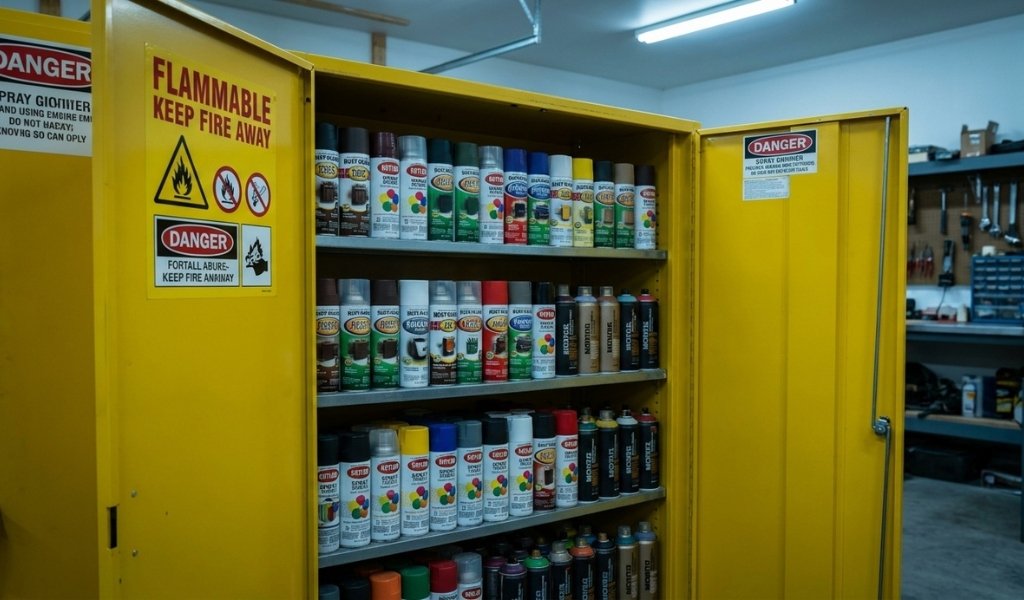
Specific conditions to avoid:
Store aerosol cans upright in a dedicated, clearly labeled cabinet or storage area, separate from oxidizers and other incompatible materials. Limit quantities stored to what’s reasonably needed for current painting projects bulk storage increases risk proportionally.
Never attempt to puncture, crush, or incinerate an aerosol spray can even one that appears empty. Residual propellant and paint can still ignite when the pressurized container is compromised. A can that’s been dented, corroded, or has a defective valve should be treated as hazardous waste.
Check the SDS for the specific product before disposal. Most aerosol cans with remaining content must be taken to a designated hazardous waste collection facility. Never dispose of them in general waste bins or recycle containers without first ensuring they are completely empty and the propellant has been fully released per manufacturer guidance.
Oily or solvent-soaked rags present a separate but equally serious hazard. Rags saturated with oil-based solvents can self-ignite through a process called spontaneous combustion as the solvent oxidizes and generates heat. Store used rags in a sealed, metal, fire-rated container with a tight-fitting lid, and arrange for regular disposal.
Once spray paint has fully cured, the solvents have largely evaporated, which significantly reduces its flammability. However, during the drying phase before full cure flammable vapors continue to off-gas. Oil-based dried coatings can still be combustible under extreme heat, so the safest approach is to maintain ventilation and eliminate ignition sources until the surface is completely cured.
The flammability of spray paint comes from two main sources: the solvents in the paint formula (such as toluene, xylene, and acetone) and the hydrocarbon-based propellants (like propane or butane) inside the aerosol can. Both release flammable vapors at room temperature, and these vapors can ignite from a spark, open flame, or static electricity discharge.
Yes. Most Rust-Oleum oil-based spray paint products are classified as flammable and labeled accordingly. Their SDS sheets confirm flash points in the flammable range. Some Rust-Oleum water-based products carry a lower flammability classification, but the aerosol cans still contain flammable propellants and should be stored and handled with the same fire safety precautions.
Water-based spray paints are less flammable than oil-based formulas due to their reduced solvent content, but the propellant gas inside the aerosol can is still typically a flammable hydrocarbon. This means the can itself is a pressurized flammable substance. Always keep water-based aerosols away from heat sources and open flames, regardless of how the paint formula is classified.
Yes. Aerosol cans are pressurized, and high temperatures cause the internal pressure to rise rapidly. A car interior can reach 60°C (140°F) or higher on a warm day well beyond the safe storage range for most spray cans. Under these conditions, the can can rupture violently, releasing flammable propellant and paint in an explosion hazard. Never leave spray cans in a vehicle, near a window in direct sunlight, or near any heat source.