Physical Address
304 North Cardinal St.
Dorchester Center, MA 02124
Physical Address
304 North Cardinal St.
Dorchester Center, MA 02124

Acacia wood shows up everywhere: dining tables, outdoor benches, cutting boards, flooring. Its striking grain pattern, warm brown tones, and reputation for hardness make it one of the most marketed hardwoods on the market. But the sales pitch doesn’t always tell the full story.
Before you invest in acacia furniture or flooring, you need a clear picture of what you’re actually signing up for. Yes, acacia is a genuinely capable hardwood. It’s dense, visually appealing, and more affordable than many premium alternatives. But it also warps under humidity swings, fades outdoors without regular treatment, and demands consistent maintenance that many buyers don’t anticipate at the point of purchase.
If you’ve already read up on What Is Acacia Wood? and understand its general characteristics, this post goes deeper specifically into the disadvantages of acacia wood, where it struggles compared to teak, and what proper care actually involves. Whether you’re furnishing a patio, a living room, or a rental property, this guide will help you make a decision you won’t regret.
Acacia wood furniture isn’t a bad choice but it isn’t a flawless one either. To evaluate it honestly, you first need to understand what the wood actually is and where its properties create real-world trade-offs.
Acacia is a hardwood harvested from acacia trees, a genus that spans more than 1,000 species found across Africa, Australia, and Southeast Asia. Most of the commercial acacia wood furniture sold globally comes from fast-growing species like Acacia mangium, cultivated in countries like Vietnam, Indonesia, and Thailand.
The characteristics of acacia wood include a high Janka hardness rating typically between 1,700 and 2,300 lbf depending on the species, a wavy or interlocking grain pattern, and a color palette that ranges from pale gold to deep reddish-brown. That interlocking grain adds structural strength, and the density makes it resistant to scratches and surface dents. Common uses of acacia include dining tables, benches, garden furniture, acacia flooring, and kitchenware like cutting boards.
The pros and cons of acacia wood aren’t evenly distributed across all use cases. The pros of acacia are most apparent in controlled indoor settings: it holds up to heavy daily use, looks beautiful, and costs less than comparable hardwoods like teak or walnut. The disadvantages of acacia wood emerge most prominently in outdoor environments and in climates with significant humidity or temperature variation. Knowing which category your intended use falls into is the first step toward making the right call.
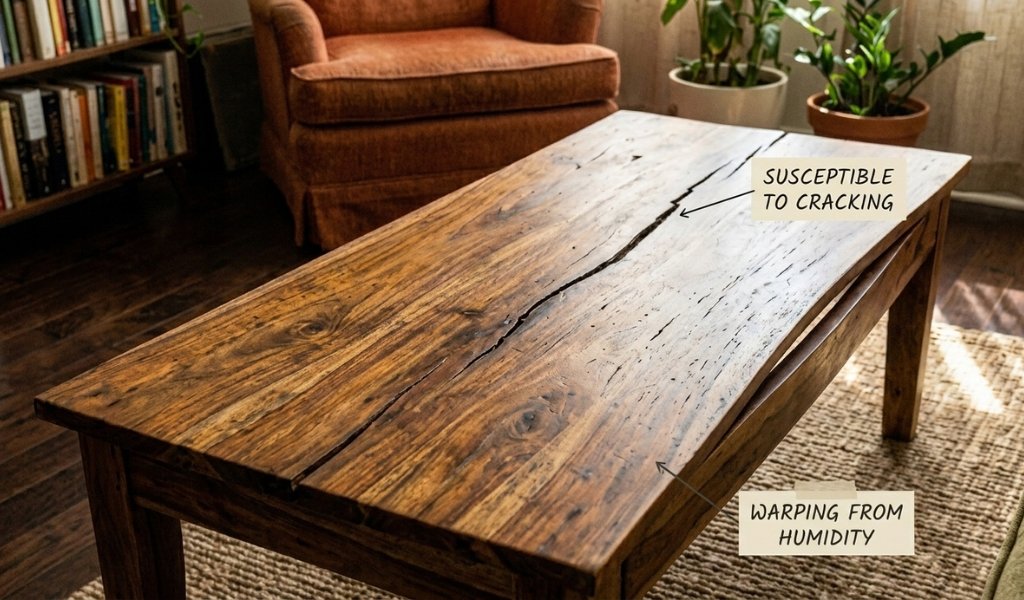
This is the most significant disadvantage for most buyers, and it catches people off guard. Acacia is a hardwood known for its durability, but it reacts strongly to changes in moisture and temperature. When humidity levels rise and fall whether seasonally or due to heating and cooling systems acacia wood expands and contracts at a noticeable rate.
For acacia flooring, this means gaps can form between boards in dry winter months and boards can press against each other and buckle during humid summers. For acacia wood furniture placed near air conditioning vents, heaters, or drafty windows, warping is a real risk over time. Acacia is not a stable wood by nature; its density works in its favor against physical impact, but it doesn’t make it immune to the effects of a fluctuating environment.
Even in relatively stable conditions, acacia wood can develop surface cracks particularly if it dries out between oiling sessions. The wood’s high density means it holds moisture well when sealed, but when that seal deteriorates and the wood is left untreated, it dries rapidly and surface-level checking (fine cracks along the grain) can develop.
Warping and splitting are more common in outdoor settings, but they can also occur indoors if the wood is exposed to prolonged direct sunlight through a window or placed in a room with consistently low humidity. Acacia furniture can last for years in the right conditions, but the risk of structural deformation is higher than with more dimensionally stable hardwoods.
The density that makes acacia a durable wood is also a practical inconvenience. Solid acacia furniture is heavier than many buyers expect. A solid acacia dining table can be genuinely difficult to move without assistance, which matters for anyone reconfiguring a space or relocating.
The color of acacia is another point of contention. That natural variation in tone golden honey hues blending into dark brown streaks is beautiful in isolation, but matching multiple pieces of acacia furniture within the same room is notoriously difficult. Two acacia chairs from the same manufacturer can look noticeably different, and adding pieces over time rarely results in a cohesive match. For buyers who care about interior consistency, this is a real limitation.
Furniture made from acacia wood requires more upkeep than furniture made from many synthetic or composite materials and more than some competing hardwoods. Without regular oiling, acacia dries out, loses its luster, and becomes more susceptible to cracking. This isn’t a once-a-year task that takes a few minutes; it requires consistent attention, especially for pieces exposed to heat, sunlight, or fluctuating indoor conditions.
For buyers expecting low-maintenance wooden furniture, acacia can feel like a demanding choice. It rewards care, but it punishes neglect faster than more naturally oil-rich woods like teak.
Acacia wood for outdoor furniture is workable but its resistance to the elements is conditional, not inherent. Unlike teak, which produces abundant natural oils that actively repel moisture and resist decay without intervention, acacia’s natural oil content is lower. That means outdoor acacia furniture requires more frequent application of protective sealants or oils to maintain its resistance to rain, damp soil contact, and pooling water.
In covered outdoor spaces patios with overhead roofing, pergolas, or sheltered decks acacia performs reasonably well. Exposed outdoor settings are where the cracks, quite literally, start to show.
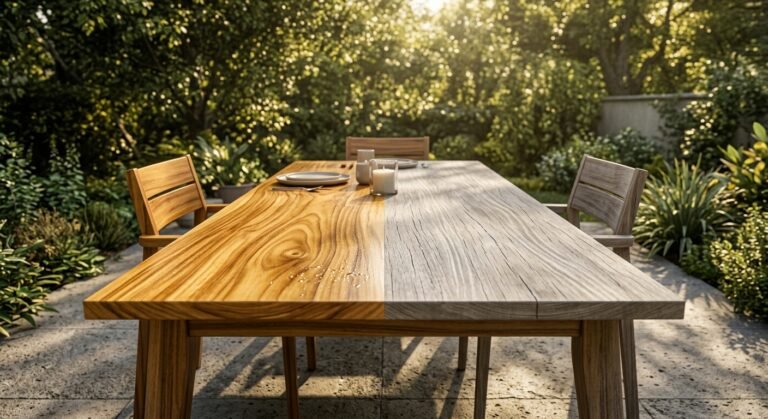
Without UV protection, acacia wood left outdoors will gray and fade within a single season. The rich, warm tones that make acacia so visually appealing will wash out to a silvery-gray under prolonged sun exposure. While some buyers find weathered wood charming, most purchasing premium acacia furniture expect that color to persist.
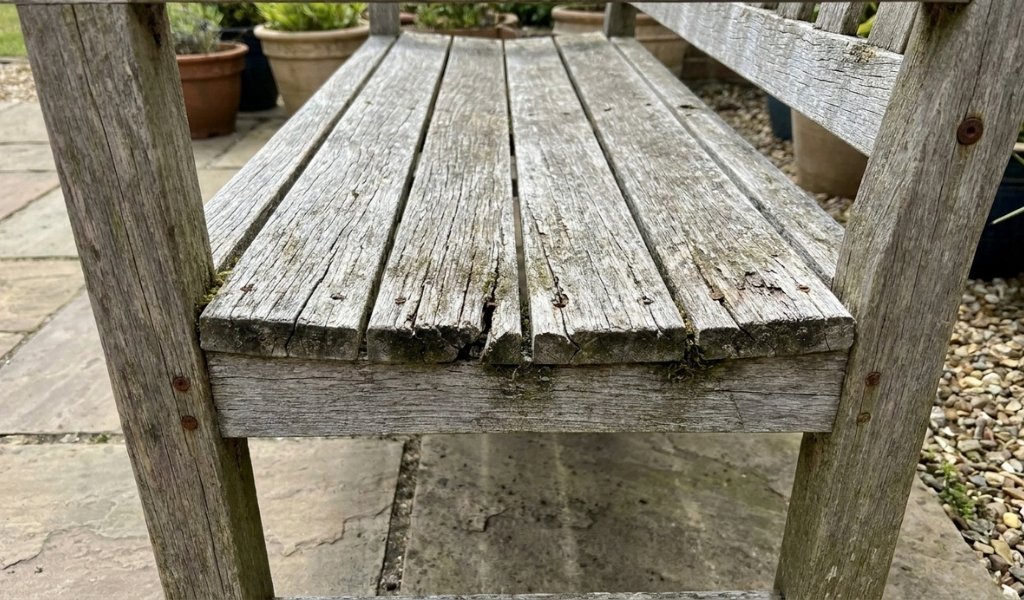
Beyond aesthetics, sustained UV exposure degrades the wood’s surface integrity. The wood dries out more quickly, surface cracking accelerates, and the wood becomes less resistant to moisture absorption creating a cycle where each season of neglect makes the next season’s damage worse.
Comparing acacia wood vs teak wood comes down to one core distinction: teak is self-sufficient outdoors, and acacia is not. Teak wood furniture owes its legendary durability to a naturally high silica and oil content that resists water, insects, and rot without needing regular treatment. Acacia and teak are both hardwoods, and acacia actually scores higher on the Janka hardness scale but hardness and outdoor durability are not the same thing.
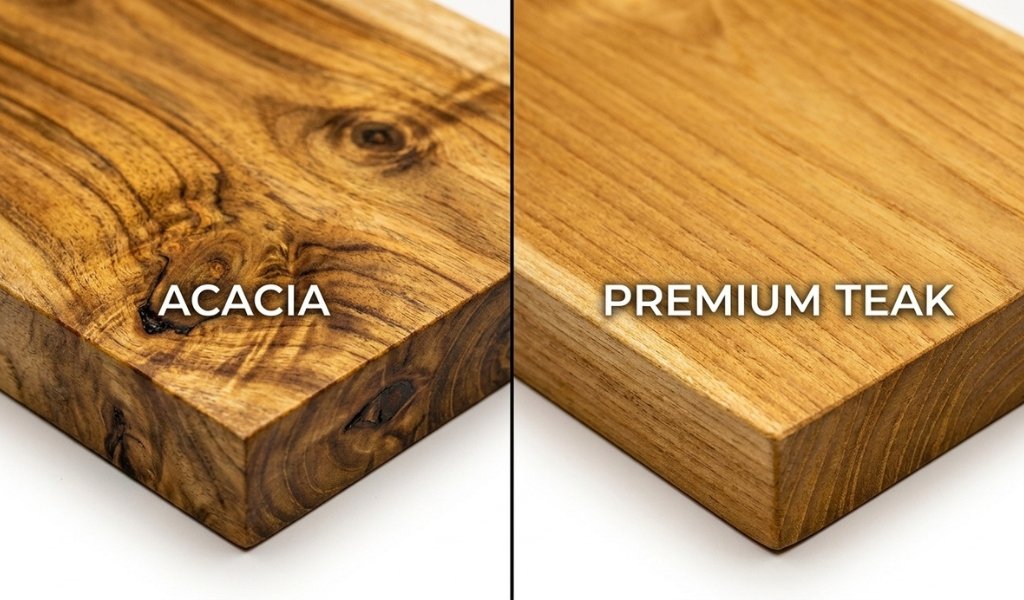
For indoor furniture, the durability of acacia holds up very well. For outdoor use over multiple years without consistent maintenance, acacia wood furniture will show wear significantly faster than teak furniture left under comparable conditions. The durability gap between teak and acacia widens with exposure and narrows with attentive care.
The price difference between acacia and teak is substantial. Teak wood furniture commands premium prices for good reason its low-maintenance outdoor performance justifies the investment over the long term. Acacia furniture is considerably more affordable upfront, which makes it an attractive choice for buyers with limited budgets.
The honest cost trade-off looks like this: acacia costs less to buy but more to maintain, and it carries a higher replacement risk if that maintenance lapses. Teak costs more upfront but delivers more reliable longevity outdoors with minimal intervention. For outdoor living spaces that get heavy seasonal use, the long-term cost of acacia may exceed what the initial price tag suggests.
Proper care begins with cleaning. For indoor acacia furniture, wipe down surfaces with a damp cloth and a small amount of mild soap, then dry immediately. Never leave standing water on acacia wood, and avoid harsh chemical cleaners that strip the wood’s natural oils.
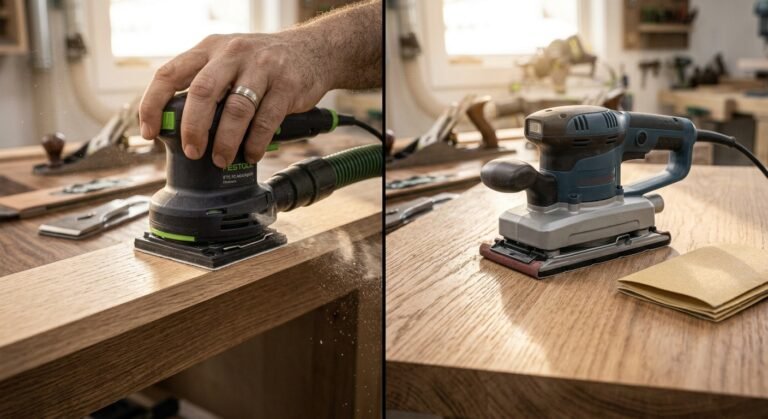
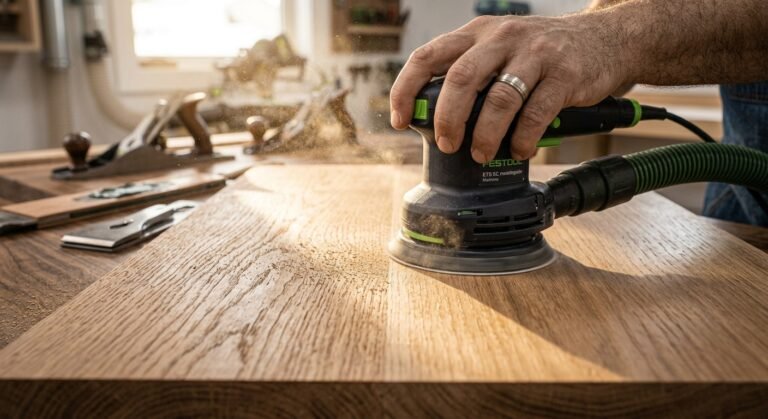
Oiling is the most important maintenance task. Apply a food-safe mineral oil or a dedicated wood conditioning oil every one to three months for cutting boards and high-use surfaces. For acacia wood furniture, teak oil or linseed oil works well lightly sand the surface with fine-grit sandpaper beforehand to open the wood’s pores and improve absorption. A thorough wood furniture maintenance guide will walk you through these steps in detail for different furniture types and finishes.
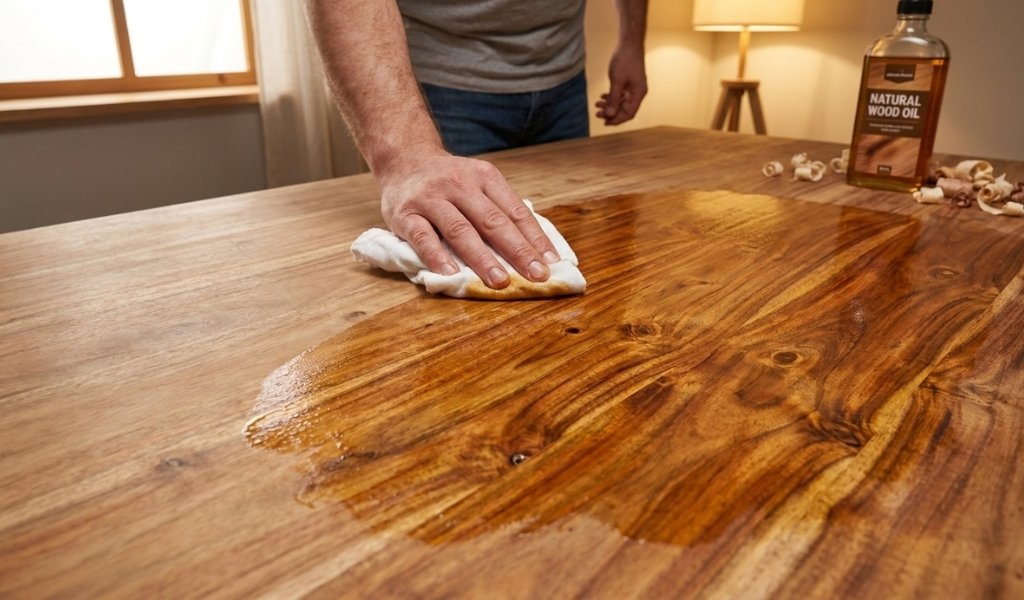
Moisture control matters as much as oiling. Use coasters under glasses, placemats under dishes, and felt pads under decorative objects. Keep acacia furniture away from heat sources and air conditioning vents. In regions with dramatic seasonal humidity swings, a humidifier during winter months can reduce the expansion-contraction cycle that leads to cracking.
For outdoor acacia furniture, seasonal protection is non-negotiable. Before winter or extended periods of rain, apply a quality outdoor wood sealant or teak oil and allow it to penetrate fully before the furniture is exposed to wet conditions. Cover furniture with breathable, waterproof covers during extended periods of non-use avoiding non-breathable plastic covers that trap condensation and promote mold.
During summer, keep acacia pieces out of direct midday sun when possible, or apply a UV-protective sealant to slow color fading. Sand and re-oil outdoor acacia furniture at least twice a year more frequently in coastal environments where salt air accelerates degradation. Acacia wood outdoor furniture that receives this level of care can realistically last five to ten years or more. Without it, expect visible deterioration within two to three seasons.
The main problem with acacia wood is its sensitivity to moisture, humidity, and temperature fluctuations. Despite being a dense and hard wood, acacia expands and contracts significantly in response to environmental changes, which can lead to warping, cracking, and splitting over time particularly in outdoor settings or rooms with inconsistent humidity levels.
Yes, acacia wood requires more maintenance than many buyers anticipate. To preserve its appearance and structural integrity, acacia furniture needs regular oiling every one to three months, prompt drying after exposure to moisture, and seasonal sealing for outdoor pieces. Neglecting this routine accelerates surface cracking, color loss, and long-term damage.
With consistent maintenance including regular oiling, UV sealant application, and protective covers during harsh weather acacia wood outdoor furniture can last between five and ten years. Without proper care, noticeable deterioration including graying, surface cracking, and structural warping can occur within two to three seasons of outdoor use.
Teak is the stronger choice for outdoor furniture in exposed settings. Teak wood’s naturally high oil content gives it built-in resistance to moisture, decay, and UV damage without the same level of maintenance acacia requires. Acacia is a practical, more affordable alternative for covered outdoor spaces where it’s protected from constant direct weather exposure.
Yes, acacia wood is prone to cracking and warping when exposed to significant humidity shifts, drying conditions, or prolonged outdoor weathering without treatment. The risk is highest in regions with extreme seasonal variation, near heat sources indoors, or in outdoor settings without consistent sealing and oiling. Regular maintenance substantially reduces but does not eliminate this risk.
Acacia wood earns its popularity, the grain is striking, the hardness is real, and the price is genuinely competitive. But the disadvantages of acacia wood are specific and predictable enough that they shouldn’t surprise you after the purchase. Moisture sensitivity, demanding maintenance requirements, limited outdoor durability compared to teak, and inconsistent coloring are not flaws that disappear with premium pricing. They’re inherent to the wood’s nature.
The buyers who get the most from acacia wood furniture are those who go in with accurate expectations: a commitment to regular oiling, thoughtful placement away from moisture and heat extremes, and a realistic assessment of whether covered or open outdoor use is the intended application. Make that evaluation honestly before you buy, and acacia can be a rewarding, long-lasting choice. Skip it, and you may find yourself replacing furniture far sooner than you planned.