Physical Address
304 North Cardinal St.
Dorchester Center, MA 02124
Physical Address
304 North Cardinal St.
Dorchester Center, MA 02124


If you’ve ever tried to sand a curved chair leg or a rounded cabinet edge with a rigid sanding block, you already know the frustration. Flat tools fight against curves, leaving uneven pressure, flat spots, and a finish that’s anything but smooth. That’s where foam sanding pads come in.
Foam sanding pads have quietly become one of the most valuable additions to any woodworker’s kit. Their flexible foam construction lets abrasive material hug contours, wrap around profiles, and apply consistent pressure exactly where you need it. The result? A cleaner, more uniform finish with far less effort. For a broader look at how these fit into your overall workflow, our complete guide to sanding covers the tools, grits, and techniques that pair perfectly with foam pads.
Whether you’re a professional refinishing high-end furniture or a DIYer tackling your first weekend project, understanding foam sanding pads will change how you approach every sanding job. In this guide, we’ll break down the different types, their real-world applications, the top brands worth your money, and how to choose the right pad for your sander. Let’s dig in.
Before we get into specifics, it’s worth clearing up a common point of confusion. People often use “foam sanding pads” and “sanding sponges” interchangeably, but they’re two very different products with different jobs in the shop.
Foam sanding pads are foam-based attachments that mount onto power sanders, most commonly random orbital sanders. They sit between your sander’s backing plate and the abrasive, adding a layer of flexible foam that cushions the contact point.
This cushioning does two important things. First, it lets the abrasive conform to curves and contours instead of skating across them. Second, it distributes pressure evenly across the entire surface, which prevents the swirl marks and gouges that come from uneven contact. Think of a foam sanding pad as the bridge between your rigid sander and a delicate, shaped workpiece.
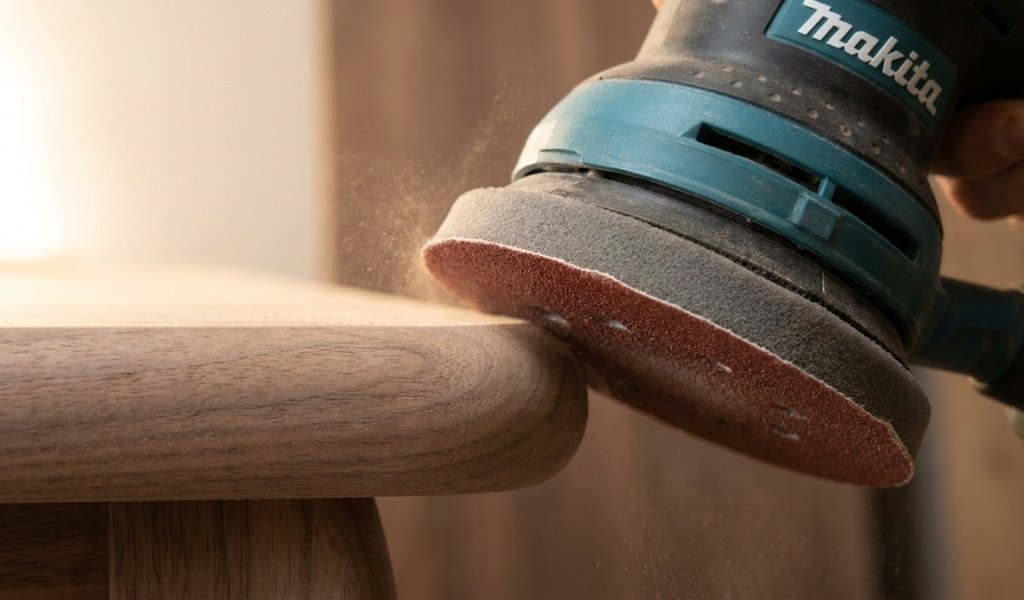
Most foam sanding pads include a hole pattern that matches your sander’s dust extraction ports, keeping airflow and dust collection intact even while you sand tricky profiles.
A sanding sponge is a standalone hand tool. It’s a block of foam with abrasive grit bonded directly to one or more of its faces. You don’t attach it to anything, you grip it in your hand and sand it by hand.
Sanding sponges shine on detail work: edges, moldings, spindles, and any spot too small or too intricate for a power sander. Because the foam flexes, a sponge naturally follows the shape of whatever you’re working. They’re reusable, washable, and available in a range of grits, which makes them a cost-effective staple for finishing work.
The simplest way to remember the difference: a foam sanding pad is an attachment for your sander, while a sanding sponge is a tool you hold. Both use flexible foam, but they solve different problems.
Not all foam pads are built the same. Different jobs call for different densities, sizes, and designs. Here are the main categories you’ll come across when shopping.
Interface pads are the workhorses of contour sanding. These flexible foam pads mount between your sander’s backing pad and the abrasive disc, adding just enough cushion to let sandpaper wrap around gentle curves, coves, and rounded edges. If you sand a lot of profiled surfaces, an interface pad is often the single most useful upgrade you can make.
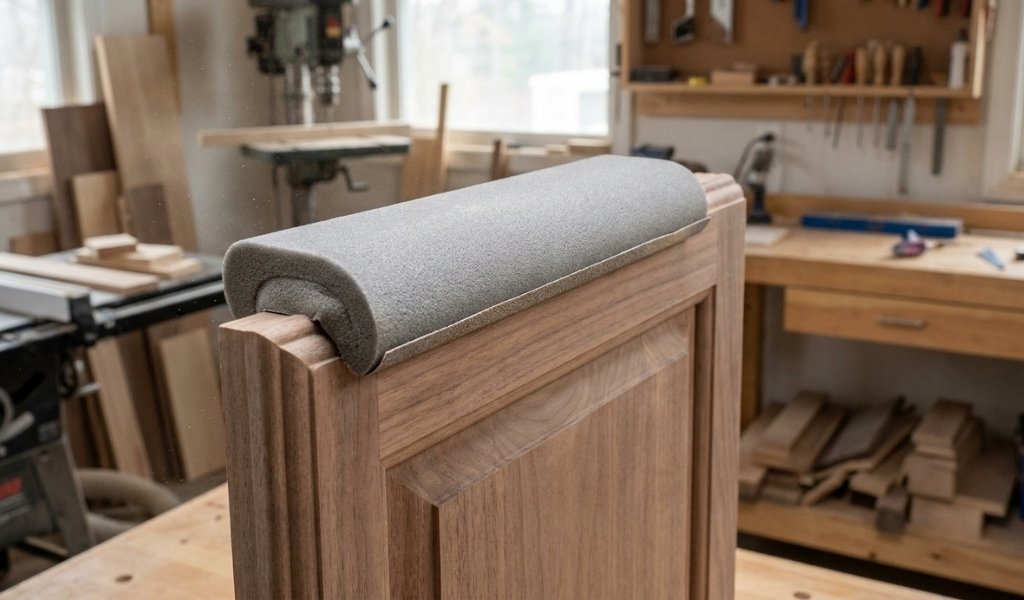
For extreme contours and delicate profiles, ultra-soft pads like those built for the Festool PLANEX system take flexibility even further. Their soft, giving foam molds around aggressive curves without flattening details, making them a go-to for detail work where control matters more than speed.
Protection pads serve a different purpose. Instead of adding flex, they protect your sander’s hook-and-loop backing plate from wear. Every time you swap a disc, the hooks on your backing pad take a little abuse. A protection pad acts as a sacrificial buffer, extending the life of both your abrasive and your sander’s backing plate.
Backup pads, sometimes used interchangeably with protection pads, provide a stable, durable foundation for your abrasive on random orbital sanders. They keep your disc flat and firmly seated, which translates to more consistent results and a longer service life for your sanding supplies.
Beyond the general-purpose pads, plenty of specialized attachments are designed for specific sanders and tasks. SurfPrep, for example, offers compact 3″ x 4″ foam pads ideal for detailed sanding on furniture and cabinetry, where a smaller footprint gives you tighter control in confined spaces.
On the larger end, 6″ foam pads for Dynabrade and similar air-powered sanders handle bigger surfaces while still delivering the flexible contact foam it is known for. Matching the pad to your specific tool and job is key; a mismatched size or hole pattern will hurt both performance and dust extraction.
So why bother adding foam pads to your setup? Because they solve problems that flat, rigid tools simply can’t. Here’s where they earn their keep.
The number one reason woodworkers reach for foam sanding pads is contour work. Curved surfaces, rounded edges, and profiled moldings are nearly impossible to sand evenly with a flat pad. Rigid tools bridge across curves, cutting hard on the high spots and missing the low ones.
Flexible foam changes the game. It conforms to the shape of the workpiece, keeping the abrasive in full contact across the entire profile. That means a fine, even finish on the kind of curved surfaces that used to demand slow, careful hand sanding. For anyone chasing a perfect result on shaped work, this alone justifies the investment.
Sanding supplies aren’t cheap, and a protection pad helps you get more out of every disc. By cushioning the abrasive and distributing pressure evenly, foam pads reduce the localized wear that shreds sandpaper prematurely.
Protection pads also shield your sander’s backing plate from damage during disc changes. That’s a small piece of gear doing double duty protecting your abrasive and your tool at the same time. Over the course of a big project, the savings on sandpaper and replacement backing plates add up fast.
A well-designed foam pad with a matching hole pattern keeps your dust extraction working the way it should. The holes line up with your sander’s ports, so dust gets pulled away efficiently instead of clogging the abrasive or coating your workspace in fine particles.
Cleaner air means better visibility, a healthier shop, and abrasive that cuts at full efficiency. On top of that, the uniform pressure foam provides eliminates the pressure spikes that cause swirl marks and uneven cutting. The payoff is consistent, professional-looking results across the whole surface every time.
Once you understand the types and benefits, choosing the right product comes down to brand, density, and fit. Here’s what to weigh before you buy.
The foam sanding pad market includes several trusted names, each with its own strengths:
Buying from a reputable brand or a specialty shop ensures you get consistent quality and pads that actually fit your sander.
Density determines how a foam pad behaves, and picking the right one matters more than most people expect.
As a rule of thumb: the sharper the curve, the softer the pad. Flatter work calls for firmer foam.
The last step is fit. A foam pad has to match both the size and the hole pattern of your sander to perform properly. A 6″ pad on a 5″ sander or a mismatched hole configuration kills your dust extraction and throws off your balance.
Before buying, check your sander’s pad diameter and count the number of dust extraction holes and their arrangement. Common sizes include 5″ and 6″ for random orbital sanders, plus specialized shapes like the 3″ x 4″ pads for SurfPrep systems.
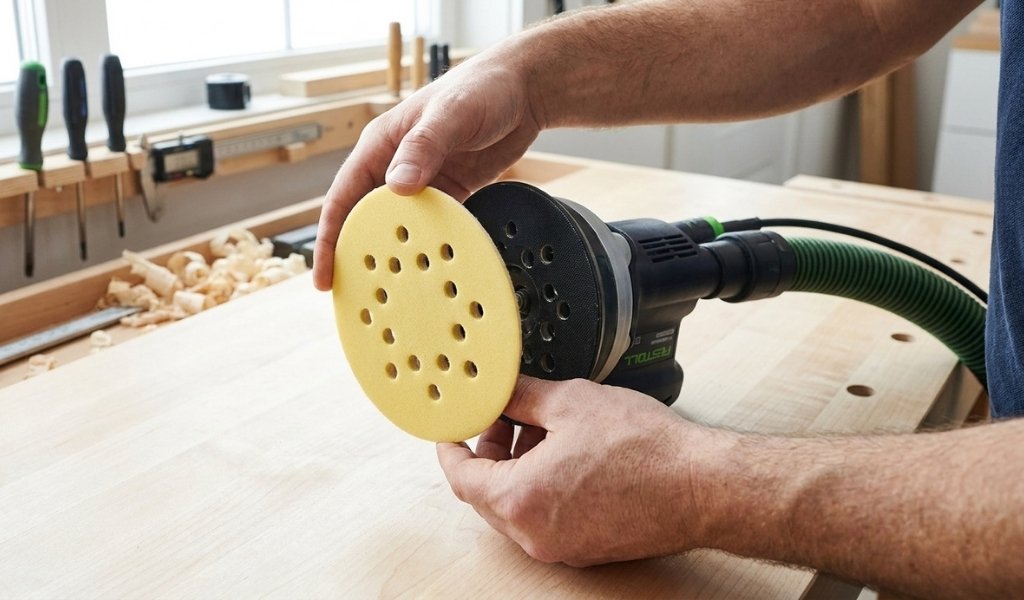
Matching the hole pattern keeps airflow strong and your results consistent. When in doubt, buy the pad designed for your specific sander model.
Yes foam sanding pads are excellent for achieving a smooth, even finish, especially on curved or contoured surfaces. Their flexible foam conforms to shapes that rigid tools can’t handle, distributes pressure uniformly to prevent swirl marks, and helps extend the life of your abrasives. For any work involving profiles, edges, or delicate finishing, they’re well worth adding to your kit.
Foam sanding pads are used to sand curved surfaces, rounded edges, coves, and profiled moldings where flat tools fall short. They’re also used to protect a sander’s backing plate, improve dust extraction through matching hole patterns, and deliver a fine, uniform finish across shaped workpieces. In short, they handle the detailed, contoured work that a rigid pad struggles with.
Foam sanding pads come in interface pads, ultra-soft contour pads, protection pads, and backup pads. Common sizes include 5″ and 6″ round pads for random orbital sanders, along with specialized shapes like 3″ x 4″ pads for SurfPrep systems and 6″ pads for Dynabrade air sanders. Densities range from ultra-soft to medium to suit different curves and surfaces.
Foam sanding products span the full grit range, from coarse (around 60–80 grit) for material removal to medium (120–180 grit) for surface leveling and fine to ultra-fine (220–400 grit and beyond) for finish work and sanding between coats. For detail and contour work, most woodworkers stick to the finer grits to refine the surface without cutting too aggressively.
Absolutely. Sanding sponges are a cost-effective, reusable hand tool that excels at detail work edges, moldings, spindles, and tight profiles too intricate for a power sander. The flexible foam follows curves naturally, they’re washable and reusable across many projects, and they come in a range of grits. For finishing and touch-up work, they’re a shop staple.
Yes. Interface pads and protection pads are made specifically for random orbital sanders. They mount between the sander‘s backing plate and the abrasive disc, with a hole pattern that matches your sander’s dust extraction ports. Just be sure to match the pad diameter usually 5″ or 6″ and the hole configuration to your specific orbital sander.
You can create a simple DIY foam sanding pad by bonding abrasive sheets or self-adhesive sandpaper to a block of dense, flexible foam cut to your desired size and profile. For contour work, shape the foam to match the surface you’re sanding. That said, homemade pads rarely match the consistency, durability, and dust extraction of purpose-built products, so for serious or repeat work, a premium pad from a trusted brand is the smarter choice.
Top brands offering foam sanding pads include Festool, Mirka, SurfPrep, Dynabrade, and Flex Air. Each brings its own strengths: Festool for premium contour systems, Mirka for abrasive and dust extraction quality, SurfPrep for detail-focused foam pads, Dynabrade for air-powered performance, and Flex Air for flexible, value-driven options. Buying from a reputable supply shop ensures the quality and fit you need.
Foam sanding pads solve a problem every woodworker eventually runs into: how to get a smooth, professional finish on surfaces that aren’t flat. Their flexible foam construction hugs curves, spreads pressure evenly, and keeps dust extraction working all of which add up to cleaner, more consistent results with less effort.
The right choice comes down to three things: pick a density that matches your surface (softer for tighter curves), match the pad size and hole pattern to your sander, and buy from a trusted brand like Festool, Mirka, SurfPrep, Dynabrade, or Flex Air. Get those three right, and you’ll wonder how you ever sanded contours without them.
Ready to upgrade your finishing game? Start with an interface pad sized for your current sander, add a protection pad to extend the life of your abrasives, and build out your grit range from there. Your next curved surface and your final finish will thank you.