Physical Address
304 North Cardinal St.
Dorchester Center, MA 02124
Physical Address
304 North Cardinal St.
Dorchester Center, MA 02124

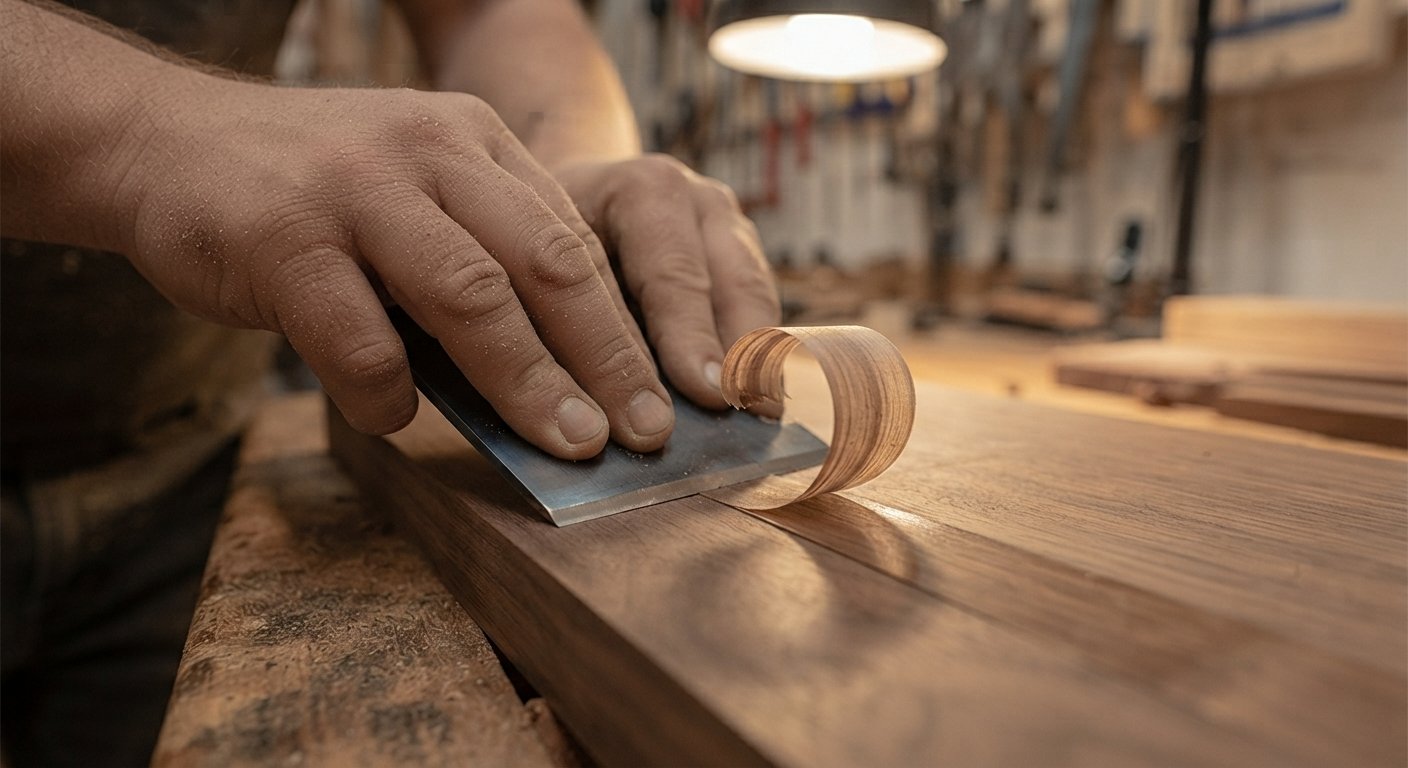
Ask any experienced furniture maker what tool sits closest to their bench and there’s a good chance they’ll point to a small rectangle of steel that doesn’t look like much at all. The wood card scraper has been quietly doing the work that sandpaper struggles with for centuries, and once you learn how to use one properly, you’ll wonder why you waited so long to add it to your toolkit.
This guide covers everything from what a card scraper actually is to how it works, the different types available, and how to keep one sharp and ready to use. Whether you’re finishing a tabletop or cleaning up tricky wood grain, this tool deserves a spot in your shop.
A card scraper is a flat piece of hardened steel, usually rectangular, that woodworkers use to shave off thin curls of wood to create an incredibly smooth surface. Unlike a hand plane or chisel, it has no handle and no moving parts. It’s just a simple sheet of metal, often around the thickness of a credit card, which is actually where the tool gets part of its name.
Despite looking almost too basic to be useful, this humble tool has been a staple in cabinetmaking and furniture building for generations. It excels at tasks that other tools handle poorly, particularly when dealing with figured wood like curly maple or birdseye maple, where the grain changes direction constantly and tends to tear out under a plane blade.
The magic behind a card scraper isn’t in the steel itself but in a tiny hook of metal called a burr, which sits along the edge. This burr is created deliberately during the sharpening process by rolling the edge over with a hardened rod. When the scraper is tilted at the right angle and pushed or pulled across the wood, that burr shaves off微 microscopic shavings rather than tearing or ripping the fibers apart.
This shearing action is fundamentally different from how sandpaper works. Sandpaper grinds and abrades the surface, generating dust and heat, while a scraper slices cleanly through the wood grain. The result is a surface that reflects light more evenly and often needs little to no sanding afterward. It’s a bit like the difference between cutting a piece of paper with sharp scissors versus tearing it by hand.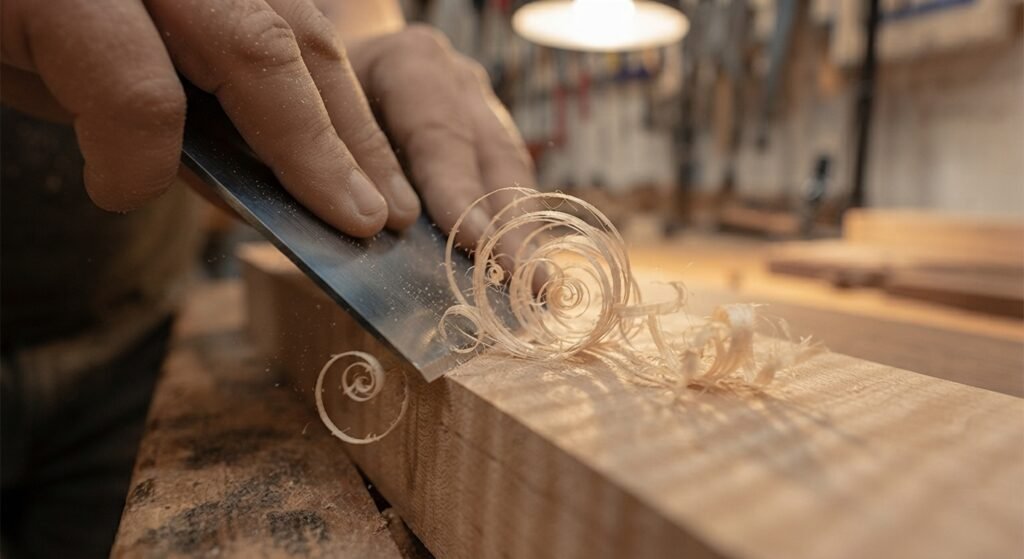
There are plenty of reasons woodworkers reach for this tool instead of, or alongside, sandpaper. The most obvious one is control. A properly tuned scraper removes an extremely thin layer of material with each pass, which means you can fine-tune a surface without the risk of gouging or over-sanding one spot.
It also shines on difficult wood grain. Highly figured lumber, the kind with swirling patterns and unpredictable grain direction, often defeats hand planes because the blade catches against the grain and tears out small chunks. A scraper handles this situation with ease since its cutting action doesn’t rely on the grain running in one consistent direction.
Dust is another factor worth mentioning. Sanding produces a fine cloud of dust that gets everywhere and requires a dust mask or good ventilation. Scraping produces fine curls similar to what you’d get from a hand plane, which are far easier to sweep up and much less irritating to breathe in.
Finally, there’s the finish quality itself. A well-scraped surface often has a subtle sheen that sanded wood lacks, since the wood fibers are sliced cleanly rather than roughed up by abrasive grit.
Not all scrapers are built the same, and different shapes exist to handle different jobs around the workshop.
This is the most common type and the one most beginners start with. Flat scrapers are rectangular pieces of steel, typically around five inches by two and a half inches, though sizes vary. They’re perfect for flat surfaces like tabletops, panels, and wide boards. Because they’re simple and inexpensive, most woodworkers own two or three of these in different thicknesses.
Gooseneck scrapers have a curved profile, resembling the neck of a goose, which makes them ideal for concave or contoured surfaces. Think of chair seats, curved moldings, or any shape that a flat scraper simply can’t reach into. The curves along the edge give you multiple radius options in a single tool.
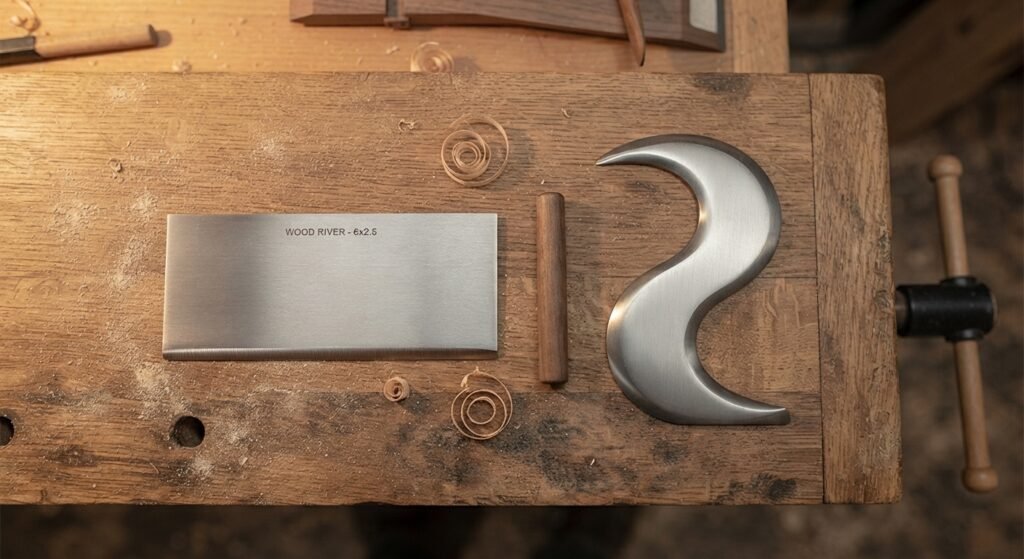
Beyond the two main types, there are specialty scrapers designed for specific tasks. Some come with a convex curve for rounded surfaces, while others are shaped for scraping inside corners or tight recesses. There are also scrapers built into holders, sometimes called scraper planes, which combine the blade with a body similar to a hand plane for more controlled, comfortable use over long sessions.
Before you can get any real use out of this tool, it needs to be properly prepared. A brand new scraper straight from the store usually needs its edges jointed, filed, and burnished before it will cut effectively.
Start by clamping the scraper in a vise with the edge exposed. Using a flat file, run it along the edge at a perfect ninety degree angle to square it up and remove any factory marks. This step, called jointing, creates a flat, consistent edge to work from. Follow this with some light honing using a fine sharpening stone to polish that edge further, removing any burrs left behind by the file.
The final and most important step is turning a fresh burr using a burnisher, which is a hardened steel rod harder than the scraper itself. This process is what actually creates the cutting hook that does all the work, and we’ll walk through it in more detail further down.
Using a scraper effectively comes down to angle, pressure, and a bit of practice. Hold the scraper with both thumbs pushing from behind while your fingers curl around the front edges, creating a slight bow in the steel. This flex helps prevent the corners from digging into the wood and creates a smoother, more even shaving.
Tilt the tool forward at roughly seventy to eighty degrees relative to the wood surface and push it away from you, or pull it toward you depending on your preference and the type of scraper. Apply steady, even pressure and pay attention to the feedback. 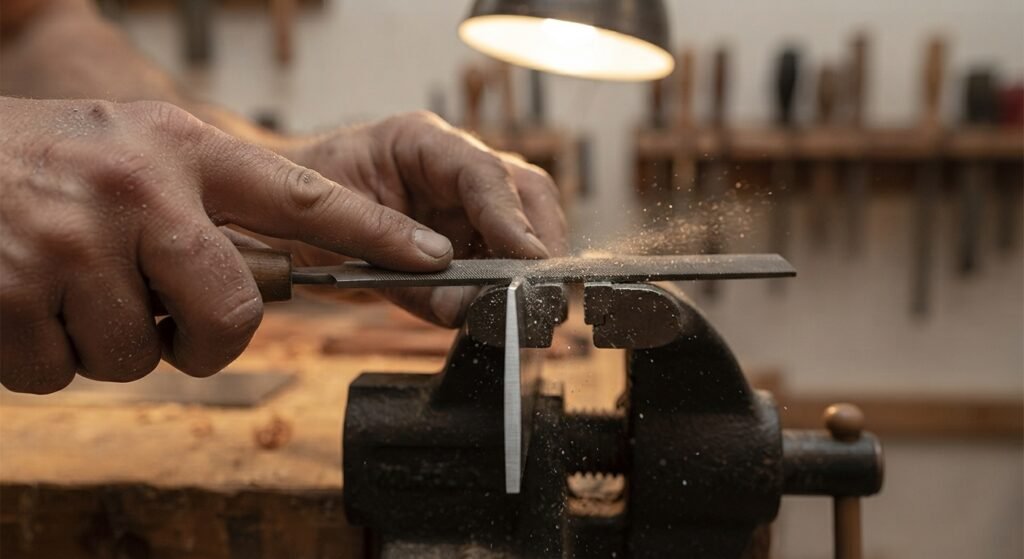 If you’re getting fine curls of wood rather than dust, you’re doing it right. If nothing seems to be happening, adjust the angle slightly until the burr catches the wood fibers properly.
It’s worth comparing these two approaches directly since many woodworkers use both depending on the situation. Sandpaper is more forgiving for beginners and works well across almost any wood species, but it removes material unevenly if you’re not careful, and it clogs quickly on resinous or oily woods.
A scraper, on the other hand, requires a small learning curve but rewards you with a cleaner, faster result once you get the hang of it. It also lasts far longer than a sheet of sandpaper, since the same piece of steel can be resharpened dozens of times before it needs replacing. That said, sandpaper still has an edge for final smoothing before finishing, especially with softer woods where a scraper can sometimes leave faint shallow lines if the burr isn’t perfectly even.
Many professional furniture builders use scrapers to do the bulk of the smoothing work, then follow up with a light pass of fine sandpaper to blend everything together before applying stain or a topcoat.
Even experienced woodworkers run into a few recurring issues with this tool. One of the most common mistakes is holding the scraper too flat against the wood, which causes it to skate across the surface without cutting anything. The angle needs to be steep enough for the burr to actually engage the wood fibers.
Another frequent problem is applying too much pressure, which can cause the tool to dig in unevenly or create grooves rather than smooth, even shavings. Light, consistent pressure combined with the right angle almost always outperforms brute force.
Skipping the sharpening steps is another issue that trips people up. A dull scraper, or one with an uneven burr, produces dust instead of clean shavings and leaves the surface looking scratched rather than smooth. Some beginners also forget to flex the blade while using it, which leads to the corners catching and gouging the wood unexpectedly.
Keeping a scraper in good working condition doesn’t take much time once you understand the process. The burr wears down after repeated use, usually within twenty to thirty minutes of active scraping, so resharpening is a regular part of the workflow rather than a rare event.
To refresh the edge, start by removing the old burr with a few light passes of a flat file. Follow up by honing the edge on a sharpening stone to keep it square and polished. Then use a burnisher, holding it at a slight angle and running it firmly along the edge several times to roll a fresh hook of metal into place. Many woodworkers keep their burnisher and file right next to their scrapers so resharpening becomes a quick, almost automatic habit rather than a chore.
Storing scrapers properly also helps. Keeping them in a dedicated slot or wrapped in a cloth prevents the edges from getting nicked or dulled by contact with other tools in a drawer.
The wood card scraper might be one of the simplest tools in a woodworking shop, but it earns its place through sheer usefulness. From tackling difficult, swirling grain to producing a finish that often needs no sanding at all, this small piece of steel punches well above its size. Learning to prepare, sharpen, and use one properly takes a bit of practice, but the payoff in surface quality is hard to beat.
If you haven’t picked one up yet, grab an inexpensive flat scraper and a burnisher and give it a try on a scrap piece of wood. Once you feel that first clean shaving peel away, you’ll understand why this tool has stuck around in workshops for so long.
What is a card scraper used for in woodworking?
It’s mainly used to smooth wood surfaces by shaving off thin curls with a sharpened burr, particularly useful for figured grain that tends to tear out under a hand plane.
Do I need to sharpen a new card scraper before using it?
Yes. New scrapers usually need their edges jointed, filed, and burnished to create a proper burr before they’ll cut effectively.
How often does a card scraper need to be resharpened?
Most woodworkers resharpen after about twenty to thirty minutes of continuous use, though this varies depending on the wood species and how much pressure is applied.
Can a card scraper replace sandpaper entirely?
Not entirely. It handles the bulk of smoothing work very well, but many woodworkers still follow up with light sanding before applying a finish for the best results.
What’s the difference between a flat scraper and a gooseneck scraper?
A flat scraper is best for wide, flat surfaces like tabletops, while a gooseneck scraper has curved edges suited for contoured or concave shapes like chair seats.
Why isn’t my card scraper cutting properly?
This usually comes down to a dull or uneven burr, or holding the tool at the wrong angle. Resharpening and adjusting the tilt often solves the problem.
Is a card scraper hard to learn for beginners?
There’s a small learning curve involved, especially with sharpening, but most people get comfortable within a few practice sessions on scrap wood.